advertisement

Recent Posts



Featured Posts
Most Read
Why Madison Keys Was ‘No Longer Searching for Validation’ Even Before Winning the Australian Open
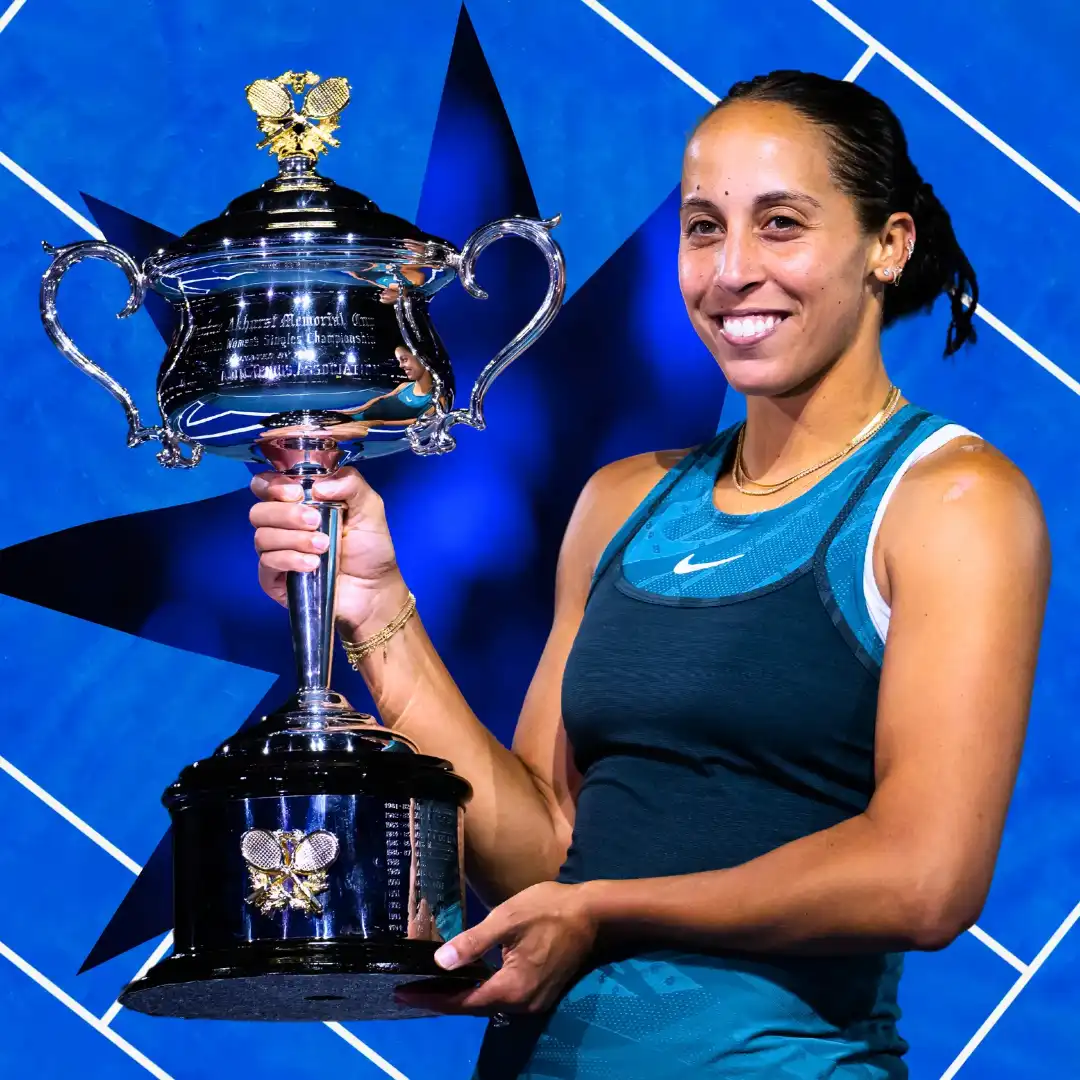
SportsWhy Madison Keys Was ‘No Longer Searching for Validation’ Even Before Winning the Australian OpenDays after her first Slam title, the tennis star shares what stoked her confidence, how she tweaked her game, and why representation matters on the court.By Caroline TienJanuary 29, 2025Robert Prange/SONGPHOL THESAKIT/Getty ImagesSave StorySave this storySave StorySave this storyIn the land down under, Madison Keys is on top of the world. Over the weekend, the 29-year-old American tennis player won the first major of her career, beating two-time defending champion Aryna Sabalenka to clinch a historic victory at the Australian Open. In footage of the match’s final point, she raises her arms high in the air before covering her face in an outburst of emotion. “It was just kind of an out-of-body experience,” she tells SELF in a Zoom call on January 28. “In that moment, you become so hyper-focused on the task at hand that you just take everything point by point. Everything else just disappears.”And she’s still riding that high three days later. In her own way, that is—keeping it chill is the new titlist’s preference. Immediately after, “I did get a nice glass of champagne, and then the next night, I got to have dinner with my team and kind of take it all in,” Keys says. “I'm a pretty low-key person, so that was the perfect way to celebrate.”SELF Healthy EatingGet nutrition tips, delicious recipes, and inspo for your grocery list delivered to your inbox just in time for your weekly meal prep.SIGN UPBy signing up, you agree to our user agreement (including class action waiver and arbitration provisions), and acknowledge our privacy policy.And there was a lot to reflect upon. With the win, Keys achieved a career milestone that she’s been eyeing for more than half her life. Since turning pro on her 14th birthday in 2009 (she famously started playing tennis after seeing Venus Williams on TV), she’s been considered a top contender on the WTA Tour, but a Grand Slam title eluded her. Previously, her closest brush was the 2017 US Open final, but it ended in a decisive straight-sets loss to fellow American Sloane Stephens. More recently, Keys made it to the Wimbledon fourth round but was forced to retire due to a minor hamstring tear, a decision that was necessary for her health but no less heartbreaking for it. “You kind of have to rebuild confidence back with your body after an injury,” she told SELF of the setback, right before the US Open. Then, in that tournament, she was knocked out in the third round by Belgian player Elise Mertens.But change was in the cards. Ranked 14 in the world heading into the Australian Open, Keys managed to overcome a difficult draw, beating fellow American Danielle Collins in the third round, 2022 Wimbledon champion Elena Rybakina in the fourth, Elina Svitolina in the quarterfinals, and five-time Grand Slam champion Iga Świątek in the semifinals before facing off against Sabalenka. Held in Rod Laver Arena, the final was a nail-biter, but in the third set, Keys hit a forehand winner that sealed the deal.In the process, she notched a few notable achievements: Becoming the first American to win the Australian Open in five years; the first woman in 20 years to beat the World No. 1 and 2 (Sabalenka and Świątek, respectively) en route to an Australian Open win; and the fourth oldest first-time Grand Slam women’s champion in the Open Era, according to Tennis.com.Days later, the excitement hasn’t worn off. “I’m still super happy,” she says. “I think I'll probably ride the wave as long as I can.” Below, Keys talks to SELF about that ride so far; making the changes that prefaced her big win; and feeling comfortable with who she is and where she’s at, Grand Slam title or not.SELF:Your husband, fellow tennis player Bjorn Fratangelo, doubles as your coach. What is that dynamic like?Madison Keys:This summer will be, I think, two years that he’s been coaching me. It really helps that he played professional tennis as well, so he understands the life.We work really well together because he knows when and how to deliver messages. We have really good communication, and we do a good job of knowing when we should talk tennis, and when the tennis talk should be turned off and we should go back to just being romantic partners.He is a very smart guy and knows what he is talking about, so it’s pretty easy to have back-and-forth. He has my best interests at heart, and I trust what he says.You’ve made some big technical changes recently regarding your racket, like switching out your Wilson for a Yonex and swapping your gut strings for polyester ones. How do you feel these adjustments have enhanced your game and reduced your injury risk?We started making some changes last year. I had a pretty significant injury at the beginning and missed the first few months [of the tennis season], and it finally got to the point where I was like, Okay, I need to make some actual changes so that I can continue to play full seasons and be healthy.I don’t really know specs and the technical things, but Bjorn is such a tennis geek. He can literally watch tennis on TV and tell me what racket the players are using, what it is. He knows everything. So I told him what I was searching for in a racket, and he narrowed it down for me, so I didn’t feel like the options were endless. Within the first five minutes of hitting with the new racket, I was like, Oh, yeah, this is it.Do you think these changes were a factor in your victory?Yeah, absolutely. I think the extra power and control that I’ve been able to find has not only helped my average rally ball be a little bit more dangerous, but also given me the freedom to go for things and thread the needle a little bit more, in a way that feels safe and comfortable. When you have that kind of combination, it just gives you a level of confidence. You feel like, Okay, no matter what is happening during the match, I can figure things out and I don’t have to stress as much that I have to play at a perfect level. This [racket and strings pairing] is definitely the combination for the foreseeable feature.Going into the Australian Open, how were you feeling, especially knowing you’d have a long road to the podium?So I actually won the tournament before the Australian Open, the Adelaide International. I played some really good tennis there, and when you’re able to do that, you have a level of confidence already that definitely helps push you through the draw.Maybe there’s a little bit of superstition to it as well. The one other time I won the Adelaide International [in 2022], I ended up making the semifinals of the Australian Open. So when I won Adelaide again this year, in my head, I was like, Oh, maybe this is good luck. Maybe we’ll see a run in Australia.I actually never look at the draw, so I am always kind of surprised at the end of any match about who the next opponent is. Some people like to look—I know [current World No. 6] Jessie Pegula does and knows every possible thing that could happen—but I’ve always just thought that the chances of it actually playing out how it should are so rare, why waste your time? Eventually, at some point, you figure it out, when there’s not very many people left. But in this case, I think I'm glad that Ididn’tlook at the draw, because that could have been a little bit daunting. Every round, I definitely gained more and more confidence, and as things went on, I felt more and more sure of myself, sure that I could be the one holding the trophy on Saturday.What does it mean to you to finally achieve this milestone of winning a major? Does it feel like a lot of pressure has been lifted?I think that I finally got to the point where I felt like I didn’t need to prove myself anymore, where I was really content with what I had done. Obviously, as a professional tennis player, I was still always wanting more, always wanting to win every draw, but no longer searching for validation through winning a Slam.Notwinning a Slam, I think, gave me the freedom to not only win one, but now really appreciate it in a way that I don’t think that I could have before.In some ways, I wish I could [reassure my younger self], but in other ways, I think going through all of the hard moments and the heartbreak got me to this point, because that was how I learned the lessons that I needed to win. So I am kind of a believer that everything happens for a reason.With your Australian Open win, you join Black tennis greats like Serena Williams and Naomi Osaka, who have also achieved that distinction. What does it mean to you that many young girls see themselves represented in you?I think representation matters, especially as a woman of color who has been playing for as long as I have and has gone through a lot of hard times to finally—at this point in my career—get the win. Being able to be someone who a little girl can look up to and say, ‘She looks like me,’ I mean, it’s amazing.I got a very nice note from Serena. From the first time we played, she’s been someone who has always said that she believed I could absolutely be a Grand Slam winner. And as someone who looked up to her so much growing up, that always made me feel like, ‘Okay, if she says it, then it’s got to be true.’ So finally getting one, and having all of her support and kind words, it’s definitely something that you dream of when you’re a little kid.What comes next for you? Are you already strategizing for upcoming tournaments, or are you taking some time to savor this moment?I have a few days off, so honestly, I’m really looking forward to being home—making coffee, cooking some meals in our recently renovated kitchen, just getting back to normal life.I’m trying to take in everything that’s happened in the last two weeks, but also, I’m always looking forward. That’s the reality of tennis, is that it doesn’t really stop. We have a bunch of big tournaments coming up—Indian Wells, the Miami Open—so I’m looking forward to getting back on the court and working on trying to continue to improve my serve and my net game. And, I think, focusing on that—focusing on constantly trying to be better and implement the things that we’re doing on the practice court in matches—just gives me the best opportunity to keep playing some good tennis.Related:All the Reasons to Stan Coco Gauff—Even If You Don’t Watch TennisEverything Naomi Osaka Has Said About Her Mental HealthHere’s What It’s Like To Try Out for the US Open Ball CrewGet more of SELF's great sports coverage delivered right to your inbox.
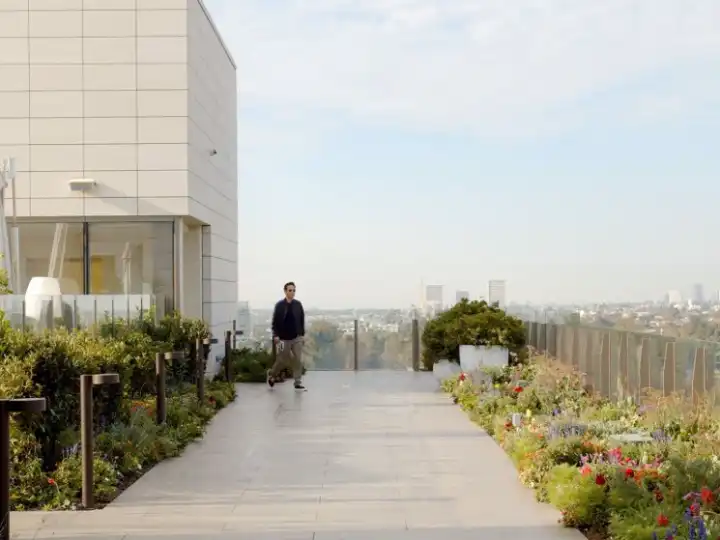
A different view with David Alhadeff
DesignBeverly HillsFebruary 2, 20213 MIN 32 SECA different view with David AlhadeffPerched above the buzz of Beverly Hills sits Casa Perfect, a gallery of contemporary design set in a spectacular modernist home. Its founder David Alhadeff shows us the wealth of remarkable art and architecture that is to be found in the varied neighbourhoods of this sunny city. Monocle Films has partnered with Beverly Hills Conference & Visitors Bureau to reveal hidden gems through the eyes of local creatives.Editor Giada GhiringhelliSubscribeEmailiTunesYouTube
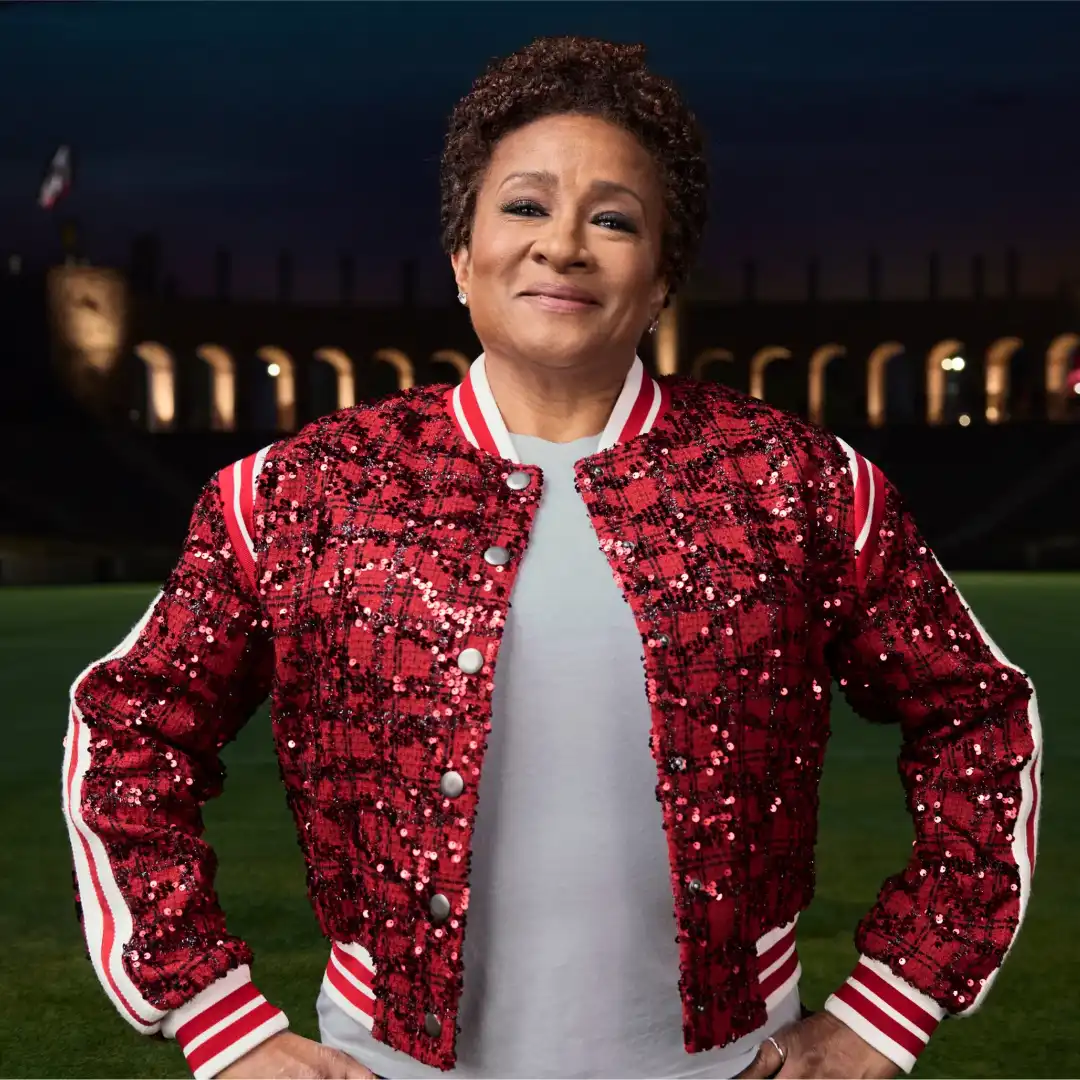
This Super Bowl Ad Raised a Big Point About Women and Breast Cancer Screening
HealthThis Super Bowl Ad Raised a Big Point About Women and Breast Cancer ScreeningPreventive care is so, so crucial.By Korin MillerFebruary 10, 2025Photo courtesy of Novartis, photography by Riis Massey-Williams.Save StorySave this storySave StorySave this storyThe Super Bowl is always packed with attention-grabbing ads, but Novartis’s cleavage-packed commercial created particularly major buzz after it aired on February 9.Called “Your Attention, Please,” the grabby ad runs through a series of breast-focused scenes, including close-ups of cheerleaders in low-cut uniforms, a breastfeeding mom, women trying on bras, and more. After that montage, it ends on a different note: with comedian Wanda Sykes, who had a double mastectomy after being diagnosed with breast cancer in 2011, urging women to get screened for the disease.“Let’s start paying attention to breasts when it matters the most,” Sykes says in the ad. “Early detection for breast cancer is a game changer, and why I’m able to be here today.” From there, she encouraged “more women to get screened than ever before,” and directed viewers to visit the website YourAttentionPlease.com to learn more—as well as find locations to get screened.The ad definitely got people talking—and, in the case of cancer screening, that’s a good thing. In fact, when SELF reached out to doctors who treat this type of cancer, they applauded the ad’s underlying messaging. Here’s what they want you to know.SELF DailyGet healthier and happier with expert advice delivered to your inbox daily.SIGN UPBy signing up, you agree to our user agreement (including class action waiver and arbitration provisions), and acknowledge our privacy policy.The ad uses America’s obsession with boobs to hammer home the importance of preventive care.The Super Bowl ad is especially important because so many people tune in to watch the game—and thus, the messaging in between the plays, G. Thomas Ruiz, MD, lead ob/gyn at MemorialCare Orange Coast Medical Center in Fountain Valley, California, tells SELF. “It’s the biggest event of the year,” he says. “You put a commercial out there and hope it grabs a woman’s attention to say, ‘Oh yeah, I’ve never had a mammogram’ or ‘I’m overdue for a mammogram.’”And, as research shows, lots of folksaremissing their screening. Data from the CDC show that just 66% of women aged 40 and older are up-to-date on their mammograms. That means one in three women aren’t being screened as recommended for a potentially life-threatening condition that affects a huge number of Americans each year—specifically, breast cancer is the second most common cancer in women in the US (skin cancer is the first), according to the American Cancer Society (ACS). To distill it even further: There’s a one in eight chance that the average American woman will develop breast cancer in her lifetime.That makes this reminder to get screened crucial, Janie Grumley, MD, breast surgical oncologist and director of the Margie Petersen Breast Center at Providence Saint John’s Center in Santa Monica, California, tells SELF. “It encourages people to stop and think, Breast cancer could happen to me,” she says. “It’s always important to have a reminder.”The ad was also smart in that it grabbed the attention of menandwomen, which could foster dialogue between couples, encouraging men to ask their partners when their last breast cancer screening was, Dr. Ruiz says.“I love this ad,” Dana Ataya, MD, a breast imaging radiologist at Moffitt Cancer Center, tells SELF. “It does such a compelling and engaging job reminding us of the importance of breast cancer screening in saving lives.”There’s a reason why the phrase “early screening saves lives” is so popular.Current ACS guidelines recommend that women with average risk of developing breast cancer have the option to begin annual screenings at age 40; those 45 to 54 should get a mammogram annually, and women 55 and older can switch to mammograms every other year, if they wish. Screenings should continue as long as a woman is healthy and expect to live at least 10 more years, per the guidelines. (The US Preventive Services Task Force currently recommends every-other-year screening for women 40 to 74).But if you’re considered high risk for breast cancer, you may need to be screened starting at age 30, alternating between a mammogram and MRI every year. That includes having a lifetime risk of breast cancer of about 20% to 25% or higher based on assessment tools (which mostly consider family cancer history), having a known BRCA 1 or BRCA 2 gene mutation, a first-degree relative with a BRCA1 or BRCA2 gene mutation, a history of radiation therapy to the chest before age 30, or having Li-Fraumeni syndrome, Cowden syndrome, or Bannayan-Riley-Ruvalcaba syndrome, or a first-degree relative with one of those conditions, per the ACS. (Keep in mind that some people with dense breasts may also need additional screenings, like breast ultrasound or a breast MRI.)Most PopularLife‘Wicked’ Forced Me to Have a Conversation I Hoped My Daughters Could AvoidBy Jessica ShybaHealthThe One Thing That Reliably Kills Norovirus and How to Keep it From Spreading in Your HomeBy Erica SloanRelationships5 Ways to Feel Less Lonely During the HolidaysBy Hannah SmothersBreast cancer mortality rates have dropped in the last 50 years, and many organizations, including the American College of Obstetricians and Gynecologists (ACOG) and ACS, chalk that up in part to increased screenings.“Screening is crucial,” Dr. Ruiz says. “You do these early screens and you nip things in the bud before they’re life-threatening.” In fact, according to the CDC, when cancer is found in a localized stage—meaning it hasn’t spread outside of the breast—the five-year relative survival rate is nearly 99%. Part of the reason is because early detection also usually gives women more choices around treatment, Dr. Grumley says. “The earlier you find it, the more options you have, and the better your outcomes,” she says. For instance, it’s typically easier to treat breast cancer that’s only in the breast tissue versus cancer that’s spread (a.k.a. metastasized) from the breast to the lymph nodes or other organs.Still, breast cancer rates are increasing in women, especially in young women, making it more important now than ever to stay vigilant about your breast health.You can get screened, even if you don’t have an established relationship with a doctor.While your general practitioner or ob/gyn can order a mammogram for you, Dr. Ataya says you don’t need to go that route if you don’t have an established relationship with a healthcare provider. “Women who are 40 or older and don’t have symptoms can schedule a mammogram without a doctor’s referral,” she says. (Like we mentioned, if you have a higher risk of breast cancer due to family history or other reasons, you may be eligible for earlier screenings—and you may want to connect with a healthcare provider or breast center for personal guidance for your unique situation, Dr. Grumley says.)This is the case at multiple breast centers across the country, Dr. Ataya says. Planned Parenthood also offers breast cancer screening and mammograms to women, Dr. Ruiz says. And the FDA has an online search tool to help you find a screening site too. “Waiting on a referral should never be a barrier to getting screened,” Dr. Ataya says.Most PopularLife‘Wicked’ Forced Me to Have a Conversation I Hoped My Daughters Could AvoidBy Jessica ShybaHealthThe One Thing That Reliably Kills Norovirus and How to Keep it From Spreading in Your HomeBy Erica SloanRelationships5 Ways to Feel Less Lonely During the HolidaysBy Hannah SmothersOne thing to keep in mind: It’s not uncommon to be called back for additional testing after a mammogram. In fact, this happens in about 10% of cases, per the National Cancer Institute (NCI). So don’t let that worry dissuade you from getting screened in the first place. If you do get that message, Dr. Grumley says it’s important not to panic. “Getting called back does not mean you have cancer,” she says. “It just means we need to have a better look.” Only 7% led to a cancer diagnosis, according to the NCI.If you have a doctor and aren’t sure about whether you need a mammogram, reach out to their office and ask. They should be able to guide you from there. The idea of breast cancer screening is a little intimidating, and it’s easy to push it off. But not getting screened doesn’t mean you’re cancer-free—it just means you don’t know what’s happening in your body.Related:There’s a ‘Real, Documented Rise’ in Cancer in Young People. Should You Be Worried?6 Early Symptoms of Breast Cancer That Are Too Easy to MissThese Are the Most Common Colon Cancer Symptoms in Young PeopleGet more of SELF's great service journalism delivered right to your inbox.
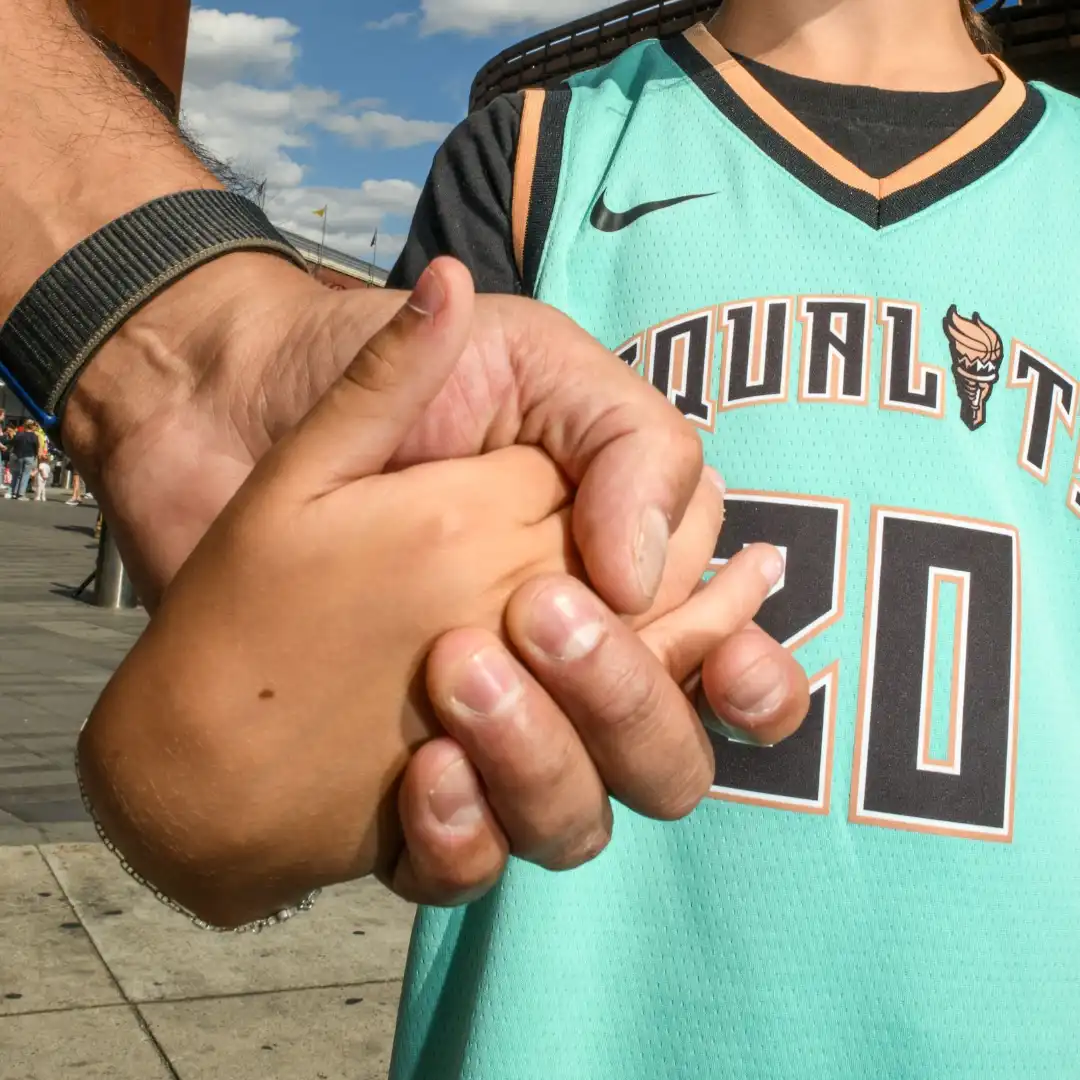
A Day Out With the Dads and Daughters Who Love Women’s Basketball
SportsA Day Out With the Dads and Daughters Who Love Women’s BasketballWe hit up a recent WNBA game to chat with the sport’s next wave of (very wholesome) superfans.By Caroline TienPhotography by Dolly FaibyshevSeptember 18, 2024Dolly FaibyshevSave StorySave this storySave StorySave this storyEven if they hadn’t been standing in line waiting to flash their QR codes, the fans would have been easy to pick out. As they emerged from side streets and subway stations and made their way toward Brooklyn’s Barclays Center on September 8 to watch the New York Liberty take on the Las Vegas Aces, many wore oversized seafoam green jerseys that instantly identified them (though I did spot a few rebels donning gray Aces merch). Some had accessorized to match: basketball earrings, purses, and face paint; foam fingers and Statue of Liberty headpieces. Several girls even wore homemade bracelets or necklaces spelling out the names of their favorite players à la Swifties attending the Eras Tour.When the doors opened an hour before the 4 p.m. start, a steady trickle of individuals, couples, and families was already creeping toward the arena’s entrance. As tip-off neared, that trickle turned into a torrent; at one point, two parallel sets of lines stretched to the end of the block. Buoyant pop rhythms blasting from nearby speakers contributed to the festive Game Day atmosphere. (“Espresso,” anyone?)The size and diversity of the crowd was a testament to the WNBA’s broad appeal—and newfound visibility. With buzzy new stars like Caitlin Clark and Angel Reese making waves on the court—along with legendary vets like Diana Taurasi, A’ja Wilson, and Breanna Stewart continuing to break records and push the game forward—the WNBA is enjoying a meteoric and much-deserved rise and loads of mainstream appreciation. Just look at the stats: As of May 2024, some 400,000 people had already attended WNBA games, marking a 26-year high in opening-month attendance, according to a June news release from the league; and more than half of all 2024 games sold out, a whopping 156% increase from the 2023 season. As the WNBA announced on September 9, the Liberty-Aces game ended up joining those ranks, with an audience of 15,393.Father-daughter duos made up a not-insignificant portion of the crowd. Some dads told me they wanted an activity to do with their girls, while others say they are simply passionate about basketball in any form. Some dads felt that women’s sports had been historically overlooked and wanted to do their part to change that. “These games are a party for two hours,” Jeffrey, 44, told me, standing near an ice cream truck with his six-year-old daughter, Perry. “It’s a love fest, I think, for a young girl who loves sports, to see other women that are amazing at what they do and deserve our respect and appreciation.”“I wanted to come because I wanted to spend time with my dad,” one young girl told me.(Plenty of young boys were in the crowd too. One dad—Ryan, 37—said he likes bringing his almost-two-year-old son, Bedford, to Liberty games to show him at an early age that basketball isn’t just for guys: “Sports are great for everybody, and it’s not just a men’s thing—he’s got a little brother at home too, but the future is female.”)When I asked folks who they were most excited to see compete, nearly every father and daughter had the same answer: “Sabrina,” as in Liberty guard Sabrina Ionescu, a league-wide standout who helped Team USA snag its eighth-straight gold medal in women’s basketball at the Paris Games in August. “I like Sabrina for how she shoots threes, and I like how Breanna is really, like, tall and she gets a lot of rebounds and stuff. And she’s good at shooting threes too,” Emmy, 10, said.Here’s a look at the scene outside Barclays Center before the game.Interviews have been lightly edited for length and clarity.Kalyn, 11, and Deryl, 61When did you guys start getting into the WNBA?Deryl:We really started getting into it last year. We were at four games last year. We always come to see the Aces. A’ja’s my favorite player, so I got to come check A’ja out.You’re a big Aces fan?Deryl:Oh, no, I'm a big Liberty fan, I’m not here to really root for A’ja. I’m an A’ja fan as a player, but I’m a Liberty fan as a team.SELF Healthy EatingGet nutrition tips, delicious recipes, and inspo for your grocery list delivered to your inbox just in time for your weekly meal prep.SIGN UPBy signing up, you agree to our user agreement (including class action waiver and arbitration provisions), and acknowledge our privacy policy.And Kalyn, what do you like about the WNBA?Kalyn:I like basketball and I just want to watch it so I can see other girls play.Okay, I see. Do you play basketball at school as well?Kalyn:Yes. Well, I don’t playyet. I’m going to play this year.Deryl:She’s starting seventh grade, so she’s on the team this coming year.And are there any other players you’re excited to see play today?Deryl:Definitely. Breanna Stewart is the best player in the league, and if Jonquel Jones does what she’s supposed to do, the Liberty’s going to get their title.Daria, 24, and Dave, 55How was the commute in? The New York City traffic is no joke.Dave:No joke. We jumped on a train from Ronkonkoma, came in. We’re very excited about today’s game.What do you two like about the WNBA, and how long have you been fans?Daria:We’re new fans. Ever since this past year. We watched UConn and Iowa, which was huge. Ever since then, once that new rookie class came into the W, it’s just been about watching all their games.Dave:What I found really amazing today, being here, is the effect the WNBA is having on the young girls in the world today. It’s amazing to see. And I don’t know if it’s this year alone that really started it—I mean, I know it’s been around for over 25 years—but this year it’s been something else, and it’s really creating a mark on the young girls today. It’s awesome. It really is.Daria:We just went out for lunch and it seems like the whole restaurant was wearing stuff for the Liberty. It’s incredible. You see it happen for the NBA or even the MLB, and it’s just so cool to see everyone supporting the Liberty. Little girls with their posters. It’s just an incredible environment to be around.Bennie, 18 months, and Sam, 36How’d you become a WNBA fan?Sam:Living here in New York and having one of the best WNBA teams.Yeah, I saw the Liberty play a couple of months ago and they were tremendous.Sam:We also lived in Minnesota before this, before Bennie was born. The Minnesota Lynx were in the WNBA championship, like, 10 years ago, and I got to go to the game for, like, 30 bucks. So a mix of having a great team and then just always being able to go and afford it.Do you and Bennie come to see the WNBA games pretty often then?Sam:Yeah, absolutely. I took her to her first game when she was, like, three months old. This is game number two for her.Makayla, 5, and TJ, 43TJ:This is my first game. I’m a basketball fan, coach basketball and everything else, so I’ve been watching the WNBA since they started.Oh wow. Like father, like daughter?TJ:[laughing]Hopefully. We’ll see.Vera, 5, and Frank, 47Frank:This our fourth game of the season. One of the players, her daughter goes to Vera’s school—Breanna Stewart. So we got into it through that. She likes watching. She likes the popcorn too.Ella, 10, and Adam, 44How long have you been WNBA fans?Ella:Like three years now.How did you get into it in the first place?Ella:I just play basketball. My sister does too, so we just watch the pros play.Are there any players you’re especially excited to see this time around?Ella:A’ja Wilson, Sabrina Ionescu, Breanna Stewart, and Kelsey Plum.And, Adam, as a dad, what do you like about the WNBA and going to the games?Adam:I just love that it gives me something to do to hang out with my daughters, spend time with them. There’s some good role models in the league to have my girls look up to.Jordyn, 6 going on 7, and Brendan, 37Brendan:Longtime sports fans and proponents of women’s sports in general. Love the movement and the momentum behind the WNBA. This is actually our first WNBA game, so we’re very, very excited.Ava, 18, and Bruno, 52So I see you’re wearing an Aces shirt, Ava. Are you two Aces fans?Ava:I am, yeah. I’ve just recently gotten more into the WNBA, but this is my second game.Nice! Why the Aces? I feel like I’ve talked to a lot of Liberty fans so far, so I’m curious.Ava:I love the players on the team and I guess I just watch a lot of their games. But I’m not that experienced yet. I feel like I’m flawed sometimes, like, “Oh my God, I don’t know that much.”You’re good! I feel like so many people have gotten into it really recently too. AndBruno, what do you, as a dad, like about the WNBA?Bruno:I’m just supporting her and her passion.Ava:[interjecting] But he liked it when we went to the Seattle Storm game on Thursday!Bruno:Yeah. The last game on Thursday too—it was a lot of fun.Corrine, 6. Not pictured: Mille, 10, and Evan, 45What brings you out here?Evan:We’re big basketball fans. We wanted to see the game and we realized the season is almost over, so we made it out.Corrine, what are you looking forward to about the game?Corinne:Who wins.Very fair answer.Evan:I’m looking forward to seeing the elephant mascot.Perry, 6, and Jeffrey, 44Are you big fans of the WNBA?Perry:Yeah. We’re season ticket holders.So you got to get your money’s worth too!Jeffrey:Yup. We come to a lot of games and she gets to bring friends to a lot of games.As a dad, what do you like about the WNBA?Jeffrey:I think that it promotes incredible positivity. And she loves it, most importantly.Is Perry a big basketball player?Jeffrey:She is! She takes lessons, she plays in all-girls leagues…The next Caitlin Clark?Jeffrey:You know what, she doesn’t need to be. She should just enjoy it. As long as she enjoys it, that’s the best part.Related:Marion Jones: ‘Your Failure Is Not Forever’It Shouldn’t Be This Expensive to Be a Paralympic AthleteDominique Moceanu, Shannon Miller, and Dominique Dawes Take a Victory LapGet more of SELF’s great sports coverage delivered right to your inbox—for free.

Barcelona: The Monocle Travel Guide
Monocle FilmsBarcelonaApril 17, 20182 MIN 47 SECBarcelona: The Monocle Travel GuideThe Catalan capital boasts a singular character. Venturing beyond the tourist-beaten track, join us on a cinematic tour of fairytale architecture and independent retailers, as well as the innovative restaurants bringing a modern touch to Catalan cuisine.Available now at The Monocle Shop.Narrator Daniel BachSubscribeEmailiTunesYouTube
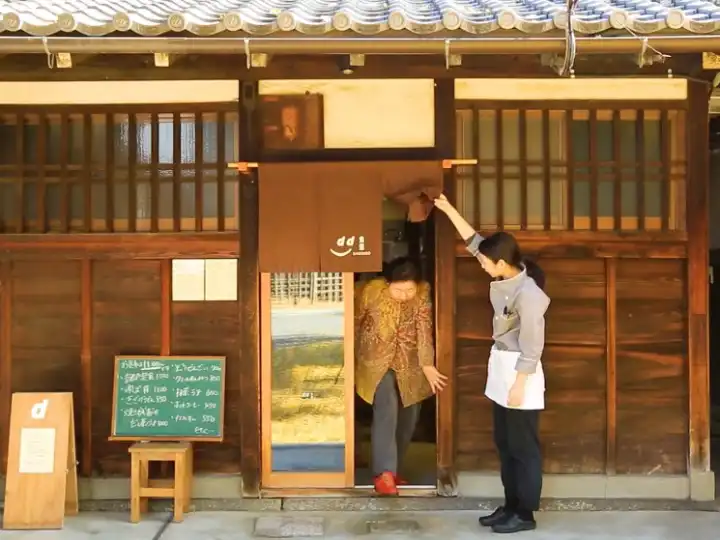
Kyoto: The Monocle Travel Guide
Monocle FilmsKyoto, JapanJanuary 16, 20182 MIN 58 SECKyoto: The Monocle Travel GuideJapan’s ancient capital may be full of hushed streets steeped in tradition but don’t be fooled: there’s plenty of forward-thinking retailers, innovative chefs and modernist architecture too. Our Kyoto guide will help you navigate your way around, as well as setting you off on your own path.Available now at The Monocle Shop.Narrator Fiona WilsonSubscribeEmailiTunesYouTube
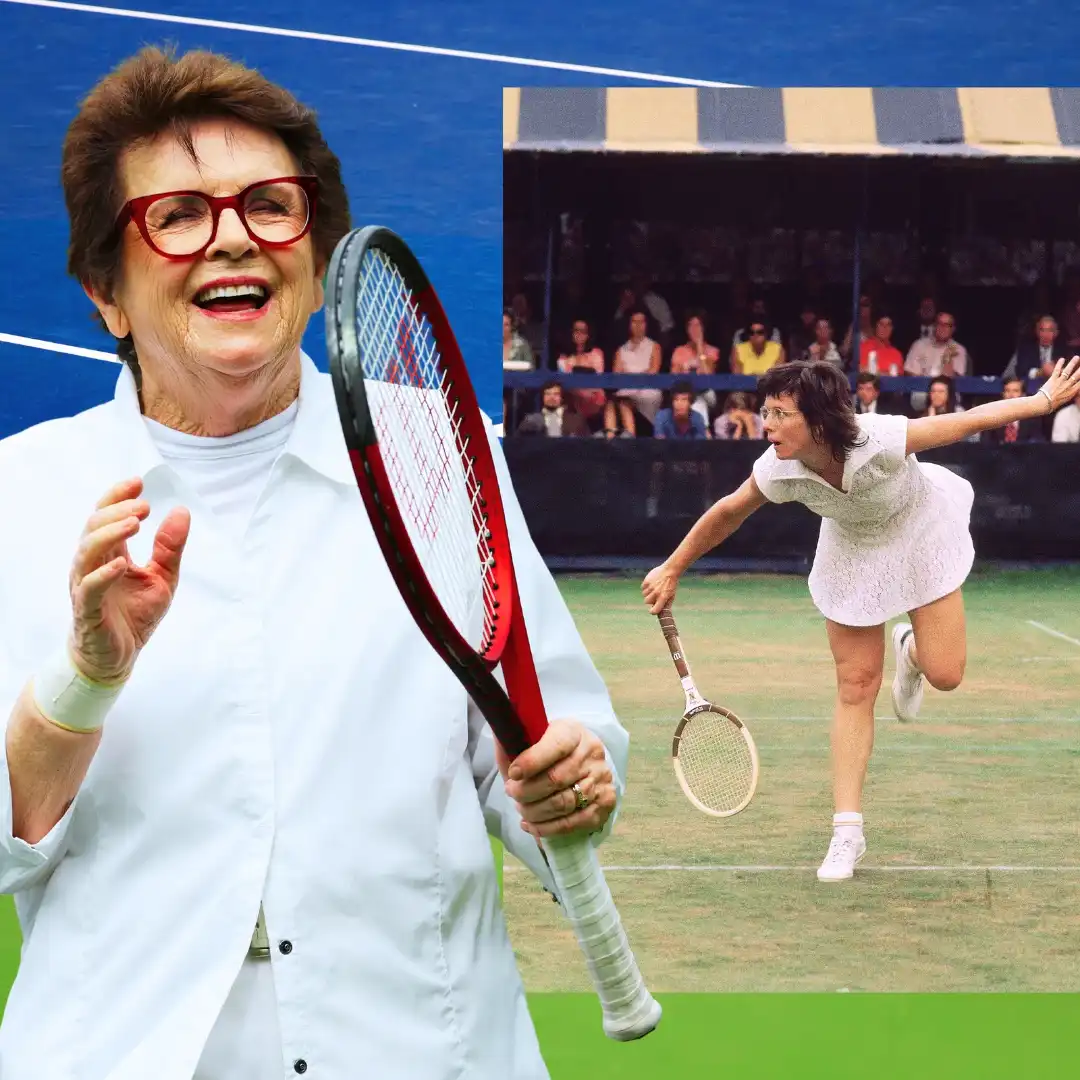
Billie Jean King Is Back on the Court—And Still Fighting for Women in Sports
FitnessBillie Jean King Is Back on the Court—And Still Fighting for Women in SportsThe tennis icon shares how she warms up, keeps her body strong, and continues to inspire girls to give movement a chance.By Caroline TienFebruary 4, 2025Rob Newell - CameraSport/Tony Triolo/Getty ImagesSave StorySave this storySave StorySave this storyWhile her days of dominating at the Slams may be behind her, tennis—and fitness in general—still remains a major facet of Billie Jean King’s life. Even today, her passion is obvious. “There’s nothing like it,” the tennis icon tells SELF from her Upper West Side apartment in a January 30 Zoom call. “When the ball hits the strings, it’s magical.”In fact, the 81-year-old spent the first few minutes of the Zoom call talking tennis—in particular, the latest big news in the sport: Madison Keys’s victory at the Australian Open. “I got to text her, tell her, ‘You finally did it!’” King says. “I’ve known her forever, and I’ve watched her progress through the years and seen how she always wanted to win a major…. I’m so happy for her, because she’s such a great person—a very kind, very good person.”For someone clearly still so passionate about tennis, however, it may come as a surprise that King went through a period in which she didn’t play at all. It was only a few years ago—around the height of the pandemic—that her wife, retired South African pro Ilana Kloss, convinced her to take it up again. Sidelined by knee surgeries (she wears braces to play now), King “hadn’t hit a ball for 20 years,” she says. “[Ilana] got me back” into it. Today, the two—who started out as doubles partners decades ago and married in 2018—play on a public-private court at a John McEnroe Tennis Academy location, hitting back and forth on a half-court. Topspin, direction, speed, angle, altitude: “Every ball that comes to me is never the same, ever, so it’s a new thing every time,” King says. “It’s like a new present, a new gift.”While King’s eyesight is still keen—“With glasses, I see 20/10 or 20/15 still”—she’s incorporated strength, agility, and balance work into her off-court fitness routine so she can continue to play strong. Before a rally with Kloss, she often stretches and warms up her muscles with resistance bands. “More limber, less chance to get injured,” she explains. For instance, as she showed in an Instagram reel last October, she’ll use the bands for internal and external shoulder rotation moves (important for full and safe range of motion) as well as biceps and triceps exercises. Then, to prep her lower body, she’ll perform 20 bodyweight squats before starting to hit.What’s more, King is big on lifting weights to maintain and build strength, since muscle mass wanes with age. Even everyday tasks like “picking up packages, picking up or opening a bottle, that gets harder as you get older,” she says. While she appreciates the benefits of lifting, however, it can’t compare to tennis for her. Restarting “absolutely has changed my life,” she says. “I feel better. My brain stays more active.” Since King’s still working full-time—she serves as an Adidas global ambassador, a Women’s Sports Foundation board member, a Professional Women’s Hockey League advisory board member, and a member of the Los Angeles Dodgers and Angel City FC ownership group, among other commitments—she “need[s] that to keep going.”Still, King has never beenjusta tennis player, though she has enough personal accomplishments on the court to make her one of the sport’s all-time greats: With 39 major titles to her name (including one Australian Open, one French Open, six Wimbledon, and four US Open singles titles), she has the third most wins of any female tennis player in history. But King’s impact extends beyond her own life and career. Named one ofLifemagazine’s 100 Most Important Americans of the 20th Century, she had a heavy hand in transforming women’s tennis into the sport we know and love today. Not only did she help found the Women’s Tennis Association, she also successfully campaigned for equal prize money for men and women and defeated Bobby Riggs in the infamous Battle of the Sexes in 1973. In her eyes, though, more progress needs to be made. “Girls are behind. We haven’t had as much attention given to us, in this area particularly,” she says. “And I know it because I’ve lived it forever.”Most PopularLife‘Wicked’ Forced Me to Have a Conversation I Hoped My Daughters Could AvoidBy Jessica ShybaHealthThe One Thing That Reliably Kills Norovirus and How to Keep it From Spreading in Your HomeBy Erica SloanRelationships5 Ways to Feel Less Lonely During the HolidaysBy Hannah SmothersThat continuing crusade is one reason why King has partnered with personal care brand Dove to raise awareness of the body confidence issues that affect a significant percentage of girls in sports. Based on research conducted by Dove and Nike, nearly half of teen girls who quit sports do so because they were told their body isn’t right for it. In a 2022 review published in theInternational Journal of Environmental Research and Public Health,researchers wrote that most female athletes reported facing coach pressure to modify their body shape to better align with the purported ideal for their sport. “I’m so glad I’ve lived long enough to see changes, but we still have so much work to do,” King says. “We”—women and girls—“really are socialized not to trust our bodies.” And, she adds, “body image, body talk, how you think and feel about yourself, is so important in life, not just in sports.”While King’s Dove partnership meshes well with her history of advocacy for women, it’s also informed by her personal experience. She doesn’t specifically say if she faced any criticism about how her body looked as a young, talented, ambitious tennis player, but she came of age in the 1950s and ’60s—an era now widely viewed as a heyday of sexism. “Every girl my age in those days got the message, ‘Why are you trying to do this?’,” she says. “It was considered very masculine to play a sport.” (Not that those gender normsstoppedKing: As frowned upon as it might have been for her, both she and her brother Randy—who later pitched for the MLB—were highly competitive from an early age. “If we lost, I wouldn’t have wanted to be my parents,” she says. “When my brother and I lost, oh my God, we wereterrible.We hate losing.”)Most PopularLife‘Wicked’ Forced Me to Have a Conversation I Hoped My Daughters Could AvoidBy Jessica ShybaHealthThe One Thing That Reliably Kills Norovirus and How to Keep it From Spreading in Your HomeBy Erica SloanRelationships5 Ways to Feel Less Lonely During the HolidaysBy Hannah SmothersAnd King, who started out playing basketball and softball, encountered plenty of dissenting voices along the way once she switched to tennis too—voices she had to figure out how to ignore. In the run-up to the Battle of the Sexes, for example, Riggs famously made comments mocking women and women’s tennis. It “stinks,” he said, according to the Smithsonian American Women’s History Museum. You “can see some pretty legs, but it’s night and day compared to the men’s game.” (And, of course, we all know how the Battle of the Sexes match turned out.)SELF Healthy EatingGet nutrition tips, delicious recipes, and inspo for your grocery list delivered to your inbox just in time for your weekly meal prep.SIGN UPBy signing up, you agree to our user agreement (including class action waiver and arbitration provisions), and acknowledge our privacy policy.Whether you’re 8 or 80, a figure skater or a tennis player, confidence is a big factor in success—a lesson King learned long ago. “It’s really important to have strong self-talk, believe in yourself, even if others do not,” King says. Her own life is an excellent case study. “A lot of people never thought I’d be number one in the world, and I didn’t care what they said—I knew I had to,” she says. “Well, I did care, but I didn’tlistento them. I didn’t take it to heart. My self-talk was strong enough to overcome that.” And, she adds, that’s what she wants girls in sports experiencing low body confidence to learn how to do: “To believe in their bodies, to trust their bodies and say they’re great the way they are.”Related:How Tennis Skirts Have Changed Over 100+ Years of PlayThe Best Tennis Gear for Beginners, According to ProsHere’s What It’s Like To Try Out for the US Open Ball CrewGet more of SELF’s great fitness coverage delivered right to your inbox.
advertisement