WEBGAMEARENA
  • Home
  • Food
  • Travel
  • Sports
  • Search
  • Home
  • About Us
  • Food
  • Travel
  • Sports
  • Contact

Recent Posts

Kanda neighbourhood guide

Kanda neighbourhood guide

Yanaka neighbourhood guide

Yanaka neighbourhood guide

‘It's All About a Mindset’: Sprinter Gabby Thomas Shares Her Best Confidence Tips

‘It's All About a Mindset’: Sprinter Gabby Thomas Shares Her Best Confidence Tips

Search

advertisement
Kanda neighbourhood guide
Travel 2026-01-08 21:16:20

Kanda neighbourhood guide

Monocle FilmsTokyo, JapanFebruary 19, 20213 MIN 2 SECKanda neighbourhood guideThis historic corner of northeast Tokyo was once described as a place for “universities, bookshops and intellectuals”. Academic institutions are still there – along with the Holy Resurrection Cathedral – but Kanda is also home to electronics district Akihabara, a huge shrine and dozens of Japanese curry restaurants too.Editor Mototake MakishimaNarrator Chloe PotterSubscribeEmailiTunesYouTube

Yanaka neighbourhood guide
Travel 2026-01-04 04:49:30

Yanaka neighbourhood guide

Travel and restaurantsTokyo, JapanFebruary 16, 20213 MINYanaka neighbourhood guideYanaka moves at a different pace from much of Tokyo. As the city has changed around it, Yanaka has retained its old-fashioned atmosphere. Vacant wooden buildings have been brought back to life as new businesses such as cafés, noodle shops and galleries give them a fresh purpose.Editor Ignas KazlauskasNarrator Chloe PotterSubscribeEmailiTunesYouTube

‘It's All About a Mindset’: Sprinter Gabby Thomas Shares Her Best Confidence Tips
Sports 2026-01-12 16:09:30

‘It's All About a Mindset’: Sprinter Gabby Thomas Shares Her Best Confidence Tips

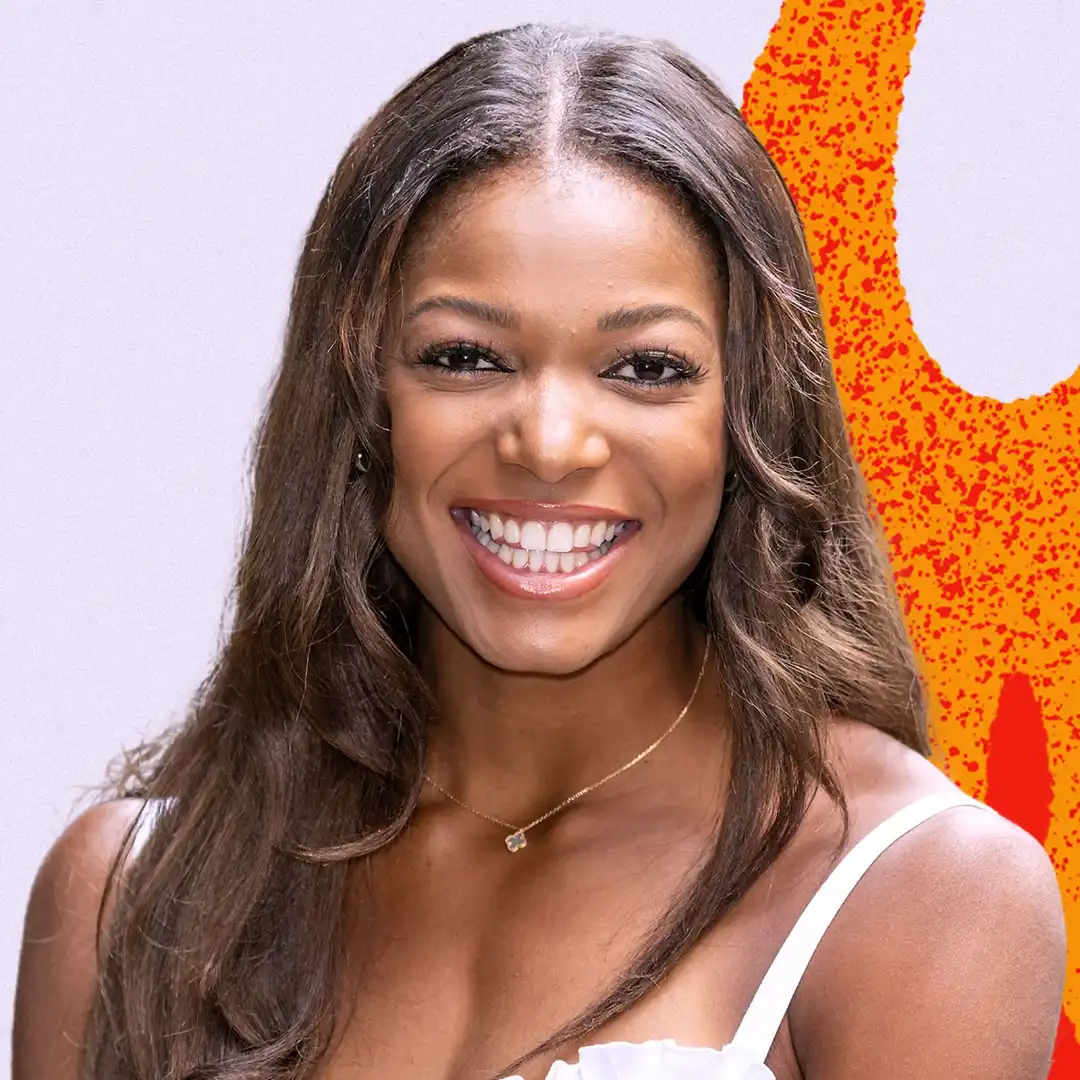
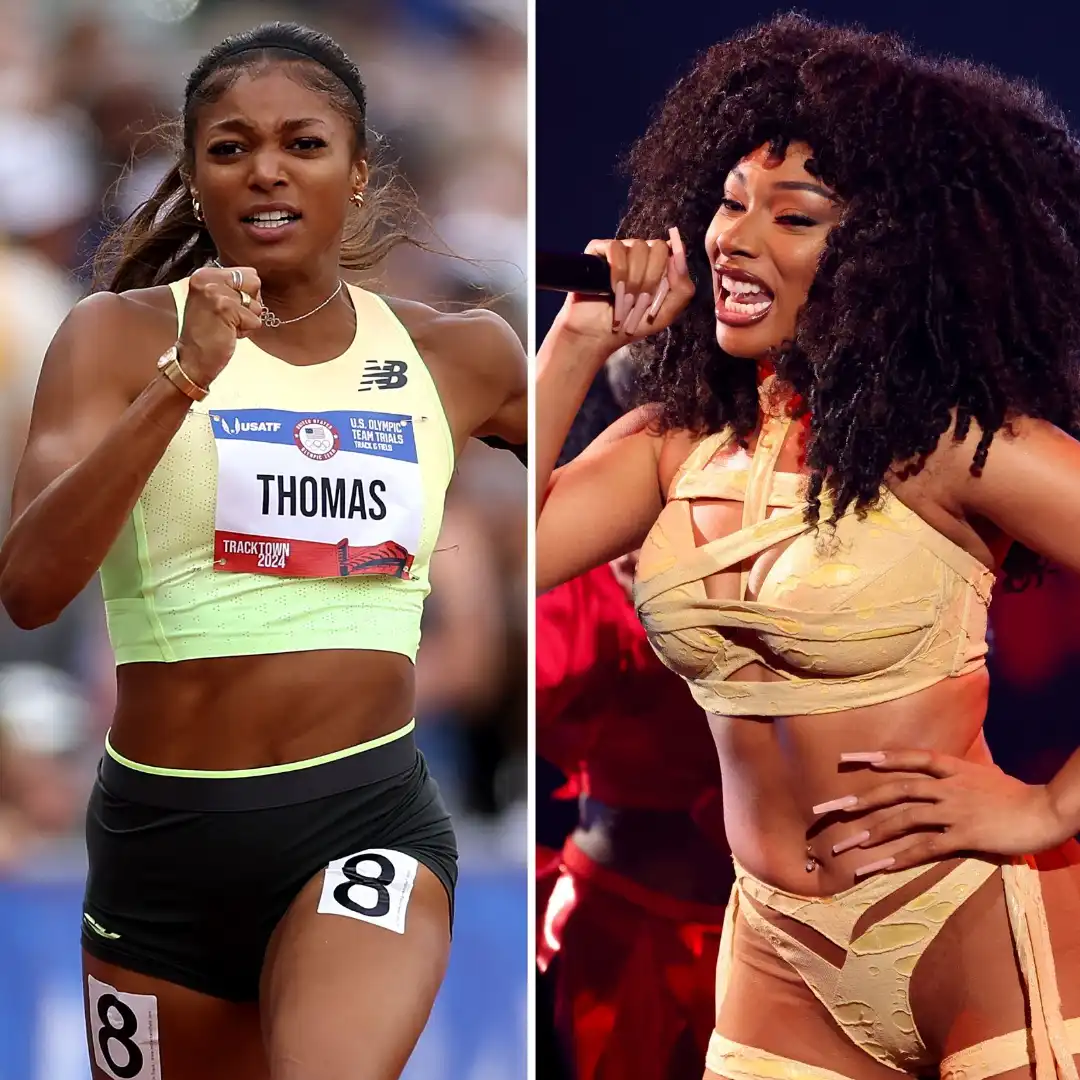
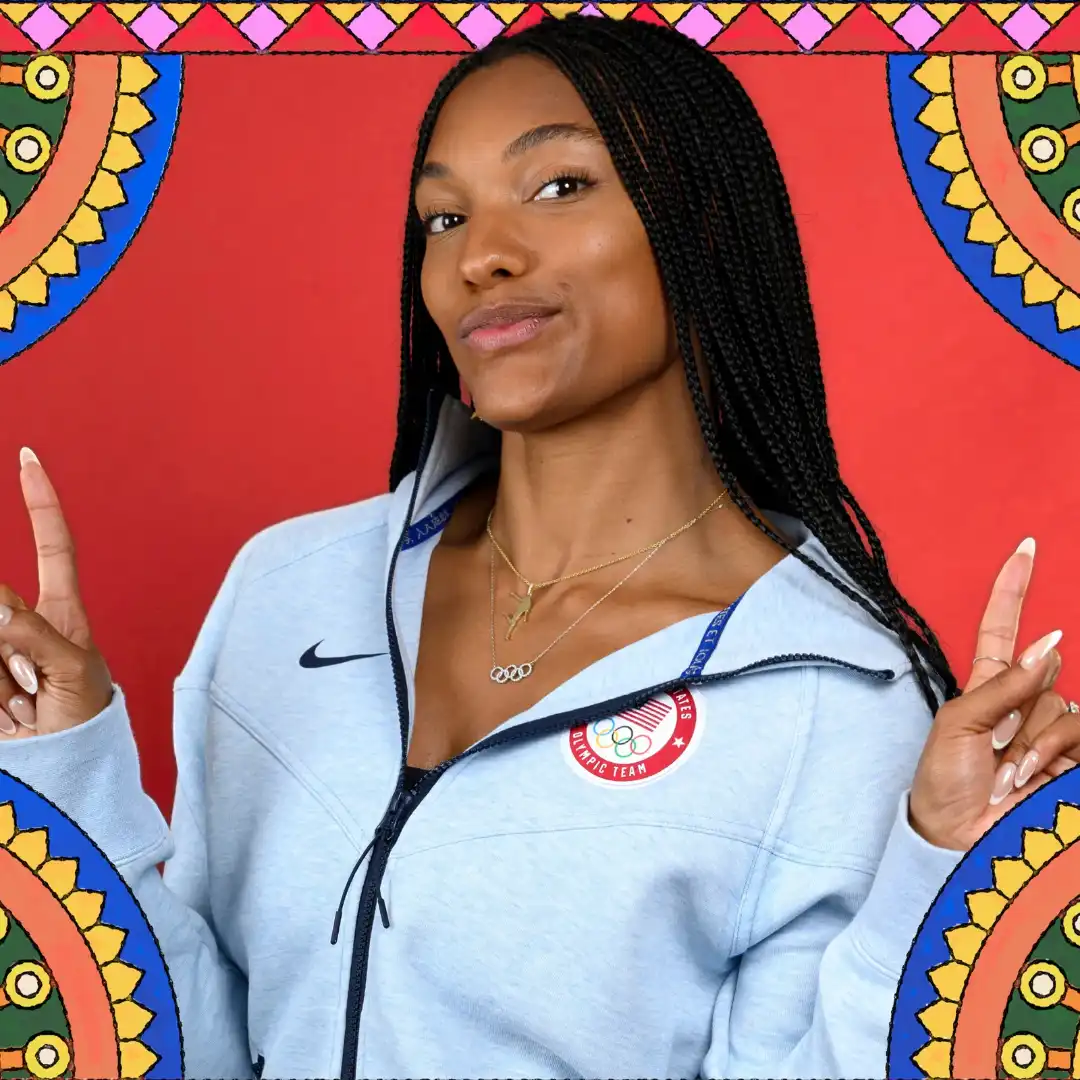
Sports‘It's All About a Mindset’: Sprinter Gabby Thomas Shares Her Best Confidence TipsThe Olympian talks playlists, skin care, and the other daily habits that make her feel her best.By Grace McCartySeptember 25, 2024Gilbert Carrasquillo/Getty ImagesSave StorySave this storySave StorySave this storyAll products featured on Self are independently selected by our editors. However, we may receive compensation from retailers and/or from purchases of products through these links.In SELF’s new Hot Stuff series, we’re asking celebrities, athletes, and other notable people to share the habits, rituals, and products that boost their confidence and help them feel sexy.If you’re a track and field enthusiast—or happened to check social media during the Paris Olympics—we don’t need to convince you: Gabby Thomasisthat girl.SELF Healthy EatingGet nutrition tips, delicious recipes, and inspo for your grocery list delivered to your inbox just in time for your weekly meal prep.SIGN UPBy signing up, you agree to our user agreement (including class action waiver and arbitration provisions), and acknowledge our privacy policy.In August, the 27-year-old sprinter turned a dazzling lead in the women’s 200-meter event into her first Olympic gold medal (and then took home two more, for good measure). Since then, she hasn’t slowed down: She made appearances at the US Open and New York Fashion Week, and she’s a New Balance sponsored athlete, working with the brand to develop new running apparel and footwear. On September 26, she’ll be competing at Athlos—a brand new elite women’s track event in New York City.Thomas is one of the fastest women in the world and one of the biggest stars in her sport, but running isn’t her only passion: She’s also a Harvard graduate with a master’s in public health, who serves as a program director at Volunteer Healthcare Clinic. As an athlete at the top of her gameandsomeone who spends her free time helping others, it’s unsurprising that Thomas has a certain glow. But for the details on how Thomas hypes herself up daily, we had to go straight to the source.“When it comes to feeling hot, it’s all about a mindset that I’ve cultivated through my training, style, and little rituals,” Thomas tells SELF. Below, read more about the routines, products, and back pocket tricks that help Gabby Thomas feel her best, in her own words.First, nothing makes me feel more confident than stepping onto the track knowing I’ve put in the work.Mental confidence is a huge part of my sport, and the energy that comes from knowing I’m at my strongest is what truly makes me feel fabulous. So every day, I’m building the habit of training consistently, working hard, and pushing my limits.In terms of products, I love a fresh, glowing skin care routine before I head to the track (or do anything).I’m big on hydration, so a moisturizer with SPF and a face mist always give me an extra boost of radiance. Right now I am obsessed with CeraVe Vitamin C Serum and Summer Fridays Shade Drops SPF 30 Mineral Milk Sunscreen.Cera Ve Skin Renewing Vitamin C Serum$30Ulta$29$21(28% off)AmazonSephoraSummer Fridays ShadeDrops Mineral Milk Sunscreen SPF 30$36Sephora$36AmazonMusic can be a game changer for me.If I’m in the shower, getting ready to go out, or need a pick-me-up before a race, I’ll blast a song like Megan Thee Stallion’s “Wanna Be” to get me in the zone. It’s all about the mindset for me—owning my space, feeling powerful, and giving main-character energy.Nothing beats a killer outfit.I keep a healthy balance in my wardrobe: I love a stylish athleisure moment (like a matching set with a cool New Balance collab sneaker) that shows my sporty and fun side or a stunning dress for a night out that shows my feminine side. Putting on something that makes me feel strong and beautiful is an instant confidence booster.New BalanceAthletics French Terry Jogger$85New BalanceNew BalanceFresh Foam X 1080v13$165Shop NowAt the end of the day, feeling hot comes from within—it’s about me embracing the moment that I’m in and expressing my authentic self.This interview has been edited and condensed for length and clarity.Related:7 Products that Make Paige DeSorbo Feel Hot8 Things to Know About Femita Ayanbeku, the Paralympian Who Qualified for Paris 6 Months After Giving BirthKatie Ledecky’s Top Recovery Tips Help Her Manage POTS, Fuel Her Body, and Get Her Mind Back in the Game

‘Appalling’: The Paralympic Women’s Cycling Course Is Just Half the Length of the Men’s
Sports 2025-12-25 00:07:37

‘Appalling’: The Paralympic Women’s Cycling Course Is Just Half the Length of the Men’s

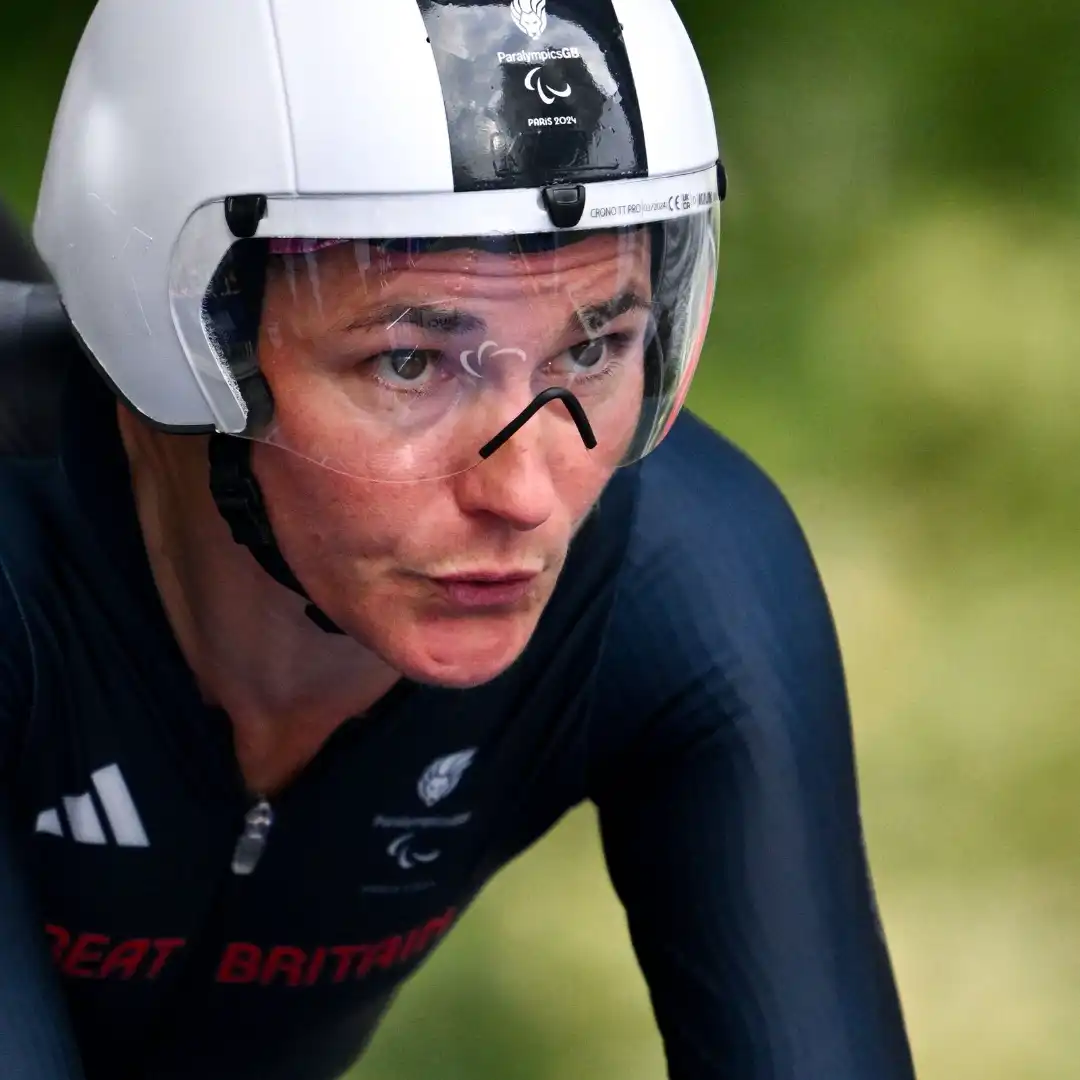
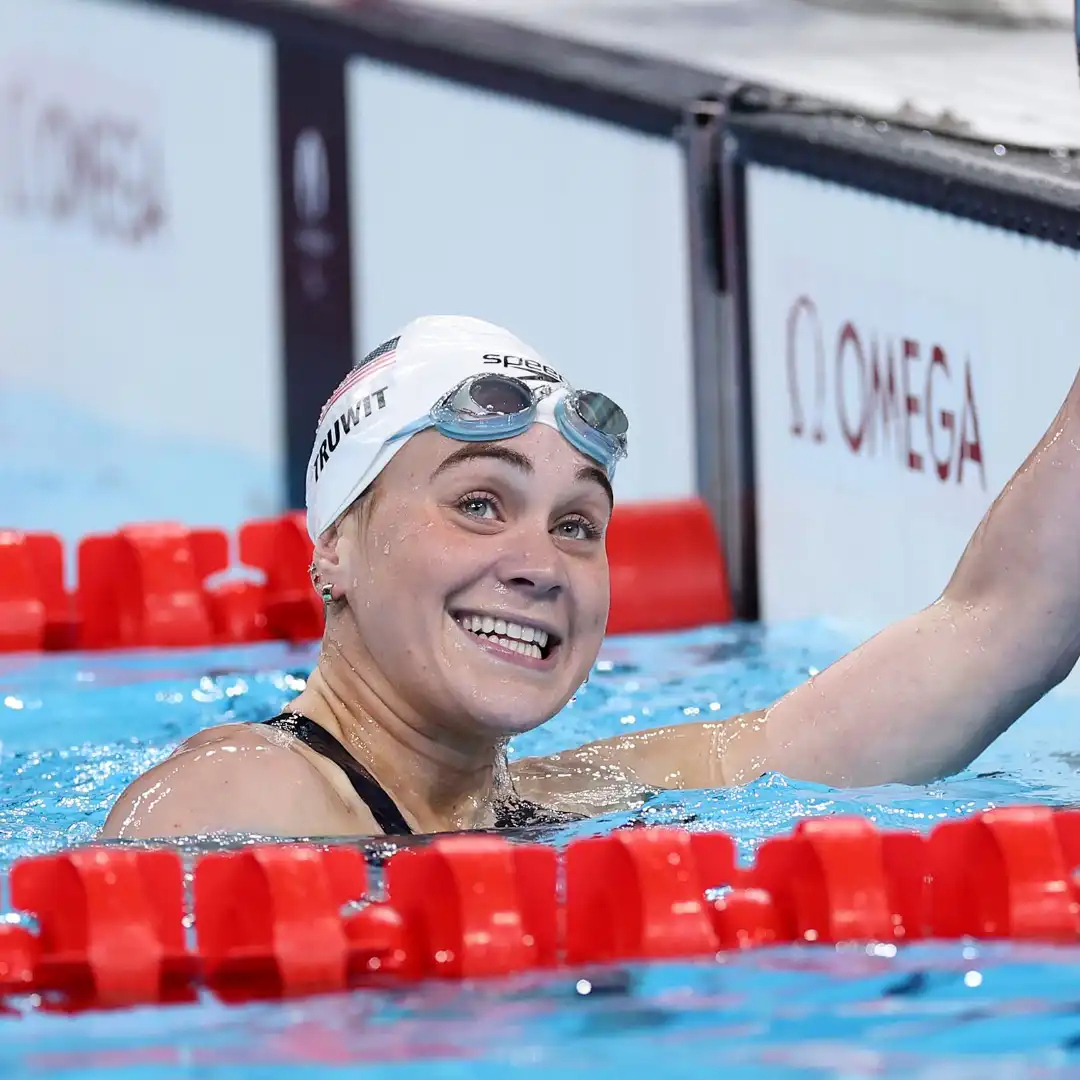
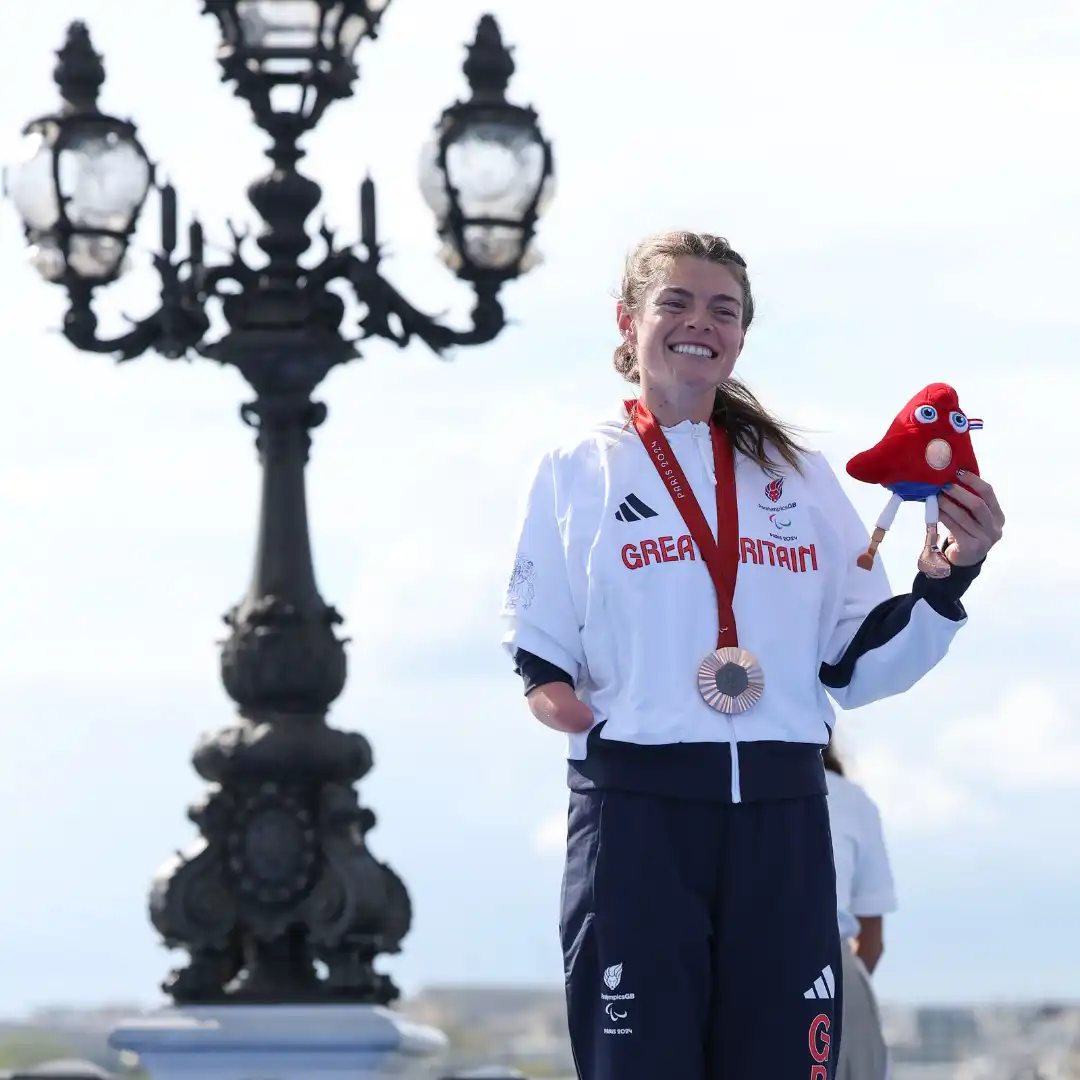
Sports‘Appalling’: The Paralympic Women’s Cycling Course Is Just Half the Length of the Men’sAfter athletes have fought so hard for gender parity, gold medalist Sarah Storey called the decision a “real disappointment.”By Jenny McCoy, C.P.T.September 4, 2024Ramsey Cardy/Getty ImagesSave StorySave this storySave StorySave this storyAll products featured on Self are independently selected by our editors. However, we may receive compensation from retailers and/or from purchases of products through these links.Though there’s been a bunch of recent, exciting progress made in narrowing the gender equity gap in sports, there’s still much more work to be done. And the Paralympic women’s cycling course at the 2024 Paris Games is one prime example of where parity continues to fall short—literally.The course for the women’s C5 road time trial measured just half the length of the men’s, as BBC Sports reported.Women’s gold medalist Sarah Storey, who finished first in the C5 time trial event on September 4 with a time of 20:22.15, said on Twitter she was “so proud to have won this race five times in a row.” But, per BBC Sports, she also expressed her disappointment over the abbreviated distance.“This is the shortest Paralympic time trial we’ve ever had and I think it’s a real shame because you don’t get to showcase para-sport in the way that you want to,” Storey, the most decorated Paralympic athlete in history, said per BBC after winning her 18th (!!) Paralympic gold medal. (Heidi Gaugain of France won silver in 20:26.84 and Australian Alana Forster nabbed bronze with 21:00.48; the C5 classification includes athletes who have cerebral palsy, amputees, and others who can ride a bike.)The women’s C5 course measured 14.1 kilometers, while the men’s measured 28.3 kilometers. As Storey, who races for Britain, explained to BBC Sports, women cyclists generally expect to raceat least22 kilometers for a championship event, which was the case in the most recent Paralympic Games prior to Paris.At the Tokyo 2020 Games, the C5 women cycled 24 kilometers (compared to the men’s C5 32-kilometer race). And at the 2016 Rio Games, that race measured 30 kilometers for the men and 20 kilometers for the women.The Number of Women Playing Wheelchair Rugby at the Paralympics Has Doubled Since TokyoThe mixed-gender (but male-dominated) sport still has a ways to go.Storey noted that, prior to the event, athletes had questioned Games organizers about the shortened distance, but didn’t receive an explanation, per theThe Guardian.According to the outlet, Paralympic race organizers decided to shorten the distance of some of the cycling time trials due to Wednesday’s “busy schedule” of 19 races, plus medal ceremonies.As BBC Sports reported, seven men’s road time trial races were contested over the two-lap distance, while only one for women—the B event for visually impaired racers—went that length.SELF Healthy EatingGet nutrition tips, delicious recipes, and inspo for your grocery list delivered to your inbox just in time for your weekly meal prep.SIGN UPBy signing up, you agree to our user agreement (including class action waiver and arbitration provisions), and acknowledge our privacy policy.“There’s plenty of time in the day for us to do two laps like the men,” Storey said, per BBC. “Having fought so hard for parity in women’s cycling, to not have it is a real disappointment.”As women’s sports advocacy group SheRaces pointed out in an Instagram comment on a post fromThe Telegraph,the shortened course had implications beyond the race itself: “This was unfair and undermined the incredible female competitors. Half the race length meant half the coverage on TV and denied them the exposure they deserve.”The choice to have the women cycle a short course comes on the heels of some positive gender parity news from the Paralympics: A record number of female athletes were projected to participate in the Paris Games, according to a press release issued on August 23. An estimated 1,983 women–45% of all athletes–were set to take on Paris, notably more than in Tokyo 2020 (1,846) and over double the women’s field at the Sydney 2000 Games (988).Even so, the shortened women’s cycling course emphasizes how full gender parity in sports is not yet a reality.“I hope they never do this to the women again, because it has been appalling,” Storey said.SELF is your go-to source for all things Paralympics. Follow our coverage of the Paris Games here.Related:Paralympic Archer Jodie Grinham Just Competed While 7 Months PregnantIt Shouldn’t Be This Expensive to Be a Paralympic AthleteZakia Khudadadi Just Became the First Athlete From the Refugee Paralympic Team to Win a MedalGet more of SELF’s great sports coverage delivered right to your inbox—for free.

Madrid: The Monocle Travel Guide
Travel 2026-01-14 01:18:20

Madrid: The Monocle Travel Guide

Monocle FilmsMadridApril 15, 20172 MIN 45 SECMadrid: The Monocle Travel GuideMadrid has thrown off the shackles of tradition: what was once a buttoned-down bastion of conservatism has become Spain’s unabashed centre of the avant-garde. Monocle films visits the city to discover a melting pot of talent, taste and tenacity. Published by Gestalten, The Monocle Travel Guide to Madrid is available now at The Monocle Shop.Narrator Liam AldousSubscribeEmailiTunesYouTube

Who Is Jessica Pegula, the 2025 US Open Semifinalist?
Sports 2025-12-27 03:12:28

Who Is Jessica Pegula, the 2025 US Open Semifinalist?

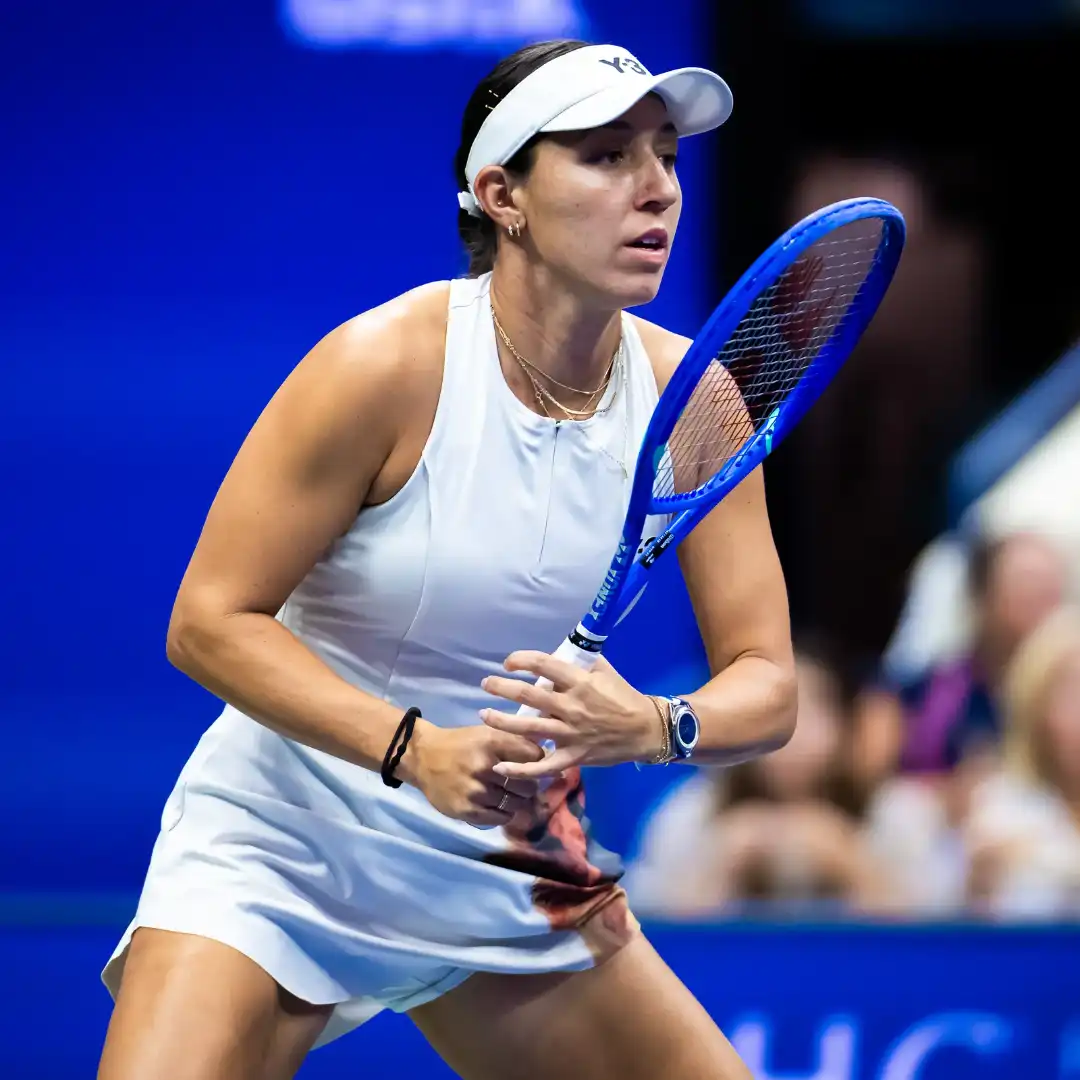
SportsWho Is Jessica Pegula? What to Know About the 2025 US Open SemifinalistShe’s Coco's doubles partner, the Buffalo Bills owner’s daughter—and a potential Grand Slam champ.By Jenna RyuSeptember 4, 2025Robert Prange/Getty ImagesSave StorySave this storySave StorySave this storyAs the 2025 US Open nears the start of its semifinal round, Jessica Pegula is standing strong as one of two Americans left in the draw. Casual fans or those newly aboard the tennis train might be wondering: Who is Pegula?Ranked fourth in the world, the 31-year-old player has been dominating the tournament thus far and is set to face off against world number one and defending US Open champ Aryna Sabalenka on Thursday night. If you’re a major tennis fan, perhaps you’re already familiar with Pegula’s (pretty impressive) game. But if you’re just now tuning in—or want to learn more about her ahead of the big match—here are a few key (and fun) facts about the American powerhouse who could very well take home the next Grand Slam title.SELF Healthy EatingGet nutrition tips, delicious recipes, and inspo for your grocery list delivered to your inbox just in time for your weekly meal prep.SIGN UPBy signing up, you agree to our user agreement (including class action waiver and arbitration provisions), and acknowledge our privacy policy.1. Her breakthrough came only recently.While a lot of top players—like Sabalenka and Coco Gauff—quickly moved up the rankings in their teens or early 20s, Pegula’s breakthrough didn’t come overnight. The 2024 US Open marked the first time she ever reached a Grand Slam final, where she ultimately lost to Sabalenka (but hey, this is the perfect opportunity for a high-stakes rematch).Before that, Pegula cracked the world top 50 for the first time at 27 years old in 2021 after a standout performance at the Australian Open, where she defeated big-name competitors including Victoria Azarenka, Samantha Stosur, and Elina Svitolina. Since then, Pegula has continued to rack up wins at major tournaments, like the 2023and2024 Canadian Opens as well as the 2025 Charleston Open to get to where she is today.2. Her doubles partner was none other than Coco Gauff.Since teaming up in 2021, Pegula and Gauff have claimed five doubles titles together, including at the 2023 Miami Open. Their incredible teamwork didn’t stop there: Later that year, they went on to become the world’s number one doubles team, marking the first all-American duo to achieve this milestone since 2012. (Gauff and Pegula were also the only regular doubles team to rank in the top 10 individually, according to the WTA.)Matthew Stockman/Getty ImagesWhile the two agreed to put their doubles streak on hold to focus on their singles careers, Pegula only has praise for her teammate. “[Coco] is much more sure of herself, and knows what she wants,” Pegula told reporters last year. “Also, she is hitting that age where you are learning all that stuff. You are trying to figure out what you want, how you want it, making more of your own decisions, and we have seen that over the past year.”3. Tennis brought Pegula closer to her Korean roots.If you’re not already aware, Pegula is half Korean—an important aspect of her identity that she takes great pride in.“I don’t know a lot of my heritage,” Pegula admitted in 2023. (Her mother, born in Seoul, was abandoned by her birth parents and adopted by an American family at age 5.) However, Pegula’s first trip to Korea (for the 2019 Hana Bank Korea Open) allowed her to “realize the importance of [her] heritage,” she said.X contentThis content can also be viewed on the site it originates from."Even though I didn’t exactly grow up fully Korean, it’s something that now I think me and my family and my sister have also wanted to learn more about,” Pegula explained. “We realize how important it is for those that come over here and those that are in Asia, they see us in these different lights representing them when there’s not a lot of us.” This wake-up call, she said, inspired her to join the Asian American Pacific Islander Tennis Association as a founding member and on the board of directors.4. Pegula’s dad owns the Buffalo Bills.You might’ve seen some talk about Pegula and the Buffalo Bills on your social media feeds. That’s because, yes, her father (Terrence Pegula) owns both the NFL’s Buffalo Bills and the NHL’s Buffalo Sabres, according to Forbes.Timothy T Ludwig/Getty ImagesEven though her parents became billionaires later in life, she’s seemingly managed to stay grounded, even debunking “outrageous” rumors about being spoiled. “People think I have a butler, that I get chauffeured around, I have a private limo, that I fly private everywhere. I’m definitely not like that,” Pegula told reporters during last year’s US Open press conference. (In fact, the New York native has previously taken the subway to compete in Flushing Meadows, just like most spectators.) “I’m definitely not like that.”5. Off the court, Pegula is dedicated to rescuing dogs and making a difference.Speaking of humility…Pegula is all about giving back to a good cause. She and her husband (who are both proud dog owners) run a charity together called A Lending Paw, which is dedicated to rescuing pups and training them to become service animals.Most PopularLife‘Wicked’ Forced Me to Have a Conversation I Hoped My Daughters Could AvoidBy Jessica ShybaHealthThe One Thing That Reliably Kills Norovirus and How to Keep it From Spreading in Your HomeBy Erica SloanRelationships5 Ways to Feel Less Lonely During the HolidaysBy Hannah Smothers“We wanted to help people afford service dogs,” Pegula previously shared withVogue. “Not only is it about dogs helping people, it’s about people helping dogs, because we only work with rescues. It goes both ways.”6. She was trained by Venus Williams’s former coach.For about five years Pegula was coached by David Witt, best known as Venus Williams’s longtime coach and hitting partner. (He and Williams worked together for 11 years, during which Williams reached two Grand Slam finals.)While Pegula achieved many milestones with Witt (including breaking into the top 75), she announced last February that they would be parting ways: “David and I obviously had a lot of success, and what we were able to accomplish together was pretty amazing,” she explained at the 2024 Indian Wells Open. “But I think having started with him when I was maybe 25, and then being 30 this year, I think I’m just in a much different place—a different ranking, a different place personally and career-wise…I just felt like I needed to take some chances…I just didn’t want to look back and be like, ‘Maybe I should have tried someone else, or tried something different.’”Now Pegula is working with Mark Knowles, former world number one doubles player who also coached Jack Sock, as well as University of Florida coach Mark Merklein.7. At one point, Pegula considered stepping away from tennis due to a series of injuries.Even though Pegula’s on fire now, her journey hasn’t always been so smooth. A few injuries threw a wrench in her career and kept her off the tour for over a year, including a knee injury and hip surgery in 2016, which she told reporters was “the hardest to come back from.”Most PopularLife‘Wicked’ Forced Me to Have a Conversation I Hoped My Daughters Could AvoidBy Jessica ShybaHealthThe One Thing That Reliably Kills Norovirus and How to Keep it From Spreading in Your HomeBy Erica SloanRelationships5 Ways to Feel Less Lonely During the HolidaysBy Hannah Smothers“I didn’t even know if I wanted to come back,” Pegula admitted back in 2021. “This was just going to be so hard…but I think I just got over it. I was like, Whatever, I’m just going to fight through it again.” (And thank goodness she did—because now she’s made it to the US Open semifinals for the second time in a row!)Related:Coco Gauff on Protein-Maxxing, Her First Labubu, and Dressing Up for the US OpenTennis Star Iga Swiatek Swears By Pasta With Strawberries—Here’s What a Dietitian ThinksEverything Naomi Osaka Has Said About Her Mental HealthGet more of SELF’s great sports coverage delivered right to your inbox—for free.

Q&A: John Morford
Travel 2026-01-07 20:56:13

Q&A: John Morford

DesignHong KongFebruary 23, 2010Q&A: John MorfordDesigner John Morford has created some of the most iconic hotel interiors in Asia – from the Grand Hyatt Hong Kong to the Park Hyatt Tokyo, made famous in the Sofia Coppola film “Lost in Translation”. Monocle editor-in-chief Tyler Brûlé caught up with Morford in Hong Kong to talk about the design ingredients that go into a great hotel.Gabriel Leigh /Editor Gabriel LeighSubscribeEmailiTunesYouTube

Everything You Need to Know About the Paralympic Classifications
Sports 2026-01-03 16:51:05

Everything You Need to Know About the Paralympic Classifications

SportsEverything You Need to Know About the Paralympic ClassificationsIf you’re wondering why there are more than a dozen 100-meter races, read this.By Cindy KuzmaSeptember 3, 2024Ezra Shaw/Marco Mantovani/NurPhoto/Getty Images/Amanda K BaileySave StorySave this storySave StorySave this storyAll products featured on Self are independently selected by our editors. However, we may receive compensation from retailers and/or from purchases of products through these links.You’re all geared up to watch the 2024 Paralympic Games. But as you flick on an event, you can’t help but wonder: Why are there 16 different men’s 100-meter races on the track and seven different groups of women swimming the 400-meter freestyle in the pool?! And what’s with all those letters and numbers by the name of each competition?The answer to both is classification, a system that groups athletes according to their type of impairment (for example, visual impairment, reduced muscle power, or a limb deficiency) and also how it affects their ability to perform the skills needed for their sport. Here’s what to know about the system so you understand what you’re watching as the Paralympics continues.SELF Healthy EatingGet nutrition tips, delicious recipes, and inspo for your grocery list delivered to your inbox just in time for your weekly meal prep.SIGN UPBy signing up, you agree to our user agreement (including class action waiver and arbitration provisions), and acknowledge our privacy policy.Why are there Paralympic classifications in the first place?The whole point is to make the competition as fair as possible by matching up athletes with similar capabilities. Otherwise, the least disabled athlete would often prevail, according to the International Paralympic Committee (IPC). With classification, winning becomes about fitness, skill, focus, athletic abilities—or, as the IPC describes it, “sporting excellence,” instead.While athletes often compete against people with similar types of disabilities, the exact health condition is less important than how—and how much—it affects their movement, coordination, and balance. So for instance, athletes with spinal cord injuries, birth defects like spina bifida, and complications from a viral disease might compete against each other if their conditions have similar effects on their bodies, per World Para Athletics.How does it all break down?Ten types of impairments make athletes eligible to compete in Paralympic sports on an international level. Eight are physical impairments, including short stature; limb deficiency such as amputation; and a lack of muscle power, often due to paralysis. The other two are visual impairment and intellectual impairment.Some sports, such as athletics (a.k.a. track and field) and swimming, have opportunities for athletes with all 10 impairments. Others are specific to one impairment. For instance, goalball is only for athletes with visual impairment, and para-powerlifting is a bench-press competition for those with limitations in their legs or hips and has only weight categories, not specific classes. Meanwhile, events like para-dressage and para-cycling have categories for a limited number of impairments.So what exactly do the letters and numbers mean?Athletes are grouped into sport classes first by their type of impairment, and then the degree to which their disabilities affect them and their ability to compete.The letters correspond to the sport. For example, S for swimming, T for track (running and jumping), F for field (throwing), SH for shooting, and PR for para-rowing. Some sports also have subcategories within them. Road cyclists, for example, might be in a class that starts with C for cycling, H for handbike, T for tricycle, or B for blind riders, who compete on tandem bikes.8 Things to Know About Paralympic Guides, Pilots, and TappersThey keep the athletes safe and set them up for success—all while training their own bodies for high-level competition too.The numbers refer to both the type and degree of impairment and vary by sport. Higher numbers usually, though not always, mean less severe impairments. In swimming, for instance, classes S11 to S13 are for visual impairments. S11 athletes have little to no vision and wear blackened goggles so everyone can compete equally, while S13 athletes might have limited peripheral vision but can see the end of the pool from a maximum of 5 meters (roughly 16 feet) away.Why are the classes different by sport?There’s no one-size-fits-all because each sport has its own history and governing body, which decides the rules for its competitors. Plus, each requires specific skills and movements. What holds someone back on the track might not be as much an issue for someone in wheelchair fencing or para-canoe, and vice versa.Sometimes, criteria even vary betweeneventsin a sport. For example, athletes use different muscles for breaststroke than for other strokes. So a swimmer who competes in multiple events might have a separate classification for breaststroke (SB) and for freestyle, butterfly, and backstroke events (S).How does an athlete get classified?At least once at the beginning of their international career, athletes submit documentation of their medical condition and also undergo evaluation by a minimum of two classifiers. Classifiers are trained experts such as physicians, coaches, psychologists, and ophthalmologists who have been trained and certified by each sport’s federation.Most PopularLife‘Wicked’ Forced Me to Have a Conversation I Hoped My Daughters Could AvoidBy Jessica ShybaHealthThe One Thing That Reliably Kills Norovirus and How to Keep it From Spreading in Your HomeBy Erica SloanRelationships5 Ways to Feel Less Lonely During the HolidaysBy Hannah SmothersSome athletes can get classified once and continue competing in that sport class for their entire careers. Others have to go through the process again. For example, young athletes who are still maturing and those with progressive conditions might have to be evaluated as things change, according to the IPC.The process is meant to be as objective and clear as possible, according to the IPC, but athletes do sometimes report embarrassment, awkwardness, or even physical injuries as a result of the process, and at times disagree with the classifier’s decisions, per the Conversation. (And on the flip side, some athletes say others engage in something called “classification doping,” where they misrepresent their disability as worse than it is to gain an advantage, asThe Washington Postreports.) Each sport has specific rules about filing protests, which is kind of like an appeal, if there’s a question or problem.Wait, how does all this work for team sports?The answer depends a bit on the sport, but in general, the goal is to keep teams approximately evenly matched.All wheelchair rugby players, for example, have some paralysis. During classification, they’re assigned a point value based on their abilities, from 0.5 for a player with the least function to 3.5 for those with the most function, per World Wheelchair Rugby. At any given time, the point total for all the players on the floor can’t be above 8 points (or 8.5, if one of the players is a woman—both men and women compete on the same teams).Sitting volleyball players, meanwhile, have impairments in one or more limbs. They’re grouped into two classes: VS1 for those with more severe impairments and VS2 for more function. Each team’s roster can include a max of two VS2 players.That’s a lot to remember! What should I keep in mind as I’m watching?There’s a ton of information available about the system on Paralympic.org and Olympics.com, including the nuances for each sport, from blind football to wheelchair tennis.Most PopularLife‘Wicked’ Forced Me to Have a Conversation I Hoped My Daughters Could AvoidBy Jessica ShybaHealthThe One Thing That Reliably Kills Norovirus and How to Keep it From Spreading in Your HomeBy Erica SloanRelationships5 Ways to Feel Less Lonely During the HolidaysBy Hannah SmothersAn important thing to keep top of mind: Classification is a huge deal for athletes, and it’s not always an easy or comfortable process. The biggest thing for fans to know is that sport classes are similar to age groups in marathons and weight classes in boxing—essentially, ways to make the playing field more level.Knowing more about what’s behind the incredible performances you’re watching can offer you an even deeper appreciation of athletes’ preparation, skills, and dedication.SELF is your go-to source for all things Paralympics. Follow our coverage of the Paris Games here.Related:Paralympic Archer Jodie Grinham Just Competed While 7 Months PregnantIf You’re Not Following the Perfectly Unserious Paralympics TikTok Account, You’re Missing OutZakia Khudadadi Just Became the First Athlete From the Refugee Paralympic Team to Win a MedalGet more of SELF’s great sports coverage delivered right to your inbox—for free.

5 Reasons Coco Gauff Is *the* Tennis Superstar of the Moment
Sports 2026-01-13 11:13:05

5 Reasons Coco Gauff Is *the* Tennis Superstar of the Moment

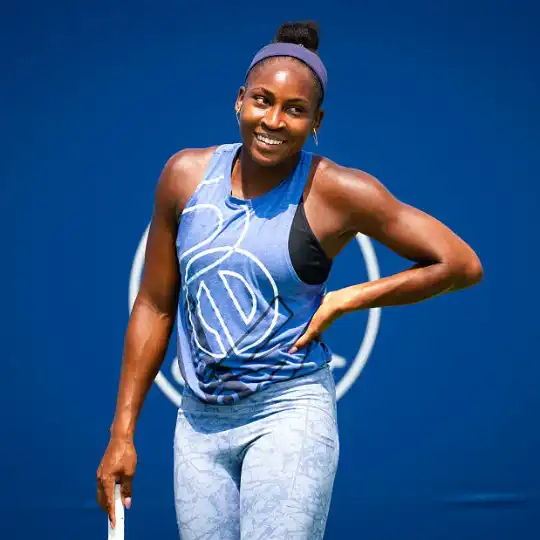
Sports5 Reasons Coco Gauff Is *the* Tennis Superstar of the MomentHave you seen her iconic post-game interviews or Beyoncé lip syncs?By Jenna RyuAugust 22, 2025Robert Prange/Getty ImagesSave StorySave this storySave StorySave this storyThe rise of tennis phenom Coco Gauff has been nothing short of electric. Based on numbers alone, it’s impossible not to be impressed—two Grand Slam titles at only 21 years old, and she’s the youngest American to win the French Open since Serena Williams. But aside from her technical skills and killer backhand, it’s her star power—a mix of confidence, charisma, and a magnetic personality—that’s made sports diehards and more casual viewers alike know her name and cheer for her wins.Whether you’ve been following her from the jump or started going down a fandom rabbit hole ahead of this year’s US Open, Gauff is a name you won’t stop hearing anytime soon. So below, we’ve rounded up all the more reason(s) to stan Gen Z’s tennis legend in the making, a symbol of representation, and an inspiration all around.SELF Healthy EatingGet nutrition tips, delicious recipes, and inspo for your grocery list delivered to your inbox just in time for your weekly meal prep.SIGN UPBy signing up, you agree to our user agreement (including class action waiver and arbitration provisions), and acknowledge our privacy policy.1. She handles pressure like a pro.In true legend fashion, Gauff has thanked not only her family and fans but shouted out the haters too, saying, “Those who thought they were putting water on my fire, you were really adding gas to it. Now I’m really burning so bright right now.”She continued to acknowledge folks who doubted her skills during a post-match interview as well. “I felt like people were like, ‘It was all hype.’ I see the comments,” Gauff said. “People think I don’t see, but I’m very aware of Tennis Twitter. I know y’all’s usernames. I know who’s talking trash. I can’t wait to look on Twitter right now.”2. She’s had an inspirational journey, from a fan in the stands to a US Open champ.If you didn’t know, Gauff actually first shot to fame after defeating one of her idols, Venus Williams, at Wimbledon back in 2019—at only 15 years old! But that technically wasn’t her first time appearing at a major match.A viral throwback video circulating online shows an adorable eight-year-old Gauff cheering and dancing from the bleachers at the 2012 US Open. Little did tiny Coco know that a decade later, she would be the center of attention as the crowd went wild forher.X contentThis content can also be viewed on the site it originates from.3. She’s not afraid to be vulnerable with the world.Tennis isn’t just physically taxing. Mentally, it’s a challenge too—and being compared to GOATs like Serena and having all eyes on you adds a ton of additional pressure. It’s no surprise, then, that Gauff has dealt with her fair share of frustration and disappointment when she doesn’t perform as well as she’d hoped.In a vulnerable BBC Sports column, she reflected on the life-changing perspective shift that has helped her manage these tough feelings. “I do think you can accomplish great things at any age—but for your own mental well-being, you have to remind yourself you will fail and make some silly mistakes,” Gauff wrote. “Now I’m trying to tell myself to enjoy my wins a little bit more.” (Honestly, that’s a mindset we should all be adopting.)4. She’s passionate about making a difference on and off the court.Just weeks after the murder of George Floyd in June 2020, Gauff delivered an impassioned speech in her hometown of Delray Beach, Florida. “I’ve been spending all week having tough conversations, trying to educate my non-Black friends on how they can help the movement,” a 16-year-old Gauff said at the time.More recently, the tennis pro proudly voiced her opposition to her home state’s “Don’t Say Gay” bill , which restricts classroom discussions about sexual orientation or gender identity for many young students. “I’m against it,” Gauff told reporters at the time. “These conversations are important, and for me, who has friends in the LGBTQ+ community, I couldn’t imagine not being able to talk about your identity.”5. She’s making tennis refreshingly fun again.Aside from being, ya know, a major tennis star, Gauff is just like us—well, kind of. She, too, fangirls over pop singers (Justin Bieber to be specific), for example, and bought her very first Labubu. Not to mention, Gauff brings the kind of refreshing, youthful energy we’ve needed into tennis fashion, moving past the usual bland skirts with bold colors and inventive cuts (as seen in her recent Miu Miu and New Balance collab).HENRY NICHOLLS/Getty ImagesMost PopularLife‘Wicked’ Forced Me to Have a Conversation I Hoped My Daughters Could AvoidBy Jessica ShybaHealthThe One Thing That Reliably Kills Norovirus and How to Keep it From Spreading in Your HomeBy Erica SloanRelationships5 Ways to Feel Less Lonely During the HolidaysBy Hannah SmothersDespite her professionalism on the court, she also knows how to let loose on the sidelines too, as evidenced by the fact that she (hilariously) roasted her fellow teammates’ outfits in good fun. You can see more of her lighthearted side on her TikTok account, where she’s lip-synced away her differences with rival Aryna Sabalenka, for instance, and rooted for her favorite couple onLove Island(Nicolandria, obviously) like the rest of us.Especially in a predominantly white sport, it’s inspiring to see such a confident, expressive, fun-loving young woman like Gauff get her flowers from both fans and the tennis establishment.Related:Aryna Sabalenka’s Next SetNaomi Osaka’s Next ChapterWhat It Was Like to Be a Ball Boy During Serena’s Final VictoryGet more of SELF’s great sports coverage delivered right to your inbox—for free.

Lisbon: The Monocle Travel Guide
Travel 2026-01-15 01:53:09

Lisbon: The Monocle Travel Guide

Monocle FilmsLisbon, PortugalSeptember 14, 20172 MIN 48 SECLisbon: The Monocle Travel GuideLisbon may be one of Europe’s oldest cities but it’s far from staid, with massive murals, azulejo-covered townhouses and cutting-edge museums. Allow us to guide you through this eminently liveable (did we mention there are sandy beaches?) and fast-changing city. Published by Gestalten, The Monocle Travel Guide to Lisbon is available now at The Monocle Shop.Narrator Gaia LutzSubscribeEmailiTunesYouTube

Why Madison Keys Was ‘No Longer Searching for Validation’ Even Before Winning the Australian Open
Sports 2025-12-30 10:12:57

Why Madison Keys Was ‘No Longer Searching for Validation’ Even Before Winning the Australian Open

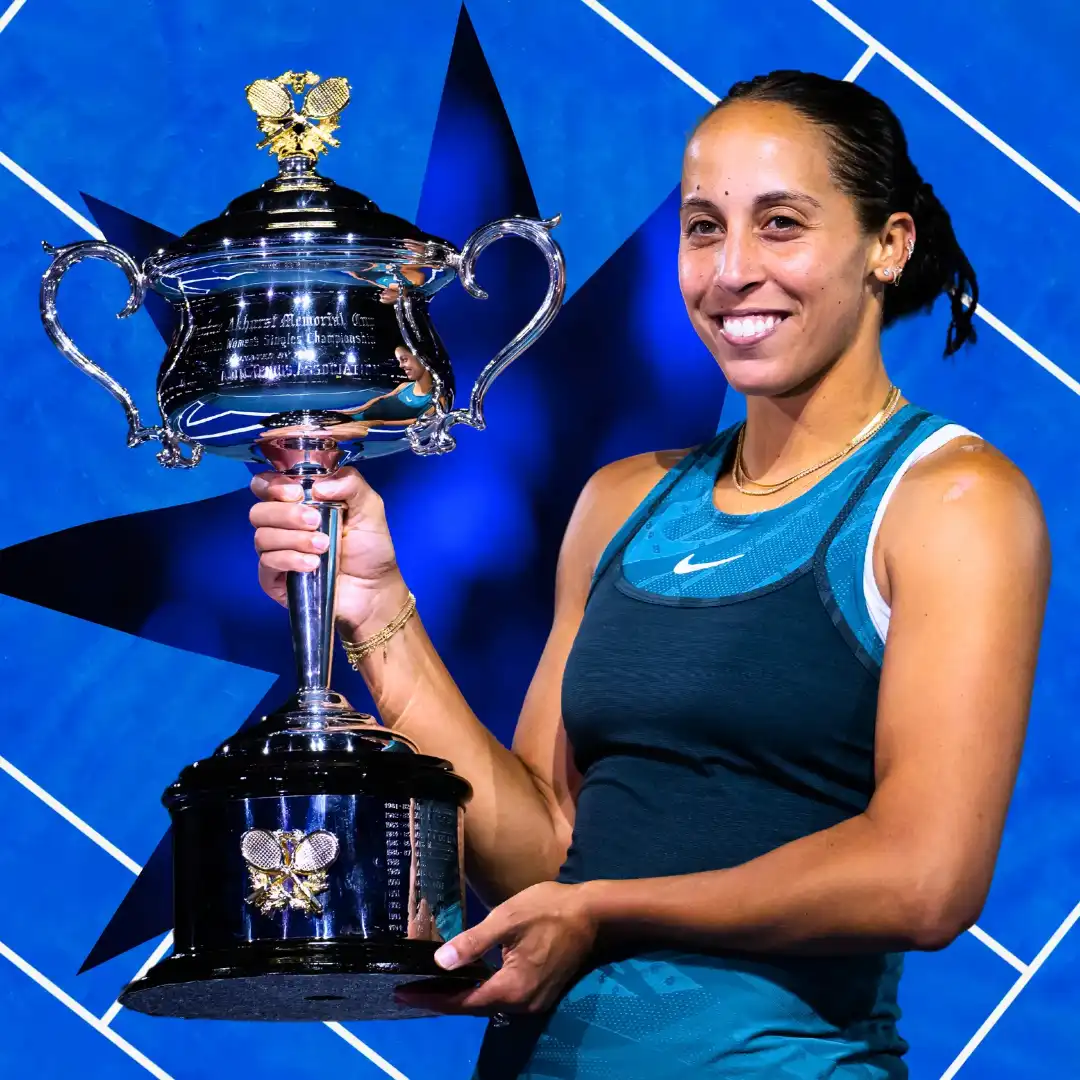
SportsWhy Madison Keys Was ‘No Longer Searching for Validation’ Even Before Winning the Australian OpenDays after her first Slam title, the tennis star shares what stoked her confidence, how she tweaked her game, and why representation matters on the court.By Caroline TienJanuary 29, 2025Robert Prange/SONGPHOL THESAKIT/Getty ImagesSave StorySave this storySave StorySave this storyIn the land down under, Madison Keys is on top of the world. Over the weekend, the 29-year-old American tennis player won the first major of her career, beating two-time defending champion Aryna Sabalenka to clinch a historic victory at the Australian Open. In footage of the match’s final point, she raises her arms high in the air before covering her face in an outburst of emotion. “It was just kind of an out-of-body experience,” she tells SELF in a Zoom call on January 28. “In that moment, you become so hyper-focused on the task at hand that you just take everything point by point. Everything else just disappears.”And she’s still riding that high three days later. In her own way, that is—keeping it chill is the new titlist’s preference. Immediately after, “I did get a nice glass of champagne, and then the next night, I got to have dinner with my team and kind of take it all in,” Keys says. “I'm a pretty low-key person, so that was the perfect way to celebrate.”SELF Healthy EatingGet nutrition tips, delicious recipes, and inspo for your grocery list delivered to your inbox just in time for your weekly meal prep.SIGN UPBy signing up, you agree to our user agreement (including class action waiver and arbitration provisions), and acknowledge our privacy policy.And there was a lot to reflect upon. With the win, Keys achieved a career milestone that she’s been eyeing for more than half her life. Since turning pro on her 14th birthday in 2009 (she famously started playing tennis after seeing Venus Williams on TV), she’s been considered a top contender on the WTA Tour, but a Grand Slam title eluded her. Previously, her closest brush was the 2017 US Open final, but it ended in a decisive straight-sets loss to fellow American Sloane Stephens. More recently, Keys made it to the Wimbledon fourth round but was forced to retire due to a minor hamstring tear, a decision that was necessary for her health but no less heartbreaking for it. “You kind of have to rebuild confidence back with your body after an injury,” she told SELF of the setback, right before the US Open. Then, in that tournament, she was knocked out in the third round by Belgian player Elise Mertens.But change was in the cards. Ranked 14 in the world heading into the Australian Open, Keys managed to overcome a difficult draw, beating fellow American Danielle Collins in the third round, 2022 Wimbledon champion Elena Rybakina in the fourth, Elina Svitolina in the quarterfinals, and five-time Grand Slam champion Iga Świątek in the semifinals before facing off against Sabalenka. Held in Rod Laver Arena, the final was a nail-biter, but in the third set, Keys hit a forehand winner that sealed the deal.In the process, she notched a few notable achievements: Becoming the first American to win the Australian Open in five years; the first woman in 20 years to beat the World No. 1 and 2 (Sabalenka and Świątek, respectively) en route to an Australian Open win; and the fourth oldest first-time Grand Slam women’s champion in the Open Era, according to Tennis.com.Days later, the excitement hasn’t worn off. “I’m still super happy,” she says. “I think I'll probably ride the wave as long as I can.” Below, Keys talks to SELF about that ride so far; making the changes that prefaced her big win; and feeling comfortable with who she is and where she’s at, Grand Slam title or not.SELF:Your husband, fellow tennis player Bjorn Fratangelo, doubles as your coach. What is that dynamic like?Madison Keys:This summer will be, I think, two years that he’s been coaching me. It really helps that he played professional tennis as well, so he understands the life.We work really well together because he knows when and how to deliver messages. We have really good communication, and we do a good job of knowing when we should talk tennis, and when the tennis talk should be turned off and we should go back to just being romantic partners.He is a very smart guy and knows what he is talking about, so it’s pretty easy to have back-and-forth. He has my best interests at heart, and I trust what he says.You’ve made some big technical changes recently regarding your racket, like switching out your Wilson for a Yonex and swapping your gut strings for polyester ones. How do you feel these adjustments have enhanced your game and reduced your injury risk?We started making some changes last year. I had a pretty significant injury at the beginning and missed the first few months [of the tennis season], and it finally got to the point where I was like, Okay, I need to make some actual changes so that I can continue to play full seasons and be healthy.I don’t really know specs and the technical things, but Bjorn is such a tennis geek. He can literally watch tennis on TV and tell me what racket the players are using, what it is. He knows everything. So I told him what I was searching for in a racket, and he narrowed it down for me, so I didn’t feel like the options were endless. Within the first five minutes of hitting with the new racket, I was like, Oh, yeah, this is it.Do you think these changes were a factor in your victory?Yeah, absolutely. I think the extra power and control that I’ve been able to find has not only helped my average rally ball be a little bit more dangerous, but also given me the freedom to go for things and thread the needle a little bit more, in a way that feels safe and comfortable. When you have that kind of combination, it just gives you a level of confidence. You feel like, Okay, no matter what is happening during the match, I can figure things out and I don’t have to stress as much that I have to play at a perfect level. This [racket and strings pairing] is definitely the combination for the foreseeable feature.Going into the Australian Open, how were you feeling, especially knowing you’d have a long road to the podium?So I actually won the tournament before the Australian Open, the Adelaide International. I played some really good tennis there, and when you’re able to do that, you have a level of confidence already that definitely helps push you through the draw.Maybe there’s a little bit of superstition to it as well. The one other time I won the Adelaide International [in 2022], I ended up making the semifinals of the Australian Open. So when I won Adelaide again this year, in my head, I was like, Oh, maybe this is good luck. Maybe we’ll see a run in Australia.I actually never look at the draw, so I am always kind of surprised at the end of any match about who the next opponent is. Some people like to look—I know [current World No. 6] Jessie Pegula does and knows every possible thing that could happen—but I’ve always just thought that the chances of it actually playing out how it should are so rare, why waste your time? Eventually, at some point, you figure it out, when there’s not very many people left. But in this case, I think I'm glad that Ididn’tlook at the draw, because that could have been a little bit daunting. Every round, I definitely gained more and more confidence, and as things went on, I felt more and more sure of myself, sure that I could be the one holding the trophy on Saturday.What does it mean to you to finally achieve this milestone of winning a major? Does it feel like a lot of pressure has been lifted?I think that I finally got to the point where I felt like I didn’t need to prove myself anymore, where I was really content with what I had done. Obviously, as a professional tennis player, I was still always wanting more, always wanting to win every draw, but no longer searching for validation through winning a Slam.Notwinning a Slam, I think, gave me the freedom to not only win one, but now really appreciate it in a way that I don’t think that I could have before.In some ways, I wish I could [reassure my younger self], but in other ways, I think going through all of the hard moments and the heartbreak got me to this point, because that was how I learned the lessons that I needed to win. So I am kind of a believer that everything happens for a reason.With your Australian Open win, you join Black tennis greats like Serena Williams and Naomi Osaka, who have also achieved that distinction. What does it mean to you that many young girls see themselves represented in you?I think representation matters, especially as a woman of color who has been playing for as long as I have and has gone through a lot of hard times to finally—at this point in my career—get the win. Being able to be someone who a little girl can look up to and say, ‘She looks like me,’ I mean, it’s amazing.I got a very nice note from Serena. From the first time we played, she’s been someone who has always said that she believed I could absolutely be a Grand Slam winner. And as someone who looked up to her so much growing up, that always made me feel like, ‘Okay, if she says it, then it’s got to be true.’ So finally getting one, and having all of her support and kind words, it’s definitely something that you dream of when you’re a little kid.What comes next for you? Are you already strategizing for upcoming tournaments, or are you taking some time to savor this moment?I have a few days off, so honestly, I’m really looking forward to being home—making coffee, cooking some meals in our recently renovated kitchen, just getting back to normal life.I’m trying to take in everything that’s happened in the last two weeks, but also, I’m always looking forward. That’s the reality of tennis, is that it doesn’t really stop. We have a bunch of big tournaments coming up—Indian Wells, the Miami Open—so I’m looking forward to getting back on the court and working on trying to continue to improve my serve and my net game. And, I think, focusing on that—focusing on constantly trying to be better and implement the things that we’re doing on the practice court in matches—just gives me the best opportunity to keep playing some good tennis.Related:All the Reasons to Stan Coco Gauff—Even If You Don’t Watch TennisEverything Naomi Osaka Has Said About Her Mental HealthHere’s What It’s Like To Try Out for the US Open Ball CrewGet more of SELF's great sports coverage delivered right to your inbox.

A different view with David Alhadeff
Travel 2025-12-28 21:11:19

A different view with David Alhadeff

DesignBeverly HillsFebruary 2, 20213 MIN 32 SECA different view with David AlhadeffPerched above the buzz of Beverly Hills sits Casa Perfect, a gallery of contemporary design set in a spectacular modernist home. Its founder David Alhadeff shows us the wealth of remarkable art and architecture that is to be found in the varied neighbourhoods of this sunny city. Monocle Films has partnered with Beverly Hills Conference & Visitors Bureau to reveal hidden gems through the eyes of local creatives.Editor Giada GhiringhelliSubscribeEmailiTunesYouTube

This Super Bowl Ad Raised a Big Point About Women and Breast Cancer Screening
Sports 2025-12-30 15:37:01

This Super Bowl Ad Raised a Big Point About Women and Breast Cancer Screening

HealthThis Super Bowl Ad Raised a Big Point About Women and Breast Cancer ScreeningPreventive care is so, so crucial.By Korin MillerFebruary 10, 2025Photo courtesy of Novartis, photography by Riis Massey-Williams.Save StorySave this storySave StorySave this storyThe Super Bowl is always packed with attention-grabbing ads, but Novartis’s cleavage-packed commercial created particularly major buzz after it aired on February 9.Called “Your Attention, Please,” the grabby ad runs through a series of breast-focused scenes, including close-ups of cheerleaders in low-cut uniforms, a breastfeeding mom, women trying on bras, and more. After that montage, it ends on a different note: with comedian Wanda Sykes, who had a double mastectomy after being diagnosed with breast cancer in 2011, urging women to get screened for the disease.“Let’s start paying attention to breasts when it matters the most,” Sykes says in the ad. “Early detection for breast cancer is a game changer, and why I’m able to be here today.” From there, she encouraged “more women to get screened than ever before,” and directed viewers to visit the website YourAttentionPlease.com to learn more—as well as find locations to get screened.The ad definitely got people talking—and, in the case of cancer screening, that’s a good thing. In fact, when SELF reached out to doctors who treat this type of cancer, they applauded the ad’s underlying messaging. Here’s what they want you to know.SELF DailyGet healthier and happier with expert advice delivered to your inbox daily.SIGN UPBy signing up, you agree to our user agreement (including class action waiver and arbitration provisions), and acknowledge our privacy policy.The ad uses America’s obsession with boobs to hammer home the importance of preventive care.The Super Bowl ad is especially important because so many people tune in to watch the game—and thus, the messaging in between the plays, G. Thomas Ruiz, MD, lead ob/gyn at MemorialCare Orange Coast Medical Center in Fountain Valley, California, tells SELF. “It’s the biggest event of the year,” he says. “You put a commercial out there and hope it grabs a woman’s attention to say, ‘Oh yeah, I’ve never had a mammogram’ or ‘I’m overdue for a mammogram.’”And, as research shows, lots of folksaremissing their screening. Data from the CDC show that just 66% of women aged 40 and older are up-to-date on their mammograms. That means one in three women aren’t being screened as recommended for a potentially life-threatening condition that affects a huge number of Americans each year—specifically, breast cancer is the second most common cancer in women in the US (skin cancer is the first), according to the American Cancer Society (ACS). To distill it even further: There’s a one in eight chance that the average American woman will develop breast cancer in her lifetime.That makes this reminder to get screened crucial, Janie Grumley, MD, breast surgical oncologist and director of the Margie Petersen Breast Center at Providence Saint John’s Center in Santa Monica, California, tells SELF. “It encourages people to stop and think, Breast cancer could happen to me,” she says. “It’s always important to have a reminder.”The ad was also smart in that it grabbed the attention of menandwomen, which could foster dialogue between couples, encouraging men to ask their partners when their last breast cancer screening was, Dr. Ruiz says.“I love this ad,” Dana Ataya, MD, a breast imaging radiologist at Moffitt Cancer Center, tells SELF. “It does such a compelling and engaging job reminding us of the importance of breast cancer screening in saving lives.”There’s a reason why the phrase “early screening saves lives” is so popular.Current ACS guidelines recommend that women with average risk of developing breast cancer have the option to begin annual screenings at age 40; those 45 to 54 should get a mammogram annually, and women 55 and older can switch to mammograms every other year, if they wish. Screenings should continue as long as a woman is healthy and expect to live at least 10 more years, per the guidelines. (The US Preventive Services Task Force currently recommends every-other-year screening for women 40 to 74).But if you’re considered high risk for breast cancer, you may need to be screened starting at age 30, alternating between a mammogram and MRI every year. That includes having a lifetime risk of breast cancer of about 20% to 25% or higher based on assessment tools (which mostly consider family cancer history), having a known BRCA 1 or BRCA 2 gene mutation, a first-degree relative with a BRCA1 or BRCA2 gene mutation, a history of radiation therapy to the chest before age 30, or having Li-Fraumeni syndrome, Cowden syndrome, or Bannayan-Riley-Ruvalcaba syndrome, or a first-degree relative with one of those conditions, per the ACS. (Keep in mind that some people with dense breasts may also need additional screenings, like breast ultrasound or a breast MRI.)Most PopularLife‘Wicked’ Forced Me to Have a Conversation I Hoped My Daughters Could AvoidBy Jessica ShybaHealthThe One Thing That Reliably Kills Norovirus and How to Keep it From Spreading in Your HomeBy Erica SloanRelationships5 Ways to Feel Less Lonely During the HolidaysBy Hannah SmothersBreast cancer mortality rates have dropped in the last 50 years, and many organizations, including the American College of Obstetricians and Gynecologists (ACOG) and ACS, chalk that up in part to increased screenings.“Screening is crucial,” Dr. Ruiz says. “You do these early screens and you nip things in the bud before they’re life-threatening.” In fact, according to the CDC, when cancer is found in a localized stage—meaning it hasn’t spread outside of the breast—the five-year relative survival rate is nearly 99%. Part of the reason is because early detection also usually gives women more choices around treatment, Dr. Grumley says. “The earlier you find it, the more options you have, and the better your outcomes,” she says. For instance, it’s typically easier to treat breast cancer that’s only in the breast tissue versus cancer that’s spread (a.k.a. metastasized) from the breast to the lymph nodes or other organs.Still, breast cancer rates are increasing in women, especially in young women, making it more important now than ever to stay vigilant about your breast health.You can get screened, even if you don’t have an established relationship with a doctor.While your general practitioner or ob/gyn can order a mammogram for you, Dr. Ataya says you don’t need to go that route if you don’t have an established relationship with a healthcare provider. “Women who are 40 or older and don’t have symptoms can schedule a mammogram without a doctor’s referral,” she says. (Like we mentioned, if you have a higher risk of breast cancer due to family history or other reasons, you may be eligible for earlier screenings—and you may want to connect with a healthcare provider or breast center for personal guidance for your unique situation, Dr. Grumley says.)This is the case at multiple breast centers across the country, Dr. Ataya says. Planned Parenthood also offers breast cancer screening and mammograms to women, Dr. Ruiz says. And the FDA has an online search tool to help you find a screening site too. “Waiting on a referral should never be a barrier to getting screened,” Dr. Ataya says.Most PopularLife‘Wicked’ Forced Me to Have a Conversation I Hoped My Daughters Could AvoidBy Jessica ShybaHealthThe One Thing That Reliably Kills Norovirus and How to Keep it From Spreading in Your HomeBy Erica SloanRelationships5 Ways to Feel Less Lonely During the HolidaysBy Hannah SmothersOne thing to keep in mind: It’s not uncommon to be called back for additional testing after a mammogram. In fact, this happens in about 10% of cases, per the National Cancer Institute (NCI). So don’t let that worry dissuade you from getting screened in the first place. If you do get that message, Dr. Grumley says it’s important not to panic. “Getting called back does not mean you have cancer,” she says. “It just means we need to have a better look.” Only 7% led to a cancer diagnosis, according to the NCI.If you have a doctor and aren’t sure about whether you need a mammogram, reach out to their office and ask. They should be able to guide you from there. The idea of breast cancer screening is a little intimidating, and it’s easy to push it off. But not getting screened doesn’t mean you’re cancer-free—it just means you don’t know what’s happening in your body.Related:There’s a ‘Real, Documented Rise’ in Cancer in Young People. Should You Be Worried?6 Early Symptoms of Breast Cancer That Are Too Easy to MissThese Are the Most Common Colon Cancer Symptoms in Young PeopleGet more of SELF's great service journalism delivered right to your inbox.

A Day Out With the Dads and Daughters Who Love Women’s Basketball
Sports 2025-12-23 06:34:52

A Day Out With the Dads and Daughters Who Love Women’s Basketball

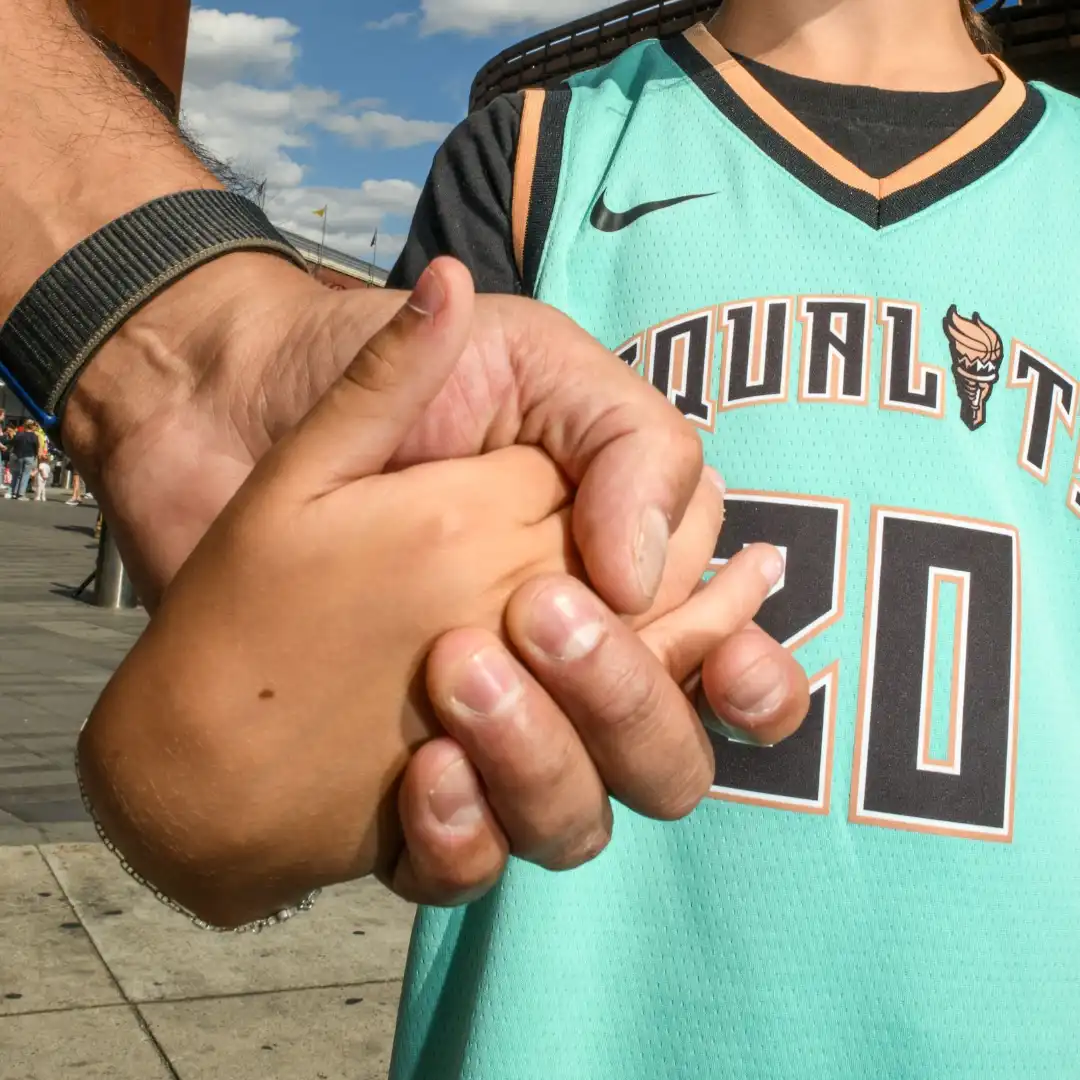
SportsA Day Out With the Dads and Daughters Who Love Women’s BasketballWe hit up a recent WNBA game to chat with the sport’s next wave of (very wholesome) superfans.By Caroline TienPhotography by Dolly FaibyshevSeptember 18, 2024Dolly FaibyshevSave StorySave this storySave StorySave this storyEven if they hadn’t been standing in line waiting to flash their QR codes, the fans would have been easy to pick out. As they emerged from side streets and subway stations and made their way toward Brooklyn’s Barclays Center on September 8 to watch the New York Liberty take on the Las Vegas Aces, many wore oversized seafoam green jerseys that instantly identified them (though I did spot a few rebels donning gray Aces merch). Some had accessorized to match: basketball earrings, purses, and face paint; foam fingers and Statue of Liberty headpieces. Several girls even wore homemade bracelets or necklaces spelling out the names of their favorite players à la Swifties attending the Eras Tour.When the doors opened an hour before the 4 p.m. start, a steady trickle of individuals, couples, and families was already creeping toward the arena’s entrance. As tip-off neared, that trickle turned into a torrent; at one point, two parallel sets of lines stretched to the end of the block. Buoyant pop rhythms blasting from nearby speakers contributed to the festive Game Day atmosphere. (“Espresso,” anyone?)The size and diversity of the crowd was a testament to the WNBA’s broad appeal—and newfound visibility. With buzzy new stars like Caitlin Clark and Angel Reese making waves on the court—along with legendary vets like Diana Taurasi, A’ja Wilson, and Breanna Stewart continuing to break records and push the game forward—the WNBA is enjoying a meteoric and much-deserved rise and loads of mainstream appreciation. Just look at the stats: As of May 2024, some 400,000 people had already attended WNBA games, marking a 26-year high in opening-month attendance, according to a June news release from the league; and more than half of all 2024 games sold out, a whopping 156% increase from the 2023 season. As the WNBA announced on September 9, the Liberty-Aces game ended up joining those ranks, with an audience of 15,393.Father-daughter duos made up a not-insignificant portion of the crowd. Some dads told me they wanted an activity to do with their girls, while others say they are simply passionate about basketball in any form. Some dads felt that women’s sports had been historically overlooked and wanted to do their part to change that. “These games are a party for two hours,” Jeffrey, 44, told me, standing near an ice cream truck with his six-year-old daughter, Perry. “It’s a love fest, I think, for a young girl who loves sports, to see other women that are amazing at what they do and deserve our respect and appreciation.”“I wanted to come because I wanted to spend time with my dad,” one young girl told me.(Plenty of young boys were in the crowd too. One dad—Ryan, 37—said he likes bringing his almost-two-year-old son, Bedford, to Liberty games to show him at an early age that basketball isn’t just for guys: “Sports are great for everybody, and it’s not just a men’s thing—he’s got a little brother at home too, but the future is female.”)When I asked folks who they were most excited to see compete, nearly every father and daughter had the same answer: “Sabrina,” as in Liberty guard Sabrina Ionescu, a league-wide standout who helped Team USA snag its eighth-straight gold medal in women’s basketball at the Paris Games in August. “I like Sabrina for how she shoots threes, and I like how Breanna is really, like, tall and she gets a lot of rebounds and stuff. And she’s good at shooting threes too,” Emmy, 10, said.Here’s a look at the scene outside Barclays Center before the game.Interviews have been lightly edited for length and clarity.Kalyn, 11, and Deryl, 61When did you guys start getting into the WNBA?Deryl:We really started getting into it last year. We were at four games last year. We always come to see the Aces. A’ja’s my favorite player, so I got to come check A’ja out.You’re a big Aces fan?Deryl:Oh, no, I'm a big Liberty fan, I’m not here to really root for A’ja. I’m an A’ja fan as a player, but I’m a Liberty fan as a team.SELF Healthy EatingGet nutrition tips, delicious recipes, and inspo for your grocery list delivered to your inbox just in time for your weekly meal prep.SIGN UPBy signing up, you agree to our user agreement (including class action waiver and arbitration provisions), and acknowledge our privacy policy.And Kalyn, what do you like about the WNBA?Kalyn:I like basketball and I just want to watch it so I can see other girls play.Okay, I see. Do you play basketball at school as well?Kalyn:Yes. Well, I don’t playyet. I’m going to play this year.Deryl:She’s starting seventh grade, so she’s on the team this coming year.And are there any other players you’re excited to see play today?Deryl:Definitely. Breanna Stewart is the best player in the league, and if Jonquel Jones does what she’s supposed to do, the Liberty’s going to get their title.Daria, 24, and Dave, 55How was the commute in? The New York City traffic is no joke.Dave:No joke. We jumped on a train from Ronkonkoma, came in. We’re very excited about today’s game.What do you two like about the WNBA, and how long have you been fans?Daria:We’re new fans. Ever since this past year. We watched UConn and Iowa, which was huge. Ever since then, once that new rookie class came into the W, it’s just been about watching all their games.Dave:What I found really amazing today, being here, is the effect the WNBA is having on the young girls in the world today. It’s amazing to see. And I don’t know if it’s this year alone that really started it—I mean, I know it’s been around for over 25 years—but this year it’s been something else, and it’s really creating a mark on the young girls today. It’s awesome. It really is.Daria:We just went out for lunch and it seems like the whole restaurant was wearing stuff for the Liberty. It’s incredible. You see it happen for the NBA or even the MLB, and it’s just so cool to see everyone supporting the Liberty. Little girls with their posters. It’s just an incredible environment to be around.Bennie, 18 months, and Sam, 36How’d you become a WNBA fan?Sam:Living here in New York and having one of the best WNBA teams.Yeah, I saw the Liberty play a couple of months ago and they were tremendous.Sam:We also lived in Minnesota before this, before Bennie was born. The Minnesota Lynx were in the WNBA championship, like, 10 years ago, and I got to go to the game for, like, 30 bucks. So a mix of having a great team and then just always being able to go and afford it.Do you and Bennie come to see the WNBA games pretty often then?Sam:Yeah, absolutely. I took her to her first game when she was, like, three months old. This is game number two for her.Makayla, 5, and TJ, 43TJ:This is my first game. I’m a basketball fan, coach basketball and everything else, so I’ve been watching the WNBA since they started.Oh wow. Like father, like daughter?TJ:[laughing]Hopefully. We’ll see.Vera, 5, and Frank, 47Frank:This our fourth game of the season. One of the players, her daughter goes to Vera’s school—Breanna Stewart. So we got into it through that. She likes watching. She likes the popcorn too.Ella, 10, and Adam, 44How long have you been WNBA fans?Ella:Like three years now.How did you get into it in the first place?Ella:I just play basketball. My sister does too, so we just watch the pros play.Are there any players you’re especially excited to see this time around?Ella:A’ja Wilson, Sabrina Ionescu, Breanna Stewart, and Kelsey Plum.And, Adam, as a dad, what do you like about the WNBA and going to the games?Adam:I just love that it gives me something to do to hang out with my daughters, spend time with them. There’s some good role models in the league to have my girls look up to.Jordyn, 6 going on 7, and Brendan, 37Brendan:Longtime sports fans and proponents of women’s sports in general. Love the movement and the momentum behind the WNBA. This is actually our first WNBA game, so we’re very, very excited.Ava, 18, and Bruno, 52So I see you’re wearing an Aces shirt, Ava. Are you two Aces fans?Ava:I am, yeah. I’ve just recently gotten more into the WNBA, but this is my second game.Nice! Why the Aces? I feel like I’ve talked to a lot of Liberty fans so far, so I’m curious.Ava:I love the players on the team and I guess I just watch a lot of their games. But I’m not that experienced yet. I feel like I’m flawed sometimes, like, “Oh my God, I don’t know that much.”You’re good! I feel like so many people have gotten into it really recently too. AndBruno, what do you, as a dad, like about the WNBA?Bruno:I’m just supporting her and her passion.Ava:[interjecting] But he liked it when we went to the Seattle Storm game on Thursday!Bruno:Yeah. The last game on Thursday too—it was a lot of fun.Corrine, 6. Not pictured: Mille, 10, and Evan, 45What brings you out here?Evan:We’re big basketball fans. We wanted to see the game and we realized the season is almost over, so we made it out.Corrine, what are you looking forward to about the game?Corinne:Who wins.Very fair answer.Evan:I’m looking forward to seeing the elephant mascot.Perry, 6, and Jeffrey, 44Are you big fans of the WNBA?Perry:Yeah. We’re season ticket holders.So you got to get your money’s worth too!Jeffrey:Yup. We come to a lot of games and she gets to bring friends to a lot of games.As a dad, what do you like about the WNBA?Jeffrey:I think that it promotes incredible positivity. And she loves it, most importantly.Is Perry a big basketball player?Jeffrey:She is! She takes lessons, she plays in all-girls leagues…The next Caitlin Clark?Jeffrey:You know what, she doesn’t need to be. She should just enjoy it. As long as she enjoys it, that’s the best part.Related:Marion Jones: ‘Your Failure Is Not Forever’It Shouldn’t Be This Expensive to Be a Paralympic AthleteDominique Moceanu, Shannon Miller, and Dominique Dawes Take a Victory LapGet more of SELF’s great sports coverage delivered right to your inbox—for free.

Barcelona: The Monocle Travel Guide
Travel 2025-12-31 12:51:55

Barcelona: The Monocle Travel Guide

Monocle FilmsBarcelonaApril 17, 20182 MIN 47 SECBarcelona: The Monocle Travel GuideThe Catalan capital boasts a singular character. Venturing beyond the tourist-beaten track, join us on a cinematic tour of fairytale architecture and independent retailers, as well as the innovative restaurants bringing a modern touch to Catalan cuisine.Available now at The Monocle Shop.Narrator Daniel BachSubscribeEmailiTunesYouTube

Kyoto: The Monocle Travel Guide
Travel 2026-01-01 08:33:29

Kyoto: The Monocle Travel Guide

Monocle FilmsKyoto, JapanJanuary 16, 20182 MIN 58 SECKyoto: The Monocle Travel GuideJapan’s ancient capital may be full of hushed streets steeped in tradition but don’t be fooled: there’s plenty of forward-thinking retailers, innovative chefs and modernist architecture too. Our Kyoto guide will help you navigate your way around, as well as setting you off on your own path.Available now at The Monocle Shop.Narrator Fiona WilsonSubscribeEmailiTunesYouTube

Billie Jean King Is Back on the Court—And Still Fighting for Women in Sports
Sports 2025-12-29 11:42:30

Billie Jean King Is Back on the Court—And Still Fighting for Women in Sports

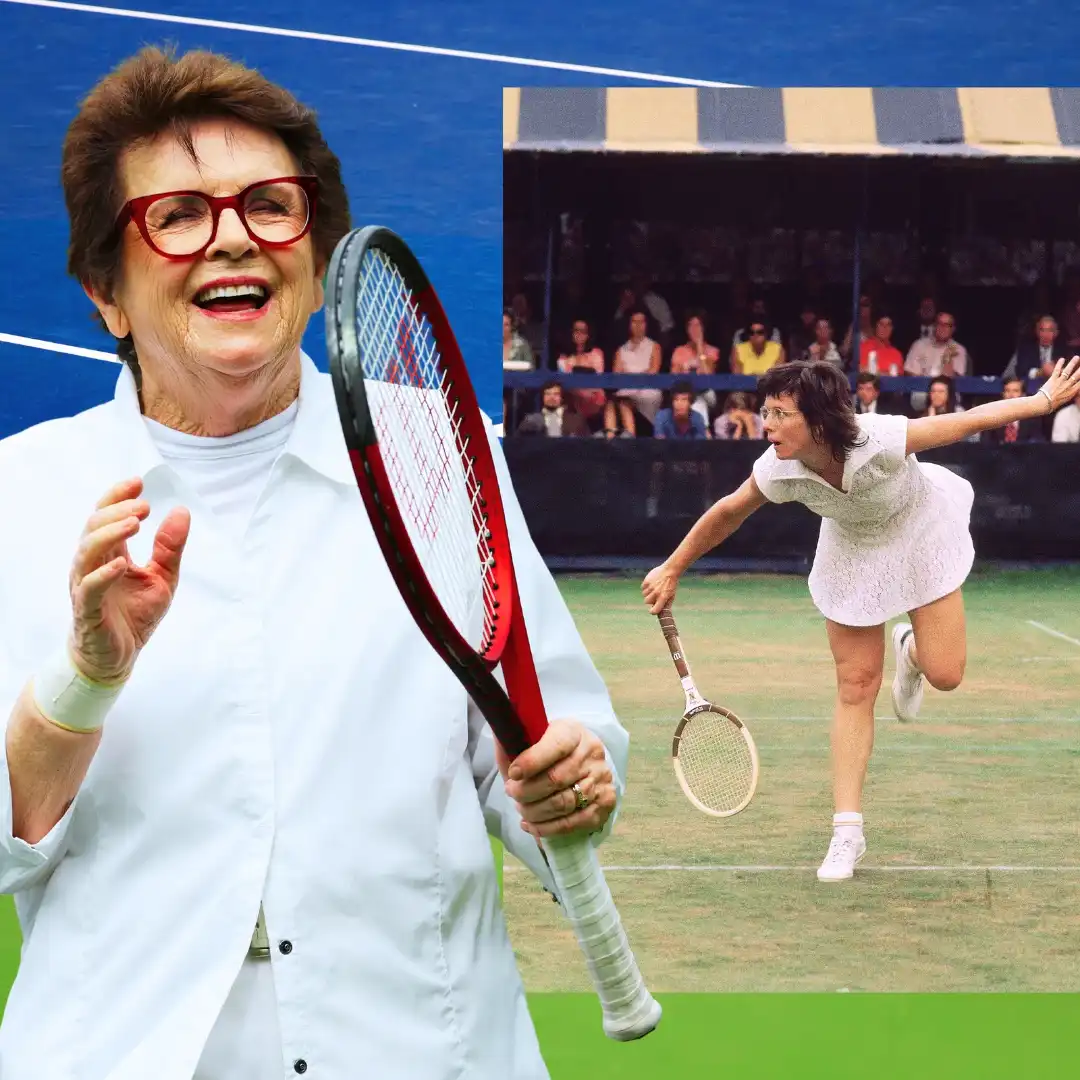
FitnessBillie Jean King Is Back on the Court—And Still Fighting for Women in SportsThe tennis icon shares how she warms up, keeps her body strong, and continues to inspire girls to give movement a chance.By Caroline TienFebruary 4, 2025Rob Newell - CameraSport/Tony Triolo/Getty ImagesSave StorySave this storySave StorySave this storyWhile her days of dominating at the Slams may be behind her, tennis—and fitness in general—still remains a major facet of Billie Jean King’s life. Even today, her passion is obvious. “There’s nothing like it,” the tennis icon tells SELF from her Upper West Side apartment in a January 30 Zoom call. “When the ball hits the strings, it’s magical.”In fact, the 81-year-old spent the first few minutes of the Zoom call talking tennis—in particular, the latest big news in the sport: Madison Keys’s victory at the Australian Open. “I got to text her, tell her, ‘You finally did it!’” King says. “I’ve known her forever, and I’ve watched her progress through the years and seen how she always wanted to win a major…. I’m so happy for her, because she’s such a great person—a very kind, very good person.”For someone clearly still so passionate about tennis, however, it may come as a surprise that King went through a period in which she didn’t play at all. It was only a few years ago—around the height of the pandemic—that her wife, retired South African pro Ilana Kloss, convinced her to take it up again. Sidelined by knee surgeries (she wears braces to play now), King “hadn’t hit a ball for 20 years,” she says. “[Ilana] got me back” into it. Today, the two—who started out as doubles partners decades ago and married in 2018—play on a public-private court at a John McEnroe Tennis Academy location, hitting back and forth on a half-court. Topspin, direction, speed, angle, altitude: “Every ball that comes to me is never the same, ever, so it’s a new thing every time,” King says. “It’s like a new present, a new gift.”While King’s eyesight is still keen—“With glasses, I see 20/10 or 20/15 still”—she’s incorporated strength, agility, and balance work into her off-court fitness routine so she can continue to play strong. Before a rally with Kloss, she often stretches and warms up her muscles with resistance bands. “More limber, less chance to get injured,” she explains. For instance, as she showed in an Instagram reel last October, she’ll use the bands for internal and external shoulder rotation moves (important for full and safe range of motion) as well as biceps and triceps exercises. Then, to prep her lower body, she’ll perform 20 bodyweight squats before starting to hit.What’s more, King is big on lifting weights to maintain and build strength, since muscle mass wanes with age. Even everyday tasks like “picking up packages, picking up or opening a bottle, that gets harder as you get older,” she says. While she appreciates the benefits of lifting, however, it can’t compare to tennis for her. Restarting “absolutely has changed my life,” she says. “I feel better. My brain stays more active.” Since King’s still working full-time—she serves as an Adidas global ambassador, a Women’s Sports Foundation board member, a Professional Women’s Hockey League advisory board member, and a member of the Los Angeles Dodgers and Angel City FC ownership group, among other commitments—she “need[s] that to keep going.”Still, King has never beenjusta tennis player, though she has enough personal accomplishments on the court to make her one of the sport’s all-time greats: With 39 major titles to her name (including one Australian Open, one French Open, six Wimbledon, and four US Open singles titles), she has the third most wins of any female tennis player in history. But King’s impact extends beyond her own life and career. Named one ofLifemagazine’s 100 Most Important Americans of the 20th Century, she had a heavy hand in transforming women’s tennis into the sport we know and love today. Not only did she help found the Women’s Tennis Association, she also successfully campaigned for equal prize money for men and women and defeated Bobby Riggs in the infamous Battle of the Sexes in 1973. In her eyes, though, more progress needs to be made. “Girls are behind. We haven’t had as much attention given to us, in this area particularly,” she says. “And I know it because I’ve lived it forever.”Most PopularLife‘Wicked’ Forced Me to Have a Conversation I Hoped My Daughters Could AvoidBy Jessica ShybaHealthThe One Thing That Reliably Kills Norovirus and How to Keep it From Spreading in Your HomeBy Erica SloanRelationships5 Ways to Feel Less Lonely During the HolidaysBy Hannah SmothersThat continuing crusade is one reason why King has partnered with personal care brand Dove to raise awareness of the body confidence issues that affect a significant percentage of girls in sports. Based on research conducted by Dove and Nike, nearly half of teen girls who quit sports do so because they were told their body isn’t right for it. In a 2022 review published in theInternational Journal of Environmental Research and Public Health,researchers wrote that most female athletes reported facing coach pressure to modify their body shape to better align with the purported ideal for their sport. “I’m so glad I’ve lived long enough to see changes, but we still have so much work to do,” King says. “We”—women and girls—“really are socialized not to trust our bodies.” And, she adds, “body image, body talk, how you think and feel about yourself, is so important in life, not just in sports.”While King’s Dove partnership meshes well with her history of advocacy for women, it’s also informed by her personal experience. She doesn’t specifically say if she faced any criticism about how her body looked as a young, talented, ambitious tennis player, but she came of age in the 1950s and ’60s—an era now widely viewed as a heyday of sexism. “Every girl my age in those days got the message, ‘Why are you trying to do this?’,” she says. “It was considered very masculine to play a sport.” (Not that those gender normsstoppedKing: As frowned upon as it might have been for her, both she and her brother Randy—who later pitched for the MLB—were highly competitive from an early age. “If we lost, I wouldn’t have wanted to be my parents,” she says. “When my brother and I lost, oh my God, we wereterrible.We hate losing.”)Most PopularLife‘Wicked’ Forced Me to Have a Conversation I Hoped My Daughters Could AvoidBy Jessica ShybaHealthThe One Thing That Reliably Kills Norovirus and How to Keep it From Spreading in Your HomeBy Erica SloanRelationships5 Ways to Feel Less Lonely During the HolidaysBy Hannah SmothersAnd King, who started out playing basketball and softball, encountered plenty of dissenting voices along the way once she switched to tennis too—voices she had to figure out how to ignore. In the run-up to the Battle of the Sexes, for example, Riggs famously made comments mocking women and women’s tennis. It “stinks,” he said, according to the Smithsonian American Women’s History Museum. You “can see some pretty legs, but it’s night and day compared to the men’s game.” (And, of course, we all know how the Battle of the Sexes match turned out.)SELF Healthy EatingGet nutrition tips, delicious recipes, and inspo for your grocery list delivered to your inbox just in time for your weekly meal prep.SIGN UPBy signing up, you agree to our user agreement (including class action waiver and arbitration provisions), and acknowledge our privacy policy.Whether you’re 8 or 80, a figure skater or a tennis player, confidence is a big factor in success—a lesson King learned long ago. “It’s really important to have strong self-talk, believe in yourself, even if others do not,” King says. Her own life is an excellent case study. “A lot of people never thought I’d be number one in the world, and I didn’t care what they said—I knew I had to,” she says. “Well, I did care, but I didn’tlistento them. I didn’t take it to heart. My self-talk was strong enough to overcome that.” And, she adds, that’s what she wants girls in sports experiencing low body confidence to learn how to do: “To believe in their bodies, to trust their bodies and say they’re great the way they are.”Related:How Tennis Skirts Have Changed Over 100+ Years of PlayThe Best Tennis Gear for Beginners, According to ProsHere’s What It’s Like To Try Out for the US Open Ball CrewGet more of SELF’s great fitness coverage delivered right to your inbox.

Here’s What Kept the NYC Marathon’s ‘Final Finishers’ Going in the Home Stretch
Sports 2025-12-16 00:26:33

Here’s What Kept the NYC Marathon’s ‘Final Finishers’ Going in the Home Stretch

SportsHere’s What Kept the NYC Marathon’s ‘Final Finishers’ Going in the Home StretchThe first runners to cross the finish line get all the glory—but the last deserve our admiration too.By Caroline TienPhotography by Dolly FaibyshevNovember 5, 2024Save StorySave this storySave StorySave this storyThe home stretch of the New York City Marathon is dusted with confetti—colorful pieces of paper that litter the sidewalks along the last leg of the 26.2-mile course. By 8:00 p.m. on Sunday, most of the runners had long since crossed the finish line, but I wasn’t there to document the winners who took home a portion of the substantial prize pot and the respect of the entire Big Apple: My interests lay with the stragglers.And I wasn’t alone. Nearly nine hours after the first runner broke the tape, a crowd of spectators, volunteers, and other athletes was still in position to welcome the final batch of marathoners—whistling, cheering, and waving glowsticks despite the late hour and dropping temps. Every time a new runner jogged, walked, or limped up, they were congratulated by a dozen strangers, bombarded with high fives, and enveloped in a thick orange marathon-issue poncho to stave off the cold. Tired as they were, they all beamed when the medal was draped around their neck.Many of the “final finishers” who spoke to SELF pointed to this supportive atmosphere as a distinctive aspect of the New York City Marathon. Some had come from afar to compete—occasionally very, very afar. Two women from New Zealand, Rosie Dell, 67, and Alison Shannon, 63, are members of an organization that caters to slower runners and had traveled to New York with an Australian marathon travel agency. “We trained together and we decided to stick together,” Dell told SELF. “When one of us was flagging, the other would say, ‘Have you eaten? Have you had anything to drink?’” Still, there were moments when Dell was tempted to throw in the towel. Around the 10K mark, a rough patch of the course “let some negative thoughts in,” Dell said, but she tried to stay positive. “I can do this,” she told herself. “Left foot, right foot, just keep going.” And, in the end, she did.There were plenty of other duos too. Wearing matching “Black Girls Run!” hats, Char Willis and Joyce Rowlett, both 56-year-olds from the Albany area, finished together around 8:30 p.m. “We’ve been best friends since we were 14,” Willis told SELF. “She’s faster than me, but she didn’t want to leave me behind.” Meanwhile, Waldo Best, 58, of White Plains, New York, said his 25-year-old son popped up next to him on the course around the nine-mile mark and offered some words of encouragement. “I was so surprised when I saw him. I said, ‘What are you doing here?!’” Best told SELF. “But he said, ‘Come on, let’s go.’”Later on, volunteers with the New York Road Runners—the nonprofit running organization that hosts the marathon annually—stepped up to fill that role. “If it wasn’t for those volunteers, I would never have finished,” Best said. “They offer you water, they offer you gels, but they just really walk with you and give you emotional support. It’s very, very challenging to finish a race when everyone else finished a long time ago.” A bad knee that started to act up around the halfway point made the 2024 race “probably the most difficult” of his 12 total New York City Marathons. But “nobody wants to spend a year training for a marathon and not finish,” he said. “So I did. It took forever, my body feels like garbage, but I’m good.”Below, read more about a few of the latecomers who toughed it out through self-doubt, cramps, pain, and crushing fatigue to complete the 2024 New York City Marathon—and notch a rare achievement in the process.Aiko Ogata, 81, and Pamela Ogata, 54, Burbank, CaliforniaFinal time: 8:32:22 and 8:32:23SELF: So you two are mother and daughter?Pamela Ogata:We are. We started our running career with the Leukemia and Lymphoma Society’s Team in Training in 2009. I got her [motioning to Aiko Ogata] involved in running because it’s a great physical activity. It is a great way to combat depression [and shore up] social life and mental wellness as people age.She started at the age of 65. She’s now 81. We do it for ourselves, but we do it for others as well. Every race we do, we pick a charity.How many New York City Marathons have you done?Pamela:This is our first. We went to Tokyo. She didn’t quite finish that, but that was exciting. But she’s done LA a couple of times; Alaska. What else have we done? San Diego, Walt Disney. I’m a Disney buff. I don’t even know what our first race was—SELF Healthy EatingGet nutrition tips, delicious recipes, and inspo for your grocery list delivered to your inbox just in time for your weekly meal prep.SIGN UPBy signing up, you agree to our user agreement (including class action waiver and arbitration provisions), and acknowledge our privacy policy.Aiko Ogata:San Francisco.Pamela:Oh, it might have been San Francisco—the Nike Women’s [race], back in the day. And that particular marathon gave out Tiffany necklaces. Firemen handed them out. So of course, two women, we’re going to sign up for that.Sounds like you two have traveled all around the world for races.Pamela:It’s a way for us to bond. It’s a way for us to just have fun.And for today, what was the toughest stretch of the course for you?Pamela:There were a lot of undulations, and the bridges. Five bridges, I think, and they were tougher than the hills in Boston. It just was nonstop. It gives me a whole new perspective on race strategy. What was hard for you?Aiko:The Queensboro Bridge. You had to do a lot of hill training, and it went on and on.How does it feel, knowing that you completed your umpteenth marathon together and that the whole city is celebrating you?Aiko:I really can’t believe it. I didn’t think that I should do it, but with her support I did it. Being 81 and running this type of course, it really takes a lot out of you. It takes a lot of mental and emotional strength to know that you have so many miles to go on this terrain. And so I’m just proud that I did finish.Pamela:But we have to thank the whole of New York, all the boroughs. You guys really came out and supported us. I mean, to have people out there to the very end cheering you on is absolutely amazing. It made us feel so special. We would like to do it again.Do you have any advice for people who are interested in getting into running marathons a little later in life?Pamela:You know what, they said it to us on the course and we’ll tell you: Just put one foot in front of the other. It doesn’t matter how fast or how slow you go, just keep doing it—it’s the consistency. And enjoy it. Not every training day and not every race is going to be your best, but you’re going to have those really special moments like this where it makes it all worth it. You’re only racing against yourself. It’s a commitment to yourself, right? To say, “You know what? I’m going to take 30 to 45 minutes to do my three-mile run no matter what.”Guillermo Rangel, 71, Monterrey, MexicoFinal time: 11:38:21SELF:How are you feeling now that you just finished?Guillermo Rangel:I’m doing great, but I twisted my ankle. I cannot run. I had to walk the last 13 miles, maybe. But this is my 41st marathon here, so I didn’t want to drop out or quit. I wanted to finish.Do you think you have more in you after this one too?[Nodding vigorously and grinning.] Yes.What keeps you going? What helps you stay motivated when it’s physically tough?Well, I enjoy it. Then, my situation of health. I feel [physically] great because I run. And then you also feel fulfillment because you achieve a lot of goals. Today, well, it’s a different experience because I [am] injured.But you kept going!I kept going. Do you run?I don’t, actually. But it’s impressive seeing so many people run.Little by little, little by little. Just put 10 minutes or whatever [into] walking and running [daily]. And little by little, you will feel how it is inside, the health and your spirit. You are very strong. I’m very grateful because it has a lot of benefits. I strongly recommend it to you.Do you have any other advice for aspiring runners?To look for different experiences. When you go to other places, it’s very interesting because you [get to] know the culture of other countries. I’m from Mexico, from Monterrey, Mexico, but I come every year here—Specifically for the marathon?Yes.Wow, that’s amazing.This is the best. I have been in Berlin, Vancouver, in Paris. But this one is different.What makes this one the best?People. The people. The organization and the city itself. This year, it was so many more people cheering [for] you. It’s beautiful.James Giorgio, 33, Brooklyn, New YorkFinal time: 9:37:44SELF:How are you doing right now after your finish?James Giorgio:Emotionally, I’m riding a very, very high high. It’s great. Physically, I still feel pretty good. I’m surprised, actually. I think the adrenaline is playing a lot into how good my body’s feeling, because I’ve done half-marathons that were a lot harder and I know this is a harder course.What motivated you to want to do the marathon? Is this your first? Your 30th?This is my first marathon. What really pushed me to do it was my wife. She wanted to go running, and she started with runDisney down in Florida. She was practicing late nights, and I didn’t really like the idea of her being alone. So we started making it a group activity. We got to do it together, and learned to love it together. She finished a couple hours ago. She did really well, and I can’t wait to see her.Do you think you’ll run more marathons going forward?I wouldn’t be surprised if I’m back. It was fun. I am tempted to do it again.Clare Sheedy, 23, New York, New YorkFinal time: 9:24:04SELF:Physically and emotionally, how are you feeling right now?Clare Sheedy:Emotionally, I am all over the place. I feel like everything that people say about the New York City Marathon being the best in the world absolutely stands. I don’t know if I would’ve finished if it weren’t for my boyfriend and all the random strangers who hopped in and gave me motivation or walked with me or gave me Biofreeze [pain-relieving gel] or a banana or water. I feel like my faith in humanity is restored a bit, which is really refreshing. Physically, I’m really tired and I am glad to be sitting down. It got to a point where I just couldn’t run anymore because I think the [lactic] acid all built up in my legs, so my knees and legs were feeling it for a good portion of the race.In those moments, what kept you going and what kept you motivated?I think remembering the big picture. Why did I sign up to do this? I fundraise for a charity called PAWS New York. And I think just remembering it was for such a bigger purpose than me that I was doing it.But, also, remembering my mom has battled leukemia the past few years and thinking of her, thinking of everyone that’s suffering the consequences of war and just really kind of channeling all of that to finish today.How long have you been running?It’s my first marathon. I ran cross-country in high school and then kind of fell off for a while, started to pick it back up a little bit. I volunteer with PAWS New York, and they posted that they were looking for marathon runners. And so I was like, Okay, what the heck, maybe I’ll try it out.Do you have any more marathons in your future? Or are you one and done?I don’t know. I mean, I always say, “Give me a couple years to reevaluate.” My boyfriend walked with me the last four miles—I was just in such distress and I was not feeling good—and we were saying next year, we would absolutely love to be spectators, love to cheer everyone on, especially the way that those people that stayed later in the day did for me.Do you two have any plans for after this, in terms of celebrating a little bit?We’re going to go to P.J. Carney’s, which is our local bar and restaurant that we go to all the time. He ran a half-marathon in Central Park and a 10K in the spring, and so we made it a tradition to go there afterward.He must have been a good source of support and advice as you were training for your first marathon.It made it a lot easier. And I think, also, it bonded us a lot more because I understood a lot of what his training was more than I did before. And I think we were able to just kind of connect on a deeper level, which was really nice.Josh Graves, 44, Seattle, WashingtonFinal time: 9:57:46SELF:Of all the people I’ve talked to, you’re among the most alert and energetic still, so I’m so impressed.Josh Graves:Yeah, I don’t know how I’m actually functioning still. [Laughs.] This is my fifth marathon. I have number six on December 1 in Seattle, and then seven is Eugene in April, and eight is San Francisco.I did my fourth one two weeks ago, and that was tough. I spent a lot of time on the course by myself, and that was probably the first time I really had to push myself because I lost course support around mile 17.What led you to start running in the first place, or getting into the marathons?My wife. Somebody had mentioned to her that they didn’t think she could do a half, and it got her into it, and I’m like, “Yeah, I’ll do one half with you.” And then we finished and I saw it was half-price for the next year, so I did it again. Our first marathon was in 2022. And she was so excited to do this one this year.What do you find rewarding about marathoning in general, as a physical feat or an emotional one, or both?Graves:Both. It shows me I don’t give up. It’s really hard to do some of these runs, and when I’m out there at mile 20 and I just want to stop and say, “No, I’m done,” I’m showing myself what I can do. And at the end, that just makes it absolutely worth it. Once you finish, you have such a feeling of accomplishment, a rush of endorphins. It’s incredible.What advice would you give to people who are trying to get into running?I would say start small, like a 5K, 10K, or even a half marathon. Find one that doesn’t have a [time] cutoff and just go.What makes the New York City Marathon worth flying across the country for?Since my wife and I started running a few years ago, we’ve just started finding things that were a little more challenging each time. We like to find new areas to run, and it’s an incredible way to try new things. We’re here for a week, going through everywhere—from Staten Island through all the boroughs. We’re staying just right down from Times Square, so we’ve spent plenty of time there, but it’s also incredible to see everything.And the course support here was amazing. Going through Brooklyn, everybody was just so excited. This city was incredible for a run. I loved it. I’ve never seen an atmosphere like this, and it was constant through the whole city, which is so impressive—for over 26 miles, to have that much support. Everybody’s been amazing.These interviews have been edited and condensed for length and clarity.Related:A Day Out With the Dads and Daughters Who Love Women’s BasketballI Tried the Walk-Run Method at a Major Marathon, and the Results Were SurprisingHow to Turn a Boring Long Run Into an Invigorating Celebration of the Outdoors

Last Year, Ali Truwit Lost Her Lower Leg in a Shark Attack. Now, She’s a Paralympic Medalist
Sports 2025-12-26 20:45:15

Last Year, Ali Truwit Lost Her Lower Leg in a Shark Attack. Now, She’s a Paralympic Medalist

SportsLast Year, Ali Truwit Lost Her Lower Leg in a Shark Attack. Now, She’s a Paralympic Medalist“When you are truly faced with death and you understand what a second chance at life means, you want to make the most of it.”By Jenny McCoy, C.P.T.September 6, 2024Fiona Goodall/Getty ImagesSave StorySave this storySave StorySave this storyFor Ali Truwit, the past 16 months have been a story of trauma, resilience, and—as of last night—triumph.In May 2023, just days after she’d graduated from Yale, the former competitive Division I swimmer was attacked by a shark while snorkeling off the coast of Turks and Caicos. Truwit fought off the animal, which bit off her foot at the ankle, and escaped by swimming some 50 to 75 yards to a boat. After being airlifted to the hospital, she underwent three surgeries, including one to amputate her left leg just below the knee, as CNN reported.Despite developing a (very understandable) fear of the water—Truwit told CNN she was conscious the entirety of the attack—she began competing in para-swim events last October. Several months later, she won a silver medal at the US Para Swimming National Championships, and this past June she qualified for the Paris Games.And now, less than a year and a half after the life-changing attack, she’s one of the top Paralympic swimmers in the world: On September 5, the 24-year-old won silver in the women’s S10 400-meter freestyle at the 2024 Paris Games. Her time of 4:31.39 seconds set a new American record. (Aurelie Rivard of Canada won gold, and Hungarian Bianka Pap clinched bronze.)“It’s a real full-circle moment and speaks to the support I have all around me,” Truwit said to the media following the race. “When you are truly faced with death and you understand what a second chance at life means, you want to make the most of it.”Though brief from an outsider’s perspective, Truwit’s journey to Paralympic podium has been far from breezy. Earlier this year, she told US Paraswimming that “water and swimming were always my first loves.” But the shark attack more than complicated that relationship. As she detailed to US Paraswimming, speed training in the pool unearthed the trauma of having to sprint for her life to the boat; she also had to relearn many aspects of the sport, including how to start from the blocks and flip-turn using just one leg.SELF Healthy EatingGet nutrition tips, delicious recipes, and inspo for your grocery list delivered to your inbox just in time for your weekly meal prep.SIGN UPBy signing up, you agree to our user agreement (including class action waiver and arbitration provisions), and acknowledge our privacy policy.With time, though, Truwit learned to embrace her nonlinear progress.Paralympian Lauren Steadman Had ‘Zero Expectations’ Before Winning Bronze While Managing Long COVIDFor the British triathlete, “just to be on the start line was fantastic.”“Truthfully, at the start, I thought that it was going to be that I overcame the fear and that was it,” she said after the race yesterday, perThe Guardian.“I’ve learned through this journey that that isn’t what this looks like, that there will be days when it’s great and there are going to be days where I have to fight to get that love back, but I say I’m at a 90-10 right now at really feeling comfortable and happy in the water.”Following yesterday’s race, a smiling Truwit—still in her swimsuit and cap—credited her parents for helping instill in her a sense of optimism and gratitude that buoyed her through the tribulations of the past 16 months. “My parents have done an incredible job in raising me and my three brothers to be adaptable and to try to look for the positives in life and appreciate all we’ve been given,” said the Darien, Connecticut, native, perThe Guardian. “And so when I was faced with a life-changing trauma, I worked to see the positives and to focus on gratitude and let that carry me and adapt to the situation I was in.”In that spirit of ebullience, Truwit posted yesterday on her Instagram Story a series of photos from the Paralympics. The caption? “Luckiest girl in the world.”SELF is your go-to source for all things Paralympics. Follow our coverage of the Paris Games here.Related:Paralympic Archer Jodie Grinham Just Competed While 7 Months PregnantIt Shouldn’t Be This Expensive to Be a Paralympic AthleteZakia Khudadadi Just Became the First Athlete From the Refugee Paralympic Team to Win a MedalGet more of SELF’s great sports coverage delivered right to your inbox—for free.

I’m Not a Pro, but These Pickleball Shoes Made Me Feel Like One
Sports 2026-01-12 21:31:16

I’m Not a Pro, but These Pickleball Shoes Made Me Feel Like One

SportsThe Best Pickleball Shoes Make Me Feel Like a ProI tested pairs from Nike, K-Swiss, and more.By Renee CherryApril 29, 2025Courtesy of the brands / Gabrielle CastrillonSave StorySave this storySave StorySave this storyAll products featured on Self are independently selected by our editors. However, we may receive compensation from retailers and/or from purchases of products through these links.Whether you’re a pro pickleballer or you dabble in the sport, your shoe choice matters. The right pair will keep you light on your feet so you can return speedy serves with ease.We get that it’s tempting to wear shoes you already own, especially if you’re a beginner. But playing pickleball in footwear designed for other activities is risky, Bart Bennett, certified pickleball master trainer and cofounder of Always Be Picklin’, tells SELF. “I think the fastest way to get hurt playing pickleball is to play in running shoes,” he says. “I have had my foot completely break through a good pair of running shoes during recreational play. There’s too much side-to-side motion for a shoe with no lateral support.”As the sport gets evenmorepopular, tons of brands are releasing pickleball-specific shoes. So how do you choose the right pair? I interviewed coaches and tested a few shoes out for myself so you don’t have to—shop my favorites below.Our top picksMost Comfortable:Babolat Women's Jet Mach 3, $149Most Lightweight:K-Swiss Women's Express Light Pickleball Shoe, $105$84Best Arch Support:Skechers Viper Court Pro 2.0, $120$110Best for Outdoor Courts:Diadem Court Burst, $150Most Stylish:Nike Zoom Challenge, $107$95Best Ankle Support:Asics Gel-Resolution X, $155Best for Indoor Courts:K-Swiss Ultra Court, $115In this articleAccordionItemContainerButtonLargeChevronShop the best pickleball shoesWhat to look for in pickleball shoesHow we tested these shoesFrequently asked questionsShop the best pickleball shoesThese comfy, grippy sneaks were made for the court.Most Comfortable: Babolat Jet Mach 3ChevronChevronDotsDotsBabolatJet Mach 3 All Court$149$109(27% off)AmazonJosh Gartman, director of coaching and curriculum at CityPickle, gives the Babolat Jet Mach 3 the ultimate stamp of approval: He wears them himself. “As an advanced player who requires support during sharp changes of direction, these shoes deliver exactly what I need, while also being incredibly lightweight,” he says. “They make me feel agile and quick on the court—almost like I’m 10 years younger.”Out of all the shoes I tested for this story, these were hands down the most comfortable out of the box. The upper felt less rigid compared to other pairs. And the midsoles aren’t too cushy, so they still felt stable and responsive whenever I picked up speed.The only catch? They’re not the “most durable option,” Gartman says, so you may need to replace them more often.Pros & ConsAccordionItemContainerButtonLargeChevronProsConsSpringy, responsive midsoleNot the most durableGreat lateral supportExpensiveFelt comfortable right out of the boxProduct specsAccordionItemContainerButtonLargeChevronSizes:5.5 to 11 |Material:Polyamide, rubber |Weight:11 oz.Most Lightweight: K-Swiss Express Light Pickleball ShoeChevronChevronDotsDotsK-SwissExpress Light Pickleball Shoe$105$84(20% off)Amazon$110K-SwissIf finding a lightweight style is high on your list of priorities, the Express Light definitely belongs on your radar. True to their name, they weigh just over half a pound. When I slipped them on, I immediately noticed some extra pep in my step—they didn't drag me down at all.Gartman’s a fan, noting that they're “breathable, comfortable, and well-priced.” Bennett warns that they’re not the most supportive pickleball shoe and says the fit can be too roomy for some, which I also noticed while playing. However, he adds that “the outsoles are good for hard courts and seem to be okay on other court surfaces.”Pros & ConsAccordionItemContainerButtonLargeChevronProsConsAvailable in multiple widthsNot as supportive, compared to other pairsBudget-friendlyBreathableProduct specsAccordionItemContainerButtonLargeChevronSizes:5 to 11 |Material:Faux leather, rubber |Weight:8.6 oz.Best Arch Support: Skechers Viper Court Pro 2.0ChevronChevronDotsDotsSkechersViper Court Pro 2.0$120$100(17% off)Amazon$120$110(8% off)Zappos$125SkechersWhen I tried these sneakers on, I noticed their firm arch support right away. It’s part of what helped the Viper Court Pro 2.0 earn the American Podiatric Medical Association's (APMA) seal of acceptance, which is awarded to shoes that a panel of podiatrists agrees are good for your feet. My pickleball partner, who tried the men's version of the shoe, has flat feet and appreciated the midsole even more than I did. Even if you wear custom orthotics, this shoe can work for you: The insoles are removable, so you can slip your own inside.Gartman loves that the Viper Court Pro 2.0 is comfy and lightweight. Plus, “Goodyear soles make these shoes arguably some of the most durable on the market,” he says. The biggest drawback: It lacks the lateral support that most other picks on this list have, he explains.Pros & ConsAccordionItemContainerButtonLargeChevronProsConsAvailable in multiple widthsNot the best lateral supportDurable solesArch support may feel too firm for someAPMA seal of acceptanceProduct specsAccordionItemContainerButtonLargeChevronSizes:5 to 11 |Material:Mesh, rubber |Weight:11.7 oz.Best for Outdoor Courts: Diadem Court BurstChevronChevronDotsDotsDiademCourt Burst$150Amazon“The Diadem Court Burst is a premium shoe,” Bennett says. “It’s much more hard court-specific—on indoor wood court surfaces, they can be slippery.” It has a reinforced toe guard, which can really pay off during matches. “Toe drags are common in pickleball, so shoes should have extra reinforcement in the toe area to prevent premature wear,” Bennett says. (A toe drag refers to dragging your back toe when reaching to hit the ball.) “A durable toe cap extends shoe life, especially for players who slide into shots or lunge frequently," he adds.Most PopularLife‘Wicked’ Forced Me to Have a Conversation I Hoped My Daughters Could AvoidBy Jessica ShybaHealthThe One Thing That Reliably Kills Norovirus and How to Keep it From Spreading in Your HomeBy Erica SloanRelationships5 Ways to Feel Less Lonely During the HolidaysBy Hannah SmothersI love that they also have a high heel counter (the part at the back of the ankle). Wearing these, my feet felt totally supported, and there wasn’t any extra space in the shoe—including the toe box, where I often havetoomuch room for my toes to breathe.SELF Healthy EatingGet nutrition tips, delicious recipes, and inspo for your grocery list delivered to your inbox just in time for your weekly meal prep.SIGN UPBy signing up, you agree to our user agreement (including class action waiver and arbitration provisions), and acknowledge our privacy policy.Despite the snug fit, there weren’t any points where the shoe seemed too tight or rigid. They helped me sprint across the court without fear of rolling my ankle (a big win).Pros & ConsAccordionItemContainerButtonLargeChevronProsConsFelt particularly supportive during testingOn the heavier sideHas a reinforced toe guardCan be slippery on indoor wood courtsSnug, secure fitNot machine-washableProduct specsAccordionItemContainerButtonLargeChevronSizes:5 to 15.5 |Material:Polyester, rubber |Weight:14.5 oz.Most Stylish: Nike Zoom ChallengeChevronChevronDotsDotsNikeZoom Challenge$125$117(6% off)Amazon$120NikeThe sleek Zoom Challenge from Nike comes in bright color combos that would match any pickleball paddle—but they're not all looks.One of the first things I noticed is their wide base: The outsole extends past the toe box on either side. I loved having that wider base of support when I was moving sideways. The shoe also has extra rubber at the toes for durability and padding underneath the heel for comfort.Pros & ConsAccordionItemContainerButtonLargeChevronProsConsReinforced toesSome reviewers report that the outsoles wear down quicklyProvided great lateral support during testingUpper has breathable mesh panelsProduct specsAccordionItemContainerButtonLargeChevronSizes:5 to 12 |Material:Mesh, rubber |Weight:10.4 oz.Best Ankle Support: Asics Gel-Resolution XChevronChevronDotsDotsAsicsGel-Resolution X$155Amazon$160$155(3% off)Zappos$160AsicsWhile it’s categorized as a tennis shoe, Asics’ Gel-Resolution X is Bennett’s rec for pickleball players. “The shoe has great cushioning and is stable with quick side to side bursts, and the toe is durable to toe drags,” he says. “It's less breathable than other shoes, but overall, a great shoe.” I noticed that solid toe box right away—and, while the shoes are supportive throughout, I like that the sole is still a little flexible, for pushing off into a sprint.Most PopularLife‘Wicked’ Forced Me to Have a Conversation I Hoped My Daughters Could AvoidBy Jessica ShybaHealthThe One Thing That Reliably Kills Norovirus and How to Keep it From Spreading in Your HomeBy Erica SloanRelationships5 Ways to Feel Less Lonely During the HolidaysBy Hannah SmothersAlthough they’re pricey, they tend to last longer than other options, Bennett says, making them a great investment. The inner collar is raised for better ankle protection (no twists or sprains here), and reinforcements in the midsole wrap from the outside of your foot around to your heel for stability. One downside? The shoe dug in at the back of my ankles, so you may want to plan on a break-in period.Pros & ConsAccordionItemContainerButtonLargeChevronProsConsWide range of sizesPriceyHas a high inner collar for added ankle supportOn the heavier sideAvailable in multiple widthsProduct specsAccordionItemContainerButtonLargeChevronSizes:5 to 12 |Material:Polyester, rubber |Weight:13 oz.Best for Indoor Courts: K-Swiss Ultra CourtChevronChevronDotsDotsK-SwissUltra Court$125Amazon$120K-SwissIf you plan to play indoors, it’s important to wear sneakers that won’t leave marks behind, Bennett says. K-Swiss's Ultra Court shoes fit the bill.They felt feather-light and comfortable from the first try-on, even before I’d had a chance to break them in. Compared to the other shoes I tested, they have a slimmer profile, making them look less clunky on the court. Also nice to have: A breathable upper that won’t trap sweat and a midsole made with thick, springy foam.Pros & ConsAccordionItemContainerButtonLargeChevronProsConsLightweightDidn’t provide as much stability as other pairs during testingAvailable in multiple widthsNon-marking solesProduct specsAccordionItemContainerButtonLargeChevronSizes:5 to 11 |Material:Faux leather, rubber |Weight:9 oz.What to look for in pickleball shoesHere’s how to find a pair of pickleball sneaks you'll love playing in.FitAccordionItemContainerButtonLargeChevronThe golden rule: “What matters most is that it’s acourtshoe, not a running or walking shoe, and that it fits your foot,” CJ Johnson, a pickleball coach with Better Pickleball, tells SELF.A proper fit is secure, but comfortable. Your shoes should be snug enough that your foot doesn't move around inside them, but not so tight that they'll cause blisters, Bennett adds.Arch supportAccordionItemContainerButtonLargeChevron“Arch support is crucial for preventing foot pain, especially for players with high or flat arches,” Bennett says. If you're in either camp, consider looking for a shoe with some extra support in the midsole, to prevent mid-match foot fatigue.Durable outsoleAccordionItemContainerButtonLargeChevronLook for shoes with outsoles that are made of durable rubber, Bennett says. “Indoor pickleball shoes are more similar to volleyball or badminton shoes, featuring softer, grippy soles for traction on wood or synthetic floors,” he says. “Outdoor shoes are more like tennis shoes, with tougher rubber outsoles to withstand rougher court surfaces.”ComfortAccordionItemContainerButtonLargeChevronFoam midsoles or gel cushioning can reduce the stress on your joints, Bennett says. He adds that extra heel padding for shock absorption and a secure, flexible fit will also make a shoe feel more comfortable.Lateral supportAccordionItemContainerButtonLargeChevronIn pickleball, your shoe can protect you from mishaps when you move laterally (side-to-side). “Shoes should have reinforced sidewalls and a stable base to prevent ankle rolling,” Bennett says. “A low-profile design with a wide outsole helps improve balance and control during quick direction changes.”How we tested these shoesI wore each pair of shoes on this list for an outdoor pickleball match on hard courts. I paid close attention to how supportive the shoes felt when I picked up speed, especially during lateral movements. I also assessed each shoe’s level of cushioning, arch support, traction, and whether they felt lightweight or relatively heavy. Only shoes I felt comfortable and confident playing in earned a spot on my final list.Frequently asked questionsWhat's the difference between pickleball shoes and tennis shoes?AccordionItemContainerButtonLargeChevron“Compared to tennis, pickleball has more quick stops, sudden starts, and a lot more side-to-side motion because of the smaller court," Johnson says. "Which means tennis shoes can work for pickleball, but they aren’t built for the specific movement demands.”She adds that a true pickleball shoe is stable enough for quick, lateral movements. It should also have a wider toe box, to prevent bruising when your toes hit the front of the shoe during fast stops.How often should I replace my pickleball shoes?AccordionItemContainerButtonLargeChevronPretty frequently. “I typically replace my pickleball shoes every three to four months, as an avid player who plays three to four times a week,” Gartman says. “For those who play less frequently, closer to six months might be fine—and for those who play more often, it could be every two to three months.”It may seem excessive, but “shoes lose their tread over time, and pickleball players often wear holes near the toe area due to all the quick stop-and-start movements on court,” Gartman says.Related:The Best Alo Yoga Clothing to Add to Your Rotation Before It Sells Out (Again)Personal Trainers Share Their Favorite Sneakers for Every ActivityThe Best Polarized Sunglasses for All Your Outdoor AdventuresGet more ofSELF’s stellar deal alerts and product recommendations delivered right to your inbox (for free!).

Soccer Star Alex Morgan Has Retired from Competition—Both on and off the Field
Sports 2025-12-18 19:04:09

Soccer Star Alex Morgan Has Retired from Competition—Both on and off the Field

SportsSoccer Star Alex Morgan Has Retired from Competition—Both on and off the FieldTired of being pitted against other moms, she's partnering with organic formula company Bobbie for their campaign 'There’s No Scoreboard in Motherhood'By Mara SantilliSeptember 4, 2025Collage: Self; Source Images:Courtesy of Bobbie, Meg Oliphant/Getty Images, Paper Whistle, annomariaSave StorySave this storySave StorySave this storyIn 2020, at seven months pregnant, Alex Morgan was still training with the US Women’s National Soccer Team. In a viral video, you can see her doing drills in a sweatshirt that reads “LFG USA.” It was clear the soccer star had no intentions of giving up her love for the sport when she became a parent.Morgan, now 36, played a pivotal role in helping build the National Women’s Soccer League (NWSL)—widely considered the world’s best professional women’s soccer league—both as a player beginning in 2013, and now as an investor in her former club, the San Diego Wave. In addition to her three years as a forward on the Wave, her résumé also includes two Olympic medals with the US Women’s National Soccer Team and two World Cup championships. But it’s her accomplishments off the field—building a family alongside her husband, former pro soccer player Servando Carrasco, and raising two kids—that she hopes serves as an inspiration for other athletes who are also moms.She gave birth to her daughter, Charlie, in May 2020 and returned to the field less than six months later, which was a longer break than she would have had if the Tokyo 2020 Olympics had not been postponed to 2021. The mental and physical strain was difficult enough that she decided growing her family meant speeding up her retirement from soccer. Early into her second pregnancy, in September 2024, Morgan decided to end her 15-year professional career and gave birth to a son, Enzo, in March.Morgan is now speaking out about her pregnancy, the postpartum pressures athletes face, and how she’s hanging up the stigma of moms being compared to one another—along with her cleats.“It's been so great just being able to take a lot more time this time around with the kids,” she tells SELF. Today, life six months postpartum looks much different than it did the first time around. “I mean, at this time, with [Charlie], I was moving to London to play with Tottenham Hotspur.” Plus, it was 2020—so she was dealing with a pandemic, tending to her postpartum body, and adjusting to a new country and city. Morgan was simultaneously prepping for the Tokyo Olympics, and says she felt like the only person who was parenting while playing on the US Women’s National Team. “I felt my body stretching in ways I wasn’t used to before,” she says.After her second pregnancy, she didn’t push herself to her physical limits. “I felt like I took care of my body, but I also gave it the grace to not go on a run or get in the gym,” she says. “And my body responded really well this time around, in being able to give birth and get back to feeling good. I actually feel like it was the not having all that pressure on myself to get back quickly on the field.”Though most of us don’t face the same physical pressures as pro athletes, there is one aspect of new motherhood Morgan describes that is entirely relatable: breastfeeding stress. Like many new parents, Morgan worried about whether her baby was getting enough milk to hit all of the right growth markers. On top of that, she was focused on getting back in the gym and on the field. With her second, “I just listened to my motherly instinct,” says Morgan, who proudly shares that she’s combo feeding her son breastmilk and formula, and says there’s nothing “unhealthy” or “imperfect” about it.SELF Healthy EatingGet nutrition tips, delicious recipes, and inspo for your grocery list delivered to your inbox just in time for your weekly meal prep.SIGN UPBy signing up, you agree to our user agreement (including class action waiver and arbitration provisions), and acknowledge our privacy policy.In an attempt to shake off the pressure of the postpartum “snapback” and counter the idea that breastmilk is the only appropriate way to feed a baby, Morgan decided to partner with organic infant formula company Bobbie for their new campaign, There’s No Scoreboard in Motherhood. Taking note from other famous moms on the company’s “Motherboard,” like tennis star Naomi Osaka and model Ashley Graham, Morgan joined in celebrating the company’s nonjudgmental support of moms.And it’s helped her in her feeding journey with her son too. “I don't want to come to a point where I’m really stressed about finishing breastfeeding or looking at combo feeding and not have a place to turn confidently,” Morgan says. “There's this sort of stigma where moms feel like they can’t talk about their feeding journey because of fear of being judged by other moms.”Most PopularLife‘Wicked’ Forced Me to Have a Conversation I Hoped My Daughters Could AvoidBy Jessica ShybaHealthThe One Thing That Reliably Kills Norovirus and How to Keep it From Spreading in Your HomeBy Erica SloanRelationships5 Ways to Feel Less Lonely During the HolidaysBy Hannah SmothersHer partnership feels like a natural extension of her advocacy work in the NWSL league and on the US Women’s National Team. In 2021, Morgan joined forces with Orlando Pride teammates Sydney Leroux, Ashlyn Harris, and Ali Krieger, who at the time had four children between them, to negotiate better parental leave and childcare benefits for women soccer players. “This was something that we had to do for ourselves to continue playing,” says Morgan.The NWSL signed a Collective Bargaining Agreement in 2022, guaranteeing fully paid salaries for players throughout their pregnancies, plus paid parental leave for birth and adoptive parents. “That’s created a pathway for these athletes to play and have their career a lot longer than initially thought,” Morgan adds. They no longer have to choose between retiring early to start a family and continuing to play for a full salary. And athletes don’t have to be pushed to get back on the field immediately after birth. “You can’t go from birthing a baby to playing soccer in six weeks. It’s just not realistic and creates more injuries,” says Morgan.She negotiated with her most recent NWSL club, the San Diego Wave, as well as the US National team for better accommodations for players traveling with babies and small children, and for nursing moms who might be either bringing their babies along or need support with pumping. Morgan advocated for children of Wave players to be given their own airplane seat at age one, particularly for long, cross-country flights. While many teammates had the luxury of being able to rest on the flight before training and playing a game the following day, moms like Morgan would be holding a baby the entire time. “That just is not giving me the support that I need in order to excel at my sport,” she says.Most PopularLife‘Wicked’ Forced Me to Have a Conversation I Hoped My Daughters Could AvoidBy Jessica ShybaHealthThe One Thing That Reliably Kills Norovirus and How to Keep it From Spreading in Your HomeBy Erica SloanRelationships5 Ways to Feel Less Lonely During the HolidaysBy Hannah SmothersFor Morgan, “saying ‘there is no scoreboard in motherhood’ is all about supporting each other and getting the support that we really need,” she explains. It means that female athletes can parent in the way that’s most comfortable for them and get the benefits they deserve while they do their jobs.As Morgan adjusts to the pace of retirement, her main focus is her family’s well-being. Her daughter, Charlie, recently decided she “likes her baby brother,” Morgan laughs. In her book, that’s as big a win as any World Cup victory.Related:Megan Roup Wants You to Be a Little More SelfishWhy Every 20-Something Needs a Friend in Their 40s5 Reasons Coco Gauff Is the Tennis Superstar of the MomentGet more of SELF’s great service journalism delivered right to your inbox.

JuJu Watkins Hasn’t Stopped Putting in the Work
Sports 2026-01-15 01:51:04

JuJu Watkins Hasn’t Stopped Putting in the Work

SportsJuJu Watkins Hasn’t Stopped Putting in the WorkIn the wake of a career-pausing ACL tear, the USC Trojans star guard is tackling rehab with her signature intensity.By Erica SloanPhotography by Caroline TompkinsDecember 4, 2025Save StorySave this storySave StorySave this storyAll products featured on Self are independently selected by our editors. However, we may receive compensation from retailers and/or from purchases of products through these links.It’s March 2025, and JuJu Watkins is on fire. The USC Trojans star guard—then a sophomore and largely considered the best player in women’s college basketball—has led her team to its deepest NCAA tournament run in decades. Watkins is fearless in the high-stakes, round-two game against Mississippi State, driving down the court with her signature aggression and power on full display. Suddenly, her right knee buckles, and she hits the hardwood. The packed stadium grows quiet as her teammates gather around a tearful Watkins, writhing on the floor, grasping her knee. After a tense minute that feels like 10, she’s carried to the locker room. Her team goes on to win the game (and make it to the quarterfinals before losing to UConn). But for Watkins…well, time stood still as she was engulfed by pain—and denial.“I mean, I could barely walk…but I was like, ‘Oh, this can’t be that bad,’” Watkins tells SELF. It turned out to be the dreaded torn anterior cruciate ligament, or ACL, an injury that women are three to four times as likely to sustain as men. Part of Watkins’s denial was simply the result of being 19 years old, plenty early in her career to bounce back stronger and young enough to be a bit naive. “It was my first injury, so I didn’t know what it would feel like to actually tear something,” she says.SELF Healthy EatingGet nutrition tips, delicious recipes, and inspo for your grocery list delivered to your inbox just in time for your weekly meal prep.SIGN UPBy signing up, you agree to our user agreement (including class action waiver and arbitration provisions), and acknowledge our privacy policy.But even when reality sank in, the sadness was short-lived. Not because Watkins wasn’t grasping the gravity of the situation—she would be sidelined for the remainder of that NCAA tournament and the entire current 2025-2026 season (it takes 9 to 12 months, on average, to heal from an ACL tear). But rather because she could quickly “see my future past this injury, what I’ll be able to learn, how I’ll evolve,” she says.It’s a testament to Watkins’s resilience, both on and off the court. It’s a trait you need to have as someone who rose quickly from middle school hoops to WNBA draft pick rumors. In season one of her NBC Sports docuseries “On the Rise: JuJu Watkins,” which just launched its second season in November, USC women’s basketball head coach Lindsay Gottlieb recalls first hearing the buzz about “this eighth grader JuJu Watkins, down in LA” when she was head coach at Cal. Years later, the prospect of coaching Watkins helped sway Gottlieb to leave the NBA for her role at USC.What came next was what’s been coined the “JuJu Effect:” a record-shattering start to her college career that has more than quadrupled the number of fans at Trojans home games, followed by a flurry of NIL deals including what sources have described as one of the richest shoe endorsement deals in women’s basketball with Nike. A Superbowl commercial. A massive mural in LA. A State Farm ad:“You need good juju?!”Her court look went viral, with fans scrambling for intel on her signature bun. She scored the first professional makeup brand endorsement in women’s college basketball with NYX. Caitlin Clark even passed along her personal cell in case Watkins needed tips on managing being thrust into stardom. (Watkins will likely be eligible for the WNBA draft in 2027, based on current rules, and says she’s “excited for that chapter of my life.”)When we chat, however, Watkins is humble, quick to point out the obvious shortcoming on her goal list: She hasn’t won a championship. I ask what she’s most proud of when she looks back at the accomplishments shehasnotched, and she says she’ll give me two answers: tangible and intangible. The former “has to be Naismith,” she says, referring to the 2025 Naismith Women’s College Player of the Year award: “I am always super grateful for individual awards, but that one in particular is something I’ve dreamt of since I was a kid.” And the intangible? “The resilience I’ve gained,” she says, “as both an athlete and a person.”It’s an apt word choice in the context of her current status, rounding out month eight of her ACL recovery journey. Once she was able to “rearrange my mindset from being distraught to motivated” in those days post-injury, she says she was “ready to dive into this next phase.” Two weeks later it was time for surgery, and the following day she was in rehab.Enthusiasm aside, the tedium of those first few weeks was tough. She spent them maneuvering around her apartment in crutches and “literally relearning how to bend and raise my leg,” she says. Then began the slow process of reactivating her leg muscles, like her quads and glutes, first by just flexing them while seated, next involving resistance bands and eventually isometric moves like wall sits and lunges. And these weren’t your run-of-the-mill 10- or 20-second holds. “We built up to a minute at a time, five sets, because of her ability, as an athlete, to withstand the fatigue and burning of the muscle,” Jason Park, PT, DPT, one of Watkins’ physical therapists and the director of performance physical therapy at MMVP, tells SELF. It was as grueling to Watkins as it sounds, if mostly because of the glacial pace. “I never realized how impatient I was until this injury,” she says, laughing.By the second month, “my North Star was just being able to drive again,” she says. She was getting stir-crazy in her apartment, and no offense to her parents, who stayed with her in those first weeks post-injury to help out, but she craved her independence. Instantly, I’m reminded that JuJu, the basketball phenom, is also JuJu, the college junior.It’s what makes her unwavering commitment to rehab all the more impressive, Dr. Park says: “She’s taken it as seriously, if not more so, than athletes much older.” While mustering through those early days may have been a bit of a drag, each one counted as a step forward to Watkins, who approached them with the mental intensity she’s known for on the court.Once Watkins hit months three and four post-injury, she could pour her physical energy into rehab too. She was able to start moving faster, jumping again, powering up in the weight room. And in the past couple months, short sprints and even some dribbling and shooting have also been on the table. “Whenever we’re doing anything active, I’m excited,” she says.Her positivity and verve are palpable, even via Zoom. As Dr. Park puts it, Watkins has “this innate ability to find the win in any situation.” She was quickly able to see, for instance, that watching games from the sidelines this season, alongside Gottlieb, will allow her to strengthen her basketball IQ, Dr. Park says. She’ll also have more time this school year to rewatch tape and work on the mental side of the game, she points out.“Of course, the FOMO will always be there,” Watkins concedes, softening for a moment. We’re talking just ahead of USC’s season opener, which is bound to bring up some sadness. But it’s mostly bittersweet, she adds, because “I’m still happy to be around basketball even if I’m not playing. And I’m going to stay true to my role on the team this year, which is being there supporting, cheering them on, and helping out in any way I can.” Case in point: Dr. Park recalls her charging up the stairs ahead of a recent conditioning session for the team, hauling all of her teammates’ water bottles and resisting declarations from an athletic trainer that she didn’t need to do that: “Iwantto carry the waters for my team,” she replied.Looking ahead, Watkins also has a positive mindset about her return to the court for her senior year and picking back up where she left off, which she credits to “becoming confident in my abilities and having so much faith.” Not to mention, she’ll have the chance during rehab to spend time working on core fundamentals, like ball-handling and reading the defense, in ways she might not have been able to in a regular season, Dr. Park says. We can expect to see even more finesse on the court, an even more cerebral JuJu on the other side of this, he forecasts.But if the time away has already given Watkins anything, it’s a reminder of the joy this game has always brought her—ever since she first walked onto a court as a tall-for-her-age kid with “athletic genes and a lot of energy” to blow. “Honestly, when I get back, I will just be so happy to play basketball,” she says. “I don’t know if I really care about things that could go wrong.” Though if you know Watkins, you also know she rarely misses a rebound.Photographer:Caroline TompkinsHair:Kelli FindleyMakeup:Pircilla PaeOn-set Production:Leigh Culbertson

Here’s What Ilona Maher Does to Get Through Bad Body Image Days
Sports 2025-12-16 04:58:37

Here’s What Ilona Maher Does to Get Through Bad Body Image Days

SportsHere’s What Ilona Maher Does to Get Through Bad Body Image DaysThe rugby star knows self-acceptance is an ongoing journey—which is why she relies on these three mental exercises.By Jenna RyuSeptember 23, 2024Gilbert Flores/Getty ImagesSave StorySave this storySave StorySave this storyThe beauty standards in our antiaging, pro-thinness culture can feel impossibly high, so it’s no wonder that so many of us deal with bad body image days—yep, even Olympic athlete andSports Illustratedcover model Ilona Maher.The rugby bronze medalist, who just returned from the 2024 Paris Games and is currently competing in the newest season ofDancing with the Stars,has been super vulnerable about her own self-acceptance journey. She’s shared a photo of her cellulite with her followers to prove “we all have it,” posted a friendly reminder that “there isn’t one body type for female athletes,” and taken down trolls who criticized her body mass index.But that doesn’t mean Maheralwaysfeels great about herself—and yesterday was one of those off days. “Just keeping it real with you, so I wanted to just let you know I’m not feeling too body confident right now,” Maher admitted in a TikTok video posted on Sunday. “But that’s okay.” In moments like these (which, she noted, are completely “normal”), Maher said she usually leans on three simple strategies to lift her spirits—and we’re here for all of them.Her first mental hack? “I try to remember what my body does for me,” she said. That could look like going on a run, she explained, lifting weights, or dancing her heart out (which she’s been doing a lot of onDWTSlately). Basically, it’s about celebrating all the cool things your arms, legs, stomach, whatever can do—rather than fixating on how they look.The second thing she tells herself: That her body is always changing. Most people don’t have the same physique they had 10, 5, maybe even two years ago—and that’s totally normal. “Whether we’re in a different part of our cycle, whether we’re eating more, eating less, working out more—I’m not working out as much I usually do, so that’s why my body’s changing a little bit,” Maher added. Beyond lifestyle shifts, though, bodies can outgrow themselves simply because that’s just a natural part of getting older, as SELF previously reported. And while lots of us (including Maher) may forget this reality—or struggle to accept it—experts say it’s important to remind yourself that just as you’re evolving, your body is too.Finally, Maher said she’s learning to give herself grace whenever that mean, critical voice starts to mess with her self-esteem. “It’s hard for me in this time,” Maher explained, noting that she’s still adjusting—physically and mentally—to her post-Olympics routine and newDWTSschedule. Through all these changes, Maher said she’s committed to showing herself kindness (which, BTW, is a therapist-approved way to buffer the mental health consequences of self-criticism).SELF Healthy EatingGet nutrition tips, delicious recipes, and inspo for your grocery list delivered to your inbox just in time for your weekly meal prep.SIGN UPBy signing up, you agree to our user agreement (including class action waiver and arbitration provisions), and acknowledge our privacy policy.And for anyone else struggling with moments of insecurity, Maher has one final message: “Take a breath,” she said in her TikTok. “Remind yourself you’re beautiful. It’s okay if you’re going through [this].”Related:This Is Your Sign to Finally Get Rid of Your “One Day When I’m Thinner” Clothes5 Sneaky Ways Diet Culture Might Still Be Messing With YouHow to Build Your Confidence So You Can Have the Life You DeserveGet more of SELF's practical mental health tips delivered right to your inbox—for free.

Dance Parties, Bus Bunks, and Deep Conversations Are All Part of the Gold Over America Gymnastics Tour
Sports 2026-01-11 02:06:14

Dance Parties, Bus Bunks, and Deep Conversations Are All Part of the Gold Over America Gymnastics Tour

SportsDance Parties, Bus Bunks, and Deep Conversations Are All Part of the Gold Over America Gymnastics TourFour athletes gave SELF an inside look as they prepped for their Brooklyn performance.By Caroline TienPhotography by Dolly FaibyshevOctober 17, 2024Save StorySave this storySave StorySave this storyWhen the lights went down in Barclays Center at 7:30 p.m. on October 5, the screaming started—a deafening roar that several of the gymnasts on the Gold Over America Tour had warned me about earlier in the day. Bring earplugs, one or two had even advised. Sitting in the stands, I wished I had, but I couldn’t fault the fans making all the clamortoomuch. Most of the audience were kids—a demographic known for expressing enthusiasm in decibels—and they were watching some of their absolute idols perform right in front of them.Spanning close to two months, the Gold Over America Tour is a coast-to-coast odyssey, currently in its second iteration, that takes prominent gymnasts across the US to showcase their skills; the goal is to bring the sport to a wider audience and inspire the next generation of bar, beam, floor, and vault stars. But while you’ll see flips, twists, and some really wild stunts, it’s unlike a traditional gymnastics competition: Performers don fun costumes and do choreographed dance numbers that incorporate pop-culture trends along with incredible tumbling passes. My favorites included a “Barbie”-themed segment and a series of romantic dance duets set to Taylor Swift’s “Love Story.” (In fact, the show’s soundtrack features multiple T-Swift songs, a creative decision that elicited a lot more screams.)While headliner Simone Biles is the most famous face of the tour, plenty of other Team USA Olympians signed on this year as well, including Jade Carey, Jordan Chiles, Hezly Rivera, Brody Malone, Frederick Richard, and Paul Juda. (Pommel Horse Guy, a.k.a. Stephen Nedoroscik, alas, isn’t among them, presumably due to his “Dancing with the Stars” commitments.) The ensemble also includes non-American Olympians, college stars, and other top gymnasts.I watched all the athletes in their full glory during the show, but I was lucky enough to get a sneak peek earlier in the day: The GOAT folks invited SELF behind the scenes, so I headed backstage around 4:30 p.m. to chat with some of them and watch their warm-ups. Sprawled on the blue competition mats, the group talked, bantered, and joked like “a bunch of cousins,” as Peng-Peng Lee, 31, a Canadian gymnast who was set to compete at the 2012 London Games before an injury sidelined her, described it to me.On the mats, Lee caught up with Joscelyn Roberson, 18, an alternate for Team USA in Paris and a University of Arkansas freshman. Mélanie de Jesus dos Santos, a 24-year-old French gymnast who competed at the Tokyo Games in 2021, sat with her legs pulled to her chest under an oversized striped sweatshirt as she scrolled through her phone. To her right, Katelyn Ohashi, 27, a former UCLA Bruin whose joyous floor routine at the 2019 Collegiate Challenge went viral, styled Carey’s hair, weaving small sections into braids—their longstanding pre-show ritual.If hanging with close friends on a near-constant basis while doing what you love sounds like heaven, the stars of the Gold Over America Tour are living your wildest dream. The world of elite gymnastics is a small one, so most had crossed paths at some point before joining, but the tour is an immersive bonding experience like few others. The cast members mostly travel together, practice together, sleep on their respective buses together, and explore their host cities together. “It’s cool to be able to get to know each other on a deeper level,” Lee said as she applied makeup in a mirrored room along with Roberson, de Jesus dos Santos, and Ohashi. “And at the end of the day, we all can relate to each other in some sense.”Soon, the dressing tables took on the appearance of an oversized bathroom vanity, covered in tubes, sprays, bottles, compacts, and palettes. As hands flew back and forth between beauty blenders, brow combs, mascara wands, and more brushes than I could count, Roberson, de Jesus dos Santos, Ohashi, and Lee talked about what performing in the show—and living together on the road—is really like. Read on as the gymnasts share their “deep, deep question” sessions, new nicknames for each other (and what “Boss Baby” really means), how that sleeping situation actually works, and why the tour represents a “full-circle moment.”SELF: To start with, can you walk me through your pre-show routine?Peng-Peng Lee:Ooh, man. Where to start?Joscelyn Roberson:We have call time around 4 p.m., 4:15 p.m. every single day. Until then, I usually do schoolwork or hang out, whatever.Last night, me and Jade [Carey], we stayed on the bus and studied. We are both in college right now, so we’ll be like, ‘Okay, we have to make sure we get this assignment done before we do anything else.’ So it’s really fun to have that little bond and pact to make sure we’re both staying accountable.SELF Healthy EatingGet nutrition tips, delicious recipes, and inspo for your grocery list delivered to your inbox just in time for your weekly meal prep.SIGN UPBy signing up, you agree to our user agreement (including class action waiver and arbitration provisions), and acknowledge our privacy policy.And then after call time, I go throw my hair up super quick, get in my warm-up gear, and then practice. After that, I go do my makeup and my hair and then get in costume. Then, it’s showtime.Mélanie de Jesus dos Santos:I’m quite a morning person. I always wake up with music, take a shower, and I generally try to walk around the cities where we stop to explore as much as I can. I also make sure to grab a coffee, of course. After that, I head back to the arena to start my makeup and hair, which usually takes me about an hour.Lee:Katelyn and I have a different role this year [primarily as hosts and dancers], so we’re doing a lot of stuff on the mic. So I try to do vocal warm-ups. Sometimes I eat before the show.But then we all come together at call time. Since there’s so many of us, we do things together. No one’s ever alone, which is nice. And then by the time the show comes, it’s cool going, ‘Oh, what makeup are you going to do today? Oh, what are you going to do with your hair?’ It’s kind of like a big-sister bonding moment.Because the tour has a gold theme, a lot of us are doing more gold-toned makeup, but it really just depends on how we’re feeling. Sometimes we’re just putting stuff on our faces, and we’re like, ‘Oh, that looks good.’ Yesterday, Katie did a really cool blue eyeliner or blue mascara that popped so nicely in the lights, so it’s fun just playing around. And Jordan [Chiles] had rhinestones on her eyes the other day.Katelyn Ohashi:Yeah, like Peng does Jade’s makeup every day and I braid Jade’s hair every day. Sometimes we’ll go for a walk depending on the city if we want to explore a little bit. Maybe shop for stuff to put in the bags that we don’t have space in.SELF: Any favorite cities you’ve been to so far? Or specific tourist stuff?Roberson:Philly was definitely my favorite. I went once when I was younger, and I love the “Rocky” movies, so going to see the Rocky steps and the Rocky statue was really cool.And the show also had the best vibe, I think. The audience members were singing all the songs, cheering for everyone. The kids really loved the whole show, and we could feel that from all the way down on the floor.Lee:Yeah. No one had sung the songs before.Ohashi:We turned pop stars suddenly.SELF: The GOAT schedule is pretty busy—multiple consecutive days of performances. What is it like dealing with constant travel?Ohashi:Well, we sleep on the bus most nights [in built-in bunks]. Unless we have an off day, when we get to have a bed [in a hotel]. But it’s actually really fun because you go to bed and wake up with your girlfriends. Sometimes we’ll stay up late chatting or just—Roberson: Flipping!Lee:Flipping, having a little dance party on the bus. Our group likes to dance.Lovesto dance. We can bring that energy anywhere. Sometimes it’ll be in the middle of the street.Roberson: Like last night, we had an early bus call, so we all went out into the parking lot where our buses were and just danced.Lee:Jordan [Chiles] had a boom box then.Ohashi:One of our guys, Yul [Moldauer], he DJs, so he brought his little DJ setup.SELF: Sounds like a big slumber party! Is it physically tough to be on the go all the time?De Jesus dos Santos:It’s true that from the outside, it might look exhausting. And yes, it is tiring, but I’m happy to be here! I feel the fatigue differently—my body and muscles are definitely tired after the show, but honestly, at night I’m exhausted because I’m having so much fun.Roberson:We have a PT on the bus that travels with us. I think recovery is really important—so getting treatment, getting good rest, and then making sure you’re ready and really warmed up for the shows. Your body is your instrument on this trip, so making sure it’s as healthy as it can be is the most important thing.SELF: Is there anything specific that you try to do after a show so you’re feeling as good as you possibly can for the next one?De Jesus dos Santos: What helps me the most is mental recovery, so doing lots of things outside of gymnastics. Physically, I recover pretty quickly, so I don’t have a strict routine.Roberson:It depends on the day, honestly. But yesterday, I went to the PT and we just flushed out my calves and made sure my ankles were feeling good. I also like to do NormaTec. They’re like compression sleeves for your legs, and they really help with recovery and just getting your muscles ready for the next show, especially since we have so many in a row.Lee:I know some places have ice baths, so some of the girls will do an ice bath after the show. But sometimes after the show you’resotired…Ohashi:It kind of gives you a high, though.Roberson:Yeah, it definitely is hard to go to sleep after.Lee:I like to say that we’re living on 5% brain cells. We don’t really know what day it is anymore. Nighttime seems like daytime, and it’s just totally different than what you’re used to as an athlete.Roberson:When I moved to Houston two-ish years ago, and then when I went to college in Fayetteville, I was a grandma. I never stayed up past 11:30 p.m., midnight. And now I’ve already pulled three all-nighters.SELF: Besides the physical recovery stuff, is there anything else that helps you relax and unwind after performing?De Jesus dos Santos:I love music, dancing, and going out, being someone other than the athlete and gymnast that I am.Lee:Some of us might try to see family or friends or eat a very late dinner at wherever’s open. Others will head to the buses or study. Sometimes we disperse, but then we all somehow come together in the end.Roberson:I just love getting cozy in my little Target robe. I definitely look forward to getting in the shower at the end of the day. And taking off my makeup is really nice—that really settles me down.Ohashi:And Joss and I, every off day, we—Roberson:Oh, yeah, we have our late-night talks! We will just stay in someone’s room—most of the time it’s Kate’s—and ask each other deep, deep questions.SELF: Can I ask about some of the topics you’ve covered?Roberson:Kate, what’s a good one?Ohashi:I thought one that was really cute was, ‘What are each other’s green flags?’ Basically, what everyone’s great qualities are, that we’ve noticed and observed being on this tour.Roberson:I said Kate’s very comfortable and authentic to herself. She’s very secure in who she is and she’s not afraid to let other people know.Ohashi: Besides Hezly, who comes in and out, Joss is our youngest girl on the tour right now. She’s only been in college—what, a couple weeks?—and it already seems like she’s going to be such a strong college—Lee:Leader!Ohashi:Leader. She knows exactly what to say. She’s really articulate and straight to the point. And I feel like when something happens during a show, she brings everyone together and can say something that uplifts everyone.Lee:We call her Joss the Boss. Boss Baby.Ohashi:[laughing] Boss Baby!Lee:But it’s so well earned. She’s like a little captain, and it’s so fun because she brings that college energy to the sport.SELF: So how would you say the experience of being on this tour is different from being in a regular gymnastics competition or meet?Roberson: It’s so different. When you’re at competitions and meets, you’re doing that for yourself. Yes, there are people coming to watch you, but it’syourgoal,yourdream. But here, you’re doing it for the fans. You want to make sure everyone coming to watch is enjoying their time.This is our moment to have fun. We’ve already done everything we worked so hard for, so this is our reward for that.SELF: And do you feel like there's more camaraderie, too?Roberson:Oh, a hundred percent. I mean, we’re not competing against each other, we’re working together. I think it’s really fun to just get to be able to be friends and hang out without the competition aspect.De Jesus dos Santos:I know most of the gymnasts from international competitions, and I trained for two years at WCC [World Champions Centre] with Joscelyn, Jordan, and Simone, so I know them well. But it’s true that this experience allows me to get to know everyone a bit better and understand each person’s personality outside of training or competitions. I get very attached to people, and I already know who I’m going to miss.Lee:Katelyn and I haven’t competed in a while, but it is like what Joss says. When you’re in season, you’re focused on competing, but then here you’re really connecting with the audience and the gymnasts who have supported you throughout your career, so it’s really cool to be able to go to different cities and actually be face-to-face with those kids and just see how happy they are. It’s almost like doing gymnastics in a whole different way now, and it feels like we’re giving back to the sport, in a sense.Roberson:It also reminds me of how much I wanted to meet Olympians when I was their age, and how inspired I was by Olympians when I was their age. So knowing that I am helping them fall in love with the sport is such a beautiful thing to me, and it’s such a full-circle moment.SELF: What is your favorite thing that you've been able to do at these performances that you don’t (or didn't) get a chance to do at a normal gymnastics competition?Roberson:Really just interacting with the fans during the show. There are so many moments when you can play to the crowd and lock eyes with a lot of them. If you’re at a regular gymnastics meet, you are so focused on the gymnastics that you don’t get a chance to really look out into the audience and see the people who are watching you do what you love.Plus, all the dancing. I actually grew up dancing, but I had to give it up for gymnastics, which was really hard. So it’s really cool that I came back to it at an older age thankstogymnastics.Ohashi:For Peng and I, this is a really fun opportunity for us to get back out there and perform. I mean, [since we’re both retired], we literally haven’t done the sport in years. Peng graduated [from college] six years ago, me five, and something that I’ve not been able to successfully achieve since is feeling the same adrenaline that I got through competing.Lee:Honestly, this is a once-in-a-lifetime opportunity to be with other gymnasts, both men and women, to bond and to really get to know each other on a personal level rather than just in a competition setting. We’re all breaking out of our comfort zones together, we’re all learning new things together or doing things that maybe not everyone’s used to doing. It really feels like no one’s left out.These interviews have been lightly edited and condensed for length and clarity.Related:Here’s How You Get 10,000 Swarovski Crystals on a Teeny-Tiny LeotardSuni Lee Finds Her BalanceSo…How Do Olympic Gymnasts Avoid Wedgies When They’re Competing?Get more of SELF’s great sports coverage delivered right to your inbox—for free.

What It’s Like to Get a Breast Cancer Diagnosis While Training for the Olympics
Sports 2026-01-11 14:58:00

What It’s Like to Get a Breast Cancer Diagnosis While Training for the Olympics

SportsWhat It’s Like to Get a Breast Cancer Diagnosis While Training for the OlympicsHere’s how track prepared Marta Pen Freitas to face this new challenge.By Cindy KuzmaDecember 10, 2024Courtesy of Ricardo Lima/Johnny PaceSave StorySave this storySave StorySave this storyMarta Pen Freitas is a middle-distance runner from Portugal and two-time Olympian who is sponsored by Brooks and trains in the US, and recently revealed she was diagnosed with breast cancer as she was aiming to make her third Games. Here’s her story, as told to writer Cindy Kuzma.As a professional track-and-field runner, my life goes by four-year cycles—it’s all about the Olympics. In September of 2023 I represented my country, Portugal, in the 1500 meters at the World Athletics Championships, a big accomplishment and a stepping stone which would position me well to make my third Olympic team in Paris the following year. But after that, I was hurt, in a bad spot with my Achilles tendon. I felt like I was heading into the 2024 season playing catch-up.My team, the Brooks Beasts, is based in Seattle, but we go to altitude camp [a short stint at higher elevation to improve performance] in Albuquerque, New Mexico. My fitness was just starting to improve when we arrived there this past May. One Friday I went to the grocery store with my husband. I remember that it was super hot, and I touched the upper part of my chest and felt a lump.From the first moment, I felt like something was really wrong. On the ride back home, I started tearing up, getting a little bit emotional. My husband and one of my teammates both assured me it was probably no big deal but that I should get it checked out.When I went to the doctor the next week, she thought the lump might not be anything serious—after all, I was only 30. I had just done blood testing at the beginning of altitude camp and everything was fine. But she wanted me to get a mammogram to be sure, so I made an appointment for the following Friday.That day, I worked out early by myself, running and lifting weights. I remember thinking, There’s an option that it’s not the best scenario—that I might need to get extra testing, or it might be something bigger. I wanted to be prepared for that.SELF Healthy EatingGet nutrition tips, delicious recipes, and inspo for your grocery list delivered to your inbox just in time for your weekly meal prep.SIGN UPBy signing up, you agree to our user agreement (including class action waiver and arbitration provisions), and acknowledge our privacy policy.The next week, I would learn that I had stage I, triple-positive breast cancer. That means it’s highly treatable, because it responds to hormone therapy. This summer, I went back home to Portugal to have a lumpectomy, then returned to Seattle to do radiation for a month. I’ll be taking a new medication, ribociclib, that was just approved in September. I’ll stay on it for three years and then we’ll re-evaluate.Throughout all this, I decided to keep training for the Olympics. It wasn’t that I felt pressured—but especially with my Achilles injury, it took so much effort to get there. I wanted to keep chasing my dream. I decided cancer was not going to be the theme of the year. I didn’t want everything to stop because of this, unless my doctorstoldme I needed to stop.I was able to compete in three more races, and I ran my best times of the season at the first two. But for the third, I was drained. I had nothing else in me, so I made the hard decision to stop. I didn’t run in Portugal’s Olympic Trials, which could have qualified me for the Paris Games. But I was at peace; I didn’t feel like I quit. To keep going, I needed to perform at a certain level, and I just couldn’t.But I also feel like track and field prepared me for this moment. There is so much I’ve learned as an athlete that has carried me through.Set goals, but don’t hang your happiness on achieving them.I didn’t know if I would be able to make the Olympics after my diagnosis. But none of my teammates did either—no athlete does. We have this weird idea that we control so much, but really, the main thing we’re in charge of is where we put our minds and how much we are willing to commit.Goals aren’t the destination, they’re the direction. You set them, then you do the hard work and see what happens. You might fall short, end up right at it, or even go beyond your goal. That’s the beauty of the sport—and life. You never know.And while you’re pursuing those goals, be present and focus on all the little joys. A lot of the time we’re so focused on the way we wish things were, or on moving on to the next big goal, because we think whenever we achieve it, we will be happier. But we should not be holding our happiness hostage.The losses might not be as devastating as you fear.In April, just thinking about not making the Olympic team destroyed me. But this summer, I watched the Games, and it wasn’t that deep. I felt like, It’s not my moment. I’m more than an athlete, more than what I do. What I do is going to change in the course of my life, but who I am is only going to grow.Most PopularLife‘Wicked’ Forced Me to Have a Conversation I Hoped My Daughters Could AvoidBy Jessica ShybaHealthThe One Thing That Reliably Kills Norovirus and How to Keep it From Spreading in Your HomeBy Erica SloanRelationships5 Ways to Feel Less Lonely During the HolidaysBy Hannah SmothersThis was the first summer in 12 years that I didn’t compete. I was able to show up to my friends’ weddings, to be there for my family, and to meet a different Marta who wasn’t always on the go. This made me slow down in a way I didn’t think I would ever be able to.I kept training, but I scheduled my workouts around my surgeries and my fertility treatments. I froze my eggs, and at some phases during egg preservation, I couldn’t do impact exercise so I had to bike quite a bit instead of running. But my mindset was different than during previous injuries. It wasn’t like, Oh, I wish I was at the Olympics, but instead I’m here biking. It was like, I’m here biking because this is how I’m going to be able to go to the World Championships next year. The opportunity that’s gone is gone; it’s about what’s ahead. That shift was powerful for me.Honor your body with rest.Just as when I’m training hard and logging about nine hours a night, I’ve needed a lot of sleep during my treatments too. When I’m lacking it, I can’t be as pragmatic, I can’t be as calm. Everything seems a lot harder than it is.I’ve been doing a lot of acupuncture too, which helps me slow down—I’m typically very upbeat and always rushing into things—and just gives my body a little hug. It also helps with sleep and anxiety. I feel good about showing up for my body in a different way.Use the “sandwich method” to manage mental health.A coach once told me that when he has to say something hard to his athletes, he uses the compliment sandwich method: say something good, then something hard, and end with something good, because people are more willing to hear the bad if they get a little cushion.Most PopularLife‘Wicked’ Forced Me to Have a Conversation I Hoped My Daughters Could AvoidBy Jessica ShybaHealthThe One Thing That Reliably Kills Norovirus and How to Keep it From Spreading in Your HomeBy Erica SloanRelationships5 Ways to Feel Less Lonely During the HolidaysBy Hannah SmothersYou can also use this to get through hard things, and I did it during my exams and treatments. I would meet friends or go for a run with my nephew before and after the hospital, something fun or meaningful; otherwise, I would be fixated on the appointment. It’s amazing how well this works to balance out the low moments.Lean on your team, but know that you have to do the work too.When my doctor first called with the results of my biopsy, I was alone, leaving an appointment with my massage therapist. On my way home, I called my husband, my coach, and my athletic trainer, Sarah. Sarah, my husband, and I then talked to the doctor and made a plan.Afterward, I told my teammates. I was honest, but also made some jokes. I told them I had breast cancer, but that it was caught at a very early stage, and that I would probably fix this quicker than I fixed my foot. I wanted to keep the energy positive. I even told them if they stopped during practice to give me a sad hug, I’d have to punch them. They kept their promise on that!I’ve been working with my sports psychologist for six years now, and he plays a huge role too. But while therapists are important, they’re not going to save you. I always say he’s my housekeeper—he cleans the mess that I can’t clean, gives me advice on what I should throw away, what I should keep. But there’s a lot of work I have to do too to let go of what was and lean into this difficult time. Writing is one way I release things, for example. Our mental health is important, not just for us, but for the people around us. We need to keep investing in it.Control who’s in your (metaphorical) locker room.The flip side of that is it’s okay to set boundaries. You don’t need unsolicited advice, and it’s okay to withdraw from conversations that make you uncomfortable. I’ve had a few of these, especially around my potential retirement. Some people hear the scary C-word, they know I’m 31 years old, I probably want to have kids, the Olympic year is over. But they come at it from a condescending perspective, and my retirement is a decision for me to make.Most PopularLife‘Wicked’ Forced Me to Have a Conversation I Hoped My Daughters Could AvoidBy Jessica ShybaHealthThe One Thing That Reliably Kills Norovirus and How to Keep it From Spreading in Your HomeBy Erica SloanRelationships5 Ways to Feel Less Lonely During the HolidaysBy Hannah SmothersIt’s hard, because especially as women, we’re always trying to be polite. But even if you just listened and you didn’t like what they said, but let them keep talking, you’re still taking that home. Instead, you can say: “I respect your opinion, I don’t agree, and I don’t want to talk about it.” Or, “You have a lot of opinions, but I am not interested in hearing them, because they’re about me and it’s not helping me.”It can sound rough, but I’ve really been tapping into it. It’s okay if people don’t agree with you. You don’t have to listen to them, and you can step away and save your energy. Think about it like the locker room—you want your coach, your trainer, the massage therapist. But you don’t want too many other people there, and you get to decide who you let in. If the locker room gets too crowded, you have to close it down so people can’t just walk in whenever they want and say whatever they want about your life.Celebrate along the way.When I finished my radiation treatments at Fred Hutchinson Cancer Center, I got to ring the bell—I brought a few friends and went crazy with it. That night, I got more friends together to ring another bell. I was buzzed for days; I was so happy thinking of my friends from so many parts of my life celebrating with me. I want to keep commemorating the little things. People think the big day is their wedding, and that’s it, but there are a lot of other good reasons to party.I hope to have more to celebrate next year on the track. I am already having a comeback season—my first race back was on November 24. I don’t know where I’ll wind up, but I’m going to put everything into getting back to the world stage and running at the 2025 World Championships in Tokyo.Most PopularLife‘Wicked’ Forced Me to Have a Conversation I Hoped My Daughters Could AvoidBy Jessica ShybaHealthThe One Thing That Reliably Kills Norovirus and How to Keep it From Spreading in Your HomeBy Erica SloanRelationships5 Ways to Feel Less Lonely During the HolidaysBy Hannah SmothersBut I’ll have a different mindset as I see how far I can go. The pressure of the competition and this idea that you’re only worthy when you’re running fast and you’re only good because you’re performing—that’s honestly so toxic. Running is something that I do and I care about for me, not for anyone else. I know my body has been through a lot, and I don’t know where this journey is going to take me. But if I don’t try, I won’t make it, and that’s a guarantee.Related:Suni Lee Finds Her BalanceI Race Ultramarathons Up to 100 Miles, and I Have Lupus. Here’s How I TrainEverything Katie Ledecky Has Shared About Living With the Health Condition POTSGet more of SELF’s great sports coverage delivered right to your inbox—for free.

Ryogoku and Kuramae neighbourhood guide
Travel 2026-01-09 15:48:35

Ryogoku and Kuramae neighbourhood guide

Monocle FilmsTokyo, JapanFebruary 26, 20212 MIN 57 SECRyogoku and Kuramae neighbourhood guideWith any luck you’ll spot a sumo wrestler out and about in Ryogoku, the riverside neighbourhood that is home to Kokugikan, Tokyo’s distinctive sumo stadium. Across the water is Kuramae, another old neighbourhood that has long been famous for its craft workshops and still hums with industry.Editor Asami OhkuboNarrator Chloe PotterSubscribeEmailiTunesYouTube

Rio de Janeiro: The Monocle Travel Guide
Travel 2026-01-12 01:55:13

Rio de Janeiro: The Monocle Travel Guide

Monocle FilmsBrazilSeptember 15, 20153 MIN 39 SECRio de Janeiro: The Monocle Travel GuideRio de Janeiro is one of few global cities that strikes a balance between cosmopolitan hub and natural wonder. As well as its openness and unique mix of people, the city has a wide range of galleries, restaurants and world-famous beaches. Our new travel guide will help you discover every pocket of the city. Published by Gestalten, The Monocle Travel Guide to Rio de Janeiro is available now at The Monocle Shop.Narrator Sheena RossiterSubscribeEmailiTunesYouTube

9 Fitness Tips From Athletes in Their 90s (and Beyond!) Who Are Still Crushing It
Sports 2025-12-27 13:51:27

9 Fitness Tips From Athletes in Their 90s (and Beyond!) Who Are Still Crushing It

Fitness9 Fitness Tips From Athletes in Their 90s (and Beyond!) Who Are Still Crushing ItNo, “modification” is not the four-letter word lots of exercisers fear.By Cindy KuzmaSeptember 11, 2025Collage: Self; Source Images: Courtesy of Joyce Jones, Boston Globe/Getty Images, David Ruff, anlomaja, Bill Oxford, kb group, KotenkoSave StorySave this storySave StorySave this storyAll products featured on Self are independently selected by our editors. However, we may receive compensation from retailers and/or from purchases of products through these links.When Flo Meiler lined up for the triple jump at the National Senior Games this summer, she was fired up. She usually makes the hop, skip, and jump into the sand-filled pit from a board that’s 10 feet away from the pit. But the official working the event said he couldn’t change the position of the current board, which was 13 feet away.Meiler was upset that the conditions were different from what she was used to, making the event more challenging, but jumped anyway—and set a new world record for women age 90 to 94 in three of her four attempts. Her final, and longest, jump measured a whopping 4.55 meters, or 14 feet, 11 1/4 inches. “My friend said, ‘Well, you should get angry more often. You do better when you get mad,’” Meiler tells SELF, laughing.Meiler’s fierce competitive spirit, even at the age of 91, is proof that fitness doesn’t have a shelf life. And she’s far from alone in proving that women can continue doing big things and chasing ambitious goals even decades into the masters category.SELF spoke to six women who maintain regular workout schedules or competitive athletic careers into their 90s—and in one case, beyond them.Ourgoal: to find out what makes these athletes tick, and to see if there were insights that could apply even to exercisers decades younger.One surprising fact? While many of them have been active in some way for most of their lives, several didn’t pick up their main sport or activity until their 40s, 50s, or later. “My motto, I want you to know, is ‘Never Too Late,’” Meiler says. Here’s more wisdom from her and other nonagenarians and centenarians that we guarantee will power you through your next workout.SELF Healthy EatingGet nutrition tips, delicious recipes, and inspo for your grocery list delivered to your inbox just in time for your weekly meal prep.SIGN UPBy signing up, you agree to our user agreement (including class action waiver and arbitration provisions), and acknowledge our privacy policy.1. Don’t be afraid to try new things—and keep moving in different ways even after you find your favorite.Joyce Jones, 95, started playing badminton in high school, added tennis when she and her husband bought a tennis club when she was in her 40s, and then picked up pickleball about a decade later, after being introduced to it by one of the founders, former Congressman Joel Pritchard, a childhood friend of her late husband, Don.More than 40 years later, Jones has racked up hundreds of titles in all of ’em. She’s also in the Guinness Book of World Records as the oldest female competitive pickleball player. None of this would have happened if she hadn’t continually expanded her horizons to include other racquet sports, she tells SELF.Meiler had a similarly long history of different athletic pursuits, including basketball and competitive water skiing, before a friend recruited her into training for track-and-field events about 30 years ago. Now she competes in the decathlon—10 events that span sprinting, throwing, and jumping. That means versatility is huge, and moving her body in different ways is essential to success—kind of like built-in cross-training.Now a typical week of training looks like this: She goes to the track on Monday, Wednesday, and Friday for practice in sprints and field events, like throwing and jumping. Tuesday and Thursday is strength training and some social cardio; she does 25 minutes of weightlifting using machines, followed by playing tennis with friends. On Saturdays, she runs long—about three miles. And then Sunday is set aside for some sweet, sweet rest.That multifaceted routine keeps her healthier than if she limited herself to a single sport or workout, she believes. “You really should have another outlet so you have other parts of your body that will be getting exercise,” she says. “Doing the same thing all the time is not good for your body.”2. Break big goals down into smaller parts.Ask Meiler her favorite events, and she’s quick to name the hardest ones: the hurdles and the pole vault. “The pole vault is very, very challenging, and it takes an awful lot of stamina,” Meiler says. “I really have to work hard for that.”To practice, she goes to nearby South Burlington High School. First, she’ll take three or four runs with her pole, planting it in the ground in the designated spot. Then, she’ll set up a bungee cord to practice jumping over. “You can’t practice with the bar, because if you keep falling, you get black and blue” from the bar hitting you as you both tumble down, she says; the bungee cord is much softer and gentler.Most PopularLife‘Wicked’ Forced Me to Have a Conversation I Hoped My Daughters Could AvoidBy Jessica ShybaHealthThe One Thing That Reliably Kills Norovirus and How to Keep it From Spreading in Your HomeBy Erica SloanRelationships5 Ways to Feel Less Lonely During the HolidaysBy Hannah SmothersIt’s only on meet day that she puts it all together by planting her pole and sailing over a bar. The method clearly works: At the Masters Indoor World Championships in Gainesville, Florida, in March, she set a world record for women ages 90 to 94 when she cleared four feet, six inches. (And by the way, she also set world records in the 60-meter hurdles, high jump, and pentathlon in the same meet, bringing her total of world bests to more than 40, she says.)3. Ramp up before a big event—and rest afterward.In the weeks before a competition like the National Senior Games—a biennial event most recently held in Des Moines, Iowa, from July 24 to August 4—Meiler further dials in her preparation. “When you know you’re going to have a meet, you’re more intense in what you’re doing. You pay more attention,” she says. She focuses on nailing down details such as how many steps she’ll take before the high jump and that pesky board position for the triple jump.But just as important as the preparation is the recovery that comes afterward. After competing in 10 events over five days, earning 11 gold medals and one silver, and breaking two world records, she was exhausted. “I was so tired when I came home, I didn’t even want to see the track,” she says.So she took an entire week off training. Even when she picked things back up, she took cues from her body about how to proceed. The first morning she went back to practice, she planned on working on the long jump, but the 90-degree temperatures altered her strategy. “It was so hot that I said, ‘This is for the birds,’” she says. “I went walking for about 12 minutes in the woods because it was just too hot.”4. Use consistency to build motivation (and results!).Even as 93-year-old Elaina Gonzalez has moved around the country—from Los Angeles to Santa Fe to Lakeville, Minnesota—she has made sure to keep her body moving regularly too. Her routine has almost always included yoga, though the other components have shifted, moving away from running toward less high-impact forms of cardio like dance and walking.Most PopularLife‘Wicked’ Forced Me to Have a Conversation I Hoped My Daughters Could AvoidBy Jessica ShybaHealthThe One Thing That Reliably Kills Norovirus and How to Keep it From Spreading in Your HomeBy Erica SloanRelationships5 Ways to Feel Less Lonely During the HolidaysBy Hannah Smothers“I’m not a fanatic about it, but I do what I feel is the amount that my body can handle,” she says. “If I have to be gone for a week, or I’m traveling or something, I can feel [the lack of movement] when I come back.”It helps that she found a place she truly loves to exercise. Almost every weekday morning—Monday through Thursday, and often Friday too—she drives two miles to her local Life Time, where she’s been a member since 2017. There, she takes a 45-minute to one-hour chair or gentle yoga class. Sometimes she’ll stick around for another session, either dance-based cardio or full-body conditioning, where she either uses body weight or three-pound dumbbells to build strength. “The people are lovely. The instructors are very thorough; I’ve not found a bad one,” she says. “It’s more like a country club to me.”She rarely lacks motivation, but when she does, she reflects on the benefits, which are far more functional than aesthetic. She doesn’t take any medications, does most of her own housework, and can easily walk her two small dogs, Theo and Lily, as well as play with her grandchildren.Some of that may be genetic, she says—she also has a brother who’s 90 and healthy. But she also believes keeping her mind and body engaged plays a key role. “I know I can’t look like I did when I was 50 years younger; it just doesn’t work that way,” she says. “But I know that I’m in pretty decent shape, and I’m happy.”5. Get in a good warm-up.Lynne Hurrell started running road races when she was 44, then began competing in track meets when she was in her 60s. When she started, there were few others in her age group. “I think I won medals every time I ran,” she tells SELF. Now that she’s 91, she’s amassed thousands of them in distances from 50 meters to the marathon—so many that they overflow the racks she hangs them on.Most PopularLife‘Wicked’ Forced Me to Have a Conversation I Hoped My Daughters Could AvoidBy Jessica ShybaHealthThe One Thing That Reliably Kills Norovirus and How to Keep it From Spreading in Your HomeBy Erica SloanRelationships5 Ways to Feel Less Lonely During the HolidaysBy Hannah SmothersFor about a decade she’s been part of a team, Sierra Gold Track Club. On Saturdays or Sundays, she trains with her teammates at either Nevada Union High School or Bear River High School in Grass Valley for workouts that might involve fast 400-meter intervals, hurdles, or other challenges.But before they get to those, they prep their bodies for all the hard work yet to come: They begin with at least 15 minutes of drills like butt kicks, high knees, and skipping. “We do all these different little things to warm up every muscle,” she says. “We spend more time warming up, I think, than actually running!” All this helps activate and prepare their bodies to avoid injury, she notes.6. Surround yourself with support.Mary Coroneos grew up in Pennsylvania with four younger brothers. From an early age, they did farm work and sports together. “We did compete, but they were kind to me,” she says.Now, at age 100, Coroneos maintains a strong support system that enables her to keep active—both on the cardio and strength training fronts. Her daughter Athena, who’s 65, drives her to The Edge Fitness Club in Norwalk, Connecticut, nearly every day. Three days per week, trainers Stephanie DiNoi and Robert Drush guide her through weight training sessions that include moves like seated leg curls, sled pushes, and front raises with weights. On the other days, she rides the bike.The people are a key reason she loves the gym, Coroneos says. Athena adds that her mom is known as the mayor there, and that she isn’t above flirting with men during rest breaks. When Coroneos turned 100 on June 11, the staff even threw her a party, complete with balloons, a cake, and a sash that read “100 & Fabulous.”Most PopularLife‘Wicked’ Forced Me to Have a Conversation I Hoped My Daughters Could AvoidBy Jessica ShybaHealthThe One Thing That Reliably Kills Norovirus and How to Keep it From Spreading in Your HomeBy Erica SloanRelationships5 Ways to Feel Less Lonely During the HolidaysBy Hannah SmothersAs for Hurrell, her track teammates don’t just help her train to smash records—last year, she set American records of 5:16.16 in the 800 meters and 2:26.00 in the 400 meters at the 25th World Masters Athletics Championships. They’ve also bonded by traveling to meets, often staying in shared Airbnbs. Together, they’ve gone to places like France, Spain, Finland, and Gothenburg, Sweden.When she looks at her medals, she thinks of the sites they saw when they traveled—for instance, a flamenco dance in Spain—and the way the trips cemented their friendships. Especially because she lives alone in Grass Valley, California, and her relatives are elsewhere in the state, her teammates “are my family,” she says. “We eat out together and share each other’s birthdays, and we go to plays and do things like that, other things besides just running or throwing.”7. Do it for the joy—but don’t be afraid to go big.Carol Ruff, 91, comes from a long line of swimmers: Her grandmother swam, and her mother once won a race in the Mississippi River. As a child, Ruff would swim in the lake or at camp wherever she could. As she grew up, she turned toward other sports—high school basketball, then tennis and golf as an adult—and didn’t really return to her first love until later in life.The feeling of gliding through the water, along with the sense of flow and focus, keeps her coming back to the lanes. “I don’t think of myself as ‘training’ or ‘working out,’” she tells SELF. “I swim because I love the pleasure of swimming.” In fact, when she was looking for senior living facilities several years ago, it factored heavily into her decision-making process: She chose Cambridge Village of Apex in Apex, North Carolina, in March of 2021 in large part because of the pool. “It’s not big or anything,” she says. “But if you don’t mind making turns, you can swim for an hour.” Thanks to her regular pool access, she now swims for 30 minutes to an hour most days of the week (or walks for 30 minutes if the pool is too busy).Most PopularLife‘Wicked’ Forced Me to Have a Conversation I Hoped My Daughters Could AvoidBy Jessica ShybaHealthThe One Thing That Reliably Kills Norovirus and How to Keep it From Spreading in Your HomeBy Erica SloanRelationships5 Ways to Feel Less Lonely During the HolidaysBy Hannah SmothersAs big a part of life as swimming was, Ruff had no plans of competing in it until her son David—who’s 65, lives nearby, and also swims three to four days per week—decided to sign up for a meet himself. “He said, ‘Mom, why don’t you go with me? We’ll have a good time,’” she says.So they did, competing first in the local Wake County Senior Games, then the North Carolina Senior Games last year, before moving on to the National Senior Games this year. There, David competed in several events, placing as high as sixth in the 200-yard individual medley, while Carol claimed gold in the 50-yard breaststroke.8. Modify your movements or activities as needed.Though they take pride in defying age-related stereotypes, these athletes are the first to tell you age isn’t only a number—it’s a biological reality that has an impact on the way your body feels and functions. Rather than deny that, they’ve all taken steps to adjust their activities through the years so they can keep getting after it.Meiler, for instance, began walking rather than jumping over hurdles five years ago after a collision with a barrier left her leg and ankle seriously injured. Ruff no longer swims the freestyle because it irritates her shoulder; instead, she focuses on the breaststroke. Hurrell stopped throwing the javelin, also due to shoulder pain, and will walk if she has to during the 30-minute runs she does on Mondays, Wednesdays, and Fridays.Jones stopped competing in badminton in 2021 when a stiff neck prevented her from looking up, and she backed off from tennis in 2023 when arthritis in her hands made it too difficult to swing the heavy racquet the way she wanted to.But none of this has dampened the their desires to train and compete. Jones is still able to play pickleball, but she’s also trying even more new things—this time, that go beyond the racquet or paddle. “I figure my arthritis is going to get worse, even though I do exercises for my hands,” she says. “So I looked through the things that I could compete in that I didn’t need my hands for, and I came up with the 50- and 100-meter runs.”Most PopularLife‘Wicked’ Forced Me to Have a Conversation I Hoped My Daughters Could AvoidBy Jessica ShybaHealthThe One Thing That Reliably Kills Norovirus and How to Keep it From Spreading in Your HomeBy Erica SloanRelationships5 Ways to Feel Less Lonely During the HolidaysBy Hannah SmothersShe began to lace up: In addition to the three gold medals she won in pickleball at the National Senior Games this year, she added a silver in both of those race distances, coming in behind Ethel Lehmann, 96, who’s competed in track for four decades.9. Take joy in inspiring others—and being inspired.Jones says she gets approached by dozens of other players at every tournament, asking for photos or selfies and saying things like, “I want to be like you when I grow up,” she says. “I just love the idea of inspiring other people and showing them that they can still play as long as they want to,” she says.Meiler, too, revels in this type of attention. “There’s nothing more rewarding than to have at least a dozen or more people come up to me and say, ‘You are such an inspiration,’” Meiler says. “That is the most rewarding thing. It really pleases me that I can motivate other people to get healthy.”Hurrell, meanwhile, says what she appreciates most is the talented athletes coming up in the sport behind her. Unlike the days when she was alone in the 50s or 60s age group, athletes at these ages now face stiff competition. She hopes that they’ll continue following in her footsteps, making an athletic career that lasts into the 90s—and beyond—less remarkable and more typical.Related:How 4 Pro Athletes Balance Parenthood With Big Olympic and Paralympic Dreams7 Basic, Essential Movements Your Workout Routine Should Include as You Get Older5 Simple Tests That Can Tell You About Your LongevityGet more of SELF’s great service journalism delivered right to your inbox.

Stockholm: The Monocle Travel Guide Series
Travel 2025-12-29 08:55:49

Stockholm: The Monocle Travel Guide Series

CultureStockholmJuly 4, 20171 MIN 50 SECStockholm: The Monocle Travel Guide SeriesSet in a glittering archipelago, Stockholm is one of our favourite summer getaways. Monocle’s travel guide will help you locate Stockholm’s best hotels and most delectable restaurants, and show you what else to discover tucked away from the Swedish capital’s charming waterfront. Published by Gestalten, The Monocle Travel Guide to Stockholm is available now at The Monocle Shop.Narrator Tom EdwardsSubscribeEmailiTunesYouTube

San Francisco: The Monocle Travel Guide
Travel 2025-12-21 12:53:27

San Francisco: The Monocle Travel Guide

Monocle FilmsSan FranciscoNovember 23, 20172 MIN 23 SECSan Francisco: The Monocle Travel GuideThis energetic city perched on its Pacific peninsula still serves a healthy dose of Californian cool. Monocle’s travel guide will help you navigate its precipitous slopes and go from forward-thinking retailers to the cosiest coffee shops. Published by Gestalten, The Monocle Travel Guide to San Francisco is available now at The Monocle Shop.Narrator Robert BoundSubscribeEmailiTunesYouTube

Simone Biles’s Calf Injury at the Paris Olympics Was Even Worse Than It Seemed
Sports 2025-12-18 12:44:08

Simone Biles’s Calf Injury at the Paris Olympics Was Even Worse Than It Seemed

SportsSimone Biles’s Calf Injury at the Paris Olympics Was Even Worse Than It SeemedIn part two of her Netflix docuseries,Simone Biles Rising, she shared that her leg nearly sidelined her—again.By Kayla BlantonOctober 25, 2024Jean Catuffe/Getty ImagesSave StorySave this storySave StorySave this storyIf you eagerly followed the US women’s gymnastics team at the Paris Olympic Games last summer, you probably remember seeing Simone Biles’s calf wrapped in athletic tape as she limped, and at one point even crawled, across the competition floor. At the time, she didn’t divulge the specifics of her condition, nor did she let it prevent her from winning four medals. But in part two of her Netflix documentary,Simone Biles Rising, released today, the 27-year-old phenom details the severity of her injury—and illuminates how much worse it could have been.On day one of the women’s gymnastics qualifications in Paris, a nervous Biles took the floor to warm up. She and her teammates were given limited time, she recalled in episode three of the docuseries, and to be efficient, she wanted to “do the least amount.” So she decided to do her iconic triple-double, also known as the Biles II, and as soon as she took off toward the vault, something in her lower leg wentshhhht, as she put it.“I was like, ‘Ooh, oh. That hurt really bad. That didn’t feel right. I just felt, like, a weird sensation in my calf muscle,” Biles told the cameras. As she hovered and twisted in the air, she feared that she had torn her Achilles tendon—the band of tissue that links your calf muscles to your heel bone. After all, just a few months prior at the 2024 Olympics Trials, she witnessed three leg injuries—two of which were Achilles-related—take her teammates Kayla DiCello, Skye Blakely, and Shilese Jones out of the running. Deep down, she always feared she was next. “Whenever something like that happens, you’re so terrified,” Biles said. “An injury can happen to any of us at any point.”An Achilles tear is a sometimes career-ending injury that’s common among gymnasts. In fact, a 2021 study published inSports Healthfound the risk of Achilles injuries to be 10 times higher in collegiate women’s gymnastics than in any other college sport. Research also suggests that the momentum-building run that launches gymnasts into floor exercises like vault and tumbling is most often the culprit of Achilles blows—and that’s exactly what Biles was doing when she felt her lower leg rip.After hobbling off the mat in Paris, Biles and her team of coaches and medical experts were forced to make a big decision with little time to spare: Would she continue competing, or would she withdraw from the Games (and face backlash) as she did at the 2020 Tokyo Olympics after battling the “twisties”? Biles considered it an unwelcome “déjà vu” moment. “Ugh. It was so annoying. And I think that’s what irritated me the most,” she recalled. “As soon as I got off the floor, I was like, ‘People are gonna think I’m quitting again.’”And she wasn’t willing to let that happen. So she pressed on and, for her remaining time in Paris, straddled the line between preparedness and overdoing it. Coaches monitored her stretching, she wore a compression sleeve on her calf, and Team USA Gymnastics’ physician Marcy Faustin, MD, helped manage her pain—which, thankfully, didn’t get worse throughout the rest of the Games. Her coach, Laurent Landi, ultimately told cameras that Biles was diagnosed with a calf “strain slash tear.”While the extent of the injury may come as a surprise to Netflix viewers, Biles wasn’t exactly shocked. At 27, she is “old for a gymnast,” she said in the docuseries, and her body, she joked, is “a ticking time bomb.” She also shared that she dealt with a few minor injuries while training for Paris, including a hyperextended knee and a calf muscle tear—yep, in the exact same place it tore during qualifications. However, the second time around was worse: “Most of the time I can still walk normally and do everything,” she explained while receiving physical therapy. “On every single punch and take off, I could definitely feel my calf,” she recalled later. “But we’re doing so much, you can’t really focus on it.”SELF Healthy EatingGet nutrition tips, delicious recipes, and inspo for your grocery list delivered to your inbox just in time for your weekly meal prep.SIGN UPBy signing up, you agree to our user agreement (including class action waiver and arbitration provisions), and acknowledge our privacy policy.Somehow, Biles managed to file the pain to the back of her mind and focus on performing, which is exactly what her coaches and “religious” therapy attendance, as she called it, primed her to do. She explained that she uses a mental health technique called visualization—which involves conjuring up soothing images like the sights and sounds of the beach—to calm herself if she’s “having trouble” while competing, which “really helps.” “I knew I could do it physically,” she added as her long-anticipated Olympic return came to a close. “The part that was hard for me was if I could last mentally.”Most PopularLife‘Wicked’ Forced Me to Have a Conversation I Hoped My Daughters Could AvoidBy Jessica ShybaFoodThe 7 Best Foods to Fight InflammationBy Caroline TienCold and FluThis Year’s Flu Is Different. Doctors Explain the SymptomsBy Korin MillerAs we all know, Biles left Paris victorious with three gold medals (for the team all-around, individual vault, and individual all-around competitions) and one silver (for the individual floor). “I truly did try to enjoy each and every moment,” she said of the journey. “But we took it one day at a time, and for that, I’m grateful.”Related:Everything Suni Lee Has Shared About Her Rare Kidney Disease9 Priceless Photos of Athletes Winning Gold at the Paris Olympics11 Essential Calf Stretches to Loosen Up Your Lower LegsGet more of SELF's great sports coverage delivered right to your inbox—for free.

Routes that forward-facing tourism should be taking in 2024
Travel 2025-12-17 06:39:45

Routes that forward-facing tourism should be taking in 2024

History in the makingPortugal’s industrial tourismHolidays are often about the opportunity to encounter previously unseen, ready-made things. Think about it – you’re either appreciating a recently opened restaurant or the not-recent-at-all ruins of some ancient architectural wonder. You’re shopping for products in a place’s hip neighbourhood or looking at the art in its galleries. Aside from getting to know a destination’s residents, you’re usually there to appreciate its output, be it artistic or economic, old or new. Travelling is about indulging in the unique things that the place you’re visiting is famous for making. Yet how often do we get the chance to glimpse backstage to see how all of these things are actually made? Where and how the marble for that prized building is being extracted, for example, or how the threads on that elaborate carpet are woven, or the leather on the new pair of boots is stitched. In Portugal there’s a push to bring many of these industrial processes to share the spotlight with their end products in an initiative called Industrial Tourism.As a correspondent in Portugal, I’ve reported on business stories up and down the country, visiting pencil and bicycle factories as well as towns famous for making ceramics, blowing glass and spinning wool. It’s a humbling experience to realise that behind every product there’s either an enormous, highly specialised, clanking piece of machinery or a dexterous set of hands.Factories to visitThree industrial-tourism hotspots around the world.La Cartuja de SevillaSpainThis factory has produced high-end crockery since 1841. MaseratiItalyThe Italian car brand offers tours of its Modena plant year-round.Cooperage JosaferPortugalMaking wine barrels is an art. Visit this factory in Esmoriz and you’ll find out why.That there are other people out there who, like me, have an interest in niche know-how is something I was aware of. What I didn’t know is that many busy industrial hubs are interested in welcoming visitors, with many hosting special events and guided tours that are open to all throughout the year.In 2021, realising the potential of these manufacturing sites to boost regional economies, Turismo de Portugal launched an initiative to structure and promote the country’s industrial tourism offering by mobilising the corresponding regional entities and businesses – ranging from milliners and marble quarries to shoemakers and goldsmiths – to work together as part of a national strategy.Today hundreds of industrial heritage sites make up a nationwide circuit, occasionally opening their doors to visitors. (It’s obviously unreasonable to expect employees to deal with the distraction of onlookers on a daily basis – and I have seen groups of foreigners gathering around conveyor belts like they would theMona Lisain Paris.) The strategy aligns with Turismo de Portugal’s wider ambitions, namely to combat the seasonality of the visitor economy and to attract people to places beyond all-too-famous Lisbon, Porto and the Algarve. The hope is that these factory visits might lead to lunch at a nearby restaurant and maybe even an overnight stay. In my case, I know that if I hadn’t visited the country’s famed bicycle-assembly centre in Anadia, Central Portugal, I would probably never have had the chance to try out the region’s famed and sumptuous suckling pig. “For businesses and brands that pride themselves on their green credentials, opening the doors of their factories reaffirms a commitment to transparency”It follows that this type of tourism resonates with a contemporary audience, one that’s increasingly part of a click-to-receive global economy and feels more detached than ever from the means of production – and hence more interested and curious about it.In places like Portugal, where the making of certain goods remains an artisanal affair, visiting these manufacturers can feel like going to a unique and intriguing kind of museum that not only displays an industrial past but, often, a more sustainable future. In a recent visit to Viarco’s factory, the last pencil- makers on the Iberian peninsula, I was able to see how ingenuity and skill kept production at this old-fashioned maker alive, even as competition from Asia grew.For businesses and brands that pride themselves on their green credentials, opening the doors of their factories reaffirms a commitment to transparency. Such is the case with Portuguese label ISTO, which has been independently organising visits to its manufacturers up north for the past two years through an initiative it calls Factourism. The same can be said of the push by chefs to take their clientele to visit their suppliers, farmers and growers who do things in ethical ways and deserve the recognition and extra euros.As for us, the holidaymakers, industrial tourism offers an opportunity to really get off the beaten path. Blame it on globalisation, social media or whatever other force but tourists seem to keep landing on the same spots while travelling.Visits to industrial sights are a way of getting to know a different side of a destination, its entrails and at times the beating heart of its economy. And as I’ve found, these visits can be interesting, insightful and entertaining. They might pique your curiosity as to what else a region has to offer. If you’re lucky, they could even inspire a new business idea.Spread your wingsRethinking frequent-flyer rewardsFor too long, frequent flyers have religiously adhered to alliances such as SkyTeam, Star Alliance or Oneworld, accumulating points on their domestic carriers and limiting themselves to the offerings of a narrow alliance on international flights. This approach confines travel experiences to a monochromatic spectrum, which is, frankly, dull.It’s why recent changes in loyalty programmes in the US are now rewarding revenue and high-ticket spending rather than miles flown. For example, Delta Diamond status, once a milestone, now requires a $28,000 (€26,000) expenditure with the airline – a shift that has led to predictable consumer outcry and a flurry of social media debate. Yet the underlying message is clear: money talks.These changes might take some getting used to but they present opportunities. The smart traveller has the chance to escape the diminishing returns of loyalty programmes and explore the industry’s diverse offerings. The business shift presents a compelling argument for adopting a free-agent stance, moving away from the relentless pursuit of status and gamifying of loyalty.Embracing free-agent status opens up a world of choice: you can select flights based on convenience, cost and preference, sidestepping the stress associated with chasing status. This liberating approach broadens your access to a range of exceptional experiences.Much of the airline industry gravitates towards mediocrity but there remain beacons of innovation, national pride and operational excellence. Choosing the optimal airline for each route rewards those who excel at every touchpoint.Breaking free from a single carrier or alliance invites unique experiences. Imagine sipping from elegant Iittala Finnish glassware on Finnair, wrapped in a Marimekko blanket. Picture yourself at Cathay Pacific’s lounge in Hong Kong, relishing a bowl from its noodle bar. As a free agent, you can absorb the warmth and worldliness of Emirates’ flight attendants or inhale Alpine air on the outdoor deck of Zürich’s Swiss Lounge.Adopting the free-agent approach champions a true free-market spirit. Your personal or corporate expenditure becomes a vote for innovation and superior service. If adopted en masse, this shift could compel airlines to continually elevate their offerings, ensuring that they cater to a discerning audience rather than relying on a captive customer base. It makes travel not just less mundane but more enriching too.Hometown holidayA Singapore staycationFor residents of its neighbouring countries, Singapore is a popular jaunt for a weekend of dining and shopping; for travellers coming from further away, it’s often a quick stopover on a grand tour of Southeast Asia. What brings these two groups together is that most visitors, unless they have family here, don’t allot more than a couple of days to its sights, and for many more it’s simply a transit point on a larger journey. As a resident of the city, this makes me curious whenever I encounter a bona fide tourist in Singapore: what brought them here? To place myself more empirically in their shoes, I booked a stay at a new hotel in town – the Mondrian Singapore Duxton, which opened in June. I packed a small suitcase and hailed a taxi to take me there. Part of the reason I chose the Mondrian was for its location in Duxton Hill. A mini-neighbourhood next to Chinatown, the area is full of great restaurants, bars, cafés and boutique stores. The streets are lined with colourful shophouses, in one of Singapore’s most historic architectural styles, and the area is walkable and leafy.After checking in, I made straight for the rooftop with a book to read and ordered a strawberry daiquiri at the poolside bar. The infinity pool has a panoramic view of downtown Singapore and from that height you get a beautiful, bird’s-eye perspective of the twisting rows of orange-roofed shophouses. Seen together, the contrast between the two-storey shophouses and the gleaming silver-blue skyscrapers is quite arresting. I swam a few laps in the pool, nervously eyeing the dark grey stormcloud in the distance – as well as the numerous signs that warn guests to head indoors immediately if there’s any lightning; thankfully, that wasn’t necessary. I also made sure I spent some time observing my fellow guests.Were they business travellers, tourists or perhaps fellow staycationers? Sipping my daiquiri, I overheard an American couple planning a trip to the Night Safari, the nocturnal component of the Singapore Zoo. I had been meaning to go but still hadn’t made it, and the pair’s excitement was infectious. So I resolved to purchase tickets at the next available opportunity. Then I headed back to my room, a corner suite, determined to make the most of my short stay.“I also made sure I spent some time observing my fellow guests. Were they business travellers, tourists or perhaps fellow staycationers?”I made myself a coffee and snacked on some freely providedkuih, an umbrella term for various colourful, gelatinous Malay cakes that are popular in Singapore and Malaysia. As a child growing up in Kuala Lumpur, I loved to eat them. I experienced a brief moment of nostalgic remembrance as I bit into the pillowy coconut-flaked rectangle. Once my reverie of sensation had concluded, I did some work on my laptop at the sleek in-room desk. Technically I was already hard at work collecting impressions for this story but I would have been remiss in not trying out the desk.From my 11th-floor perch, I could see the Buddha Tooth Relic Temple, a huge red-and-white Chinese Buddhist complex with slate-grey roofs, which I had passed many times but never entered. I researched it online and learnt that despite its imposing traditional build – it was styled on Tang Dynasty temples – the structure was only completed in 2007. The temple is open to visitors (no miniskirts, pets or non-vegetarian food allowed) and even has a museum. It was another place I had overlooked and would have to visit soon.Taiwanese restaurant Ah Zhong Mian Xian on South Bridge RoadSkyline view from the grounds of Mondrian Singapore DuxtonFrench-style bistroSubtle lighting in a guest room at the MondrianTime for cocktails Hindu templeIn the evening, I went down to the third floor for dinner at Bottega di Carna, an Italian restaurant where the menu is written by Tuscan butcher-chef Dario Cecchini. The Mondrian is known for its emphasis on art and design, and the restaurant is accordingly impressive: a lofty space with calligraphy-ink ceiling murals, delightful angular chairs and a large Tracey Emin piece glowing against one of the walls.Later in the evening, I returned to the rooftop for one last look at the city skyline. The pool lights were on and the water gleamed enticingly; beyond it, the high-rise buildings sparkled with light and the sky was clear enough so that I could see the moon and even a few stars. I live on the ground floor, so I rarely see Singapore from this vantage; it was a lovely sight.The next morning, a better person might have made use of the hotel’s well-equipped gym before checking out, especially after such a decadent dinner – but I am not that person. Instead, I enjoyed an early breakfast. The Mondrian has a sensible semi-buffet with a menu of hot dishes. I ordered some scallion noodles with crispy bacon, nori and a fried egg, which went well with the eccentric assortment of foods I gathered at the buffet, of which I will spare you the details. I left the hotel with a fresh sense of the city I lived in and a checklist of places to explore – not to mention a full stomach.Local authoritiesHow to get off the beaten trackThe best travel tips come when you keep your eyes fixed on the wall – as long as it’s plastered with posters. No coffee-shop stop should miss out the noticeboard that’s thick with thumb tacks pinning postcard-sized ads. Poorly photocopied neighbourhood newsletters filling a newspaper rack? I’ll take three. Nicking flyers tucked under the windscreen wipers of unsuspecting cars isn’t beneath me either.Once assembled, this cache yields the kinds of tips only gleaned from media that’s geared to locals. Most of us aspire to transcend the tourist stereotype for that platonic ideal of the traveller who blends into their destination. Hoovering up any scraps of paper hyping the latest neighbourhood art exhibit, concert or restaurant two-for-one special is one of the best ways to achieve tourist-to-local nirvana.This strategy is a variation on the sage advice of Roman Mars, host of design podcast99% Invisible, to always read a plaque on your historical walking tour – yes, you should always learn which obscure political figure lent their name to the park you’re in. But if you want to know what to do after your day of sightseeing, always read the poster on the telephone pole inside the park.Newspaper stand in MilanEven in the age of online marketing, street advertising remains an effective hyperlocal means of publicity. Smartphone users are drowning in information to the point of tuning out the digital flotsam clogging their effort to just check the weather or make a phone call. But if you’re standing at a corner waiting for the light to turn, you can’t help but notice the flyer informing you of the comedy show taking place later that night just around the corner.I can’t guarantee that heeding a crude poster’s admonitions will lead to a better dose of culture than following some carefully curated newspaper recommendation but I can guarantee that you’re more likely to stumble into a scene you weren’t imagining. In Auckland, a flyer led me on a long train ride out to a festival. Beloved Kiwi reggae band Salmonella Dub was fairly substandard but the journey was worth it for seeing New Zealand’s neo-hippies in full regalia. In the French Caribbean collectivity of Saint Martin, I once sat through a secondary school theatre production dramatising the life of Congolese anti-colonial independence leader Patrice Lumumba. Not exactly Comédie-Française material but more instructive about French overseas identity than a day at the beach.“Even in the age of online event marketing, street advertising remains an effective hyper-local means of publicity”It helps, of course, if you can read the local language. My penchant was put to the test on a recent trip to Kyoto when I popped into the neighbourhood onsen. Soaking in the thermal waters blissfully phone-free, I had nothing but time to decipher the wall ads. I don’t read kanji but careful deduction of a poster with an exterior building photo, a simple map and a few dates and numbers printed in English suggested that the café around the corner from our rentedmachiyawas celebrating its first anniversary with live music. Sure enough, my wife and I strolled in the next night for a warm neighbourhood gathering. It was, as they say, a local’s secret.Why I’ll never abandon shipIn praise of cruisesCruise ship ‘Royal Princess’The word “travel” is derived from the French term for work: “travail”. It’s fitting because, though travel can be relaxing once you get to your destination, it can be an ordeal, particularly if you fly.Even so, many of us still wander to satisfy our curiosity, as a means of escape or for amusement. I’m a compulsive traveller but I detest going anywhere on a plane or a bus and only barely tolerate long car journeys. But put me on a quality train or ship and my vacation’s already on before I’ve moved a mile.I live in Florida and prefer to spend most of my holidays abroad because, no matter how far I travel stateside, I don’t feel as lost as I would like. As I can’t board a train to anywhere that will give me the dopamine hit that comes from being in unfamiliar environments, cruises are a great way for me to escape without having to endure the indignities of flying: the cramped seats, searches, endless delays, bad food and strangers sitting too close.I’ve never been on a cruise that didn’t depart and arrive on time. If I don’t like a dish I’m served, I order something else. If I do like it, I still often order something else because indulgence at sea is almost mandatory. Some travellers look down on cruising as shallow and environmentally irresponsible. Others, like the writer Lauren Oyler, go even further. In a recent essay forHarper’s, she insisted that cruises should be illegal. Missing from her 10,000-word critique is evidence that she took the time to meet any of the crew members she’d like to send to the unemployment queue. Contrary to popular belief, there are good cruise lines out there. I recommend the Princess and Celebrity lines if you want a standard of service you’re unlikely to find on land. Hotels barely want to clean your room these days, let alone pamper you the way high-quality cruise lines do. And unless you get invited to the UN General Assembly, you won’t find a more international environment than a cruise ship. For example, on a recent Celebrity cruise, I met crew members from 36 countries, so I didn’t just learn about our ports but many of their home countries too. Bird’s eye-view of a ship’s deck“Unless you get invited to the UN General Assembly, you won’t find a more international environment than that of a cruise ship”I’m currently researching eight Caribbean islands I’ll visit on a forthcoming cruise. I won’t have time to see these places thoroughly but I can always return to the ones that grab me. I also have two teenagers and they relish the freedom of roaming the ship on their own and hanging out in the teen clubs. Princess, Celebrity and other high-end cruise lines are also investing millions to become more environmentally responsible. For example, 85 per cent of the waste used on Celebrity ships is recycled, repurposed or sent to a waste-to-energy facility.According to a recent State of the Cruise Industry poll, 85 per cent of people who go on a cruise return for more. Marcel Proust once said, “A change in the weather is sufficient to recreate the world and ourselves.” I feel the same way on the deck of a gleaming white cruise ship, with the wind in my hair and the prospect of a new port, and a chance to reinvent myself, every day. Gravy trainsDelight in the dining carIt’s hard to resist the draw of the dining car. At a time when pre-packaged meals and plastic cutlery seem to be the only options when eating on the go, European intercity trains are fighting back with white tablecloths, quality coffee poured into porcelain cups and draught beer in thick glass tankards. Regardless of your seating class, warm service and cooked-to-order dishes remain a timeless part of rail travel.Railroad diners were first pioneered in the US and then popularised in the UK but it is in Europe that they have now become a staple on the humble commuter train. Whereas these restaurants on rails have largely disappeared elsewhere (either by disuse or because of the coronavirus pandemic), in Europe they have endured as stalwarts of a bygone era – and their value and charm should be cherished and preserved.When done right, the dining car can whet business travellers’ appetite for rail journeys instead of air travel. Comfort and efficiency, combined with the right service and a well-timed connection, can make all the difference. A work trip from Frankfurt to Milan, or Ljubljana to Vienna, is swift and scenic, while the food menus on these lines are up to scratch too. Travelling directly from one city centre to another allows more time for work or play (instead of waiting for terminal shuttles and security checks). And upon stepping off the train, one feels immediately plugged into the life of a city.“In this region, culinary traditions transcend national borders, so it’s quite appropriate to try them on the move”Sit down, relax and munch on bircher muesli as you descend from the snowcapped Alps to blooming Basel on IC 264, or feast on moreish honey-and-walnut cake with the stunning backdrop of the Slovak Tatra Mountains on EC 242 Kosican. Don’t miss out on a crispy schnitzel as you cross from Germany to Czechia on EC 176 Berliner. Have you sampled the reveredKaiserschmarrnsweet pancakes on the Austrian ÖBB or the warming goulash on the Hungarian MÁV? In this region, culinary traditions transcend national borders, so it’s quite appropriate to try them on the move.But it’s not just the food – dining car interiors are wonderfully varied. The Blå Tåget, or Blue Train, which runs between Gothenburg and Stockholm, lives up to its name with navy upholstered banquette seating and interiors reminiscent of those from the 1960s. The menu features crayfish salad and veal meatballs with mashed potato. Then there’s the panoramic dining car on the EC 8 from Zürich to Köln, which has generous windows and circular tables. Here you can order cheese platters accompanied by a delectable wine selection as the mountains roll by. Whichever the line, wherever your destination, there’s no finer way to get from A to B than with a meal and a view. Generations to comePit-stops of the futureEV-charging station in KøgeNetworks of timber structures arching over ultra-fast charging stations for electric vehicles are mushrooming along highways and in cities across Scandinavia. Architecture studio Cobe has already built 11 stations in Denmark with plans to add dozens more across the region. Cobe’s founder and head architect, Dan Stubbergaard, here explains how his studio is reimagining the classic rest stop as a place to recharge EVs (and their drivers too).“In five year’s time, most people will have an electric car. When Cobe was tasked with designing a concept for future charging stations for the charging point operator Clever, I wanted to create a place for people, not just cars. Those 20 minutes spent recharging your vehicle shouldn’t only consist of buying a Coca-Cola and a hot dog; we wanted to create an environment where you can have a meaningful break. A place to sit on the bench, exercise, watch the kids play football.We came up with a modular system of tree-like canopies, which adapt to different scales of charging stations. I call them cathedral charging stations because of the feeling of standing under the landscape of canopies.The key to these canopies is that we can compose them in different ways and adapt them to the local topography. We can create a linear station, a compact station or a ring of chargers with an inner courtyard space.We try to work with the landscape. The plants and tree species on site are selected in collaboration with the Danish Society for Nature Conservation, with a focus on local trees and plants. For instance, in the autumn drivers can recharge the cars while kids go to pick blueberries. We have many more to build and we’re learning as we go but this project shows how architecture and design can create spaces for meaningful experiences and help us change our behaviour towards a better future.”Tactile and clean design that evokes tree coverCharm offensiveThe thrill of the chaseVilnius’s stimulating city centreWhereas some parts of Europe are trying to limit visitors due to overtourism, countries in Eastern Europe such as Estonia and Slovenia are staging stunts and running campaigns to attract more travellers. One city that has mastered the art of a risqué tourism push is Vilnius.In a bid to become famous – or at the very least, less unknown – the capital of Lithuania ran a bold campaign in 2018, describing Vilnius as, “The G-spot of Europe. Nobody knows where it is but when you find it – it’s amazing.” The campaign ruffled feathers, partly because it directly preceded Pope Francis’s visit to Lithuania. But it worked: visitors to Vilnius increased by 12.5 per cent during the campaign, with a particular upswing in the number of German and British tourists. As Vilnius marked its 700th anniversary in 2023, the city continued to poke fun at its knack for flying under the radar with a retro 1980s-style infomercial about belated birthday cards: “It’s not that I didn’t remember, it’s just that I didn’t know you existed.” Just add waterAirports’ hydration stationsAirport water refill station designed to reduce single-use plastic consumptionIn an attempt to reduce single-use plastic, airports worldwide are getting better at providing water stations for passengers to refill their own bottles instead of paying for an overpriced litre in the departure lounge. Environmentally conscious EU officials passing through Brussels Airport can top up at a large multi-tap kiosk, while Geneva Airport boasts that its handsome water fountains dispensel’eau de Genève.Some airports are banning the sale of plastic water bottles outright. San Francisco International became the first to do so in 2019, while in 2023 Los Angeles (LAX) followed suit. To accommodate this change, LAX installed 60 hydration stations instead. “Eliminating single-use plastic water bottles is the right thing for our airports, our communities and our environment,” said Justin Erbacci, chief executive of Los Angeles World Airports.Just six years ago, more than half of the UK’s international airports did not have free drinking water fountains. It was a similar story in other parts of the world. Crowdsourced campaigns, such as UK-based Water at Airports, have helped to change that. Some terminals now provide the organisation with maps showing the location of their fountains, turning its website into a handy resource.Perhaps someday, every airport will have abar à eausuch as the one in the lobby of the Ibis hotel at Paris’s Charles de Gaulle (CDG). It offers free refills of micro-filtered water, with a choice of still, sparkling, semi-sparkling and hot. It’s a nice touch for an airport hotel. And even better if CDG and its counterparts elsewhere do the same for their dehydrated passengers. Fat of the landDeparture-lounge delicaciesAirport halls can at times feel like endless mazes of fluorescent lights and plastic chairs. But if you know where to look, you can find hidden gems filled with excellent regional delicacies. We’ve rounded up some of the best options worldwide for a pre-flight tipple or some last-minute dinner additions ahead of your homeward journey. 1.Singapore Changi AirportLayer cakeThe Bengawan Solo shop in Changi Airport is a favourite for its confectionery, includinglapis surabayalayer cake.2.Naples International AirportPastaHere you’ll find Italian durum wheat semolina pasta cut with a bronze die in the small city of Gragnano. It makes for a truly authentic Neapolitan souvenir. 3.Barcelona AirportHamBarcelona-born Enrique Tomás brings the best Iberian ham, montego cheese and other Spanish delicacies up to the gate. 4.Rabat-Salé AirportTraditional cookiesFounded in 1985 by pastry chef Naïma Berrada, Maymana offers a variety of traditional Moroccan sweets and savoury snacks. Pick up an assortment before takeoff.5.Rome Fiumicino AirportPorchettaThe chef market at Fiumicino is the place for pre-boarding shopping while getting a taste of the surrounding region’s cured meat, porchetta. 6.Copenhagen AirportSalmonA walk through the gates of Copenhagen Airport presents the opportunity to stock up on delightful Scandinavian pantry-fillers such as Fangst grilled salmon from Nordic Gastronomy. 7.Istanbul AirportTurkish delightsA box of Turkish delights provides a welcome sweet treat at the end of a meal. The Old Bazaar at Istanbul Airport has a wide variety to choose from.8.Geneva AirportWineThe wait for a late flight can be made more enjoyable by having a glass of L’esprit de Genève red by Florian Barthassat in the inviting shop Aelia.9.Paris Charles-de-Gaulle AirportCheeseNo trip to France is complete without bringing back some cheese, such as a creamy vacherin au lait cru by renownedfromagerHervé Mons.10.Munich AirportPretzelA loaf of Bavarian-style pretzel rod from famed bakery Backstube Wünsche makes for a great in-flight snack or a savoury gift to bring home. Do it yourselfHow to charter a private jetChartering a private jet can be a confusing process, especially for those who are new to it. With dozens of different business models available, many potential surprise fees and hundreds of operators that might have global coverage or simply specialise in light jets within a very specific region, it can all be a bit of a minefield.That said, the whole thing can be stress-free and straightforward if you know where to look. Frequent travellers who don’t own their jet will likely opt for subscription services or fractional ownership schemes that entitle them to a certain number of hours in the air. For the more occasional private flyer, however, here are some options.Call a ‘fixed fleet’ operatorThese are something like on-demand private airlines, with their own fleet of jets at the ready. You might find that there’s an operator like this which can act as a go-to. If so, get in touch, outline your requirements and the operator will determine whether it can offer you transport and at what price.Vistajet is a good place to look first because of its truly global reach. It utilises a fleet of Bombardier Globals so you’ll know exactly what you’ll be getting every time. And if you find that you’re flying more than 25 hours a year and want to level up to a membership, it’s relatively seamless to get set up (and cash in on some benefits and perks). Find a broker or firm that has access to a trusted network of operatorsThese can offer more flexibility as they work with a variety of private operators, meaning that there’s a higher likelihood that they’ll have what you need when and where you need it. But it’s important to find the correct firm from the outset – one that works only with high-quality operators and has strict standards for its partners. This can take much of the hassle out of the process. Simply ping your broker and get set up with a flight. Magellan Jets is a reputable company and a good place to start.Empty legsIf budget is a concern then it can be worth hunting around for “empty leg” offerings. Aircraft often need to position empty from one city to another to pick up a client, so many operators will try to fill those planes, often at a steep discount. The downside? A relatively fixed departure time and city pairing. But if it works out, you’ll fly private at a fraction of the cost. Another issue is the lack of a centralised firm offering global empty legs. There are various websites and mobile apps attempting to make this work, however, and there will no doubt be improvements in the coming years. For starters, check out Jettly and Fly XO. Days of wine and rosesFinding bliss in Canada’s vineyardsSitting on a terrace, overlooking the wonder of a 135km-long lake surrounded by rolling hills, while drinking the local wine. That’s how I choose to spend a sweltering summer day in Canada’s Okanagan Valley. Towns in this verdant valley in British Columbia host much of the province’s wine industry, making the region a hotspot for tourists and residents alike.It’s not the place you would expect to find such an industry due to Canada’s famously harsh winters, but many internationally trained winemakers make excellent use of the 4,400 hectares of lush vineyards in the region. Trips to Okanagan Valley were a mainstay of my childhood while growing up in neighbouring Alberta’s frigid prairies. The wineries, in addition to the warm summers and mild (by Canadian standards) winters, always drew my family back.As an adult, I became interested in the area for both its natural beauty and its career opportunities. After visiting regularly, I decided to take the leap and ended up calling this valley my home after relocating to the city of Kelowna in 2020.Moving to Okanagan Valley’s largest city to pursue a teaching career, I found myself becoming enamoured with the area’s wine industry. I loved meeting the talented people running the region’s wineries and it wasn’t long before I was employed in one, while visiting many more and discovering a whole new family in the process. After unearthing what the valley had to offer, I made a change, dove headfirst into the wine business and haven’t regretted it for a minute.Thanks to new friends and a push from my partner to expand my knowledge of wine, this time of upheaval is something that I will always be grateful for. I might go on other adventures and live elsewhere in my life but I will always return to this truly unique place for everything it has given to me.High spiritsCocktails at 35,000 feetAfter the inevitable rush to the airport, the interminable queuing to get through security and border control, then finally the boarding process, there is nothing quite like an elevated night-time cocktail (writes Sorrel Moseley-Williams). When flying, I relish the introspective state that the passenger cabin’s anonymity affords and savour the lack of social or business interactions. I forgo any anxious attempt to get online.“I relish the introspective state that the passenger cabin’s anonymity affords and savour the lack of social or business interactions”A gin and tonic truly freshens up my travel-weary palate, with its effervescence that adds a little more vigour. A decent and zesty juniper-based spirit dampens the indignity of an economy-class meal. Throw on a pair of noise-cancelling headphones and I feel as though I might have been upgraded.Mixed blessingsWith the world’s finest cocktail makers taking their craft to the skies, the days of cobbling together a bloody mary with mini cans and plastic cups are behind us. Here are the airlines that do it best:1.Japan AirlinesJAL’s drinks list was concocted by Shingo Gokan, the mixing maestro behind Tokyo’s SG Club. It includes riffs on classics such as the Roku gin martini.2.QantasThe team from award-winning Sydney bar Maybe Sammy celebrate Australian ingredients in an aromatic eucalyptus gimlet served in Qantas’s First Class cabin. 3.NorwegianThe Nordic airline’s Oslo mule is a riff on the classic, with ginger boosted by sage, which comes ready to drink in a can. It’s a swift remedy for making those air miles pass by a little faster. 4.British AirwaysIf you’re on a reopened Club World line, try a cocktail from London’s Mr Lyan bar, accented with herbs or absinthe.My choice for a more potent concoction is the hanky panky. As I savour the aromatic cocktail in close proximity to the clouds, I feel like I’ve been transported back in time and could be at The Savoy in London, with Ada Coleman serving up her creation of gin, sweet vermouth and Fernet-Branca. Relaxing over a well-made drink is an art form in itself. It’s a moment of indulgence that demands a pause to be taken. Without any distractions, sipping on a high-altitude cocktail brings instant pleasure no matter the class of seat that you’re sitting in. 

The Number of Women Playing Wheelchair Rugby at the Paralympics Has Doubled Since Tokyo
Sports 2025-12-17 07:34:33

The Number of Women Playing Wheelchair Rugby at the Paralympics Has Doubled Since Tokyo

SportsThe Number of Women Playing Wheelchair Rugby at the Paralympics Has Doubled Since TokyoThe mixed-gender (but male-dominated) sport still has a ways to go.By Taylor DutchSeptember 3, 2024Alex Davidson/Getty ImagesSave StorySave this storySave StorySave this storyOn the first day of the 2024 Paralympic Games in Paris, Sarah Adam etched her name in the history books: She became the first American woman ever to score a goal in wheelchair rugby at the Paralympics. Adam ultimately put up six tries in 16 minutes on the court to help Team USA with a 51-48 victory against Canada in the group-stage game.Beyond the score, Adam hoped her performance showed what women are capable of in a brutal sport (nicknamed murderball for its full-contact collisions) that’s been slow to welcome women into the fold. “There’s a place for us on that court,” she told AP News. “We need to have more females out there, and being seen, so that people know that this is an option for them.”Adam, a professor of occupational therapy art who played softball as a grad student at Washington University in St. Louis before being diagnosed with multiple sclerosis in 2016, is one of several women from around the world who are blazing trails in a sport that’s mixed-gender but still very much male-dominated.In total, eight women played across all of the wheelchair rugby teams in Paris, which doubled the number at the Tokyo Paralympics in 2021, according to Paralympic.org. This year, Adam became the first woman to play for Team USA. Australia has an unprecedented three women on its 12-person roster in Paris. Denmark, Germany, and Japan also have female players.While more women are taking to the court, the 88 men in Paris still outnumbered the women 11 to 1, the AP reports, meaning there’s more work to be done to increase participation.“It’s going too slowly,” Australia’s Ella Sabljak told AP News. “We’re definitely paving the way in Australia. Other teams definitely need to catch up, understand and recognize that women add value to the game. You know, we’re not burdens. We’re not different. We’re not difficult. We are, like, elite athletes amongst other elite athletes. And so I think people need to change their perspective on what women bring to the table.”SELF Healthy EatingGet nutrition tips, delicious recipes, and inspo for your grocery list delivered to your inbox just in time for your weekly meal prep.SIGN UPBy signing up, you agree to our user agreement (including class action waiver and arbitration provisions), and acknowledge our privacy policy.As a way to help boost inclusion, wheelchair rugby teams have incentives to include women: The rules of the sport reward teams for adding women to the roster. At the Paralympics, the sport classes athletes according to their physical abilities, with a score of 0.5 for the least able players, increasing by half-point increments to 3.5 for the most able. Teams of four can play with a max score of 8, according to the International Paralympic Committee. But each woman that’s brought onto the team gives the squad an extra half point, a rule that helps “level the playing field,” as Adam told AP News.What to Know About Boccia, the Unique Paralympic Sport With No Olympic CounterpartYou’ve just made an amazing throw! Great—now your opponent can knock it right out.It also encourages teams to recruit and develop female players, Andrea Bundon, who studies female participation in Paralympic sports at the University of British Columbia, told AP News. “There is value in having the women and men compete together—they can appreciate each other’s athleticism and see that women are capable of competing at that level,” Bundon said.“The position women occupy in this sport is still very precarious,” Bundon said. But with Paralympic sports getting increasing attention, “the fact that these women are going to have the opportunity to showcase their athleticism and talent is good news and should be celebrated—even as we demand better!”The progress was definitely evident in the gold-medal game in Paris on September 2, when Adam and Team USA took on Kae Kurahashi and Team Japan. Kurahashi became the second woman in history to win wheelchair rugby gold when Japan defeated Team USA 48-41.“In Japan we still don’t have so many female players, so I hope more people will get to know about the sport and think they want to try it out,” Kurahashi toldTokyo Weekenderafter the final.Adam had 14 tries, tied for the team lead with team captain Chuck Aoki, to help the Americans claim their second consecutive silver medal. Before the final, Adam spoke about facing Kurahashi and all of the women being united by a common goal.“When we’re on the court we’re fierce in competing against each other, but off the court there’s a strong community of women in the wheelchair rugby arena and supporting each other to try to grow the sport together,” she told Paralympic.org.In total, five women made it onto the Paralympic wheelchair rugby podium in Paris, including Kurahashi, Adam, and Ella Sabljak, Emilie Miller, and Shae Graham, who contributed to Australia’s bronze medal.After her historic run in Paris, Adam said she hoped to encourage other adaptive athletes to give sport a try. “Murderball” might be niche, but that only makes it more vital for folks to have someone to look up to. “I hope I can be a role model for a little girl who want to play sports and wants show that you can play whatever sport you want to play,” Adam told theChicago Tribunebefore the Games.Most PopularLife‘Wicked’ Forced Me to Have a Conversation I Hoped My Daughters Could AvoidBy Jessica ShybaHealthThe One Thing That Reliably Kills Norovirus and How to Keep it From Spreading in Your HomeBy Erica SloanRelationships5 Ways to Feel Less Lonely During the HolidaysBy Hannah SmothersShe considers it a “cool opportunity” to have the platform where she can reach female adaptive athletes and show them the benefits of being involved in a sports community, she told Team USA. “At the end of the day, I’m just going out there being an athlete with my teammates and family that support me, which keeps me centered and grounded in a way that’s meaningful and impactful.”SELF is your go-to source for all things Paralympics. Follow our coverage of the Paris Games here.Related:Paralympic Archer Jodie Grinham Just Competed While 7 Months PregnantIf You’re Not Following the Perfectly Unserious Paralympics TikTok Account, You’re Missing OutZakia Khudadadi Just Became the First Athlete From the Refugee Paralympic Team to Win a MedalGet more of SELF’s great sports coverage delivered right to your inbox—for free.

Vienna: The Monocle Travel Guide
Travel 2026-01-12 00:51:30

Vienna: The Monocle Travel Guide

Travel and restaurantsVienna, AustriaApril 15, 20163 MIN 11 SECVienna: The Monocle Travel GuideVienna is a city that bridges Eastern and Western Europe with panache. It has long been the melting pot of Europe so it’s easy to feel at home here – especially with our fully illustrated, 148-page hardback book as your guide. Published by Gestalten, The Monocle Travel Guide to Vienna is available now at The Monocle Shop.Narrator Kimberly BradleySubscribeEmailiTunesYouTube

The Quirky Hobby WNBA All-Star Allisha Gray Swears By for Relaxing Before Bed
Sports 2025-12-24 01:32:40

The Quirky Hobby WNBA All-Star Allisha Gray Swears By for Relaxing Before Bed

SportsThe Quirky Hobby WNBA All-Star Allisha Gray Swears By for Relaxing Before BedIt’s a building block to better sleep, if you will.By Caroline TienJuly 18, 2025Andrew J. Clark/ISI Photos/Getty ImagesSave StorySave this storySave StorySave this storyAll products featured on Self are independently selected by our editors. However, we may receive compensation from retailers and/or from purchases of products through these links.In SELF’s Sleeping With… series, we ask people from different career paths, backgrounds, and stages of life how they make sleep magic happen.With her third consecutive WNBA All-Star appearance fast approaching, you might think that Atlanta Dream guard Allisha Gray would be battling a case of nerves. Not only is the stage a massive one, but she’ll also have to follow up her über-impressive showing at last year’s All-Star Weekend, where she became the first hooper to win both the WNBA Skills Challenge and the 3-Point Contest in the same season. “For me to win both of ’em, I mean, it was an amazing feeling,” she tells SELF via Zoom leading up to 2025’s big game, which will be held on July 19. “It was cool to make history. That was just a great accomplishment in my career.”In another milestone, this year marks the first time Gray has earned a starting nod for the All-Star game. In fact, she’s only the second player in the history of the Atlanta Dream to be named an All-Star in three straight seasons, and she’s the first Dream player to start in an All-Star Game since 2018. “Just being an All-Star is an honor within itself, but this season, being an All-Star starter, that’s even more exciting,” she says.So yes, the pressure is on—but somehow, Gray is chilling. Overthinking, she reveals, is something her dad taught her to avoid (“Just play free,” she says), and that advice has clearly served her well throughout her career (as accolades like her 2017 Rookie of the Year title, her Olympic gold medal in 3x3 basketball, and her soon-to-be three All-Star appearances show). “I’m at my best when I don’t overthink, because when you tend to overthink, it affects other parts of your game,” she says. “So for me, I just let it go in one ear and out the other.”While, sure, it would be nice to pull off a victory (not to mention win either or both the Skills Challenge and 3-Point Contest again), her primary mission for the 2025 All-Star Weekend is pretty down-to-earth: “I’m just going in…to have fun,” she says. With a few days to go until tip-off, SELF caught up with Gray to ask how she preps for bed after a long day, since a good night’s sleep is key to a high-powered on-court performance. Below, you’ll find all the details.SELF Healthy EatingGet nutrition tips, delicious recipes, and inspo for your grocery list delivered to your inbox just in time for your weekly meal prep.SIGN UPBy signing up, you agree to our user agreement (including class action waiver and arbitration provisions), and acknowledge our privacy policy.I’ll start by kicking back with a show or two.After practice, I come home, take a nice, hot shower, warm up my meal—we get food at the gym, so what I eat depends on whatever the chef makes that day—and sit down. I’m usually home by 4 p.m. Depending on how I’m feeling, either I’m watching YouTube videos or I’m on Hulu or Netflix. I’m heavy on YouTube. I love YouTube. That’s probably my favorite thing to be on. I’m so into YouTube that I have YouTube Premium because I don’t like the ads interrupting my videos.I watch a lot of golf videos on YouTube since I’m a big fan of the sport. I actually go golfing myself a lot, probably on the majority of all my off days. Rhyne Howard [Gray’s close friend and fellow Dream teammate] is my golf buddy, so we go golfing together all the time. I even travel with my golf clubs, so anytime I get a chance to go on the course, I do.[Editor’s note: Howard was named to the 2025 All-Star team as a reserve, but was forced to drop out after injuring her left knee in a game against the Fever on July 11.]Golf is just something that helps me take my mind off the game of basketball and have fun doing something else in life. Plus, I’m outside getting my vitamins and stuff like that. Basketball is an inside game, so golf is cool because you get to kind of enjoy nature as well. But I haven’t played any golf tournaments, like pro-ams. It’s strictly a hobby for me.If I’m on Hulu, I’m probably watchingNext Level Chefwith Gordon Ramsay, orMaster Chef. I can’t cook, but I just like watching other people do it. I’m competitive, so it is cool seeing other people compete and watching them cook under pressure. It’s just so fascinating how they can make so many cool dishes in under 30 minutes.I also loveAbbott Elementary, but right now I’m caught up on it and no new episodes are out, so I’m waiting for that new season to drop.Then, I’ll start building on my Legos.I think probably the end of last WNBA season was when I first started building Legos. I was just in the store one day looking for something to do, and I went over to the Lego section and grabbed the Legos, and then from there on I was hooked. I started out kind of simple, and now I’m deep in that lifestyle. I love building Legos. When I’m at home, I probably build Legos almost every single day. How long depends on the size of the set. If it’s, like, a real big one, I probably work on that thing for a good five hours, not even going to lie. Straight through.Most PopularLife‘Wicked’ Forced Me to Have a Conversation I Hoped My Daughters Could AvoidBy Jessica ShybaHealthThe One Thing That Reliably Kills Norovirus and How to Keep it From Spreading in Your HomeBy Erica SloanRelationships5 Ways to Feel Less Lonely During the HolidaysBy Hannah SmothersI’m a huge Marvel fan—my favorite character of all time is Iron Man, even though he’s no longer with us—so Rocket Raccoon fromGuardians of the Galaxywas my first Lego set I built. I don’t know the exact time it took me, but I definitely finished that one in one day. Just turned on my music and jumped in.From there on, I kind of stayed with Marvel and Star Wars sets, and then I started expanding. Now, if I’m in a store and I see a cool Lego set, I’ll get it. I recently just finished a car—a McLaren—and that set was more than 1,000 pieces, so it took about a week. Rhyne and I actually built that one together, sitting there, adding the pieces on. We build Legos together, we golf together, we pretty much do everything together. That’s my best friend.I tackle one Lego project at a time. One that I should have been finished with by now is my Captain America shield. That’s probably my favorite—I was vlogging the build on TikTok—so I need to finish that one soon. I got down to my last bag of pieces during training camp in April, but then once the season started, I got busy, and then I went to other Lego projects. But other than that, normally when I do a Lego set, I stick to that one, then I go to my next one.Like golf, it is just something that can help, once again, get my mind away from the game and let me digest. It gives me something to do other than being focused on basketball. Just another outlet.LegoMarvel Rocket & Baby Groot Minifigure$60$48(20% off)Amazon$45WalmartLegoMcLaren Formula 1 Race Car$197Amazon$230WalmartLegoCaptain America's Shield$260Amazon$217WalmartOnce I’m done building Legos, I’ll go brush my teeth and get ready for bed.I love my toothbrush. It is a Burst electric toothbrush, and it’s cool because it has this mold that helps you brush all four quadrants of your mouth, so it makes sure it covers every area. I use Colgate toothpaste and Therabreath mouthwash.Most PopularLife‘Wicked’ Forced Me to Have a Conversation I Hoped My Daughters Could AvoidBy Jessica ShybaHealthThe One Thing That Reliably Kills Norovirus and How to Keep it From Spreading in Your HomeBy Erica SloanRelationships5 Ways to Feel Less Lonely During the HolidaysBy Hannah SmothersAnd then when I shower, I use EOS body wash in the vanilla cashmere scent. It’s really soothing. Besides that, I also love Vaseline’s cocoa butter lotion. Cocoa butter always leaves my skin feeling smooth, so I’ll spread that everywhere.To be honest, I don’t use too many products because for me, it’s genetics. I was just blessed with good skin. I can just literally use soap and water and I’m good. No makeup, anything. But I do use the Sephora Topicals glossy lip balm. It’s like a lip gloss, kind of, and it lasts on your lip throughout the whole day.eosShea Better Cashmere Body Wash$12$10(17% off)Amazon$10WalmartVaselineIntensive Care Body Lotion Cocoa Radiant$6$3(50% off)Amazon$7WalmartTopicalsSlick Salve Mint Glossy Lip Balm$16Amazon$16SephoraThen it’s time for video games, a book, and bed!Once I’m done in the bathroom, I’ll play some video games. I have a Lenovo Legion handheld gaming device, so I’ll play Tomb Raider on that for a couple hours. I started gaming when I was six. It started as a fun way to bond with my brothers. I love games with action and strong female-led storylines, and Tomb Raider checks all those boxes.Then, I’ll read some chapters in my book. Right now, I’m readingLegendbornby Tracy Deonn [a YA fantasy novel about a girl who infiltrates a magical secret society], but also, I’ve always been drawn to books about history. I enjoy learning how things came to be—how people, places, and stories evolve over time.I try to be in bed by 9 or 10 o’clock. No later than 10:30 p.m.This interview has been edited and condensed for length and clarity.Related:10 Fun Facts About WNBA Rookie Paige Bueckers Before Her All-Star DebutBasketball Star Rae Burrell Swears By This Internet Skin Care TrendA Day Out With the Dads and Daughters Who Love Women’s BasketballGet more of SELF’s great sports coverage delivered right to your inbox—for free.

Hunter Woodhall Says His Oura Ring Might Have ‘Saved’ His Life—Here’s How
Sports 2026-01-12 18:23:19

Hunter Woodhall Says His Oura Ring Might Have ‘Saved’ His Life—Here’s How

FitnessHunter Woodhall Says His Oura Ring Might Have ‘Saved’ His Life—Here’s HowDoctors discuss what to keep in mind when your tracker spits out a warning.By Korin MillerMarch 7, 2025Joe Scarnici/Getty ImagesSave StorySave this storySave StorySave this storyAll products featured on Self are independently selected by our editors. However, we may receive compensation from retailers and/or from purchases of products through these links.Paralympic track star Hunter Woodhall and his wife, Olympic long jumper Tara Davis-Woodhall, made people around the world melt after rooting each other to dual gold medals at the Paris Games. But while Woodhall is back at training, he just revealed that he had to take a time-out to have emergency surgery—and his Oura ring was what pushed him to go to the hospital.In an Instagram reel that’s now gone viral, the 26-year-old started off by sharing that his Oura ring “may have saved my life.” As Woodhall explained in the video, he began experiencing stomach pains after eating a salad that contained blue cheese. At the time, he attributed the cramps to the dairy, not recognizing they were actually symptoms of appendicitis, a potentially life-threatening infection.After getting COVID right before the Paralympics, Woodhall developed a “weird intolerance to different kinds of lactose,” he said. “I figured it was the cheese on my salad, but this was so much worse than anything I have ever experienced.” He ended up “throwing up all night.” Eventually, he tried to sleep, thinking he would feel better after a good night’s rest.But when he woke up in the morning, Woodhall said he still felt pain. That’s when he opened his Oura app, where he received a “Major Signs” symptom alert that suggested something was seriously off with his health. It was the first time in the four years he’s been wearing the ring that he saw that notification.“This instantly caught me off-guard,” he said. In the notification, the app told him that his resting heart rate and body temperature had increased above his normal range. “Knowing the pain was in my right abdomen, I searched what the symptoms [were] for appendicitis, and all those symptoms lined up to what the ring was saying,” he said.That prompted him to head to the hospital. There, he received a CT scan, which showed his appendix—a small pouch located at the end of the large intestine—was enlarged. He ended up having emergency surgery to remove it, and is now recuperating with his dad, who just had open heart surgery.SELF Healthy EatingGet nutrition tips, delicious recipes, and inspo for your grocery list delivered to your inbox just in time for your weekly meal prep.SIGN UPBy signing up, you agree to our user agreement (including class action waiver and arbitration provisions), and acknowledge our privacy policy.“Sometimes you get a sign right when you need it,” he wrote in the caption of his post. “Although scary, I’m so grateful things worked out.”How can smart health trackers be helpful in emergency situations?Woodhall’s story is freaky, but he’s not the only person to have a health tracker signal a serious health issue. The Internet is packed with stories from folks who have detected early signs of cardiac blockages, heart rhythm problems, and other conditions by using a tracker.Doctors have witnessed this in practice, too, particularly for heart issues. Take atrial fibrillation, or AFib, an irregular heartbeat that can raise the risk of blood clots, stroke, heart failure, and other complications. Consumer devices can detect this by using photoplethysmography, which measures changes in blood flow based on the intensity of light reflected off your skin’s surface, per the American College of Cardiology. Popular smartwatches like Apple Watch and Fitbit can now alert you to signs that may suggest this condition.“I have seen some of these commercial monitoring devices be helpful in identifying atrial fibrillation with a rapid heart rate,” Cedric Dark, MD, MPH, associate professor of emergency medicine at Baylor College of Medicine, tells SELF.In fact, Ali Jamehdor, DO, an emergency medicine physician and medical director of the Weingart Foundation Emergency Department at Providence Saint John’s Health Center in Santa Monica, tells SELF that the ability to detect atrial fibrillation is one of the best features of these devices. “A lot of times people will not have any idea that they have this irregular heartbeat because they may not even sense it,” he says. “This has been, in my opinion, one of the most important things these instruments are good for.”But as Woodhall discovered, smart devices can raise the alarm for things outside the cardiac realm too. After all, along with tracking the beats of your ticker, many also measure temperature, respiration, and other data points.While Dr. Dark says that heart rate monitoring is one of the more useful features of these devices from an emergency medicine standpoint, he also believes that real-time temperature tracking is also handy. “Fever is a key sign of an infection like appendicitis,” he says.Together, “these two are very important vital signs” docs can use to get a measure of your health, Erin Muckey, MD, associate professor of emergency medicine at Rutgers New Jersey Medical School, tells SELF.There are limitations to these devices, though.According to the docs we spoke to, while health trackers can be helpful in detecting serious issues, they’re not perfect. That’s a fact many of these trackers are upfront about.Most PopularLife‘Wicked’ Forced Me to Have a Conversation I Hoped My Daughters Could AvoidBy Jessica ShybaHealthThe One Thing That Reliably Kills Norovirus and How to Keep it From Spreading in Your HomeBy Erica SloanRelationships5 Ways to Feel Less Lonely During the HolidaysBy Hannah SmothersOura, for example, states that its temperature readings are 92% accurate under real-world conditions. Its night time resting heart heart rate measurement is 99.6% accurate, while its heart rate variability (the variation in time between consecutive heart beats) is 98% accurate when compared to a medical-grade electrocardiogram (ECG), which measures the heart’s electrical activity. The brand also stresses that the ring isn’t a medical device, and isn’t designed to diagnose or monitor medical conditions.As for the Apple Watch, the fine print includes caveats about what the watch features are and are not capable of doing, including the fact that it’s not constantly monitoring for AFib so it may not detect all instances. Apple also notes that the companion ECG app cannot detect heart attack, stroke, blood clots, or other heart-related conditions. The company stresses the importance of seeking immediate help if you experience concerning symptoms.What’s more, using these kinds of devices inaccurately—say, if they don’t fit quite right—may throw off readings too. That’s something Dr. Muckey says she’s personally experienced. “Sometimes my watch says my heart rate is half of what it is, even though I’m breathing hard, and I notice that it’s loose,” she says. “You just have to use your own judgement to say that a reading doesn’t make sense.”Okay: I just got an alert from my health tracker. Is it time to freak out?If you happen to get an alert from your health tracker, don’t panic. But doctors say it’s worth at least paying attention to this information if you’ve been using your device correctly. That’s especially true if you’re also having other symptoms—like dizziness, trouble breathing, chest pain, and feeling faint—along with the alert, Dr. Dark says. Or, say, the severe stomach pains Woodhall experienced.In these situations, “it makes sense to speak with your physician or seek medical care,” Dr. Dark says. Something else to consider is if your symptoms are normal for you, Dr. Muckey says. “In someone who always has headaches, a headache would not be a red flag,” she explains. “But if someone never has headaches and is now having terrible head pain, I’m more worried.”Most PopularLife‘Wicked’ Forced Me to Have a Conversation I Hoped My Daughters Could AvoidBy Jessica ShybaHealthThe One Thing That Reliably Kills Norovirus and How to Keep it From Spreading in Your HomeBy Erica SloanRelationships5 Ways to Feel Less Lonely During the HolidaysBy Hannah SmothersThat’s why Dr. Muckey recommends looking at health readings from your tracker as a guide more than anything. “People should listen to their bodies,” she says. “Your fitness tracker may tell you that everything is fine, but if you’re having pain like nothing you’ve ever felt, that should be a signal that something is off.”Unfortunately, though, as Dr. Jamehdor points out, you might not have any symptoms if your heart rhythm is off. If you feel like you’re using your device correctly and you get an alert about your heart but you otherwise feel fine, he still recommends doing some digging: Get your heart rate checked at a local drugstore, contact your doctor about an evaluation, or go to your local urgent care to get evaluated. “This is potentially dangerous enough that, if you blow it off, you’re doing yourself a disservice,” he says.While Dr. Muckey says it’s important not to be “obsessive” about your health data, she also believes there’s a role for these trackers in health care. “If you are already feeling unwell and the numbers also being off help you make the decision to seek medical advice, I think that’s wonderful,” she says.And that could have been what gave Woodhall that potentially life-saving push: In his video, he admitted that he’s “so stubborn” that he didn’t think he would have gone to the hospital without his ring’s alert, possibly putting his life at risk. Now, as he detailed in a follow-up Instagram story, he’s hopeful that sharing his experience will help someone else who may be in a similar situation. “Still extremely sore, but feeling better,” he added.Related:It Shouldn’t Be This Expensive to Be a Paralympic AthleteThe Path Out of Sport Isn’t Always Clear for Retiring ParalympiansHow to Get Rid of Gas Pain If You’re Feeling Crampy, Bloated, and Desperate for ReliefGet more of SELF's great service journalism delivered right to your inbox.

All the Celebrities Who Have Turned Up to Watch the 2024 US Open So Far
Sports 2025-12-18 10:07:04

All the Celebrities Who Have Turned Up to Watch the 2024 US Open So Far

Grand standsTaylor Swift, Travis Kelce, Brittany and Patrick Mahomes, and More Celebrities We’ve Spotted at the US Open So FarStars are once again flocking to Queens to sip Honey Deuces and cheer for their tennis faves.By Jenna RyuSeptember 8, 2024Sarah Stier/Getty ImagesSave StorySave this storySave StorySave this storyWhen you think of the US Open, you probably picture intense matches and thrilling serves. But even if you’re not much of a tennis enthusiast, there’s another big draw: the opportunity to spot some famous faces in the stands.The annual tournament is a major summer spectacle (and celebrity magnet) for a bunch of reasons. For one, it’s pretty cool to watch top players from around the world compete for a chance to win a Grand Slam title—and $75 million in prize money. But it’s also a lot of fun to dress up in tennis chic (or #tenniscore, as TikTok calls it), sip on a refreshing Honey Deuce cocktail (the US Open’s signature drink), and soak up the lively “Go sports!” atmosphere, even if you’re not keeping score. (Plus the viral success ofChallengershas definitely added to the hype.)So it’s no surprise that hundreds of thousands of people—including a slew of celebs—flocked to Flushing Meadows once again this year to get in on the high-stakes action. Below, we’ve rounded up some of the biggest names spotted in the stands at the 2024 US Open so far.1. Taylor Swift and Travis KelceCHARLY TRIBALLEAU/Getty Images2. Brittany and Patrick MahomesSarah Stier/Getty Images3. Justin TherouxANGELA WEISS/Getty Images4. Hugh JackmanGotham/GC Images5. Ellen Pompeo and Shonda RhimesGotham/GC Images6. Cynthia Erivo and Lena WaithePip Cowley/USTA7. Jessica BielGotham/GC Images8. John MayerGotham/GC ImagesGame facesThese Star Athletes Love Watching the US Open as Much as We DoBaseball, basketball, and soccer players have been spotted chilling, cheering, and fangirling on the sidelines.9. Tony GoldwynGotham/GC Images10. Kerry WashingtonPip Cowley/USTA11. Joe KeeryGotham/GC Images12. Michael CheGotham/GC Images13. Zoey DeutchJamie Squire/Getty Images14. Jason SudeikisGotham/GC Images15. Stephen ColbertGotham/GC Images16. Ego NwodimGotham/GC Images17. Alec and Hilaria BaldwinJamie Squire/Getty Images18. Kal PennJamie Squire/Getty Images19. Ally LoveSarah Stier/Getty Images20. SealJean Catuffe21. Jesse McCartneyGotham/GC Images22. Gladys KnightGotham/GC Images23. Chelsea HandlerGotham/GC Images24. Chris IveryJamie Squire/Getty Images25. Chloe FlowerJamie Squire/Getty Images26. Peter SarsgaardGotham/GC Images27. Elizabeth GilliesPip Cowley/USTA28. Lin-Manuel MirandaJean Catuffe/GC Images29. Ben Stiller and Christine TaylorGotham/GC Images30. QuestloveJean Catuffe/GC Images31. David HarbourGotham/GC Images32. Katie CouricGotham/GC Images33. Danai GuriraGotham/GC ImagesHow Tennis Skirts Have Changed Over 100+ Years of PlayWatch the classic garment evolve from floor length to functional over 27 photos.34. Chanel ImanGotham/GC Images35. Chord OverstreetGotham/GC Images36. Anna Wintour and Vera WangSarah Stier/Getty Images37. Phoebe DynevorJean Catuffe/GC Images38. Taye DiggsJean Catuffe/GC Images39. Kaitlyn DeverDustin Satloff/USTA40. Myha’la Herrold and Armando RiveraSarah Stier/Getty Images41. Sanjay GuptaGotham/GC Images42. Thomas DohertyJean Catuffe/GC Images43. Boris KodjoeJean Catuffe/GC Images44. Coco RochaGotham/GC Images45. Kelly BensimonJean Catuffe/GC ImagesMatch made in heavenMeet the Adorable Tennis Power Couples Competing at This Year’s US Open“The only thing that counts in my life is going up in the boyfriend rankings.”46. Daymond JohnLuke Hales/Getty Images47. Grace Van PattenGotham/GC Images48. Tommy DorfmanDustin Satloff/USTA49. Anna ChlumskyGotham/GC Images50. Wendell PierceJean Catuffe/GC Images51. Michael GandolfiniGotham/GC Images52. Serayah McNeillGotham/GC Images53. Conrad RicamoraDarren Carroll/USTARelated:Here’s Why Naomi Osaka’s US Open Shoes Have Bows on ThemThese Super Cute Dogs Are Helping US Open Players With Their Mental GameWhat It’s Like To Try Out for the US Open Ball CrewGet more of SELF’s great US Open coverage delivered right to your inbox—for free.

A Look Inside Athlos NYC, Where Female Track Athletes Are Treated Like Rock Stars
Sports 2026-01-11 11:33:04

A Look Inside Athlos NYC, Where Female Track Athletes Are Treated Like Rock Stars

Run this townA Look Inside Athlos NYC, Where Female Track Athletes Are Treated Like Rock StarsThirty-six elite runners. $60,000 in prize money for each winner. One vibey night.By Christine YuPhotography by Dolly FaibyshevSeptember 27, 2024Olympic gold medalist Gabby Thomas takes a selfie with fans.Save StorySave this storySave StorySave this storyJust after 10 p.m. on Thursday night, a crowd gathered on the track at Icahn Stadium in New York City. As lights started pulsing across the stage set on the infield, three teenage girls behind me screamed and ran toward it just as Megan Thee Stallion appeared. Her set closed out Athlos NYC, the women’s-only track meet boasting the highest prize purse in the sport.Most track meets don’t end with a performance from a Grammy Award–winning artist. But Athlos isn’t your typical track meet. It felt more like a highly produced show, from pyrotechnics during the athlete walk-outs to light-up bracelets that blinked in rhythm with DJ D-Nice’s set, to bestowing the winning runners with a Tiffany crown. Pink and magenta lights flashed around the perimeter of the track. A VIP section with black couches and high-top tables lined the front of the grandstand where celebrities and track and field royalty mingled.And that was the point. “Normally, track meets are all about track. They’re all about sitting in your seat and watching a race. This is about celebrating track, celebrating the runners,” three-time Olympic gold medalist Gabby Thomas said during a huddle with press the day before the race.The concept is simple—showcase women athletes. Thirty-six of the fastest women (with 30 Olympic medals among them). Custom mini bibs that fit the women’s torsos rather than the typical oversized ones. Six races (ranging from 100m to 1500m). Big prize money and revenue-sharing opportunities. (The winner of each race netted $60,000, twice what was paid to the winner of the Diamond League Finals. Second place earned $25,000, while $10,000 was awarded for third, $8,000 for fourth, $5,000 for fifth, and $2,500 for sixth!)The meet is the brainchild of Reddit cofounder Alexis Ohanian (husband to Serena Williams). After talking to a number of runners, including Thomas, he saw untapped potential and undervalued athletes. “Folks have been making decisions based on legacy media deals and what they think people want,” Ohanian told SELF ahead of the event. “But you miss out on a ton of other storytelling because you’re not getting to the why. You’re not getting into more depth about the athletes, the humans themselves.”Alaysha Johnson (100mh) hugs a young fan.Track lends itself to unique storytelling, he says—there’s a natural cadence, with an intermission between events that allows spectators to learn more about the competitors and get hyped up, so when the starting pistol goes off, you’re locked in on the race. And if he wanted to build an event that could bring in more fans and keep them engaged outside of just the Olympics, it meant centering it on women athletes, who dominate social media. “Online culture is culture,” he said. “If you want to tell a story for the youth to care about, for younger generations of sports fans, you start there.”And the younger fans were in attendance. They lined the entrance to the stadium with signs in hand, screaming when athletes arrived and asking for selfies and autographs.Alexis Holmes (400m) greets a group of fans.The event also gave the athletes a chance to show off their personalities, something they might not do at other meets. “Track has always been very serious. You get on the track and you go—but being here and being able to showcase some style, it’s definitely amazing,” Lynna Irby-Jackson told SELF about her “girly, tomboy” red-carpet style.Watch Track Star Masai Russell Share Her Medal-Worthy Makeup RoutineWe tagged along as the Olympic champ got ready for Athlos last week.From Nia Akins’s sleek orange suit, Brittany Brown’s black catsuit, Candace Hill’s ’90s-inspired look, and Tonea Marshall’s Naomi Osaka x Nike collab, the tunnel ’fits ranged from fun and playful to high-end designer.Tonea Marshall (100mh) and Brittany Brown (200m).Nia Akins (800m)Candace Hill (100m)Alaysha Johnson (100mh)Masai Russell (100mh)Alexis Holmes (400m)“We’re just being girls,” Jasmine Camacho-Quinn told SELF—she won the event’s 100m hurdles, capping off a season that also included an Olympic bronze medal and Diamond League final title. “We never really have this opportunity. This is really good for us. We’re able to just get out of work mode, in a sense, and still enjoy the time.”Jasmine Camacho-Quinn wins the 100m hurdles.Brittany Brown wins the 200m. After also placing second in the 100m, she took home $85,000 in prize money.Kenyan runner Faith Kipyegon wins the 1500m.Ethiopian runner Tsige Duguma wins the 800m.While they all came to compete, there was a collective recognition that this meet wasn’t just about the money. “This is bigger than myself. It’s bigger than this race. It’s really about what we’re doing for women’s sport,” Thomas said. “We love competing and it’s what we do. We’re going to share that with the world and hopefully push the sport further.”Brittany Brown (left) and Gabby Thomas (middle) compete in the 200m.Related:A Day Out With the Dads and Daughters Who Love Women’s BasketballThe Path Out of Sport Isn’t Always Clear for Retiring ParalympiansWomen’s Sports Bars Are Changing the Game

8 Things to Know About Femita Ayanbeku, the Paralympian Who Qualified for Paris 6 Months After Giving Birth
Sports 2025-12-24 21:15:35

8 Things to Know About Femita Ayanbeku, the Paralympian Who Qualified for Paris 6 Months After Giving Birth

Sports8 Things to Know About Femita Ayanbeku, the Paralympian Who Qualified for Paris 6 Months After Giving BirthShe shares with SELF how she got started running at 23, her training modifications while pregnant, and why retirement is looking less likely.By Cindy KuzmaSeptember 4, 2024Andy Lyons/Getty ImagesSave StorySave this storySave StorySave this storyWhen Femita Ayanbeku lined up for the 100 meters at the 2024 US Paralympic Team Trials for Track & Field in July, she had a number in mind: 13.01 seconds. That mark, she knew, would assure her a spot on the Paralympic team headed to Paris.She’d run faster in the past. In fact, three years ago, she set the American record of 12.84 seconds in the T64 classification, for athletes with a below-the-knee amputation who compete with a prosthesis. But at this year’s Trials, she was lining up just six months after giving birth to her daughter, Nailah.The gun went off, and Ayanbeku pushed hard, crossing the finish line in first place. She waited, briefly, for the announcer to say her time. When she heard it—13.01 seconds on the dot—she doubled over, crying with joy and relief.“So many people thought I wasn’t going to be able to do it,” Ayanbeku, 32, tells SELF. The tears kept flowing during her post-race TV interview, especially as her fiancé Dexter Bradley brought Nailah over for her to hold. “But I was able to do it—and have her there to see it.”Now Ayanbeku will head to her third Games to pursue her first Paralympic medal. Here’s what you should know about the superstar mom before she takes to the track for the 100 meters in Paris. Watch her in action on September 5 for the first round, with the final on September 6.SELF Healthy EatingGet nutrition tips, delicious recipes, and inspo for your grocery list delivered to your inbox just in time for your weekly meal prep.SIGN UPBy signing up, you agree to our user agreement (including class action waiver and arbitration provisions), and acknowledge our privacy policy.1. She didn’t start running until she was 23.Ayanbeku grew up outside Boston in Randolph, Massachusetts, and didn’t consider herself particularly athletic as a child. When she was 11, she lost her right leg in a car accident; she was thrown from a fast-moving vehicle, and doctors had to amputate it to save her life. During her freshman year of high school, she tried to follow in her older sister’s footsteps and play basketball, but her prosthetic leg gave her blisters and she quit after a few months. “I played for like three months, then never again,” she says.It wasn’t until 2015 that her prosthetist suggested she go to a running clinic through the Challenged Athletes Foundation, a nonprofit dedicated to adaptive sports. There she received an Össur brand running blade and met Jerome Singleton, a sprinter and three-time Paralympian. He saw something in her and introduced her to his coach, Sherman Hart, and the two agreed to start working together.After a few meets where she held her own against nondisabled athletes, Ayanbeku competed at the US Paralympic Team Trials for Track & Field in 2016. She clocked a time of 13.44 seconds to win the 100 meters and placed second in the 200 meters in 28.41 seconds. That earned her a spot at the Paralympic Games in Rio, where she placed 12th in the 100 meters and sixth in the 200 meters.Afterward, she returned to her alma mater—American International College in Springfield, Massachusetts—for homecoming. “The track coach was like, ‘Why didn’t you run for us when you were here?’” Ayanbeku says. “I was like, ‘I didn’t even know I could run!’ It was definitely a surprise to everyone, even myself.”2. She won a national championship while pregnant.Since then, Ayanbeku has won seven more national titles. Though she didn’t know it at the time, Nailah was with her for the most recent. When she counted back later on, Ayanbeku realized she was about three weeks along when she won the T64 100 meters at the 2023 US Paralympics Track & Field National Championships in May 2023.While she’d always wanted to be a mom, the timing wasn’t exactly planned. “When we found out I was pregnant, I was very excited,” she says. “The second thing I thought about was—next year is the Paralympics.” When doctors told her her due date was in January, she realized she’d have six months after her daughter was born to train for the Trials in June. “I think I can make this work,” she remembers thinking.3. She kept training as long as she could, with modifications.The tight timeline meant Ayanbeku would have to work hard both before and after birth. She kept training throughout her pregnancy, though she tweaked her routine based on her doctor’s and coach’s advice. She dialed back the intensity, running on the treadmill or grassy fields rather than sprinting on the track, and took more and longer rest breaks to bring her heart rate down while running or between sets of strength training exercises in the gym.Most PopularLife‘Wicked’ Forced Me to Have a Conversation I Hoped My Daughters Could AvoidBy Jessica ShybaHealthThe One Thing That Reliably Kills Norovirus and How to Keep it From Spreading in Your HomeBy Erica SloanRelationships5 Ways to Feel Less Lonely During the HolidaysBy Hannah SmothersFortunately, the birth experience went smoothly for both mother and daughter. Afterward, Ayanbeku took about four full weeks off, then eased back into gentle motion with the okay from her doctor. She didn’t touch the track again until May, and when she did, “I felt like I had jelly legs.”Femita Ayanbeku winning the 100 meters at the 2024 US Paralympics Team TrialsAndy Lyons/Getty ImagesBut Hart reassured her that her hard work would pay off and her muscle memory would take over. “I didn’t believe him at first,” she says. “It felt like it was going to take forever. But I stayed consistent, and slowly but surely, it started to come back.”None of it was easy. She frequently took Nailah to the gym and the track, sometimes squatting her in the carrier. When her motivation dipped, Ayanbeku thought of the message she wanted to send her daughter. “I never want her to feel I had to give up anything. I want her to know that I’m very happy she’s here, and I’m still determined to do the things I wanted to do,” she says.4. Breastfeeding while racing was a bit of an adjustment.Her first race back, Ayanbeku had fed Nailah just 10 minutes before the gun went off. She didn’t snack afterward, taking only a few sips of water pre-race. When she attempted to run at full speed, she felt completely drained.Most PopularLife‘Wicked’ Forced Me to Have a Conversation I Hoped My Daughters Could AvoidBy Jessica ShybaHealthThe One Thing That Reliably Kills Norovirus and How to Keep it From Spreading in Your HomeBy Erica SloanRelationships5 Ways to Feel Less Lonely During the HolidaysBy Hannah SmothersSo she worked to develop a schedule and routine that meets her fueling needs and the baby’s. “Now I know I need to pump and/or feed her two hours before, and then I’ll have an Ensure and a banana and a granola bar, and then some water and a Powerade,” she says. “It was a trial and error type of deal.”5. Allyson Felix and Alysia Montaño are her role models.Both of these track superstars made definitive statements about pregnancy and motherhood. Montaño competed while pregnant at not one but two national championships, in 2014 and 2017. And Felix, the most decorated female Olympian in track and field, returned to the sport and competed at a high level for three more years after her first daughter, Camryn, was born.Afterward, both have become activists pushing for more support for female athletes in general and moms in particular. In fact, Felix pushed to have a nursery in the Olympic and Paralympic Village so athletes and their families could spend time with their children.If she hadn’t, Ayanbeku isn’t sure she would have worked to qualify. “Breastfeeding is very important to me, and I don’t know that I would have decided to go to Paris and have to leave formula for my daughter if she wasn’t going to be able to be there with me,” she says. “Those two women definitely kept me inspired and motivated to feel like you can be a mom and you can be an athlete. You don’t have to sacrifice one for the other.”This Paralympic Archer Just Competed While 7 Months PregnantJodie Grinham added a few extra elements to her training routine to account for a surprise kick or two.Ayanbeku also received a grant from Montaño’s foundation, &Mother, as well as one from the Scout Bassett Fund to help cover costs for things like training and travel. “Going to Paris and getting ready for Trials and everything like that, it’s been a journey, and there’s always a financial need,” she says. “These foundations being able to support people like me has been very helpful.” She also has sponsorships from Össur and Natixis Investment Managers, a Boston-based financial firm.6. She modeled for Victoria’s Secret.In 2022, the brand famous for its fashion shows launched a campaign called “Undefinable”: “reinforcing that beauty was always for the individual to define.” Ayanbeku was one of several models and the only amputee to pose. The next year, she went to an event for the brand’s “The Tour ’23” movie, where she walked the “pink carpet” in a stunning lime bra top and skirt, with a visible baby bump.7. Her nonprofit once partnered with nail salons on discounted pedicures.Before her athletic career took off, Ayanbeku started a nonprofit, Limb-it-less Creations, to raise awareness and provide support for amputees. One of her favorite campaigns was working with a local nail salon to offer half-priced pedicures for amputees. Not only was the price fairer—after all, they only have half the toes!—it also helped amputees identify welcoming businesses. “A lot of amputees have insecurities about going to nail salons,” she says. “It’s a comfort thing.”8. Having Nailah changed her timeline for retirement.Ayanbeku had high hopes heading into Tokyo, but injuries and a case of COVID interfered with her training. She placed ninth in the 200 meters and 11th in the 100 meters. Since then, she knew she wanted one more chance at a medal, but planned to step away from the sport after Paris.Most PopularLife‘Wicked’ Forced Me to Have a Conversation I Hoped My Daughters Could AvoidBy Jessica ShybaHealthThe One Thing That Reliably Kills Norovirus and How to Keep it From Spreading in Your HomeBy Erica SloanRelationships5 Ways to Feel Less Lonely During the HolidaysBy Hannah SmothersNow, though, she aims to keep competing and to make it to her fourth Paralympics in Los Angeles in four years. At that point, she’ll be 36 and Nailah will be four—old enough to walk, talk, and hopefully form memories. “My daughter will have been able to see me do my thing, and then I can leave and feel at peace,” she says.SELF is your go-to source for all things Paralympics. Follow our coverage of the Paris Games here.Related:Paralympic Archer Jodie Grinham Just Competed While 7 Months PregnantIt Shouldn’t Be This Expensive to Be a Paralympic AthleteZakia Khudadadi Just Became the First Athlete From the Refugee Paralympic Team to Win a MedalGet more of SELF’s great sports coverage delivered right to your inbox—for free.

Paris: The Monocle Travel Guide
Travel 2025-12-26 08:35:16

Paris: The Monocle Travel Guide

Travel and restaurantsParis, FranceJuly 14, 20163 MIN 36 SECParis: The Monocle Travel GuideParis is not all about picture-perfect cobbled streets and romantic vistas. Our guide seeks to cut through the clichés and steer you away from the tourist-thronged sites to discover the “real” Paris. Published by Gestalten, The Monocle Travel Guide to Paris is available now at The Monocle Shop.Narrator Gillian DobiasSubscribeEmailiTunesYouTube

Sydney: The Monocle Travel Guide
Travel 2025-12-15 22:46:40

Sydney: The Monocle Travel Guide

Travel and restaurantsSydney, AustraliaJune 21, 20163 MIN 12 SECSydney: The Monocle Travel GuideSydney is a coastal crowd-pleaser that has long lured travellers to its shores and our 148-page hardback guide contains plenty of reasons to unpack your bags, settle in and linger a while. Published by Gestalten, our Sydney travel guide is available now at The Monocle Shop.Narrator Clare AitkenSubscribeEmailiTunesYouTube

10 Fun Facts About WNBA Rookie Paige Bueckers Before Her All-Star Debut
Sports 2025-12-31 04:40:39

10 Fun Facts About WNBA Rookie Paige Bueckers Before Her All-Star Debut

Fitness10 Fun Facts About WNBA Rookie Paige Bueckers Before Her All-Star DebutShe’s making her mark on the court, in your sneaker closet, and even on your wing night.By Lizzy Briskin and Caroline TienJuly 17, 2025Michael Reaves/Getty ImagesSave StorySave this storySave StorySave this storyAll products featured on Self are independently selected by our editors. However, we may receive compensation from retailers and/or from purchases of products through these links.You’ll often hear Paige Bueckers’s name mentioned in the same sentence as the Indiana Fever’s Caitlin Clark’s, and it’s no wonder why: The former UConn star and current Dallas Wings guard was one of the most celebrated college basketball players during her time as a Husky, and is (unsurprisingly) killing it in the WNBA as well.Shortly after leading UConn to a national championship in April in a triumphant cap to a turbulent college career, Bueckers joined the Wings as the number one pick in the 2025 WNBA draft. Her performance has been formidable thus far: Currently, she leads all other first-year players in scoring and assists, and she is widely expected to be named Rookie of the Year in the fall.And this weekend, Bueckers will be notching another milestone: playing in her first WNBA All-Star game. On June 30, Bueckers was named as one of 10 starters, making her the lone first-year player represented. In fact, she’s one of only nine rookies to earn the honor since 1999. When the All-Star teams face off at the Gainbridge Fieldhouse in Indianapolis on July 19, Bueckers will have yet another chance to show her stuff among the best of the best. But before her debut in what promises to be an epic matchup, check out these 10 facts you probably didn’t know about the Minnesota native.SELF Healthy EatingGet nutrition tips, delicious recipes, and inspo for your grocery list delivered to your inbox just in time for your weekly meal prep.SIGN UPBy signing up, you agree to our user agreement (including class action waiver and arbitration provisions), and acknowledge our privacy policy.1. She started playing basketball at age five.Born in Edina, Minnesota, and raised in the nearby town of Hopkins, Bueckers picked up basketball as a kid and seemingly fell in love right away. In March 2020, Bleacher Report reported that her dad, Bob, had initially tried to sign her up for other sports, like track, but by the time his daughter reached first grade, it was obvious that she had her sights set on hoops.Her talent was recognized early on. By fourth grade, people were raising the possibility of Bueckers playing for UConn, and by seventh grade, she was playing with high schoolers, according to Bleacher Report. By age 14, she was receiving scholarship offers from the likes of Minnesota and Iowa State, per Olympics.com. During high school, she racked up honors, including titles like Gatorade Female High School Athlete of the Year, Gatorade National Player of the Year, Naismith Prep Player of the Year, Morgan Wootten National Player of the Year, and Minnesota Miss Basketball. In 2019, she led the team to the state title, and she graduated as Hopkins’s all-time leader in points (2,877), assists (795), and steals (574).Bueckers was ranked the number one prospect in the 2020 class by ESPN and drew interest from pretty much every D1 basketball program in the US. While she considered offers from Duke, Texas, UCLA, Notre Dame, and other top universities, she brought speculation to an end in the spring of 2019 when she committed to UConn. “Women’s basketball is what UConn is known for, and it’s not like that at other schools. To see that support for women’s sports is awesome,” she said, according to ESPN.2. She nabbed some impressive awards as only a freshman.When she arrived in Storrs, Connecticut, for her first year at UConn, Bueckers proved herself right out of the gate. In 2021, she became the first freshman to win the Naismith Player of the Year award, a prize largely considered the top honor for NCAA basketball. It was a repeat of sorts for Bueckers, since she earned the high school equivalent the previous year.That year, Bueckers also achieved similar firsts with the John R. Wooden Award, which goes to a college player considered “outstanding” for their on-court performance and character; the US Basketball Writers Association Player of the Year award; and the Associated Press Women’s Basketball Player of the Year award. In the case of the latter, the announcement brought her to tears, as a video of the moment shows.3. Injuries kept her off the court for a chunk of her college career.In the wake of Bueckers’s stellar freshman year, things took a turn. She suffered a knee injury and had ankle surgery in 2021, which sidelined her for half of her sophomore season. Then, she missed her entire junior season due to an ACL injury.“The last couple years have been really challenging on my mental [health],” Bueckers said in a press conference in 2024 after her team beat out USC for a spot in that year’s Final Four. “I feel like I’ve had adversity thrown my way, but at the same time I’m super blessed to be in the position [I’m in].” She credits her recovery in part to the support of her team, coaches, and school, and the medical care and rehab provided. “It could be easy for me to sulk and be upset and be sad about what life has thrown me the last couple years, or I can attack it with the mentality of being a leader.”Most PopularLife‘Wicked’ Forced Me to Have a Conversation I Hoped My Daughters Could AvoidBy Jessica ShybaFoodThe 7 Best Foods to Fight InflammationBy Caroline TienCold and FluThis Year’s Flu Is Different. Doctors Explain the SymptomsBy Korin MillerWhat’s more, Bueckers isn’t afraid to draw on her experiences with injury to support others. When USC star JuJu Watkins tore her ACL during 2025’s March Madness, ending her season, Bueckers made sure to connect with her. “I reached out to her offering my support and prayers and letting her know that we’ve exchanged numbers now, so we’re locked in,” Bueckers said, perUSA Today.“Whatever she needs mentally, physically, to vent, ask questions.”4. She was once teammates with Caitlin Clark.Talk about a dream team. Two of the biggest names in women’s basketball—and they weren’t always rivals. Several years ago, Bueckers and Caitlin Clark both played for Team USA in the 2019 FIBA U19 World Cup (and won gold at that). In fact, Bueckers was even named MVP of the tournament, in part due to her role helping her team win in the overtime final.Since then, Bueckers and Clark have encountered each other on the court a few times as opponents. In April 2024, when both players were still in college, the Huskies lost to Clark’s team, the Iowa Hawkeyes, during the NCAA’s Final Four, allowing the Hawkeyes to advance to the national championship. “Since I’ve known her, since she was in middle school, she’s always worked that same way, she’s always had that fire, she’s always been a great leader, and I really honestly couldn’t be happier for her and the year she’s had,” Clark told SNY of Bueckers going into the showdown.More recently, the two faced off on July 13 in their highly anticipated first WNBA matchup, which ended in a decisive Fever win. “It’s fun anytime we can compete against each other,” Bueckers said at a post-game press conference when asked about Clark. “We’re two competitors who just want to win, who have grown up to be playing against each other and playing with each other, so it’s great.”5. Bueckers uses her platform for advocacy.After winning the ESPY for best women’s college athlete in 2021, Bueckers took the opportunity to advocate for Black athletes. “As a white woman who leads a Black-led sport,” she said during her acceptance speech, “I want to shed a light on Black women. They don’t get the media coverage they deserve. They’ve given so much to this sport, the community, and society as a whole, and their value is undeniable.”Most PopularLife‘Wicked’ Forced Me to Have a Conversation I Hoped My Daughters Could AvoidBy Jessica ShybaFoodThe 7 Best Foods to Fight InflammationBy Caroline TienCold and FluThis Year’s Flu Is Different. Doctors Explain the SymptomsBy Korin MillerBueckers also speaks out about racism, police brutality, and social injustice on her social mediaplatforms. Issues like these are personal for Bueckers, whose younger brother, Drew, is Black. In 2020, she shared a carousel of photos of Drew, writing in the caption, “I’m going to work for change, little brother. I want you to grow up in a world that accepts you for who you are.”6. She applied to trademark her nickname.Bueckers must have seen an opportunity when the NCAA began allowing student athletes to make money from their name, image, and likeness (NIL) in 2021. PerSports Illustrated,she applied to trademark the term “Paige Buckets” to sell merch tagged with her apt nickname (namely, “shirts, pants, jackets, footwear, hats and caps, athletic uniforms,” according to the trademark application). It looks like the trademark has since been abandoned, but now that Bueckers has made the transition to the WNBA, it may be time to revive it so new fans can get some serious swag.7. And she already has some pretty sweet sponsors and partnerships.Bueckers has 6.5 million followers across Instagram and TikTok combined, and ranked as the top-earning female college athlete of 2024, according to NIL Store. Reflecting her popularity and marketability, she’s partnered with a bunch of major brands, including Nike, Gatorade, Bose, Uber, Google Chrome, Chegg, Intuit, Dunkin’, CeraVe, Verizon, and even the new women’s basketball league Unrivaled. And in yet another exciting first, she has taken on a “creative director” role at DoorDash for the 2025–2026 WNBA season.Earlier this month, Bueckers also became the latest athlete to have her own signature fast food meal when she teamed up with the Dallas-based fast food chain Wingstop to roll out the “Paige Bueckers Flavor Lineup”—six OG hot classic wings, six hickory-smoked barbecue boneless wings, large seasoned fries, and two ranch dips. “People always ask about my go-to order, and I’m hyped to say that now they can order exactly as I do when I pull up to Wingstop with my friends and teammates,” she said in a Wingstop press release.Most PopularLife‘Wicked’ Forced Me to Have a Conversation I Hoped My Daughters Could AvoidBy Jessica ShybaFoodThe 7 Best Foods to Fight InflammationBy Caroline TienCold and FluThis Year’s Flu Is Different. Doctors Explain the SymptomsBy Korin MillerIf all that Wingstop has you feeling thirsty, you might be interested to know that there’s even a Paige Bueckers–themed beverage out there too. Last month she revealed that her longtime partner Gatorade had created an original, limited-edition, Shirley Temple–inspired flavor in her honor—a nod to her love for the drink.8. Her off-the-court routine is pretty chill.Despite her fame, Bueckers takes a laid-back, down-to-earth approach to caring for her hair and skin, keeping her regimen short and sweet and opting for drugstore staples rather than super-luxe products. Her nighttime routine starts with a shower since all that exercise drains her hair—and neither the dye (yep, that blond hue isn’t natural, as reported byAllure!) nor her typical on-court hairstyle (face-framing French braids paired with a ponytail) help. “Between the braids, the coloring, the sweat, I just want to make sure it’s as healthy as possible,” she previously told SELF.As for her skin care routine? Since Bueckers’s skin tends to be dry, moisturizer is a major component of her regimen. After showering, she swears by CeraVe Daily Moisturizing Lotion and CeraVe Facial Moisturizing Lotion.9. Outside of basketball, she loves snapping pics.In another life, Bueckers might’ve been a photographer. Like many 20-somethings, she’s always capturing fun moments with her besties. “Me and my teammates, we love to get dressed up and go take outfit pictures,” she toldGQin February, showing off the Canon cameras she took to the DC Open tennis tournament and New York Fashion Week. Besides photography, her hobbies also include listening to music and hanging out with friends and family.10. She’s kind of a sneakerhead.Sneakerheads, rejoice: Bueckers is one of you. In fact, she was even the first NIL college athlete to release a Nike Player Edition shoe, the Paige Bueckers Nike GT Hustle 3. Introduced in December 2024, the sneaker featured Bueckers’s favorite colors, baby blue and lavender, as well as personalized details reflecting “the meaningful messages, people and places in Paige’s life,” like the area codes for both her Minnesota hometown and the UConn campus, according to Nike. “It’s definitely motivating to wear your own shoe,” Bueckers said, according to a press release by the company. “I grew up wearing Nikes—all the signature shoes—so it’s surreal to have this Player Edition model. I just want to show out in it.”Most PopularLife‘Wicked’ Forced Me to Have a Conversation I Hoped My Daughters Could AvoidBy Jessica ShybaFoodThe 7 Best Foods to Fight InflammationBy Caroline TienCold and FluThis Year’s Flu Is Different. Doctors Explain the SymptomsBy Korin MillerBueckers has a bunch of other game-day options to choose from (including some custom ones!). In a June sit-down with Bleacher Report Kicks, she walked through her collection, noting that she’s drawn to “bright, vibrant” colorways. Her rotation includes everything from the Nike GT Cut 3 Turbo PE in both orange and her high school colors of royal blue and silver, to the Nike Kobe 8 “UConn” PE, to the Nike Book 1 in Lilac Bloom, to the Nike A’One in Pink A’ura, to the Nike Sabrina 2 by Paige Bueckers, but she told reporters in July that she has a favorite, according to ESPN: Dallas Mavericks guard Kyrie Irving’s Nike Kyrie shoes. (No surprise there, considering that Irving is her idol.)Related:Everything to Know About Unrivaled, the New Women’s Basketball LeagueWhy the NY Liberty’s Historic WNBA Title Means So Much to These FansA Day Out With the Dads and Daughters Who Love Women’s BasketballGet more of SELF’s great sports coverage delivered right to your inbox—for free.

Everything to Know About Unrivaled, the New Women’s Basketball League
Sports 2026-01-07 12:48:44

Everything to Know About Unrivaled, the New Women’s Basketball League

SportsEverything to Know About Unrivaled, the New Women’s Basketball LeagueThe biggest stars in the sport have signed on to make it a must-watch.By Taylor DutchJanuary 17, 2025UnrivaledSave StorySave this storySave StorySave this storyAll products featured on Self are independently selected by our editors. However, we may receive compensation from retailers and/or from purchases of products through these links.Every year from May through October, showdowns between the world’s best basketball stars take center stage during the WNBA season. Fans get to see athletes like Phoenix Mercury center Brittney Griner stun with epic blocks and aptly nicknamed “Point Gawd” Chelsea Gray dominate the court. But once the playoffs conclude in the fall, players historically travel overseas to hone their skills year-round on international teams and supplement their income during the offseason. Meaning: For half the year, women’s professional basketball is out of sight for the American fanbase.Last year, two WNBA superstars set out to change that. In the summer of 2023, New York Liberty forward Breanna Stewart and Minnesota Lynx forward Napheesa Collier announced the formation of Unrivaled, a new women’s basketball league featuring six teams of top athletes playing games of 3-on-3. The inaugural season kicks off this month in Miami and will span through March, providing players with another option for competing domestically—and with huge financial benefits. According toThe Athletic,a number of high-profile investors have also jumped onboard (including Alex Morgan, Carmelo Anthony, Steve Nash, Megan Rapinoe, and former ESPN and Turner presidents John Skipper and David Levy), backing the league’s mission to provide record salaries and equity for players in a new era for women’s basketball and beyond.“Women’s sports is on such a rise, and it feels like everyone is benefiting from that except the women in the sport, and obviously that’s something we’re trying to change,” Collier toldThe Athletic.“From the beginning, [Stewart] and I really set out to create a league that was founded on that principle that players deserve compensation and ownership that reflect their value.”So before the first tip-off, here’s everything you need to know, including the inspiration behind the venture, who’s playing in the league, how to follow Unrivaled—and the best way to watch it right at home.SELF Healthy EatingGet nutrition tips, delicious recipes, and inspo for your grocery list delivered to your inbox just in time for your weekly meal prep.SIGN UPBy signing up, you agree to our user agreement (including class action waiver and arbitration provisions), and acknowledge our privacy policy.Some of the biggest stars in the world signed on for the new league.In its inaugural season, Unrivaled split a pool of 36 athletes into six teams made up of reigning WNBA All-Stars and Olympic champions. The newly formed Laces, Phantom, Rose, Lunar Owls, Vinyl, and Mist basketball clubs feature the biggest names in the sport, including Griner, Gray, six-time All-Star Jewell Loyd, New York Liberty star Sabrina Ionescu, and NCAA champion Angel Reese, to name a few.Each club will have its own coach, chosen based on their experience in player development at the WNBA and NBA level, Unrivaled president Alex Bazzell told SB Nation. Teresa Weatherspoon will lead the Vinyl, Nola Henry will coach the Rose, the Mist will be led by Phil Handy, the Lunar Owls will be coached by DJ Sackmann, Adam Harrington will guide the Phantom, and Andrew Wade will lead the Laces.UnrivaledIt will provide more financial opportunities for players.There’s always been a huge pay disparity between men’s and women’s professional sports leagues. When Caitlin Clark was selected as No. 1 overall in last year’s WNBA draft, she tied with four fellow rookies for the highest female rookie salary—estimated to be $76,535 in her first season and approximately $338,000 over four years, according to Sport Trac. Meanwhile, most NBA players make over 100 times what the new women’s players will make. For instance, during the 2023-24 season, No. 1 NBA draft pick Victor Wembanyama made more than $12 million, according to ABC News.Most PopularLife‘Wicked’ Forced Me to Have a Conversation I Hoped My Daughters Could AvoidBy Jessica ShybaHealthThe One Thing That Reliably Kills Norovirus and How to Keep it From Spreading in Your HomeBy Erica SloanRelationships5 Ways to Feel Less Lonely During the HolidaysBy Hannah SmothersUnrivaled promises to pay the players the highest average salary in women’s professional sports league history, asThe Athleticreports. It will also give equity in the league to its inaugural participants, so that the players can reap financial rewards from Unrivaled even after they’re off the court.While exact salaries won’t be shared, each player is set to make a minimum of six figures. In an interview with SB Nation, Bazzell, who is also Collier’s husband, said the league’s salary pool is above $8 million. With 36 players, the average salary would be $222,222, higher than the regular max contract of $214,466 for the 2025 WNBA season, per CBS Sports.The league will also provide a welcome alternative for athletes navigating the WNBA’s long offseason. In the past, many players went overseas for half the year to supplement their income. But leaving the US decreases the athletes’ marketability and hinders the growth of the sport, since players aren’t showcasing their skills in front of an American audience. Unrivaled’s model aims to keep women’s basketball at the forefront year-round and provide players with a second opportunity to play stateside (Athletes Unlimited is another newly launched professional women’s league hosted during the WNBA’s offseason.)“For a long time, going overseas was the only option that people had in their offseason, and so this is kind of changing the narrative around that and giving another option,” Collier told CNBC. “Overseas is a great option for some players, but it shouldn’t be the only thing you can do to make money and play basketball and get better.”Unrivaled shakes up traditional b-ball with a new format of play.The league will debut a new style of 3-on-3 basketball played on a slightly shorter court. The modified floor, which is about three fourths the length of the WNBA’s court, is designed to allow players to show off their best skills with less impact on their bodies—a welcome reprieve from playing year-round overseas and domestically. The games will also be shorter: In the new league’s format, they will play four seven-minute quarters instead of the 10-minute quarters played in the WNBA.Most PopularLife‘Wicked’ Forced Me to Have a Conversation I Hoped My Daughters Could AvoidBy Jessica ShybaHealthThe One Thing That Reliably Kills Norovirus and How to Keep it From Spreading in Your HomeBy Erica SloanRelationships5 Ways to Feel Less Lonely During the HolidaysBy Hannah SmothersCompared to the traditional 5-on-5 concept, 3-on-3 enables athletes to improve their game in a different way. “It takes you back to how you would perfect your craft,” Gray, who plays for the Las Vegas Aces, told ESPN. “You roll the ball out, let’s play 1s or 3-on-3 in the street, so it brings a fun environment type of vibe while you’re still making bread.”“But you’ve got to be in a different type of shape for 3-on-3. I’ve got to start training for this. There’s more space and more scoring,” Gray said, explaining that the new format puts responsibility on each individual player to be more agile.In addition to the 3-on-3 season, the league will host a thrilling 1-on-1 tournament from February 10 to February 14. The single elimination tournament aims to determine the best individual player in the world. Plus the winner is set to earn a minimum of $250,000, Collier wrote on X back in August.UnrivaledUnrivaledThe league built its own facility—and will offer other much-needed player support too.Players can look forward to resources that prioritize athletes’ development and comfort in a new, state-of-the-art venue. The league has a partnership with Mediapro North America, a production facility in Miami, where the games will be held. In addition to two basketball courts, the arena features training facilities, a cafeteria staffed with nutritionists, and a childcare room for players, among other amenities. Unrivaled also hired nearly a dozen personal trainers and massage therapists, and plans to provide day care for mothers who bring their children with them during the nine-week season.“It’s everything that the athletes need under one roof when it comes to anything and everything —on-court or off-court for them,” Bazzell told SB Nation.Fans can get a front-row seat even if they live far away from the action.If a trip to Miami isn’t in the cards, you still don’t need to miss any of the play: The league will be televised and streamed for a wide audience. Last fall, Unrivaled announced it had reached a multiyear deal with TNT Sports, which also invested in the league and has taken an equity stake. The games will be broadcast on TNT, TruTV, and streamed on Max.The league kicks off mid-January.You won’t have to wait long to see Unrivaled in action. The opening game is scheduled for Friday, January 17 at 7:00 p.m. ET. The first teams to take the court will be the Mist against the Lunar Owls, a matchup between cofounders Collier and Stewart. The season will run for nine weeks, including playoffs, with the final championship game scheduled for March 17.Related:Let’s Hear It for the Dolls: A Day Shooting Hoops With Brooklyn’s Trans Basketball League10 Things You Didn’t Know About Caitlin Clark, Basketball’s Newest SuperstarWhy Does Angel Reese Only Wear One Tight?Get more of SELF’s great sports coverage delivered right to your inbox—for free.

The Workout Routine an 80-Year-Old Used to Train for the Ironman World Championship
Sports 2026-01-08 00:29:32

The Workout Routine an 80-Year-Old Used to Train for the Ironman World Championship

FitnessThe Workout Routine an 80-Year-Old Used to Train for the Ironman World ChampionshipNew Jersey grandmother Natalie Grabow is now the oldest woman to complete the race.By Caroline TienOctober 29, 2025Collage: Self; Source Images: FinisherPixSave StorySave this storySave StorySave this storyFor most people—regardless of age—so much as attempting a triathlon is a daunting prospect, let alone actually completing one. Evenmoreimpressive would be finishing fast enough to officially rank. But that’s exactly what 80-year-old Natalie Grabow did at the 2025 Ironman World Championship in Kona, Hawaii, earlier this month.On October 11, Grabow, an avid triathlete who took up the demanding athletic discipline at 59, became the oldest woman to ever complete an Ironman World Championship, breaking the previous record set by then 78-year-old Cherie Gruenfeld in 2022. She chugged across the finish line 16 hours, 45 minutes, and 26 seconds after starting—around 15 minutes shy of the 17-hour cutoff time.To ask Grabow how she pulled off this historic achievement, SELF caught up with her over Zoom 11 days after Kona. “I think as you get older, it’s important to feel strong in your body, and then you feel strong in your head,” she tells SELF. “When you challenge yourself to do some hard things, it's just a great feeling…. Even if you don’t do as well as the next person, you did as well as you could do, and you can't ask more of yourself than to give everything you’ve got.”Read on to learn how Grabow discovered a passion for triathlons later in life, what her training schedule looks like, and how she hopes her success inspires others to push their limits.SELF Healthy EatingGet nutrition tips, delicious recipes, and inspo for your grocery list delivered to your inbox just in time for your weekly meal prep.SIGN UPBy signing up, you agree to our user agreement (including class action waiver and arbitration provisions), and acknowledge our privacy policy.How she discovered a passion for triathlons“I’ve always been competitive, and I’ve always enjoyed sports,” Grabow says, a bouquet of balloons emblazoned with celebratory messages (“You’re Number #1!”) bobbing in the background of her computer screen. During her early years in the 1940s and ’50s, however, she didn’t really have much of an outlet for that energy: Back then, sports teams for women and girls weren’t an option in school. “We had cheerleading to do, but that was about it,” she says. “We didn’t have sports like the boys had.”Later in life, when she temporarily left the workforce to start a family, Grabow found more opportunities to explore her interest in fitness. She played tennis when her two daughters were young and turned to running shortly before she went back to work in her early 40s. Eventually, she progressed from short jogs during her lunch breaks into 5Ks and 10Ks locally. Encouraged by her runner friends, she entered a sprint triathlon, an entry-level race that consists of a half-mile swim, a 12.4-mile bike ride, and a 3.1-mile run: “They kept saying, ‘Come on, Natalie, there’s a sprint right in the next town. Come and do it,’” she says.There was just one (big) problem: Grabow had never learned to swim. She came up with a workaround—one of her daughters subbed in for her during the swimming portion of the event—but knew what she’d have to do if she wanted to continue competing: learn how to swim for real. So at 59, she became a regular at her local YMCA pool. “That was scary. I was very, very awkward and slow and could barely get from one end of the pool to the other in the beginning,” she says. “But I was pretty determined. I wasn’tafraidof it. I just didn't know how to do it.” Slowly but surely she improved, though the discomfort never totally left. Swimming “didn’t come naturally to me, it’s still not my favorite part, and I’m not that great at it, but I can get through it,” she says.Just nine months after her first self-directed swimming lesson, in the spring of 2005, Grabow completed her first full triathlon: the New Jersey Devilman, another sprint. From there, “I was just hooked,” she says. Before long, she progressed to a half-Ironman (also known as a 70.3), and, finally, an actual Ironman, which involves a 2.4-mile swim, a 112-mile bike ride, and a 26.2-mile run in one fell swoop. Twenty years and 93 triathlons (including 16 Ironmans) have passed since Grabow’s triathlon journey began, but she’s still going strong—a sense of drive that stems in part from her early experience of exclusion. “I don’t feel like I’ll ever get tired or burn out of the sport because I didn’t have a chance to start early,” she says.Her pre-Ironman workout routineTo train for Kona, which marked her 11th appearance at the Ironman World Championship, Grabow followed a punishing fitness regimen. Earlier in the race season, she had done three 70.3s, so she was already in solid shape, but she had to take her workouts to the next level to prepare for the heightened demand on her body. There wasn’t much margin for error: If she didn’t cross the finish line by the 17-hour mark, she’d be disqualified from the race and forfeit her bid for the oldest woman finisher title. One other woman in the 80–84 age group had previously tried and failed, so “I knew that was going to be a big challenge,” she says.Most PopularLife‘Wicked’ Forced Me to Have a Conversation I Hoped My Daughters Could AvoidBy Jessica ShybaHealthThe One Thing That Reliably Kills Norovirus and How to Keep it From Spreading in Your HomeBy Erica SloanRelationships5 Ways to Feel Less Lonely During the HolidaysBy Hannah SmothersDuring training, every day followed the same routine. A self-described “very early-to-bed, early-to-rise person” who’s “nearly always asleep by nine o’clock [p.m.],” Grabow rose between 5:30 and 6:30 a.m. Breakfast came first, a nonnegotiable. “I just have to eat,” she says. “You have to pay attention to what your body demands and what feels good for you.”Then, it was straight into stretching and mobility work—“anything to loosen tight areas up,” from foam-rolling to core exercises, Grabow says. Stretching is particularly important in her mind. “When I was younger, I might just go out for a run and not think about that,” she says. “But I think as you age, you have to really take care of your body in that way, [so] if something's tight, make sure you get that nice and loose before you go for a run.” Drilling her glutes is also a priority for her. “You use your glutes so much in sports,” she says, so to keep those all-important muscles in peak condition, she made sure to incorporate targeted moves like hip thrusts.After stretching, it was time for her primary workouts: runs, swims, and bike rides. Generally, Grabow aimed for two per day, mixing and matching modalities. Her coach, Michelle Lake of Fiv3 Racing, would in turn keep track of her distances—“the total number of miles I was running and the time on the bike and the yardage for the swim”—so Grabow could escalate slowly but surely, building the strength and endurance necessary for Kona.In keeping with her philosophy that “food is very important,” Grabow ate consistently throughout the day to make sure she had enough fuel to perform her best, from small meals at home to energy gels on long runs or bike rides. “I eat about five times a day, every three to four hours, and I just eat what I feel like my body needs at that time, whether it's protein or carbs or whatever,” she says. “I’m not a fussy eater and I don’t have a particular diet that I follow, so I include sweets and chocolate and all sorts of things.”Most PopularLife‘Wicked’ Forced Me to Have a Conversation I Hoped My Daughters Could AvoidBy Jessica ShybaHealthThe One Thing That Reliably Kills Norovirus and How to Keep it From Spreading in Your HomeBy Erica SloanRelationships5 Ways to Feel Less Lonely During the HolidaysBy Hannah SmothersOutside of training, Grabow also had other commitments, including caring for her husband, who is “not doing that well physically.” “That’s part of my routine, to get him up, get him dressed, showered, breakfast and his meals and that type of thing,” she says. Then, of course, there are her two daughters and her grandchildren. But she didn’t have a problem managing her time: “I’m very organized and I don’t watch a lot of television, so it works out,” she says.Swimming up to 3,800 yardsFor her swims, Grabow returned to the place where she took her first tentative strokes all those years ago: the pool of her local YMCA. “My swims were three times a week, 3,300 to 3,600, 3,800 yards at a time,” she says. Since she came to swimming later in life, she only knows one stroke: the freestyle. When she reaches the opposite wall in the pool, she doesn’t do the classic flip turn, either. Instead, “I just touch the wall and go back,” she says. Describing herself as a “little slow” in the water, she estimates her swims took her around an hour and twenty minutes to an hour and a half on average.Biking up to six hoursGrabow did her bike workouts in an indoor workout room at home, blasting fans and the AC unit to create the cool training conditions she prefers. “I have a power meter on my bike and my coach gives me a specific workout so that I do a certain interval of time at a certain power and then change that up,” she says. While biking, she listens to music on the radio, though the specific song doesn’t matter as long as “it's got a good beat and it's not rap or something.” “I don't really pay attention to what I'm listening to,” she admits. “I'm really working very hard, hitting these power goals that my coach gives me.” If anything, “working very hard” is an understatement: Her bike workouts could stretch as long as five and half to six hours.Running up to two hours and 20 minutesGrabow likes to run outside, mainly on the soft, flat, forgiving surface of her local high school track. “I do two or three shorter runs during the week, 35 to 40 minutes, 45 minutes,” she says. Over the weekend, by contrast, she’d do a longer run interspersed with walking breaks. “I run maybe a mile and walk a minute and repeat that for up to two hours and 20 minutes,” she explains. Despite the hefty time commitment, her weekly run mileage never exceeded 20 miles, which she describes as “pretty low.” (Relatively speaking, of course.)Most PopularLife‘Wicked’ Forced Me to Have a Conversation I Hoped My Daughters Could AvoidBy Jessica ShybaHealthThe One Thing That Reliably Kills Norovirus and How to Keep it From Spreading in Your HomeBy Erica SloanRelationships5 Ways to Feel Less Lonely During the HolidaysBy Hannah SmothersGrueling as this schedule may sound, Grabow is goal-oriented enough that she didn’t mind the hard work; rather, she saw it as a means to an end. She’d remind herself, “You've got to do this or else you're not going to do so well in the race”—stakes high enough that she was able to “put aside that boredom and focus on what I need to do.” Besides, Grabow adds, there’s something deeply satisfying about giving a task your all, whether or not you manage to achieve the objective you had in mind. Unlike an award or title, “nobody sees that,” she reflects, “but just that feeling of being proud of your effort that day is what really motivates me.”Going into the Ironman itself, Grabow felt pretty confident in her body. Plus, she had outside support: Not only did her coach turn out to cheer her on, one of her daughters did too, telling her, “Mom, you’re doing great.” Still, the tropical climate always poses difficulties. To avoid overheating and potentially dropping out, “it's a matter of really listening to your body and staying cool,” she says. Near the finish line, she ran into another obstacle—literally. Skidding on a wrinkle in the carpet leading up to it, she face-planted right in front of the cameras. The resulting video clip “was shown over and over again the next day on Facebook. I couldn't look at anything without seeing me fall.” Even though the incident was a little embarrassing for her, she didn’t let it mar her overall feelings about her performance. “I was a good 15 minutes before the cutoff, so that was a good cushion for me,” she says.What’s next?While Grabow may be competitive, her passion for triathlons is fundamentally rooted in something besides a desire for trophies and world records: her love of movement. Fully aware she might not succeed at Kona, she made a promise to herself beforehand: that she would celebrate the outcome no matter what happened. “I knew that there’d be a good chance that I wouldn’t make the cutoff and I didn’t want to go into it knowing that I’d be really disappointed,” she says. “[So I told myself] even if I don't make it, that's okay. ‘You did something hard, you tried something and no one else has done it, but you tried it and you should be proud of yourself.’” And when she actually succeeded? “I was just absolutely thrilled that I could do what I set out to do,” she says.Most PopularLife‘Wicked’ Forced Me to Have a Conversation I Hoped My Daughters Could AvoidBy Jessica ShybaHealthThe One Thing That Reliably Kills Norovirus and How to Keep it From Spreading in Your HomeBy Erica SloanRelationships5 Ways to Feel Less Lonely During the HolidaysBy Hannah SmothersNot that Grabow is content to rest on her laurels. Far from it, in fact. Currently, she has two half-Ironmans lined up for next summer—and, maybe, just maybe, she tells SELF, her sights set on another world record someday. “The one woman who wasn’t able to finish Kona, [Madonna Buder], she holds the record for finishing an Ironman at the oldest age—she did Ironman Canada at 82—so now that’s a goal out there that I might try to pursue at some point,” she says. Seeing someone succeed at something is a powerful thing, especially when they don’t conform to the stereotypical image of success in that endeavor, whether by virtue of age, race, sex, ability, or any other trait. It sets a precedent; it shows you what’s possible; it broadens your sense of your own capabilities. “You say, ‘Well, she did it,’” Grabow reflects. “‘Maybe I could do it, too.’” Now, as the newly crowned record holder, she’s setting that same example for others.Related:9 Fitness Tips From Athletes in Their 90s (and Beyond!) Who Are Still Crushing ItI’ve Tackled Triathlons, Marathons, and Mountain Races—All While Living With Crohn’s DiseaseI Race Ultramarathons Up to 100 Miles, and I Have Lupus. Here’s How I TrainGet more of SELF’s great service journalism delivered right to your inbox.

All the Best Celeb Style Moments at the US Open So Far
Sports 2026-01-03 13:14:18

All the Best Celeb Style Moments at the US Open So Far

The fashion setAll the Best Celeb Style Moments at the US OpenHere’s what famous fans are wearing to cheer for their favorite tennis stars.By Grace McCartySeptember 6, 2024Jean Catuffe/Gotham/Getty ImagesSave StorySave this storySave StorySave this storyThe US Open may be tennis fans’ Super Bowl, but they’re definitely not wearing foam fingers and face paint to show their support. Open spectators have their own style playbook, and the competition in the stands is almost as fierce as on the courts—at least as far as outfits go.The two-week event’s unofficial dress code is very much informed by the tight-knit (and crisply pleated) relationship between tennis and fashion: a classic, preppy template, where a little experimentation is always welcome. Of course, the main focus is (and should be!) on the legendary matches and athletes. But with such a star-studded roster of attendees (including other pro athletes!), it’s impossible to ignore what’s happening in the stands.The uptick in celebrity appearances at the US Open has coincided with a surge of public interest in the tournament, and this year’s crowds are already positioned to break the 2023 all-time attendance records. Sure, folks who have attended the Open since well before the Honey Deuce hit Instagram might have some thoughts about the A-List bandwagon, but famous spectators can have a real impact on sports viewership and, thus, support for the competitors. (Remember what all those Swifties in brand new Chiefs gear did for NFL ratings last season? Let’s keep that energy for the athletes who really need the boost!) When the stars turn out to watch people—especially women—play, it stokes public interest and paves the way for better facilities, pay, and more respect for athletes who deserve it. And that’s a trend we can get behind.Enjoy our favorite celebrity spectator looks from the 2024 US Open so far below.1. Kerry WashingtonGotham/Getty Images2. Danai GuriraGotham/Getty Images3. SealGotham/Getty Images4. Vera Wang and Anna WintourJean Catuffe/Getty Images5. Jessica BielGotham/Getty Images6. Elizabeth GilliesJean Catuffe/Getty Images7. Taye DiggsJean Catuffe/Getty Images8. Alicia KeysGotham/Getty Images9. Serena WilliamsGotham/Getty Images10. Chris Ivery and Ellen PompeoGotham/Getty ImagesGotham/Getty Images11. Juan SotoJean Catuffe/Getty Images12. Ego NwodimGotham/Getty Images13. Gladys KnightGotham/Getty Images14. Busy PhilippsAnna Webber/Getty Images15. Vanessa WilliamsJean Catuffe/Getty Images16. Tina LeungJean Catuffe/Getty Images17. Gabriela HearstJean Catuffe/Getty Images18. Daryl Homer and Chiaka OgboguJean Catuffe/Getty Images19. Simone BilesGotham/Getty Images20. Laverne CoxGotham/Getty Images21.Dwyane WadeGotham/Getty Images22. Jordan ChilesJean Catuffe/Getty Images23. Maria SharapovaGotham/Getty Images24. Arsema ThomasJean Catuffe/Getty Images25. Bethenny FrankelGotham/Getty Images26. Daniel Dae KimJean Catuffe/Getty Images27. Maren MorrisJean Catuffe/Getty Images28. Tiny FeyGotham/Getty Images29. Lindsay LohanJean Catuffe/Getty Images30. Suni LeeJean Catuffe/Getty Images31. Courtney CoxJohn Nacion/Getty Images32. Kendall JennerGotham/Getty Images33. Mindy KalingJean Catuffe/Getty Images34. Taylor SwiftJamie Squire/Getty ImagesRelated:The Best Tennis Kits We’ve Seen at the US Open So FarHere’s Why Naomi Osaka Is Covered in Bows at the 2024 US Open12 Tennis Skirts and Dresses You’ll Love On and Off the CourtGet more of SELF's great sports and fitness coverage delivered right to your inbox—for free.

Honolulu: The Monocle Travel Guide
Travel 2026-01-15 10:51:32

Honolulu: The Monocle Travel Guide

Travel and restaurantsHonolulu, HawaiiJune 28, 20163 MIN 18 SECHonolulu: The Monocle Travel GuideThere is more to Honolulu than aloha shirts and picture-postcard images of hula girls: our new travel guide reveals a dynamic urban centre packed with independent retailers, modernist architecture and a shave-ice stand or two. Published by Gestalten, it is available now at The Monocle Shop.Narrator Robert BoundSubscribeEmailiTunesYouTube

What Does Competing With COVID Do to an Athlete’s Body?
Sports 2026-01-14 11:17:41

What Does Competing With COVID Do to an Athlete’s Body?

What Does Competing With COVID Do to an Athlete’s Body?Pushing through to win a medal may feel worth it in the moment. But there are real risks.By Julie StewartMedically reviewed by Pritish Tosh, MDSeptember 5, 2024Daryna Zaichenko/Getty ImagesSave StorySave this storySave StorySave this storyAll products featured on Self are independently selected by our editors. However, we may receive compensation from retailers and/or from purchases of products through these links.While the Olympics were touted as the first “normal” Games “after” COVID, we soon realized that wasn’t the case: Throughout the two-and-a-half week competition in July and August, more than 40 athletes tested positive for it—including Noah Lyles, who was wheeled off the track after winning bronze in the 200 meters. And that’s just the athletes we know about: With no strict rules on reporting COVID cases, it’s hard to know how many Olympians actually were affected.As the Paralympics continues, it’s likely the spread could too, since again, there are no restrictions on competing with COVID. While doing so isn’t against the rules, does that mean it’s safe? We asked experts to break down for us what you need to know about pushing hard while your body is fighting COVID. Here’s what they said.SELF DailyGet healthier and happier with expert advice delivered to your inbox daily.SIGN UPBy signing up, you agree to our user agreement (including class action waiver and arbitration provisions), and acknowledge our privacy policy.1. Your endurance might take a hit.Even if you give it your best effort, your performance might not be nearly where you hoped it’d be. That’s because for so many athletic pursuits—swimming, sprinting, rushing down the court, heaving a shot put—you need a solid amount of oxygen to make its way into your body to power your efforts.“When you're sick, the infection is assumed [to be] everywhere in your body,” Jennifer Abeles, DO, a clinical assistant professor in the department of medicine at the University of Buffalo Jacobs School of Medicine & Biomedical Sciences, tells SELF. And in the case of COVID-19, your lungs are a common site for it; as a result, your respiratory function can decrease.“Your lungs are in charge of bringing in all your oxygen, so you may be more short of breath,” Dr. Abeles says. “You may not be able to accomplish the same feats with your exercise that you are when you're healthy, because the organs, the lungs, are not working at their ultimate ability.”It’s hard to say exactly how a current infection affects these capabilities for a pretty obvious reason: There’s not a whole lot of research done on exercising with COVID, well, because most folks don’t feel like exercising when they have COVID, Kristine Erlandson, MD, a professor of medicine-infectious disease at the University of Colorado School of Medicine, tells SELF. But there are a good number of studies that look at it after the fact: One 2022 study of elite soccer players found their VO2 max—a measure of how efficiently their bodies use oxygen during exercise—was reduced from baseline up to two months after infection. And a 2024 study of pro basketball players found they needed to take in more oxygen to do the same steady-state effort as before a mild or asymptomatic COVID infection, suggesting they’d fatigue earlier.2. Your heart could be affected.Between the physical demands and the thrill of competition, a once-in-a-lifetime athletic event can already be pretty taxing for your heart. Then COVID adds additional stress, especially in people with pre-existing cardiovascular disease—the infection sets off an inflammatory cascade that can damage heart tissue.In rare cases, the virus can directly infect and inflame your ticker. That’s the “myocarditis” you probably heard folks talk about at the beginning of the pandemic. (But this is super rare, especially in athletes; even in the earlier days of the pandemic, researchers estimated the rate of COVID-related myocarditis to be around 1%, according to a 2022 review and meta-analysis.)But even if we’re not talking actualdamage,the infection can still affect your heart.“The other concern is there can sometimes be just some irritability of the heart after COVID,” Dr. Erlandson says. “[You] may be more likely to have irregular heart rate or more likely to have a rapid heart rate response with exercise when you're still kind of sick or not feeling well.” And that can play a role in your performance by increasing fatigue and decreasing endurance—and having everything just flat-out feel harder.We still don’t know how bad the combo of exertion and acute COVID might be for your cardiovascular system, says Dr. Erlandson. Like we said, there’s just not a lot of data to draw from. However, “we are concerned about potential damage to the heart or putting someone at risk of going into a dangerous heart rhythm or causing more pain and causing symptoms to last longer,” she says.3. You might stress your system at the very time it needs rest.Both COVID and exercise—especially the intense kind—separately can increase inflammation. This double whammy could, in theory, make recovery from the virus more difficult, Hector Bonilla, MD, a clinical associate professor of medicine-infectious disease at Stanford University and codirector of Stanford’s Post-Acute COVID-19 Syndrome Clinic, tells SELF.There’s not enough scientific evidence to say for sure whether exercising intensely with COVID can make you feel worse, slow your recovery, or increase your risk of long COVID, which is defined by symptoms that persist for at least three months. But one 2023 review inFrontiers in Physiologydoes suggest that even mild to moderate exercise during the acute stages of COVID could “aggravate the inflammatory response and further worsen the COVID-19 symptoms.” And based on Dr. Bonilla’s experience treating patients, his advice is “don’t add additional stress to your body.”While generally healthy people have a lower risk of long COVID, Dr. Bonilla says it’s plausible stressing your system with hard exercise, like a marathon, ultramarathon, or century bike ride, could contribute to long COVID. He has seen some athletes get COVID, recover, and then develop long COVID symptoms a few weeks later when they start working out again.With all the unknowns still out there with COVID, it’s safer to pull back when you’re sick.There’s just not a lot of solid research out there showing that exercising with COVID is safe—let alone pushing at your max, 100%, win-me-a-medal-please effort.“I think anytime we’re sick, we have to just give pause,” Dr. Abeles says. This holds even more true if you have a fever. That should be considered a flat-out dealbreaker, she says.“Anyone with a fever, I would say that would be adone; you should not be exercising,” she says. “You should be giving your body the grace to recover and take the energy and time to fight the infection that it’s dealing with, and not trying to add a stress on it that it just does not need at this time.”What’s more, depending on what your exercise of choice is and how solitary it may be, you also have to remember that your session might not affect only you: Your “mild” case could become someone else’s nightmare. “You don’t know how others will respond, how they’ll be affected if they get COVID,” says Dr. Abeles. “Some people may not even know it. Some people won’t actually get it. But some people who are exposed to people who have a mild case can get a severe case.”So hold off until you’re feeling better; then you can start to think about your exercise routine again—little by little.“We usually recommend that people wait about three days until after their symptoms have resolved before they return to exercise,” says Dr. Erlandson. “Then at that time, it’s gradually increasing until they feel back to their baseline.” You want to tune into your body during your comeback, says Dr. Abeles. Be especially cognizant of any fatigue or pain after your session. That can be a sign of post-exertional malaise, a hallmark of long COVID.If you’re feeling okay, you can continue progressing. Start by adding frequency, then intensity. This can look like plugging in an additional easy session a week versus turning a jog into a speed workout, for instance. “You don’t want to go out and do a hardcore HIIT workout the day after,” she says.Related:The No-BS Guide to Better Gut HealthA Massive New Study Suggests Getting COVID Might Really Mess With People’s Mental HealthIt Shouldn’t Be This Expensive to Be a Paralympic AthleteGet more of SELF’s great health coverage delivered right to your inbox—for free.

Athens: The Monocle Travel Guide
Travel 2025-12-19 08:41:30

Athens: The Monocle Travel Guide

Monocle FilmsAthens, GreeceDecember 4, 20183 MIN 6 SECAthens: The Monocle Travel GuideThe weekly pilgrimage to a ‘laiki agora’ is at the heart of Greek lifestyle. To celebrate the launch of our latest book, Monocle Films takes stock at one of its favourite Athenian food markets.Available now at The Monocle Shop.Narrator Joe PickardSubscribeEmailiTunesYouTube

Berlin: The Monocle Travel Guide
Travel 2026-01-10 21:27:03

Berlin: The Monocle Travel Guide

CultureBerlin, GermanyFebruary 28, 20173 MIN 46 SECBerlin: The Monocle Travel GuideFor a long time Berlin lacked the wealth and stability of other capital cities so ingenuity prevailed. It’s now known as a place where creativity is fostered, resourcefulness encouraged and originality embraced. Published by Gestalten, The Monocle Travel Guide to Berlin is available now at The Monocle Shop.Narrator Matt AlagiahSubscribeEmailiTunesYouTube

Bangkok: The Monocle Travel Guide
Travel 2026-01-06 07:17:36

Bangkok: The Monocle Travel Guide

Monocle FilmsBangkokApril 15, 20172 MIN 46 SECBangkok: The Monocle Travel GuideBangkok is a city both liberal and traditional, where outsiders are always welcome but few can gain a true understanding of the capital’s intricacies. The Monocle Travel Guide to Bangkok will steer you to our favourite hotels and retailers, lesser-known neighbourhoods, tasty restaurants and street-side bars where Bangkok’s bright young things party until the early hours. Published by Gestalten, The Monocle Travel Guide to Bangkok is available now at The Monocle Shop.Narrator Gillian DobiasSubscribeEmailiTunesYouTube

Athlos NYC Is a New Elite Women’s Track Meet—and a Megan Thee Stallion Concert
Sports 2026-01-06 04:07:57

Athlos NYC Is a New Elite Women’s Track Meet—and a Megan Thee Stallion Concert

SportsAthlos NYC Is a New Elite Women’s Track Meet—and a Megan Thee Stallion ConcertYep, you read that right.By Taylor DutchSeptember 25, 2024Christian Petersen/Mike Coppola/Al Bello/Getty ImagesSave StorySave this storySave StorySave this storyAll products featured on Self are independently selected by our editors. However, we may receive compensation from retailers and/or from purchases of products through these links.If you’re already missing the nonstop action of track and field at the 2024 Paris Olympic Games, don’t worry—there’s another upcoming competition that should be well worth the hype.This week, some of the fastest women in the world will meet for a track-and-field showdown unlike any other. Under the lights in New York City, the first-ever Athlos NYC will bring together the star power of Olympic champions and world record-holders (plus a major must-see on the music front) in a women’s-only competition aimed to modernize the sport and recognize the athletes.Intrigued? Let us bring you up to speed on everything you need to know about this blistering fast new track event.SELF Healthy EatingGet nutrition tips, delicious recipes, and inspo for your grocery list delivered to your inbox just in time for your weekly meal prep.SIGN UPBy signing up, you agree to our user agreement (including class action waiver and arbitration provisions), and acknowledge our privacy policy.When and where will Athlos be held?Very soon! The Athlos meet will take place on Thursday, September 26 at Icahn Stadium in New York City. Located on Randall’s Island, the stadium offers seating for 5,000, and also hosts home games for the New York City Football Club.How was Athlos created?News of the inaugural event broke in the spring when Alexis Ohanian, Reddit cofounder and Serena Williams’s husband, shared that his venture capital firm Seven Seven Six invested in women’s track with the 776 Invitational. He told ESPN in April that he started following trends in professional track and field last year, and saw a need to address the lack of media coverage and broadcast opportunities outside of the Olympic cycle.“Every four years, during the Olympics, this is a really popular sport, and then all the coverage and everything seems to go away,” Ohanian told ESPN.Ohanian, who is also the principal owner and founding investor in Angel City FC and Los Angeles Golf Club, said he examined the Diamond League structure—the premiere circuit for pro track-and field-athletes—and began sending messages to athletes to learn more about the sport’s landscape. In the process, he connected with Olympic 200-meter champion Gabby Thomas, who eventually became a partner in creating Athlos NYC.“Track and field is a very underfunded sport, especially not in Olympics years, so I do think having that additional resource will mean a lot to the athletes and will help a lot of people get into the sport and stay in the sport which ultimately creates a better product,” Thomas told ESPN.And thus, the meet, which was renamed Athlos—the Greek word means “contest or trial” in relation to athletic feats—was born.How many races will there be?Athlos will include six races: the 100-meter hurdles, 100, 200, 400, 800, and 1500 meters. It’s a tighter schedule compared to most elite track meets, which usually feature more events and longer distances.And each race is slated to be a good one: Several legends and A-listers will hit the start line in each event, including Thomas and Olympic bronze medalist Brittany Brown (in the 200 meters); 800-meter world champion Mary Moraa and US champion Nia Akins (in the 800 meters); and three-time Olympic 1500-meter champion Faith Kipyegon (in the 1500 meters), among other big names. All in all, a total of 36 women will take part in the competition.What makes Athlos different from other track-and-field events?For one, Athlos is going to be a women’s-only event. Secondly, the meet will reward the largest purse ever for a women’s track event, according to ESPN. The first six finishers of each race will earn prize money, with the winner taking home $60,000, second place earning $25,000, and third place claiming $10,000, with $8,000 for fourth, $5,000 for fifth, and $2,500 for sixth place. In August, Ohanian raised the stakes by saying he’d award an additional $60,000 to the athletes who won gold in Paris.“Most important is this had to be the largest purse in the history of women’s track and field," Ohanian told ESPN. “Why? Because one, I was shocked when I found out what the current highest one was [$30,000 for a final event in the Diamond League]. And two, there is a healthy tension that exists, which is the prize money should be directly correlated or related to the sort of scale and scope of the event itself.” Ohanian added that he’s happy to be the person who offers a higher purse to top athletes who are battling for Olympic medals on the world stage.In addition to the historic prize structure, the athletes participating will also earn more through the meet’s unique giveback program. As shared on the Athlos website, 10% of all revenue from ticketing, commercial sponsorship, and broadcast will be redistributed to all competitors who race.Most PopularLife‘Wicked’ Forced Me to Have a Conversation I Hoped My Daughters Could AvoidBy Jessica ShybaHealthThe One Thing That Reliably Kills Norovirus and How to Keep it From Spreading in Your HomeBy Erica SloanRelationships5 Ways to Feel Less Lonely During the HolidaysBy Hannah SmothersAnd one more cool difference: Rather than nabbing traditional medals, the top finishers will instead be awarded Tiffany crowns, as Ohanian revealed on CBS Mornings in August.What’s this about a Megan Thee Stallion performance?!Believe us, tuning into the headliners for the races will be entertainment enough, but Athlos is pulling out all the stops to make this an event like no other.Take the runners: Each athlete will have their own walk-out song played by DJ Derrick “D’Nice” Jones.Then there will be a very special guest to really amp it up. In July, Ohanian announced on Instagram that Megan Thee Stallion will perform at the meet, a massive addition after the three-time Grammy winner’s viral performance as entertainer and host of the 2024 MTV Video Music Awards earlier this month.After the 2024 Paris Olympic Games ended in August, the rapper shared her excitement about the show on Instagram, writing “Catch me at Athlos NYC, the newest women’s track event with the biggest prize bag in history. Y’all know I’m supporting my girls all day! I’ll be performing a show to celebrate these amazing women like my girl @gabbythomas who just won Gold and many more.”What are the athletes saying about the meet?The athletes seem pretty thrilled to face off on the track in this new event. When Kipyegon announced her entry into the 1500-meter race, the world record-holder wrote on Instagram, “It’s with this event that I hope we can inspire women around the world to be the strongest version of themselves.”Jenna Prandini, a three-time global medalist in the 4x100-meter relay, also expressed her appreciation to meet organizers for recognizing women. “A track meet that’s specifically dedicated to female track athletes is such a huge step forward for our sport,” she said in an Instagram reel.Most PopularLife‘Wicked’ Forced Me to Have a Conversation I Hoped My Daughters Could AvoidBy Jessica ShybaHealthThe One Thing That Reliably Kills Norovirus and How to Keep it From Spreading in Your HomeBy Erica SloanRelationships5 Ways to Feel Less Lonely During the HolidaysBy Hannah SmothersAnd as Thomas told ESPN back in April, Athlos has the potential to be a game changer, both for the sport and for the fans who follow it.“A lot of fans want to see us run, they want to see us compete, they want to be excited, they want to follow our journeys, but when you’re not being compensated for your hard work, it’s hard to make that happen,” Thomas said. “So I think this will really change the trajectory of our sport.”How can you watch Athlos?If you can’t make the races in person (tickets are on sale now), there are plenty of places to tune in from home. In an effort to make the meet more accessible, Ohanian announced the broadcast will be available to watch live on ESPN, YouTube, X, and DAZN.If you can’t catch this meet, can you tune in to Athlos next year?While Athlos NYC is a singular event right now, Ohanian told ESPN the goal is to expand to more competitions if the demand is high. So we could see more unmissable matchups in the future.“This is an investment, right? This is not because it feels good. It’s because I think these women are amazing. They’re captivating. They are great, and fans are going to show up in a big way and be really excited to support it,” Ohanian said.Related:Track Star Marion Jones: ‘Your Failure Is Not Forever’A Day Out With the Dads and Daughters Who Love Women’s Basketball12 Women’s Sports Documentaries You’ll Want to Stream ImmediatelyGet more of SELF’s great sports coverage delivered right to your inbox—for free.

Paralympian Lauren Steadman Had ‘Zero Expectations’ Before Winning Bronze While Managing Long COVID
Sports 2026-01-02 05:32:59

Paralympian Lauren Steadman Had ‘Zero Expectations’ Before Winning Bronze While Managing Long COVID

SportsParalympian Lauren Steadman Had ‘Zero Expectations’ Before Winning Bronze While Managing Long COVIDFor the British triathlete, “just to be on the start line was fantastic.”By Taylor DutchSeptember 5, 2024Tasos Katopodis/Getty ImagesSave StorySave this storySave StorySave this storyFor British triathlete Lauren Steadman, clinching a spot on the podium at the 2024 Paralympic Games was especially meaningful: The bronze medalist lives with long COVID, which made her path to Paris particularly challenging.In March, the 31-year-old got sick with COVID while traveling home from a canceled race in Abu Dhabi. The virus severely affected her breathing and sidelined her from training for several weeks, according to Tri247, and its effects lingered. “COVID attacked my central nervous system, and I’ve had long COVID since,” she told BBC Sport in July.Steadman was only cleared by doctors to race again six weeks before the Paralympic Games. At the time, Steadman told BBC Sport she didn’t feel ready for Paris, but her team was working on a plan to get her prepared.That made just getting to the start line at the Paralympics even more impressive. During the race on September 2, Steadman found herself in a tight battle against British teammate Claire Cashmore and American Grace Norman through the swim and bike portion of the women’s para-triathlon PTS5, until the Team USA standout broke away on the run. Cashmore finished second, and Steadman clinched bronze. (The PTS5 classification is for mild impairments in which amputee athletes may use approved prosthesis or other supportive devices in both bike and run segments.)“I had zero expectations today. COVID threw a massive spanner in the works for me. If I would have said to you I would do a hard run a few months ago, I’d be in bed for two days,” she told Tri247. “Just to be on the start line [today] was fantastic.”According to the CDC, long COVID is a chronic condition that occurs after initial COVID infection and symptoms last at least three months. People with long COVID can experience fatigue, difficulty breathing, heart palpitations, and difficulty concentrating, among other symptoms. Many times, folks can feel worse after exerting physical effort.SELF Healthy EatingGet nutrition tips, delicious recipes, and inspo for your grocery list delivered to your inbox just in time for your weekly meal prep.SIGN UPBy signing up, you agree to our user agreement (including class action waiver and arbitration provisions), and acknowledge our privacy policy.Following her bronze win, Steadman told Paralympics GB she was still dealing with long COVID after being diagnosed six months ago, which made the podium finish even more special.“It took everything I had to be there,” she told the national governing body. “And I wasn’t sure if I’d be on the podium, so I just wanted to bring home a medal for Paralympics GB.”8 Things to Know About Femita Ayanbeku, the Paralympian Who Qualified for Paris 6 Months After Giving BirthShe shares with SELF how she got started running at 23, her training modifications while pregnant, and why retirement is looking less likely.Coming into the Paralympic Games as the defending champion also made the buildup tougher, but Steadman’s experience—including a highly anticipated return to the sport after struggling with the comedown after the Tokyo Paralympics—ultimately helped her shift her mindset going into the race in Paris.“I would have liked to have been 10 times stronger yesterday, but actually when I was lying in bed so unwell, it kind of put everything in perspective that actually I still get to go, I’ll do my best on the day, and I just didn’t want to let everybody at home down,” she told Paralympics GB.Now with three Paralympic medals highlighting a legendary career, Steadman told BBC Radio Manchester that Paris would likely be her last Summer Games. She plans to continue her PhD at the University of Portsmouth, where she is studying the mental health of athletes. She also hopes to qualify for the 2026 Milan Winter Paralympic Games in cross-country skiing.“I think it’s a good time to bow out when you’re actually happy and have enjoyed something, so I love triathlon, I love riding my bike, but perhaps not to the performance standard that I’m normally at,” she told BBC.SELF is your go-to source for all things Paralympics. Follow our coverage of the Paris Games here.Related:If You’re Not Following the Perfectly Unserious Paralympics TikTok Account, You’re Missing OutDo Paralympic Guides Get Medals If Their Athletes Win?What Is Goalball—And Why Are All the Athletes Wearing Black-Out Goggles?Get more of SELF’s great health coverage delivered right to your inbox—for free.

Why the NY Liberty’s Historic WNBA Title Means So Much to These Fans
Sports 2025-12-27 10:03:36

Why the NY Liberty’s Historic WNBA Title Means So Much to These Fans

SportsWhy the NY Liberty’s Historic WNBA Title Means So Much to These Fans“Twenty-eight years I’ve been waiting for this.”By Caroline TienOctober 24, 2024Rob Kim/Getty ImagesSave StorySave this storySave StorySave this storyIf you happened to be in downtown Manhattan around 10:30 a.m. on Thursday, you might have thought that the first snowfall of the season had come early. But the white thingamabobs drifting down from the sky weren’t flakes, but confetti, and they were marking a historic occasion: the New York Liberty’s first-ever WNBA championship.On October 20, the Liberty beat the Minnesota Lynx 67-62, clinching a historic victory and capping off a huge season for women’s basketball in the US. To celebrate, the city put on a traditional ticker tape parade—the first time a local women’s sports team was so honored, according to theBergen Record.Hosted by Mayor Eric Adams, the parade also drew other famous faces, including New York Sen. Chuck Schumer and Gov. Kathy Hochul, per PBS; the star players themselves; and, of course, more fans than one person could count.Thousands of people (one attendee, 40-year-old Omar Gonzalez, estimated to SELF that the number reached roughly 10 to 30K) descended upon downtown Manhattan to celebrate as a community and catch a glimpse of a favorite player or two. By 9:15 a.m., the Canyon of Heroes route stretching from Bowling Green to City Hall had been transformed into an ocean of black and seafoam green. There were Liberty hats, Liberty jerseys, Liberty T-shirts, Liberty sweatshirts, Liberty crewnecks, Statue of Liberty headpieces, even Liberty-themed stuffed animals. “I’ve been walking down this entire street and it’s just absolutely thick with people,” Rachael Burke, who wore a long black leather coat over a WNBA T-shirt, told SELF. “And it’s so moving to see how many people came out, how many different types of people it’s reaching.”“It’s really unifying New York, and it’s a really beautiful thing,” she added.Streets had been closed off, cops milled around, and sanitation workers stood by, ready to start the arduous cleanup process whenever the event was over. Chants rang out: “N-Y L-I-B-E-R-T-Y,” “Let’s go, Liberty,” “We all we need, we all we got.” Kids (and even some adults) climbed the metal skeleton of sidewalk scaffolding in search of a better vantage point. “It’s blood-pressure-rising,” Barry, 60, told SELF as he stood on one rail and held onto another for support, wearing a Liberty jersey over a checkered button-down. Several others said they felt like the charged atmosphere brought a much-needed vitality to the Big Apple. “The city needed this, you know, and I’m glad that it was a women’s [team] that was able to do it,” Lani Joseph, 28, who started watching the Liberty when fan favorite Sabrina Ionescu signed on, told SELF.For more seasoned fans, the moment had been a long time coming—decades, in fact. “Twenty-eight years I’ve been waiting for this,” Norine Knowings, 58, a native New Yorker who now lives in the South, told SELF. “I’m Harlem-made, baby. I’ve been here since day one.” In fact, Knowings had flown up all the way from Georgia to attend the rally. “I said [the] Liberty win, I’m coming home. They didn’t believe me,” she said, motioning over to her friends. “As soon as they won, as soon as the clock said zero, I was on my phone trying to find my flight.”Others at the rally had made smaller-scale sacrifices to attend—like taking off work, as in the case of Joseph and 53-year-old Shirelle Blue. “I’ve been a fan of the WNBA since they first started—1997, 1998—but I’ve got back into it because I love the college basketball star Angel Reese,” Blue said. “And then A’ja Wilson is so phenomenal. You come in for one person, but then you see the athleticism and the game that everybody has. It’s incredible.”SELF Healthy EatingGet nutrition tips, delicious recipes, and inspo for your grocery list delivered to your inbox just in time for your weekly meal prep.SIGN UPBy signing up, you agree to our user agreement (including class action waiver and arbitration provisions), and acknowledge our privacy policy.Including Blue, many women in attendance said they felt as though the WNBA—and women’s sports in general—had historically been denied the credit it was due. “We weren’t really supported that much, and the men kind of overshadowed us, so I feel like all the limelight that we do have now is dope,” Danette Monlouis, 40, told SELF. “They played just as hard. They practiced just as hard. So why not?” Echoing that sentiment, 65-year-old Cindy Broholm told SELF that women’s basketball “has been underrated and underwatched.” “And I’m glad that it’s finally getting its recognition,” she added.By around 10:45 a.m., the parade had begun in earnest. First came cruisers, motorcades, bagpipers, and mounted police. Then floats began to appear, blasting classic New York–themed songs like “Empire State of Mind” as the fenced-in crowd went wild—waving towels, resuming chants, hollering at the float occupants. Understandably, because, the Liberty stars themselves were on board, posing for photos and generally having a good time. Per E! Online, Sabrina Ionescu hopped off at one point to sign autographs for kids, and Breanna Stewart was spotted cracking open a bottle of champagne.Most PopularLife‘Wicked’ Forced Me to Have a Conversation I Hoped My Daughters Could AvoidBy Jessica ShybaFoodThe 7 Best Foods to Fight InflammationBy Caroline TienCold and FluThis Year’s Flu Is Different. Doctors Explain the SymptomsBy Korin MillerOne mom, Stephanie Hubbell, 36, clutched an Ellie the Elephant toy in one hand and held her nearly one-year-old daughter, Ezra, in the other as they watched the floats progress along Broadway. “My spouse has been watching for forever, but I really got into them this season for the first time, so now that we have a daughter, getting to share women’s sports with her is what’s really inspired me to get connected to the team,” Hubbell told SELF. “The athletes are just such role models for my little one, for any child out there.”Much like a family heirloom, sports team fandom is often passed down from generation to generation, and the WNBA is no different. “I live a few blocks from Barclays Center, so I’ve been going to games ever since [the Liberty] moved there,” Dorothy Barnhouse, 66, told SELF. “I have tall girls and I raised them playing basketball and used to go to Madison Square Garden for their birthday every year.” Despite—or perhaps because of—the fact that Barnhouse never played sports herself (though, she adds, “I feel like I would’ve played something” if Title IX had been around during her youth), she is a big women’s sports advocate: “For my daughters and granddaughters, it’s just amazing,” she said. With big names like Caitlin Clark and Angel Reese elevating the WNBA’s profile, this particular moment in sports history is “just one of these things that feels like it’s the final culmination, decades and decades later, when they rule that women’s sports should be equal to men.”Similarly, Knowings said “I wish Title IX had done more” at the time it was passed. But, she adds, it’s not like the NBA itself was an overnight success: “It took Michael [Jordan], it took Larry [Bird], it took Isiah [Thomas] to push the league forward, and it’s going to take the Angel Reeses and Caitlin Clarks and A’ja Wilsons to pushourleague forward.”“So,” she concluded, “50 years, 25 years from now, who knows where the WNBA will be?”Related:Great News: WNBA Players No Longer Have to Take Commercial Flights to Away GamesWomen’s Sports Bars Are Changing the Game8 Things to Know About Cameron Brink After Her WNBA DebutGet more of SELF’s great sports coverage delivered right to your inbox—for free.

Olympian Tara Davis Woodhall Is Still Flying High—While Embracing Her Inner Homebody
Sports 2025-12-28 19:34:23

Olympian Tara Davis Woodhall Is Still Flying High—While Embracing Her Inner Homebody

Track changesOlympian Tara Davis-Woodhall Is Still Flying High—While Embracing Her Inner HomebodyThe long jump champion talks to SELF about winning gold and making the most of her off-season.By Erica SloanDecember 30, 2024Nolan Pelletier/Kristy Sparow/Getty ImagesSave StorySave this storySave StorySave this storyThis article is part of SELF’s third annual Rest Week, an editorial package dedicated to doing less. Taking care of yourself, physically and emotionally, is impossible without genuine downtime. With that in mind, we’ll be publishing articles up until the new year to help you make a habit of taking breaks, chilling out, and slowing down. (And we’re taking our own advice: The SELF staff will be OOO during this time!) We hope to inspire you to take it easy and get some rest, whatever that looks like for you.At the Paris Games this summer, Tara Davis-Woodhall soared into the air during the women’s long jump final and didn’t come down until she’d traveled 7.10 meters—and clinched her first Olympic gold. But it was her exhilarated leap into the arms of her husband, Paralympic sprinter Hunter Woodhall, shortly after that would skyrocket her to stardom beyond the track and field universe. It was only fitting that Woodhall would do the same, jumping into Davis-Woodhall’s arms at the Paralympic Games after he nabbedhisfirst gold, earning them golden power-couple status.The raw excitement pouring out of Davis-Woodhall after her win and her instant desire to share it with her partner tugged at a whole lotta heartstrings. But like most glorious moments, this one takes on even more meaning when you consider what led up to it: In the time since her disappointing sixth-place finish at her first Olympic showing in Tokyo in 2021, Davis-Woodhall won but then was stripped of a national indoor title in 2023 (after a positive cannabis test) and the same year, came painfully close to gold at the World Athletics Championships before ultimately being notched down to silver. But after turning things around with multiple wins early this year, including a gold at the World Athletics Indoor Championships (the slightly smaller cousin to the outdoor World Athletics Championships), she was fired up for Olympic redemption. It’s no wonder she was overcome by emotion when she achieved just that.Though Davis-Woodhall wrapped up her 2024 season shortly after, she quickly swapped the track for the public spotlight, jetting off on a press tour and hitting up events like the Las Vegas Formula 1 Grand Prix and the GQ Men of the Year party alongside Woodhall. The couple also moved from Arkansas to Kansas to follow their coach, Travis Geopfert, to Kansas State University, where Davis-Woodhall has since started a gig as an assistant coach. And all the while, they’ve been keeping up with their nearly 1 million YouTube subscribers. To say they have little downtime is an understatement.But that’s also why Davis-Woodhall has learned to set boundaries around rest and find opportunities to just be a normal 25-year-old, like seeing her fave artist Billie Eilish in concert with a group of friends. She’s also focused on soaking up every moment of her new whirlwind life.For our Rest Week package, SELF spoke with the long jump phenom about bounding to instant fame, the emotional experience of achieving a massive life goal, and how she’s recuperating and regrouping ahead of her 2025 season.Kristy Sparow/Getty ImagesSELF: Can you take me back to that moment of victory after winning the gold and share a little bit about what that felt like emotionally?Most PopularLife‘Wicked’ Forced Me to Have a Conversation I Hoped My Daughters Could AvoidBy Jessica ShybaHealthThe One Thing That Reliably Kills Norovirus and How to Keep it From Spreading in Your HomeBy Erica SloanRelationships5 Ways to Feel Less Lonely During the HolidaysBy Hannah SmothersTara Davis-Woodhall:That moment was so special. I started track when I was four years old, so I’ve been wanting to win Olympic gold for a very long time now. To even be on that stage, I was so grateful from the very beginning. I was like, Oh my gosh, I can’t believe I’m here and have Hunter by my side.SELF Healthy EatingGet nutrition tips, delicious recipes, and inspo for your grocery list delivered to your inbox just in time for your weekly meal prep.SIGN UPBy signing up, you agree to our user agreement (including class action waiver and arbitration provisions), and acknowledge our privacy policy.When we went to the Tokyo Games, we didn’t have our family, we didn’t have our friends. It was very lonely. So the best thing in Paris was having family and friends and Hunter with me. I just wanted to go and show out for them on the biggest stage. Everyone there had brought me to that moment. So when I was out there, and I saw my family, I was like, “Okay, it’s showtime. Let’s just go for it. Let’s have fun.”That moment with Hunter—a lot of people asked, “How did you know where he was?” But we talked throughout the entire competition. I had six jumps, and that was the last jump. When I finished, I took a moment. I fell back into the sand, and I was like, “What the heck?” I heard the crowd cheering and yelling, and I just took it in for a second. When I got back up, I sprinted to him, and he called me an Olympic champ. And that moment was just so surreal.Throughout your Olympic journey, you had such an upbeat, positive attitude. And then you had this amazing win. Has there been any kind of mental come-down since then? How do you feel currently?I definitely had an Olympic hangover, as they say, but it also wasn’t really a full one because I never had downtime. I feel like the people who have the real hangovers—it’s like, they’re doing something, they’re doing something, and then they stop. But we’ve been continuously on the go since.Most PopularLife‘Wicked’ Forced Me to Have a Conversation I Hoped My Daughters Could AvoidBy Jessica ShybaHealthThe One Thing That Reliably Kills Norovirus and How to Keep it From Spreading in Your HomeBy Erica SloanRelationships5 Ways to Feel Less Lonely During the HolidaysBy Hannah SmothersThe real question is like,What’s next?What am I shooting for?My whole life goal was the Olympic gold, so it’s like,How do I dream more?What more do I want from this sport?And I’ve realized what I definitely want is the world record. I can say now, I figured that out. Mentally, I’m ready for the season to begin, and I’m ready to train. But yeah, for a second, I had this moment of,What am I supposed to do?You just mentioned that you didn’t have any post-Olympics downtime. I imagine some of that is from you getting thrust into the spotlight. Was that something you expected? How has all that attention felt?It definitely was not expected. Even with Adam, my agent, we would talk about the Olympics, and we’d talk about winning, but I’d always be like, “ifI win.” I wouldn’t say, “whenI win.”Now, it’s unbelievable that we’re in the rooms that we are in, but it’s kinda cool that our sport is being seen, and that’s what I’ve always wanted to do is change how people see the sport. And being in these rooms and saying hi to these people—now they’re maybe going to watch my Instagram, and then watch long jump, and then watch US Olympic Trials and Nationals. That’s the part that I’m excited for.You’re right, there’s so much visibility—but it’s got to be a little exhausting. I feel like you’ve just been jumping (like literally, jumping!) from one thing to the next. Are you ever stressed out or exhausted?Hunter and I, we’re built for this, I think…. It’s weird. I am stressed sometimes. It is a lot. But it’s not a lot where we can’t handle it. We are so vocal, and we have our boundaries, and we’ve set them, and our agents are our support—they know our boundaries. When we need a break, they give us one. We’re so in tune with our mental health right now and so in tune with our well-being, and our team is too. So, we’ve learned how to balance it all.Most PopularLife‘Wicked’ Forced Me to Have a Conversation I Hoped My Daughters Could AvoidBy Jessica ShybaHealthThe One Thing That Reliably Kills Norovirus and How to Keep it From Spreading in Your HomeBy Erica SloanRelationships5 Ways to Feel Less Lonely During the HolidaysBy Hannah SmothersCan you talk to me about those breaks? How do you spend that time?We stay at home. We don’t leave our house. In reality, we are homebodies. We have two dogs and a cat, so we play with our pets. I am a plant mom, so I tend to all my plants. And we try to catch up on all the Netflix.What I’m watching just depends on what mood I’m in. If I’m cleaning, I’m putting onLove IslandorLove Is Blind—some reality show that’s just mindless where, if I want to sit down and watch it, I already know what’s happening. But at nighttime, we are all crime or comedy or maybe a thriller. Right now, we’re watchingFrom. It’s a scary, scary show.Switching gears, I’d love to hear about your new job as assistant coach for the Kansas State track team. Why did you decide to take that on? Have you started yet?I think it’ll help me become a better athlete in my own right. I get to learn my sport in a different way and see it in a different light. I also just want to be someone thatIneeded in college. I went through a lot of things in college, like injuries, depression, parents divorcing, transferring schools. I went through so much that I feel like I have some knowledge and experience that will help me be a mentor, as well as having been successful in the sport in college. And I’m also only 25, so I’m not that much older than the students and can relate to what they’re going through.So far, though, I’ve only been to one practice in October and two practices in November. But once we start training this week, I’m going to be there all the time.Most PopularLife‘Wicked’ Forced Me to Have a Conversation I Hoped My Daughters Could AvoidBy Jessica ShybaHealthThe One Thing That Reliably Kills Norovirus and How to Keep it From Spreading in Your HomeBy Erica SloanRelationships5 Ways to Feel Less Lonely During the HolidaysBy Hannah SmothersSo how will you balance training and coaching?I’ll be training with them. So it’s the best of both worlds, where I can demonstrate, but also, I can watch on my break time or in between my sets and coach that way. Having the chance to just keep on jumping with people is also a competition for me and pushes me to be better.On that note of just being 25, you’ve experienced a ton at such a young age, and you’ve also been go-go-go this year. Emotionally, do you feel like you’ve processed it yet?Well, it’s not over yet. And the fun part about that is, when I do take a minute to emotionally process something, something else is happening. It’s like, I kinda just enjoy every moment. I have so many pictures and videos to relive everything. So I’m just trying to stay in the moment.Axelle/Bauer-Griffin/Getty ImagesMost PopularLife‘Wicked’ Forced Me to Have a Conversation I Hoped My Daughters Could AvoidBy Jessica ShybaHealthThe One Thing That Reliably Kills Norovirus and How to Keep it From Spreading in Your HomeBy Erica SloanRelationships5 Ways to Feel Less Lonely During the HolidaysBy Hannah SmothersHave there been any pinch-me moments? Or moments where you’ve been like, “I can’t believe this is my life?”I mean there’ve beensomany moments, I don’t even know which one to say. I met Finneas, Billie Eilish’s brother. And I’m a huge fan of Billie Eilish—a massive fan. I saw Post Malone up close in person and took a picture with him, and got to listen to him sing live with just his guitar and a microphone. I met The Rock, and he knew whowewere.Wow, that is so cool. So, those are the highs. But are there also times when you get overwhelmed by it all? I know you talked about just savoring every big moment—but does it ever feel like too much?I think the only thing is trying to keep up with social media, doing things I don’t normally do. I’m so used to posting my track stuff. I can push out a video on the track really easily because I think track is my personality. So I’m in the weight room, I’m on the track, I’m jumping—I can make cool videos with that. But when I’m going to these events, there’s pressure to look pretty. So the content would be more like me putting makeup on.[Laughs.]It’s a different side of me that I’m not used to.That makes sense. I also wanted to ask you about your husband, Hunter. Do you lean on him for support when things start to feel a little wild?Oh yeah, he’s my venting person—whatever I gotta say, he gets to hear it. He’s like my in-home therapist when I can’t talk to my actual therapist. He just makes everything better. Even going to these events, I could not imagine going to them alone. It’s like, we get to experience this whole new world together, going from when we were little babies, doing long-distance and trying to make it work, to then doing all these cool things and living so many of our talked-about dreams. We really do lean on each other mentally. If I’m not good, he’s good, and he’s going to try to help me get good, and vice versa.Most PopularLife‘Wicked’ Forced Me to Have a Conversation I Hoped My Daughters Could AvoidBy Jessica ShybaHealthThe One Thing That Reliably Kills Norovirus and How to Keep it From Spreading in Your HomeBy Erica SloanRelationships5 Ways to Feel Less Lonely During the HolidaysBy Hannah SmothersYou just mentioned your therapist, so I have to ask about that—especially with the conversation right now about athletes and mental health. How has therapy helped you out this year?My therapist helped me the entire three months leading up to the Olympic trials and the Olympics. She was my therapist throughout college. And so I knew this was going to be a stressful time, so I was like[mimes picking up her phone], and she was like, “Oh my gosh, I thought we’d never be able to talk again!” She was so excited to talk. She’s been on leave because she had a baby, which is so fun. But she just emailed and was like, “I'm back!” And I said, “Thank God.” Right now, it’s not that anything bad is happening. I just have a whole other side of my life that isn’t track and field. It’s family stuff, actual real-life problems. And so those are the things that we talk about.Totally, people forget that athletes are people too. So, I know you’re also preparing to get back into training. And I imagine you have your sights set on the 2028 LA Games. What are your big goals looking ahead?Well, there’s World Championships before the Olympics, so that’s what the goal is first—to get a gold, since I have one from the indoor championships but not the outdoor yet. So that’s the main goal for this coming year. And then in 2026, it’s an off year for track and field, so there’s no Championships at all. We want to do something for fans to get involved with track, so it can still be relevant. And then in 2027, we have World Championships, and then 2028 is already the Olympic Trials. So looking ahead, it’s really about doing what we can to stay afloat.This conversation has been lightly edited for length and clarity.Related:All Your Little Questions About the Olympics, Asked and AnsweredTrack Star Marion Jones: ‘Your Failure Is Not Forever’What to Know About the LA 2028 Olympics If You’re Going Through Games WithdrawalGet more of SELF’s great fitness and sports coverage delivered right to your inbox for free.
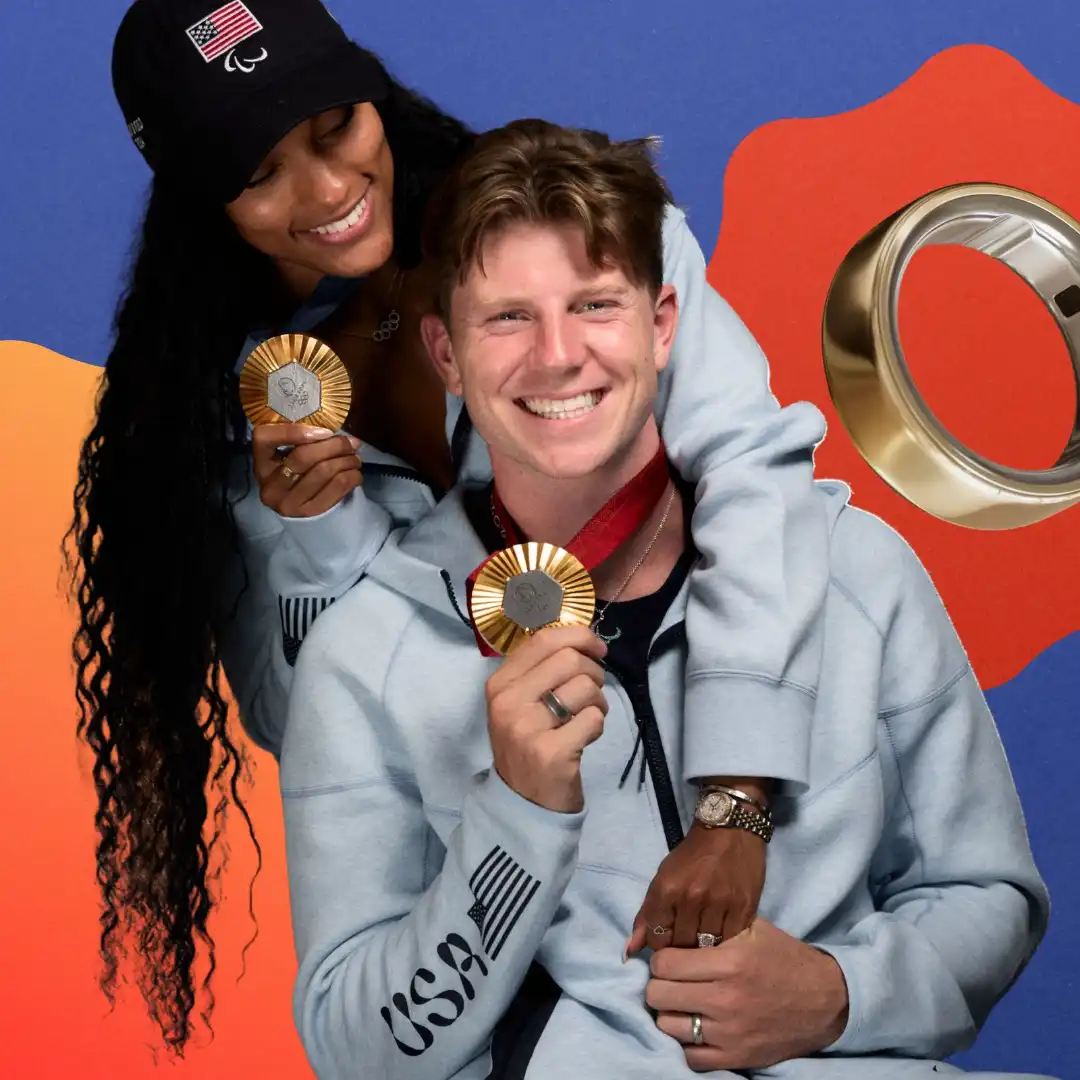
Watch Track Star Masai Russell Share Her Medal-Worthy Makeup Routine
Sports 2025-12-29 21:18:44

Watch Track Star Masai Russell Share Her Medal-Worthy Makeup Routine

SportsWatch Track Star Masai Russell Share Her Medal-Worthy Makeup RoutineWe tagged along as the Olympic champ got ready for Athlos last week.By Grace McCartyOctober 2, 2024Save StorySave this storySave StorySave this storyAll products featured on Self are independently selected by our editors. However, we may receive compensation from retailers and/or from purchases of products through these links.For Masai Russell, getting ready before a track meet is about more than looking her best when she crosses the finish line. “I feel like I’m stepping into my alter ego when I do my makeup,” the 24-year-old sprinter and hurdler tells SELF. “I feel like a beauty and the beast.”Russell took us along as she got ready for Athlos, the first-of-its-kind all-female major track meet that took place last weekend in New York City. Thirty-six elite runners, including Gabby Thomas, Brittany Brown, and Nia Atkins competed alongside Russell at the inaugural Athlos meet—which closed out with a performance by Megan Thee Stallion and boasted the highest prize payout for a women’s track event. Though she just won her first (gold!) Olympic medal, the honor of competing at this particular event was not lost on Russell, who took third in the 100m hurdle: “I’m so excited to be a part of an all women’s meet,” she tells SELF. “It just means the world to be a part [of Athlos], and to be one of the best women to be competing at this event. And I can always say that I was at the first one!”Russell doesn’t play around when it comes to preparation—on the track or in her makeup routine. She starts with a Caudalie moisturizer and serum to give her other products a smooth, lasting base. Foundation isn’t really her thing; instead, she sticks to more targeted concealer application. She uses the ultra-pigmented Luminous Silk Cheek Tint by Armani Beauty when she competes, and she defines her cheekbones with MAC’s Skinfinish Sunstruck Matte Bronzer. And for that finishing shimmer (which just hits different mid-sprint), she gets by with a little product help from Rihanna and Serena Williams: Fenty highlighter and Wyn lip serum.Armani Beauty Luminous Silk Cheek Tint$39SephoraFenty Diamond Bomb All-Over Diamond VeilWYN No Words Needed Lip Serum$18Ulta“People ask me all the time, ‘How do your lashes stay on when you’re running?” Russell says. Her secret: Duo Lash Glue, and averymeticulous application method (that’s worth the watch in and of itself). And for a setting spray—a product rec we should exclusively be taking from pro athletes, TBH—she favors a combo of MAC Fix+ and One/Size.DUO Strip Eyelash Adhesive$7$5(29% off)AmazonA flawless makeup routine isn’t Russell’s only pre-meet ritual—she also planned to watch some motivational speeches over a Chipotle bowl before lacing up her spikes—but for Athlos especially it was the perfect way to get in the zone. At its core, the meet is about letting female athletes shine, and showcasing the bold, beautiful, and diverse experiences of women in elite competition. Check out Russell’s full routine below.Related:How the World’s Best Athletes Are Using Glam to Express Themselves in Paris50 People, 4 Years, 10,000 Swarovski Crystals: How Team USA’s Gymnastics Leotards Get Made8 Things to Know About Gabby Thomas, the Harvard Grad Who Won Gold in the 200m

Ginger Peanut Chicken with Coconut Rice
Food 2025-12-23 08:06:28

Ginger Peanut Chicken with Coconut Rice

Jump to Recipe.tasty-pins-banner-container{display:block;margin-bottom:20px;position:relative;width:-moz-fit-content;width:fit-content}.tasty-pins-banner-container a{cursor:pointer;display:flex;font-size:14px;font-weight:700;letter-spacing:1px;line-height:1.8em;text-transform:uppercase}.tasty-pins-banner-container a:hover{opacity:1}.tasty-pins-banner-container .tasty-pins-banner{align-items:center;bottom:0;cursor:pointer;display:flex;justify-content:center;left:0;padding-bottom:1em;padding-top:1em;position:absolute;right:0}.tasty-pins-banner-container .tasty-pins-banner svg{margin-right:4px;width:32px}.tasty-pins-banner-container .tasty-pins-banner span{margin-top:4px}.tasty-pins-banner-container a.tasty-pins-banner{text-decoration:none}.tasty-pins-banner-container a.tasty-pins-banner:hover{opacity:.8}.tasty-pins-banner-container a.tasty-pins-banner-image-link{flex-direction:column}.tasty-pins-banner-container a img{margin-bottom:0}.entry-content .wp-block-image .tasty-pins-banner-container img{margin-bottom:0;padding-bottom:0}#et-boc .et-l div .et_pb_image_wrap .tasty-pins-banner-container .tasty-pins-banner{padding-bottom:1em!important;padding-top:1em;text-decoration:none}#et-boc .et-l div .et_pb_image_wrap .tasty-pins-banner-container a.tasty-pins-banner{cursor:pointer;display:flex;font-size:14px;font-weight:700;line-height:1.8em;text-transform:uppercase}#et-boc .et-l div .et_pb_image_wrap .tasty-pins-banner-container a.tasty-pins-banner span{letter-spacing:2px;margin-top:4px}.et-db #et-boc .et-l .et_pb_module .tasty-pins-banner-container a:not(.wc-forward){padding-bottom:0}this recipeFeatured commentJust made this exactly as stated and it was amazing. I loved the simple ingredients but big flavor. Thank you!! 🙂Katcomment icon 232 more commentsThis recipe is a fan-favorite! It was originally published in 2022 as part of our Fall 2022 SOS Series! View the full series.This juicy, quick-marinated, ginger-spiked chicken on a bed of THE MOST LUSH coconut jasmine rice, with speckles of crunchy peanuts, bright fresh cilantro, and lime squeezers is coming to save your day.In This Post: Everything You Need For This Peanut ChickenVIDEO for How to Make This Peanut ChickenWhy This Recipe is Weeknight-Fancy SOSHow to Make Coconut RiceWhat to Serve with This Ginger Peanut ChickenFAQ about this recipeWhy This Recipe Is Weeknight-Fancy SOSWe are definitely ride-or-die for weeknight-easy meals but it’s definitely a bonus when it can still feel a little fancy-adjacent, you know? A little elevated. We also love a frozen pizza or an “ok, it’s popcorn for dinner!” kind of night, too…but it’s nice when that level of ease can also be lovely and delicious and look harder than it was. So, that’s the sweet spot these SOS recipes are always kinda going for.To bring this lil’ gem together:Marinate the chicken.Do you haaaave to? Nah. But it’s a great extra boost you can give the chicken while you’re prepping the rest of your ingredients anyway! The flavor will be there even if your heart says 😩 to marinating.Make your rice.Everything goes into the Instant Pot, voila! Perfect coconut rice.Caramelize dat chicken.Get all that deliciousness in your pan and let’s go. You actually want to leave it undisturbed in the hot pan for a bit anyway to get all that caramelly sear, so yay! Less to do!That’s really just about it, a simple 1-2-3! You’ll toss your peanuts and greens in there once the chicken thighs are cooked through. We love a cilantro/green onion blend but we’ve also done it with spinach for an A+ situation. Whatever you love!Top with more peanuts, more lime squeezes, everything spilling over that fluffy, luscious coconut rice…ok, YES, SOS. We see you.How To Make Coconut Rice (And Why It’s Heaven)We really don’t know what to say about this coconut rice other than we…never stop thinking about it? Like, awkwardly so. Have you tried this other SOS fave with coconut rice? Oof.It’s still an easy Instant Pot button-push away (or rice cooker/stove top if you prefer), so no extra work, but it IS extra luxe. That coconut milk just replaces part of the cooking liquid – yep, it’s that simple – and the result is out of this world. It doesn’t turn out creamy exactly, but it is just sort of…velvety? Is that a thing?So satisfying and rich that you don’t need any kind of extra sauce on the chicken, except for a lime squeeze or two for brightness. We are so very star-eyes about all of it.What To Serve With This Ginger Peanut ChickenEverything absolutely shines as is, but if you’d like to get some extra green on the table alongside, some roasted broccoli or maybe some seared green beans might be nice. There’s always another of our SOS-iest faves: this simple green salad. Simple, lovely, a never-fail.Do you want to pile the rice/chicken in a lettuce wrap? Hello, yes you’re a genius!Does extra-good puppy chow count as a side-dish? It does now.Do you want to just open a bag of baby carrots because hey, you already accomplished a lot with this dinner? Have at it! You win. Always.Welcome to the *almost* end of winter. Let’s really celebrate with some easy dinner wins. 🏆Ginger Peanut Chicken: Frequently Asked QuestionsCan you use other nuts, or just omit the nuts?For sure! You’ll lose some of the crunch, but it will still be delicious. As an alternative to peanuts, cashews would also work well here.How can I cook the coconut rice on the stovetop or in a rice cooker?Cooking the rice in a rice cooker or just on the stovetop should work well. To make it on the stove, you can add 2 cups of rice, 1.5 cups of water, and a 14-ounce can of coconut milk to a large pot and bring it to a boil. Once it’s boiling, you can reduce the heat to a simmer, cover the pot, and cook the rice for about 15-20 minutes.Do you have to take the time to marinate the chicken?Not really, the flavor will come through either way, but as long as you’re prepping everything else anyway – rice, toppings, etc. – it will just give the chicken more time to absorb that goodness if you start that first.Watch How To Make This RecipePrintclockclock iconcutlerycutlery iconflagflag iconfolderfolder iconinstagraminstagram iconpinterestpinterest iconfacebookfacebook iconprintprint iconsquaressquares iconheartheart iconheart solidheart solid iconGinger Peanut Chicken with Coconut Rice5 Stars4 Stars3 Stars2 Stars1 Star4.8 from 120 reviewsAuthor:LindsayTotal Time:25 minutesYield:41xPrint PinDescriptionJuicy, quick-marinated, Ginger Peanut Chicken on a bed of THE MOST LUSH coconut jasmine rice, with speckles of crunchy peanuts, bright fresh cilantro, and lime squeezes.IngredientsUnitsUSMScale1/2x1x2xGinger Peanut Chicken1 1/4poundschicken thighs, fat trimmed, cut into small bite-sized pieces1-inch piece ofginger, grated3green onions, thinly sliced (white parts and green parts separated)zest and juice of 1-2limes2 tablespoonsbrown sugar1 1/2 teaspoonssalt1 tablespoonolive oiloravocado oil2–3 clovesgarlic, minced1/2cup choppedroasted peanuts1/2cup choppedcilantro1cupspinach,bok choy, etc.Coconut Rice2cupswhiteorjasmine rice1 1/2cupswater1 cancoconut milka pinch ofsaltCook Mode Prevent your screen from going darkInstructionsMarinate Chicken:In a stainless steel bowl, mix the chicken with the ginger, green onions (white parts), lime zest, brown sugar, salt, and oil. Marinate for 20 minutes-2 hours.Rice:Add the rice ingredients to an Instant Pot. Cook on high pressure for 3 minutes, followed by a natural pressure release for 10-15 minutes (it won’t be quite done yet after 3 minutes – it needs the rest time to finish cooking). Release the steam, fluff with a fork, and attempt not to eat the whole thing!(Don’t have an Instant Pot? Alternative methods are in the notes section!)Cook Chicken:Heat a large skillet (nonstick or cast iron work well) to medium-high heat. Add the marinated chicken to the pan, working in 1-2 batches depending on the size of your pan. Leave the chicken sitting undisturbed for several minutes to get a nice caramelization on the chicken.Adding Extras:When all the chicken is cooked, turn the heat down slightly and add the peanuts and garlic to the pan. Sauté for 3-5 minutes to get the peanuts roasty and the garlic nice and fragrant.Finish by adding in the cilantro, green onion, and spinach. Squeeze lime juice into the pan and season with more salt and pepper as needed.Serve over coconut rice! SO simple but so good.NotesTo cook the coconut rice on the stove or in a rice cooker:Cooking the rice in a rice cooker or just on the stove top should work well. To make it on the stove, you can add 2 cups of rice, 1.5 cups of water, and a 14-ounce can of coconut milk to a large pot and bring it to a boil. Once it’s boiling, you can reduce the heat to a simmer, cover the pot, and cook the rice for about 15-20 minutes.Prep Time:10 minutesCook Time:15 minutesCategory:DinnerMethod:StovetopCuisine:Asian-InspiredKeywords: ginger chicken, peanut chicken, coconut rice, easy chicken recipeDid you make this recipe?I love hearing from you! Leave a comment or rating below!Other Delicious Chicken Stir-FrysSaucy Gochujang Noodles with ChickenCashew ChickenLemongrass Chicken with Rice and ZucchiniChicken Tikka Masala

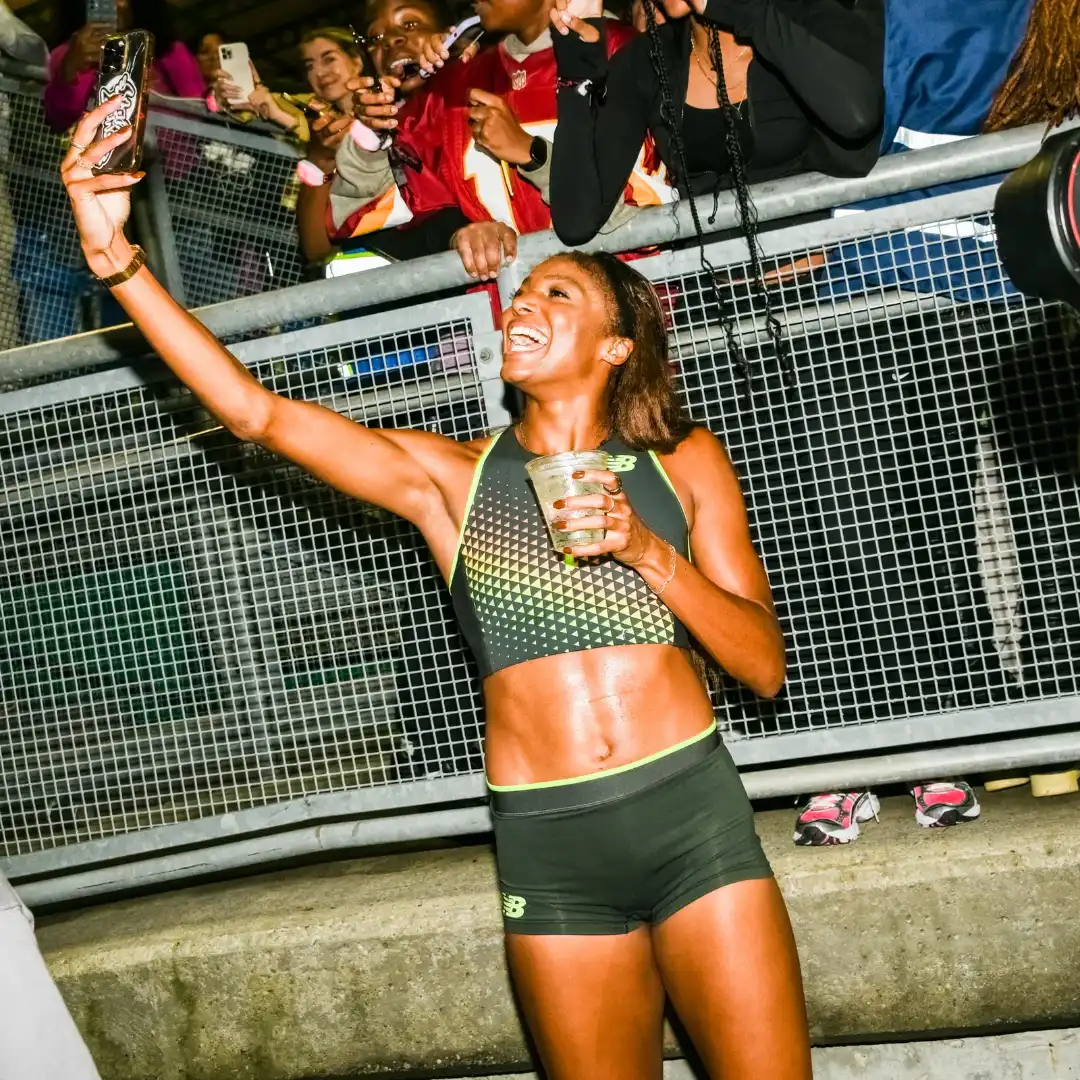
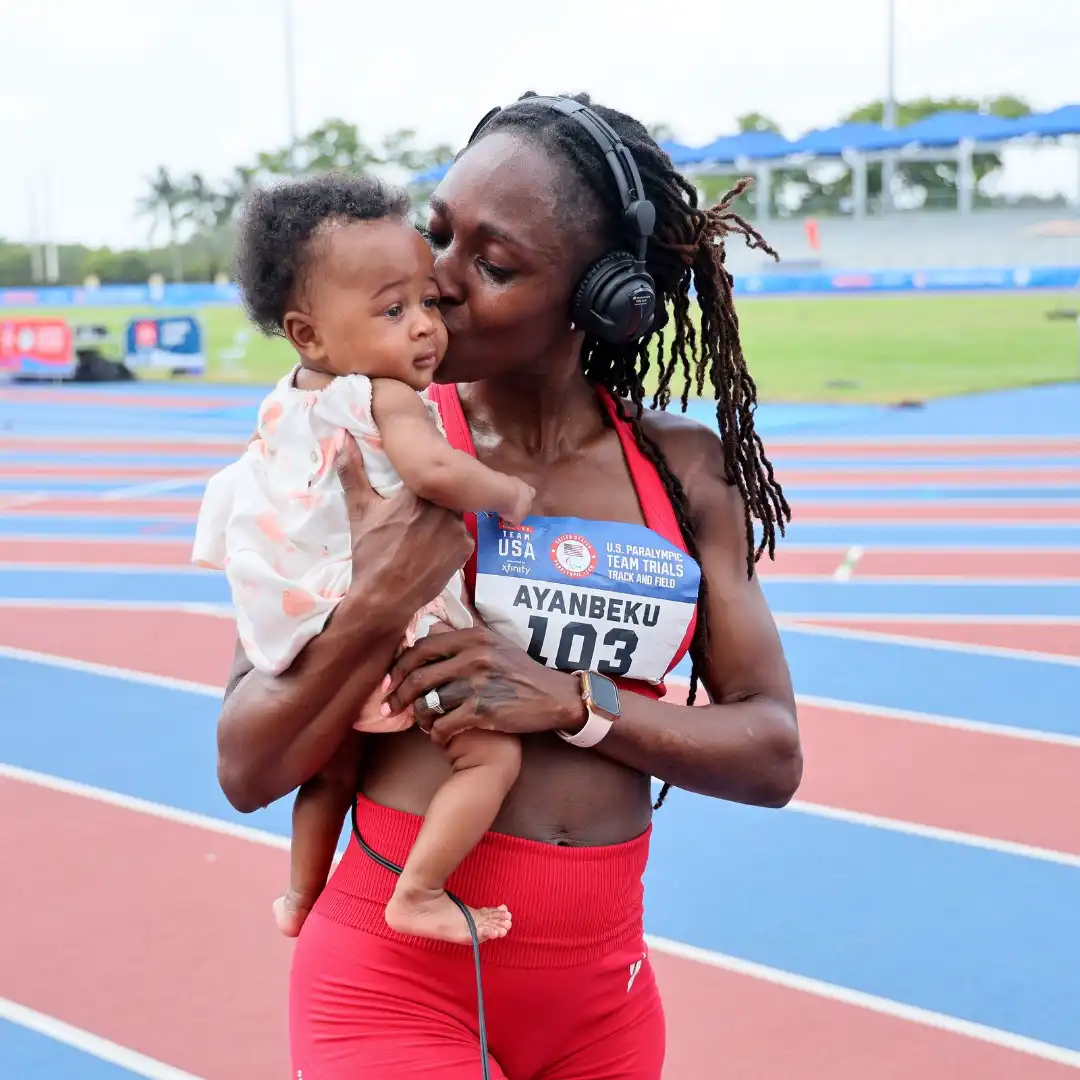
From Powder Days to Après, This Ski Gear Will Keep You Dry and Warm
Sports 2026-01-02 16:23:20

From Powder Days to Après, This Ski Gear Will Keep You Dry and Warm

ShoppingFrom Powder Days to Après, This Ski Gear Will Keep You Dry and WarmI tested jackets, pants, base layers, and more on the Colorado mountains—these pieces made the cut.By Kristin CanningFebruary 18, 2025Original photos by SELF writer Kristin Canning / Kari Traa / Laneen WellsSave StorySave this storySave StorySave this storyAll products featured on Self are independently selected by our editors. However, we may receive compensation from retailers and/or from purchases of products through these links.Whether you’re a seasoned skier or snowboarder or you’re hitting the slopes for the first time, you know that shopping for snow gear can be a chore. You want a kit with handy technical features that’ll keep you warm, dry, and safe. You also want to look and feel good—and youdon’twant to have to take out a loan to buy the stuff.Finding jackets, pants, base layers, and accessories that meet all those requirements isn’t easy. To help you narrow down your search, I interviewed ski instructors to find out what they’re wearing, then tested an absurd amount of gear myself at resorts all around Colorado. Below, you’ll find shopping advice from the pros and my favorite pieces that can take a beating on the mountain. Shop the best ski clothes before your next trip so you can send it in style.Our top picksHalfdays Georgie PufferHelly Hansen Sogn Shell JacketHalfdays Alessandra PantPicture Exa PantsWhitespace High-Waisted Bib PantsKari Traa Rose Half Zip Baselayer TopKari Traa Rose High Waisted Baselayer PantsColumbia Whirlibird III MittensTurtle Fur Single Layer Neck WarmerDarn Tough Peaks Over-the -Calf Ski and Snowboard SocksIn this articleAccordionItemContainerButtonLargeChevronWhat to look for when shopping for ski and snowboard clothesMeet the testerShop ski jacketsShop ski pants and bibsShop midlayersShop base layersShop gloves and mittensShop buffsShop socksShop accessoriesWhat to look for when shopping for ski and snowboard clothesInsulationAccordionItemContainerButtonLargeChevronSki jackets and pants can be insulated, meaning they have layers of fabric or filling to keep you warm, or non-insulated (also called shells). If you run cold, you may want to opt for insulated pieces—just note that you’ll be pretty bundled up and you won’t be able to adjust your ’fit much if you start to feel warm.If you like to layer and peel pieces off as you go, shells are a great option. “I opt for shells instead of insulated outer layers. I find that it’s easier to keep myself at a comfortable temperature that way,” says Sierra Hooge, a ski instructor at Big Sky Resort. Shells are also key for backcountry skiing—you can start your uphill climbs with fewer layers (so you don’t overheat and get damp), then pile extra clothing on at the top for your descent.Water resistanceAccordionItemContainerButtonLargeChevronNot all ski and snowboard jackets are totally waterproof; some are only water-resistant. Which type is better depends on the kind of skiing and snowboarding you plan to do. If the climate you live in tends to bring wet snow or you plan to be off-piste, it’s best to wear something that’s truly waterproof, with a high rating (ideally around 20,000 millimeters). You’ll also want to look for taped seams, which will help keep water out.Note: When it comes to shells, only “hard” ones (think jackets with a plasticky feel) are waterproof—softshell ski clothing is usually just water-resistant. If you often visit resorts and ski on fair-weather days, then water-resistant gear will work just fine.MaterialsAccordionItemContainerButtonLargeChevronFor waterproof gear, look for both a durable water repellent (DWR)-treated layeranda waterproof membrane layer. Gore-Tex is a great waterproof material that stays breathable, even as you warm up.When it comes to mid- and base layers, down, fleece, and Merino wool are always solid options. “Midlayers are the most important part of your kit. Splurge on these, and you can get away with not having crazy expensive outerwear,” Rikka Wommack, a ski instructor at Big Sky Resort, tells SELF. She adds that warm, lightweight, and breathable pieces are best. “You’re going to be working up a sweat, so you want them to be made of durable, quality fabric that both wicks and doesn’t get stinky after a couple hours. Nothing ruins your aprés vibe faster than taking your jacket off and feeling like a stink bomb.” (We agree.)Sizing and fitAccordionItemContainerButtonLargeChevronMake sure your jacket and pants fit well but still have enough room for you to move around and layer underneath if you need to. Not all ski brands offer larger sizes, Hooge notes. “I’m at the top end of the regular sizing for a lot of brands, so I first look for brands that carry an XXL in their outerwear,” she says. For plus sizes, The North Face, Helly Hansen, Columbia, L.L. Bean, and Eddie Bauer are great places to shop.Additional featuresAccordionItemContainerButtonLargeChevronLittle details are often what separates a good ski jacket and pants set from a great one. “Non-negotiables for me in jackets include having a pass pocket on the sleeve, zippered underarm vents for spring days and long skates, and several internal pockets so you can stash your phone and snacks closer to your body to keep them from freezing on frigid days,” Wommack says.For Hooge, a hood that can fit over her ski helmet is important, and she also appreciates a customizable fit. “For pants, I look for multiple adjustments at the waist,” she says. “I try to buy quality gear so that I don’t have to replace big purchases each year. I find that the initial investment in a nice piece of outerwear saves money in the long run and lets me spend more on skis!”Meet the testerOriginal photo by SELF writer Kristin CanningI’m Kristin Canning, a journalist and gear tester based outside Denver, Colorado. I learned to snowboard two years ago and I absolutely love it. Last season, I bought my first Ikon Pass and logged about 20 days in the mountains. My goal for this year is to get closer to 30 (I’ve racked up eight days so far, so I’m well on my way). I’m a resort snowboarder, and I want to venture into the backcountry in the next few years.Having tested gear for a living for over a decade, I’m familiar with what makes an item high-quality, and I’m particularly focused on gear that fits well and is as comfortable and flattering as it is technically sound. I’ve gotten to try the best pieces brands have to offer, so when something stands out, you can trust that I’ve seen—and tried on—plenty of options to compare it to.Shop the best ski jacketsYour outerwear is your first defense against cold, wet snow, and wind, so it needs to protect you from the elements, fit properly, and allow you to move freely. It’s also totally reasonable to want one that makes you feel cool and confident. After spending hours on the mountain, these are the snow jackets that I think hit the mark.Super warm insulated puffersI’m a big fan of puffy jackets for a few reasons: Many of them are cropped, and as a short girlie I find that the length fits me better. I also like the voluminous style and feel. The one downside to puffers is that they tend to be water-resistant (as opposed to fully waterproof). That’s no big deal if you’re going out on a bluebird day or riding in dry snow—but if you often ski or snowboard when it’s actively snowing or in slushy conditions, then a waterproof jacket is the way to go.HalfdaysHalfdaysChevronChevronDotsDotsHalfdaysGeorgie Puffer$495Halfdays$495ScheelsI adore my Georgie Puffer from Halfdays—its 15,000 millimeter waterproof rating is exceptional for a puffer, and it comes with all the features you could want in a ski or snowboard jacket. It has a forearm pass pocket with a goggle wipe; a helmet-friendly removable hood; a powder skirt; thick, comfortable storm cuffs; and a phone leash in the right side pocket so you can check your messages and take pics on the ski lift without the fear of losing your phone.ArrowArrowOne con: The snaps on the snow skirt can be hard to open and close.JordeJordeChevronChevronDotsDotsJordePoppy Ski Jacket$550NordstromWhitespaceWhitespaceChevronChevronDotsDotsWhitespaceCropped Puffer Jacket$359Whitespace$359$252(30% off)BackcountrySeniqSeniqChevronChevronDotsDotsSeniqPowder Puff Down Jacket$498SeniqI’m also a huge fan of Jorde Poppy’s Ski Jacket, which has an oversized fit and a toasty, quilted puffer interior.Most PopularLife‘Wicked’ Forced Me to Have a Conversation I Hoped My Daughters Could AvoidBy Jessica ShybaFoodThe 7 Best Foods to Fight InflammationBy Caroline TienCold and FluThis Year’s Flu Is Different. Doctors Explain the SymptomsBy Korin MillerKristin wears the Jorde Poppy Ski Jacket with the Lennon Ski Pant.Original photo by SELF writer Kristin CanningAnother pick: Whitespace’s Cropped Puffer Jacket—it’s even more oversized but shockingly lightweight for its size.ArrowArrowFor a longer option, Seniq’s Powder Puff Down Jacket has a cozy removable hood, unique asymmetrical quilting, side pockets with access to your bib pockets, a huge internal pocket that’s perfect for a sandwich, and an asymmetric front zipper that helps you avoid chin rub when the jacket is fully closed.Original photo by SELF writer Kristin CanningOther great insulated jacketsThe North FaceThe North FaceChevronChevronDotsDotsThe North FaceLenado Jacket$370$259(30% off)The North FaceREIREIChevronChevronDotsDotsPicture Organic ClothingSEEN JKT$335$234(30% off)REI$335$235(30% off)PictureFor just as much warmth in a longer, looser fit, try The North Face’s Lenado Jacket or Picture’s cool, color-block Seen Jkt. Both are high-quality, waterproof styles with pit zips to help you dump heat quickly, storm cuffs, snow skirts, forearm pass pockets, and taped seams.Kristin wears The North Face’s Lenado Jacket and Freedom Insulated Pant.Original video by SELF writer Kristin CanningOur favorite shell jacketIf you prefer a non-insulated jacket that has room for layers underneath, go for Helly Hansen’s Sogn Shell Jacket. It’s designed to handle non-resort skiing with features to support the most brutal conditions.REIREIChevronChevronDotsDotsHelly-HansenSogn Shell Jacket$400REI$400Helly HansenThe Sogn’s three layer construction is made up of a durable water repellent-treated outer fabric, a waterproof membrane, and a highly breathable inner fabric lining—the design can keep moisture out while still allowing sweat to escape.Kristin wears Helly Hansen's Sogn Shell Jacket and Sogn Shell Pants.Original video by SELF writer Kristin CanningPlus, it’s packed with useful features like the brand’s Life Pocket+, which is made with PrimaLoft Gold Insulation Aerogel, a NASA-developed material that keeps the pocket three times warmer than a standard ski jacket pocket. It’s the perfect place to put your phone so it won’t die on you halfway through the day.Functional anorak jacketsStioStioChevronChevronDotsDotsStioWomen’s Environ XT Anorak Jacket$429$258(40% off)StioOutdoor ResearchOutdoor ResearchChevronChevronDotsDotsOutdoor ResearchWomen’s Snowcrew Anorak$329Outdoor ResearchAn anorak-style jacket doesn’t have a front zipper; instead, it goes over your head like a hooded sweatshirt. These picks from Stio and Outdoor Research have tons of handy pockets, breezy underarm vents, and come in cute color combos (the best of both worlds).Shop the best ski pants and bibsWhen it comes to keeping you dry, warm, and comfortable on the slopes, a high-quality pair of snow pants is just as important as your jacket. These are our favorite from the plethora we tested.Cozy waterproof pantsHalfdaysHalfdaysChevronChevronDotsDotsHalfdaysAlessandra Pant$275HalfdaysI have to shout out Halfdays again here. Their fleece-lined Alessandra Pant fits like your favorite pair of flared yoga pants, with an adjustable waist, thigh vents, gaiters, and a 20,000 mm waterproof rating. The real game changer is that they’re available in a short inseam option, which means my pair doesn’t excessively pool or bunch up on top of my boots. Heads up: The snaps like to pop open, but the pants are fitted enough that even when they come unsnapped, they don’t move much.REIREIChevronChevronDotsDotsPicture Organic ClothingExa Pants$230$161(30% off)REI$230$161(30% off)PictureJordeJordeChevronChevronDotsDotsJordeLennon Ski Pant$390NordstromThe North FaceThe North FaceChevronChevronDotsDotsThe North FaceFreedom Insulated Pants$220Backcountry$200The North FaceI also love the innovative waistband on Picture’s Exa Pants—it feels almost like a super-stretchy maternity waistband (although it’s not as thick), which makes them extremely comfortable and easy to move in. The Jorde Lennon Ski Pant is another flattering, insulated option, but note that it runs very small (as does The North Face’s Freedom Insulated Pant) and might not have a baggy enough fit to accommodate snowboarding boots.Helly HansenHelly HansenChevronChevronDotsDotsHelly-HansenSogn Shell Pants$325REI$325$260(20% off)Helly HansenAlso worth considering: the Helly Hansen Sogn Shell Pants. I think they’re the best non-insulated, waterproof option, and, though they have an adjustable waist, they do run large.Extra protective bibsWhitespaceWhitespaceChevronChevronDotsDotsWhitespaceHigh-Waisted Bib Pants$349$245(30% off)Backcountry$349WhitespaceI’m not typically a fan of bibs (even though they help protect you from the snow) because they can cut across your boobs in uncomfortable ways. But I was a convert after I tried the fleece-lined Whitespace High-Waisted Bib Pants.ArrowArrowThey’re fitted, but stretchy and comfortable—and the top falls right at my natural waist, so I get the coverage of bibs with nothing on my chest but two thin, stretchy straps. (FYI: They don’t have a zipper to allow you to pee without taking off your jacket.)SeniqSeniqChevronChevronDotsDotsSeniqSlopestar Ski Bibs$398SeniqFor ample and well-placed pockets, a slightly barrel-leg cut, racerback straps, and handy zippers, check out Seniq’s flattering Slopestar Ski Bibs.Original video by SELF writer Kristin CanningShop the best ski and snowboard midlayersThe North FaceThe North FaceChevronChevronDotsDotsThe North FaceSummit Series FUTUREFLEECE Full-Zip Hoodie$170The North FaceIf you opt for a shell jacket over an insulated option (or you just run cold), you’ll want to pair your outerwear with a warm midlayer. This could be another jacket, a vest, a fleece, or a warm sweatshirt (like a hoodie or a half-zip). Hooge swears by The North Face Summit Series FutureFleece Full-Zip Hoodie, calling it “the warmest and lightest layer I’ve ever worn.”Arc’teryxArc’teryxChevronChevronDotsDotsArc'teryxAtom Hoody$300REI$300Arc’teryxWommack’s top pick is the Arc’teryx Atom Hoody. “If you’re only going to get one nice piece of clothing, it has to be this Arc’teryx midlayer jacket. It’s a splurge, but it is hands down the best piece of gear I’ve ever owned,” she says. “I wear it 200-plus days a year, both as my go-to skiing midlayer and the perfect light jacket in spring, summer, or fall. There have been many days where I find myself chatting with a group of other instructors and look around and realize every single one of us is wearing this jacket.”PatagoniaPatagoniaChevronChevronDotsDotsPatagoniaNano Puff Vest$189REI$189PatagoniaHooge and Wommack also pointed to the Patagonia Nano Puff Insulated Hoody and Vest, respectively, as their other go-tos. “This is another daily driver, no matter what,” Hooge says. “[When I wear it] I rarely get cold, and it takes a long time to get too hot; it’s super versatile.”More great midlayersThese top-rated options are just as warm and protective, and as a bonus: They’re all made with recycled materials.Helly HansenHelly HansenChevronChevronDotsDotsHelly-HansenEvolved Air ½ Zip$140Amazon$140Helly HansenMammutMammutChevronChevronDotsDotsMammutSender IN Hooded Jacket$260Mammut$260$156(40% off)Steep & CheapArrowArrowAmazonAmazonChevronChevronDotsDotsRabSuperflux Hoody$150AmazonShop the best ski and snowboard base layersREIREIChevronChevronDotsDotsKari TraaRose Half Zip Baselayer Top$110Amazon$120REI$120Kari TraaREIREIChevronChevronDotsDotsKari TraaRose Rose High Waisted Baselayer Pants$110Kari Traa$120$90(25% off)REIGood base layers are the foundation of a warm ski kit. You’ll typically want to opt for pieces made of wool, which is naturally breathable and moisture-wicking.Original video by SELF writer Kristin CanningI’m obsessed with my Kari Traa wool Baselayer Top and Pants—they’re soft; fit like a glove without feeling restrictive; and don’t hold onto smells, even after a full day of snowboarding.REIREIChevronChevronDotsDotsWild RyeHailey Half-Zip$135Wild Rye$135$108(20% off)REIREIREIChevronChevronDotsDotsWild RyeJane Legging$115Wild Rye$115$92(20% off)REIFor thinner layers, check out this Wild Rye set.Original video by SELF writer Kristin CanningAmazonAmazonChevronChevronDotsDotsHot ChillysMicro-Elite Chamois Crewneck$70AmazonHot ChillysHoy ChillysChevronChevronDotsDotsHot ChillysMicro-Elite Chamois Premiere Capri Tight$49AmazonHooge is also a fan of Hot Chillys for base layer leggings: “I love that they’re boot-top length, so that there’s not too much bulk,” she says.Helly HansenHelly HansenChevronChevronDotsDotsHelly-HansenWomen’s LIFA Merino Midweight Graphic Long-Sleeve Crew Base Layer$110$88(20% off)Helly Hansen$110$80(27% off)REIHelly HansenHelly HansenChevronChevronDotsDotsHelly-HansenWomen’s LIFA Merino Midweight Graphic Base Layer Pants$110$88(20% off)Helly HansenThis Merino wool set from Helly Hansen comes in bright florals for dreary, overcast days.Kristin wears Helly Hansen’s LIFA Merino Midweight Base Layer Long-Sleeve and Pants.Original video by SELF writer Kristin CanningShop the best ski gloves and mittensWhether you use gloves or mittens comes down to your personal preference. I like to wear a thin pair of waterproof running gloves under my big Columbia mittens—that way, I can take the mittens off to get into my bindings without exposing my fingers.ColumbiaColumbiaChevronChevronDotsDotsColumbiaWhirlibird III Mittens$65$45(31% off)Amazon$65$49(25% off)ColumbiaSmartwoolAmazonChevronChevronDotsDotsSmartwoolLiner Gloves$28Smartwool$24REIWommack uses this layering method too. “Liner gloves do more to keep my hands warm than heated gloves, in my experience, and as an instructor I’m constantly taking my gloves off to fuss with clients’ bindings, zippers, and goggles,” she says. “Most liner gloves are now smartphone touch-compatible, which means you don’t have to take them off until you’re back in the locker room at the end of the day.”More great gloves and mittensBackcountryBackcountryChevronChevronDotsDotsKincoLined Premium Grain & Suede Pigskin Mitten$52Amazon$53BackcountryREIREIChevronChevronDotsDotsREI Co-opLiner Gloves 2.0$27REIMix and match these options for the right balance of warmth and protection—no wind burn here.Shop the best ski and snowboard buffsTurtle FurTurtle FurChevronChevronDotsDotsTurtle FurSingle Layer Neck Warmer$30Turtle FurBackcountryBackcountryChevronChevronDotsDotsAnonMFI Lightweight Neckwarmer$40Amazon$40BackcountryBuffs or neck gaiters can sit around your neck or cover your whole head, keeping typically exposed areas between your jacket and helmet extra warm. I love Turtle Fur’s supersoft high-pile fleece neck warmer, although it collects moisture quickly if you wear it over your mouth. For a lightweight option that can cover your whole face, I like the Anon MFI Neckwarmer, which magnetizes to the brand’s matching goggles.SkidaSkidaChevronChevronDotsDotsSkidaSnow Tour$26SkidaFor a thinner layer, Skida's Snow Tour has a soft, brushed interior and a sleek exterior. It also comes in a ton of chic colors and patterns to match the rest of your gear (or bring a pop of color).Shop the best ski and snowboard socksTall, wool socks, often with extra padding around hot spots, are a great addition to any ski kit.AmazonAmazonChevronChevronDotsDotsDarn ToughWomen’s Peaks Over-The-Calf Ski and Snowboard Socks$28AmazonAmazonAmazonChevronChevronDotsDotsTherm-icHeated Ski Socks Ultra Warm Performance S.E.T$460AmazonSmartwoolSmartwoolChevronChevronDotsDotsSmartwoolWomen’s Ski Over The Calf Socks$30$22(27% off)Amazon$30SmartwoolWommack likes Darn Tough socks for standard ski days and uses Therm-ic Heated Socks (also trusted by Hooge) for bone-chillingly cold weather.Shop the best ski and snowboard accessoriesThese extras aren’t strictly necessary, but they can make your days on the mountain a lot more comfortable.ScubaScubaChevronChevronDotsDotsRip TieTangle Free Hair Tie$13$8(38% off)ScubaI like Rip Ties for my hair: They wrap around your braids and ponytails to keep them from falling out and getting tangled up as you go.REIREIChevronChevronDotsDotsGregoryVerte 12 backpack$120Amazon$110$83(25% off)Gregory$110REIAmazonAmazonChevronChevronDotsDotsHydraPakStow Collapsible Backpacking Water Bottle$18AmazonA spacious backpack with a bladder, like the Verte 12, can keep you hydrated on the slopes. Attached to your pack but still want to carry some H2O? Wommack says a small, collapsible water bottle is the move.Keeping a small, squishy water bottle in my jacket was a game changer, and I’ll never go back,” she says. “It might be an awkward lump in your jacket at the beginning of the day, but you’ll be so grateful for having ice cold water at the ready at the bottom of that mogul field or when you have to skate a quarter mile uphill to pick up a four-year-old that can’t get up by themselves.”AmazonAmazonChevronChevronDotsDotsHotronicFoot Warmer XLP 1C Custom Set$328Amazon$349$307(12% off)Utah Ski GearAmazonAmazonChevronChevronDotsDotsDRYGUYBoot Gloves$50$36(28% off)Amazon$40REIHooge banishes cold feet with a combo of Hotronic Foot Warmers and Dry Guy Boot Gloves: “They help keep my toes warm on the zero-degree days, especially if I wear my heated socks underneath,” she says.Related:Hours on the Slopes Proved These Ski Goggles Are the Real DealThese Are the Winter Running Hats Coaches and Joggers Wear Year After Year11 Expert-Recommended Fitness Trackers for Smarter WorkoutsGet more ofSELF’sgreat product recommendations delivered right to your inbox (for free!).

The Coolest Hairstyles We’ve Seen at the 2024 Paralympics So Far
Sports 2025-12-31 11:13:06

The Coolest Hairstyles We’ve Seen at the 2024 Paralympics So Far

Just ’do itThe Coolest Hairstyles We’ve Seen at the 2024 Paralympics So FarAthletes are sporting incredible dye jobs, braids, bows, and barrettes at the Paris Games.By Jenna RyuSeptember 4, 2024Anadolu/Dimitar Dilkoff/Getty ImagesSave StorySave this storySave StorySave this storyWhen you’re competing at a high-stakes event like the Paralympics, being prepared and giving it all you’ve got is the name of the game(s). But the quadrennial spectacle can also be a golden opportunity to have fun with your look—and this year, plenty of athletes are letting their pride and personalities shine through some seriously creative hairstyles.The 2024 Paralympics are in full swing, with competitors from across the globe gunning for medals—and looking their absolute best while they’re at it. Take Roderick Townsend, for example: The high jumper wore the eyes of Picasso on his shaved head while winning gold over the weekend. “I’m a showman,” he told reporters—and his eye-catching look (paired with his standout performance) made that abundantly clear.But Townsend isn’t the only one turning heads with his hairdo: Lots of other Paralympians are embracing whimsical ribbons, bold dyes, and patriotic braids. Below, we’ve rounded up the coolest hairstyles at the Games so far.SELF Healthy EatingGet nutrition tips, delicious recipes, and inspo for your grocery list delivered to your inbox just in time for your weekly meal prep.SIGN UPBy signing up, you agree to our user agreement (including class action waiver and arbitration provisions), and acknowledge our privacy policy.1. Roderick Townsend, United States, Para AthleticsMarcus Hartmann/Getty Images2. Lorena Silva Spoladore, Brazil, Para AthleticsJulian Stratenschulte/picture alliance via Getty Images3. Ionis Dayana Salcedo Rodriguez, Colombia, Para AthleticsNurPhoto/Getty Images4. Cyrille Chahboune, France, Sitting VolleyballElsa/Getty Images5. Amanda Cerna, Chile, Para AthleticsTasos Katopodis/Getty Images6. Yuto Sano, Japan, GoalballMoto Yoshimura/Getty ImagesWhat Is Goalball—And Why Are All the Athletes Wearing Black-Out Goggles?You’ll definitely want to tune into this super-intense Paralympic sport.7. Husnah Kukundakwe, Uganda, Para SwimmingKristy Sparow/Getty Images8. Shanshan He, China, Para AthleticsMustafa Yalcin/Anadolu via Getty Images9. Thalita Vitoria Simplicio da Silva, Brazil, Para AthleticsTom Weller/VOIGT/GettyImages10. Orla Comerford, Ireland, Para AthleticsMustafa Yalcin/Anadolu via Getty Images11. Cristina Goncalves, Portugal, BocciaAlex Slitz/Getty Images12. Ebru Acer, Turkey, Para Table TennisAitor Alcalde/Getty Images13. Nick Mayhugh, United States, Para AthleticsFiona Goodall/Getty Images14. Daniela Velasco Maldonado, Mexico, Para AthleticsKevin Voigt/Getty Images15. David Smith, Great Britain, BocciaMichael Steele/Getty Images16. Brittni Mason, United States, Para AthleticsMustafa Yalcin/Anadolu via Getty Images17. Samira da Silva Brito, Brazil, Para AthleticsFiona Goodall/Getty Images18. David Drahoninsky, Czechia, Para ArcheryAlex Davidson/Getty Images19. Poleth Isamar Mendes Sanchez, Ecuador, Para AthleticsMichael Reaves/Getty Images20. Christian King, United States, GoalballAlex Davidson/Getty Images21. Arjola Dedaj, Italy, Para AthleticsEzra Shaw/Getty Images22. Greta Streimikyte, Ireland, Para AthleticsRamsey Cardy/Getty Images23. Cristina Poblador Granados, Colombia, Para PowerliftingDavid Ramos/Getty Images24. Catarina Joao Guimaraes, United States, Para AthleticsEzra Shaw/Getty Images25. Vinicius Goncalves Rodrigues, Brazil, Para AthleticsAndrew Matthews /PA Images via Getty ImagesSELF is your go-to source for all things Paralympics. Follow our coverage of the Paris Games here.Related:6 Things to Know About Valentina Petrillo, the First Trans Athlete to Compete at the ParalympicsIf You’re Not Following the Perfectly Unserious Paralympics TikTok Account, You’re Missing Out8 Things to Know About Paralympic Guides, Pilots, and TappersGet more of SELF’s great sports coverage delivered right to your inbox—for free.

Zürich, Geneva + Basel: The Monocle Travel Guide
Travel 2025-12-27 19:12:17

Zürich, Geneva + Basel: The Monocle Travel Guide

Monocle FilmsJune 27, 20183 MIN 2 SECZürich, Geneva + Basel: The Monocle Travel GuideThis book celebrates the richness of these three Swiss cities and dives beneath the surface to bring an unexpected mix of creativity, entrepreneurialism and design. All aboard for a tour of the most impeccable hotels, world-class galleries and best spots to take a dip.Available now at The Monocle Shop.Narrator Matt AlagiahSubscribeEmailiTunesYouTube

Basketball Star Rae Burrell Swears By This Internet Skin Care Trend
Sports 2026-01-10 15:48:16

Basketball Star Rae Burrell Swears By This Internet Skin Care Trend

SportsBasketball Star Rae Burrell Swears By This Internet Skin Care TrendPlus, how the Unrivaled player winds down to recover for the next big game.By Caroline TienJanuary 21, 2025Courtesy of brands/Tyler Ross/Getty ImagesSave StorySave this storySave StorySave this storyAll products featured on Self are independently selected by our editors. However, we may receive compensation from retailers and/or from purchases of products through these links.In SELF’sSleeping With…series, we ask people from different career paths, backgrounds, and stages of life how they makesleepmagic happen.Fresh off a breakout season with the Los Angeles Sparks, WNBA guard-forward Rae Burrell has even more excitement in front of her: She’s helping launch Unrivaled, a new player-owned, three-on-three women’s basketball league bringing together some of the biggest names in hoops—and paying them the highest average salaries in women’s sports history.When Burrell’s agent approached her with the Unrivaled proposal the night before the Sparks’s final game in Minnesota last fall, “it was really exciting news for me,” Burrell, 24, who was named to Unrivaled’s Vinyl team, tells SELF. “Getting to know other players that I haven’t really been around in the WNBA has been really fun.”To prep for Unrivaled—which will pilot a brand-new style of three-on-three on a shorter full court—Burrell has been working with Vinyl coach Teresa Weatherspoon (a.k.a. “T-Spoon”) to sharpen her skills and adapt her style to a compressed format. So far, she’s enjoying herself. “There’s more opportunities to play in the space and show what you bring to the game,” she says. Besides, she says, it comes with an enhanced sense of “togetherness”: “Since there’s only six of us [per team], there’s not as many people to lean on, so that just makes our bonds even stronger with the few people that we do have.”When it comes to workouts, Burrell has been lifting four days a week to maintain her muscle, emphasizing big compound exercises like squats, bench presses, bird dog rows, and pulldowns, and has also penciled in a bunch of speed drills to improve her acceleration. And naturally, she’s been needing plenty of sleep to complement all that hard work. “Sometimes your body just wants to stay up, but I try to make sure that I’m in bed and ready to go to sleep by at least 12 a.m.,” she says. Read on to find out how else the WNBA star and Unrivaled launcher winds down for bed after a long day of training—from her go-to relaxation techniques to her multistep skin care regimen.SELF Healthy EatingGet nutrition tips, delicious recipes, and inspo for your grocery list delivered to your inbox just in time for your weekly meal prep.SIGN UPBy signing up, you agree to our user agreement (including class action waiver and arbitration provisions), and acknowledge our privacy policy.Leading up to bed, I make sure to get in a good dinner.I try to keep dinner around 6 p.m.-ish, 7 p.m., because I don’t want to eat too close to bed. Usually, my dinner depends on if the next day is a game day or practice day, but either way, I try to make sure I get in protein, carbs, and vegetables somehow.If it’s a game day, I’ll get some pasta or some chicken in to give me some energy. If I’m doing pasta, I really like to keep it simple and do some spaghetti and meatballs—I mean, that’s just a classic. And then for the chicken dish, I usually just do barbecue chicken or grilled chicken and then have sweet potatoes on the side.My favorite vegetable of all time is brussels sprouts. I get them a lot at Ruth’s Chris Steakhouse, so I think that's actually what piqued my interest with them—I wanted to recreate that dish. So I kind of just looked up some simple recipes on TikTok. When I was in Belgium over this past season, it was one of the things that I grabbed when I was in the grocery store. I like to bake ’em, put ’em in the oven, and have that all together. And I’ll make them a little bit sweeter with some honey, season them up a lot to give them some good flavor.Then I’ll hang out and relax a little bit.Sometimes I FaceTime my friends because I’m usually in a different place than them. I also have an Xbox, so sometimes I’ll play some 2K, or maybe just watch some Netflix. I know it’s an old one, but I really like the showPrison Break.I’m only on season two, but I want to keep watching. Some other favorites of all time:Money Heistand the live-actionThe Last Airbender.I like the reality TV shows too.My skin care routine is next.My skin doesn’t look great right now—just because of the travel and the transition from Vegas, which is super dry, to Miami, where it’s more humid—so it’s trying to adjust. Before I head to bed, I need to feel like my face is cleansed and any sort of residual is off. I start with the CeraVe Makeup Removing Cleanser Balm for my two-step cleansing routine, and the Fenty Skin Total Cleans’r. Then I go in with the Youth to the People Superberry Hydrate + Glow Dream Oil.ChevronChevronDotsDotsCeraVeMakeup Removing Cleanser Balm$15$12(20% off)Amazon$12CVS$13Target$14Ulta BeautyChevronChevronDotsDotsFenty SkinTotal Cleans'r Remove-It-All Cleanser with Barbados Cherry$30Fenty Beauty$34$25(26% off)Amazon$32Sephora$32Kohl'sChevronChevronDotsDotsYouth To The PeopleSuperberry Hydrate + Glow Dream Oil$49Amazon$49Sephora$49Youth To The PeopleAnd this might be kind of weird, but I’ve been using beef tallow as a moisturizer. Just 100% grass-fed beef tallow—literally, the cooking stuff. I found it on TikTok and just ordered it off of Amazon. I’ve only been using it for about a week and a half, so not long at all, but honestly, I’ve gotten some comments that my skin looks more glowy and youthful, so I feel like it’s helped a little bit. I’m going to keep using it.Most PopularLife‘Wicked’ Forced Me to Have a Conversation I Hoped My Daughters Could AvoidBy Jessica ShybaHealthThe One Thing That Reliably Kills Norovirus and How to Keep it From Spreading in Your HomeBy Erica SloanRelationships5 Ways to Feel Less Lonely During the HolidaysBy Hannah SmothersSometimes I like to use the gua sha tool and give myself a little face massage. I’ve been doing that for a couple months now. I really like it because I feel like it’s evened my face out a little bit and makes my skin more taut. And Unrivaled has recently gifted us some stuff, so I’m excited to use that too, like the TheraFace Depuffing Wand.ChevronChevronDotsDotsTherabodyTheraFace Depuffing Wand$149Therabody$149Sephora$149Nordstrom$170$140(18% off)AmazonThen, I’ll massage my head for about five minutes with a little handheld scalp massager and put my strengthening oils in my hair—I have a spray bottle to get my hair wet. I use the Ouai Scalp Serum. I’ve also been using the Camille Rose Rosemary Oil Strengthening Hair + Scalp Drops and a Camille Rose leave-in conditioner. And then I go in with some kind of gel that’ll help seal it in, and throw my hair up in the bonnet.ChevronChevronDotsDotsOuaiScalp Serum$54Amazon$52Ulta Beauty$52SephoraChevronChevronDotsDotsCamille RoseRosemary Oil Strengthening Hair + Scalp Drops$13$10(23% off)Amazon$13Ulta Beauty$14CVS$15TargetAnd I don’t forget about recovery either.Depending on if I”m feeling sore, I’ll roll my legs out or stretch a little bit. I also have boots that apply compression to my legs, so I’ll do that for about 20 minutes. Sometimes I put some ice in the boots if I have specific areas that I need to hit.I keep my bedroom cold but cozy.Silk sheets are my favorite type of bedding because they’re good for the hair. When I sleep, my hair is in a bonnet, but sometimes if I forget to put it on or it falls off, the silk does feel good. Plus, it’s just super soft and cozy. And then I usually like to have one of those really fluffy blankets, like the sherpa or fleece. That, mixed with the silk sheets—yeah. That’s the best.Most PopularLife‘Wicked’ Forced Me to Have a Conversation I Hoped My Daughters Could AvoidBy Jessica ShybaHealthThe One Thing That Reliably Kills Norovirus and How to Keep it From Spreading in Your HomeBy Erica SloanRelationships5 Ways to Feel Less Lonely During the HolidaysBy Hannah SmothersI also like to make sure the room is cold when I sleep—that’s the most comfortable for me. I usually do 67 or 68 degrees. Those people who crank their heat way up at bedtime—ugh. Can’t do it. Especially with the silk sheets, you’ll get sweating.And then, on my Apple TV, I navigate to the Calm meditation app and I put on the fireplace soundscape because I really like the crackling sound. I don’t know if it’s a placebo effect or what, but because I keep my room so cold, the fire crackling makes me feel like I’m sitting by a fire, warms me up a little. I think the sound is just really calming.I’ll watch some type of advice or affirmations YouTube video to get me in a good mindset.I have a specific channel that I watch, Nero Knowledge. As athletes, we exert so much energy in not only our bodies, but our minds too. You could have a bad practice where you’re missing shots and you’re frustrated, or you have a really good one where the dopamine is super high. Everything’s really intense throughout our days. So I like to have that time to de-stress and get back to ground before I go to bed.I actually love journaling too. When I was home, I went to the park every day to journal and stuff. However I’m feeling that day, whatever is coming to mind, I just write it down on paper. I like to stay off my phone for the time that I’m doing that and just enjoy being present in that moment. It’s just another way to decompress, maybe get some feelings out. And, also, to appreciate and have gratitude for life. Sometimes you get so caught up in what’s going on you forget to slow down and actually be grateful for everything that you do have.This interview has been edited and condensed for length and clarity.Related:Comedian Ilana Glazer Shares Her Bedtime RoutineSarah Jessica Parker Isn’t Interested in a 10-Step Skin Care RoutineThe Sleep Routine Lindsey Vonn Swears By After 10 Years of InsomniaGet more of SELF's great coverage delivered right to your inbox—for free.

The latest developments in the worlds of transport and hospitality
Travel 2025-12-19 16:13:33

The latest developments in the worlds of transport and hospitality

Getting the jump on budget travelHop Inn, ThailandThailand’s Erawan Group might be best known as the operator of Bangkok’s Grand Hyatt and JW Marriott hotels but the hospitality giant has spent the past decade building up its own brand at the budget end of the scale. Hop Inn has 50 hotels across Thailand and its basic room-only offering has become a big hit with domestic business travellers: think salespeople who drive (or hop) around the country and just need a reliable place to crash with wi-fi and a hot shower. Average occupancy rates are about 80 per cent and there are plans to add eight more Thai properties in 2024. According to Erawan Group president Petch Krainukul, the idea for a budget business hotel arose in 2012 when most investors and operators were focused on the four and five-star segment. “We saw huge growth opportunities,” says Krainukul. “There was a growing demand from domestic travellers and no competition from any of the big brands.”The 132-room Hop Inn in Bangkok’s eastern Bang Na district is a typical example. It’s based alongside an elevated highway, just down the road from one of the Thai capital’s largest conference centres. A standard room costs THB850 (€22) – half the price of an Ibis. There is no breakfast, no restaurant, only instant noodles, which can be bought from a self-service counter in the lobby, where machines supply free coffee in the morning. A petrol station and convenience store next door can provide extra fuel for man, woman and motor.“We saw huge growth opportunities. There was a growing demand from domestic travellers and no competition from any of the big brands”Kind of blueBack to basicsBy 2030 the Erawan Group plans to have 150 Hop Inns across the region, taking on Thai rival Red Planet and Go Hotels of the Philippines. Japan is its next stop. Four existing hotels, with a total of 373 keys, have been acquired in Tokyo and Kyoto, with the quartet due to open in 2024. “Japan has huge potential with fast-growing numbers of tourists, many of them repeat travellers,” says Krainukul.hopinnhotel.comWhat’s next for amenity kits?GlobalThe amenity kit has long been a point of differentiation in Business and First Class but now a few airlines are taking a renewed approach. This autumn, Hawaiian Airlines launched its first carbon-neutral amenity kit in partnership with Oahu homeware brand Noho Home, while Delta worked with Oaxaca brand Someone Somewhere to help artisans in Mexico. Japan Airlines recently introduced kits produced by Heralbony, a Tokyo fashion brand that employs artists with learning difficulties. Each of these was created by Hong Kong-based Formia, which specialises in amenity kits and works with more than 50 airlines around the globe. These small bags, which typically contain toothbrushes, moisturiser, toothpaste, socks and a set of ear plugs, are subject to the same forces that are buffeting consumer brands on the ground, from sustainability and social purpose to wellness. Certain products are now made from recycled plastic, bamboo and wheat straw, and Formia recently moved its factory from China to Mexico to be closer to customers in the Americas and reduce carbon emissions. Though traditional luxury continues to be a big selling point for the Gulf carriers (Emirates has a longstanding partnership with Bulgari, for example), small independent brands with a social purpose are driving the aviation industry forward. Let’s hope that more airlines take notice. Plane and simpleBoeing Business Jets, GlobalFor those with the means to fly private, a Boeing 737 is the ideal conveyance. It handles transcontinental flights with fuel to spare and can be configured to fit almost any buyer’s needs (think private offices, showers, sleeping quarters and cinema lounges). But if choosing the colour of your private jet’s carpet is likely to prove more daunting than the estimated $95m (€87m) price tag, fear not: the aerospace giant can now alleviate the anxiety of custom interior design too.At a Las Vegas private aviation trade show in October, Boeing Business Jets debuted its new Select offer, a slate of pre-designed cabins that reduces the seemingly infinite choices of an interiors catalogue to a mere 144 layouts in three colour palettes: beige and off-white; blue hues and earth tones; tan and gold. “The trend at the top end of business aviation is more cabin space and greater cabin comfort,” says Joe Benson, president of Boeing Business Jets. “Select provides the flexibility to meet the full spectrum of VIP travel.”Prospective customers will get a quicker finished product and a fixed price, all without the need for pre-assembly engineering and design work. The first orders are scheduled for delivery in 2026, so crack open the catalogue and start shopping. businessjets.boeing.comCarry on flyingGlobalDone right, living out of a suitcase can almost be a pleasure. Compact enough to fit into an overhead locker without compromising on smart design or high-quality craftsmanship, these carry-ons will see you on your way in style.1.The practical case:Carl Friedrik’s Carry-on ProDesigned in London and manufactured in Guangzhou, China, Carl Friedrik cases make for achingly chic travel assistants. The functional Carry-on Pro features a slim front pocket to accommodate a laptop, allowing for easy access on the move, while the hard-shell protective exterior resists denting.carlfriedrik.com2.The standout:Louis Vuitton’s Horizon 55 caseThe Horizon 55 is made from soft cowhide leather and emblazoned with Louis Vuitton’s signature monogram embossing. It pays homage to the brand’s colourful city guides, which are celebrating their 25th anniversary.louisvuitton.com3.The dependable bag:Away’s Carry-On relaunchThe New York brand’s classic suitcase first launched in 2016. Its comely shape, designed to fit snugly in overhead lockers, has now been updated with ergonomic handles underneath the wheels and a toned-down colour palette featuring khaki, navy and cream with matte or gloss options.awaytravel.comMarquee openingLafayette’s, ParisLafayette’s latest spot, from French-Senegalese chef Mory Sacko, occupies a historic 18th- century manor house close to the Élysée Palace and the Place de la Madeleine. Sacko, who made his mark in the French capital with his unique cuisine combining French produce, Japanese techniques and his West African heritage, has already earned a Michelin star and prestigious partnerships with companies such as Louis Vuitton. Opened in the former residence of the Marquis de Lafayette and in partnership with the ever-expanding Moma restaurant group, this bolthole channels the decadent dinner parties once thrown here by the flamboyant civil war general.Originally constructed by King Louis XV’s architect, Mazin, the house was completely redecorated by Barcelona-based Lazaro Rosa-Violan and turned into a 100-seater neo-bourgeois brasserie with three cosy rooms strewn with silk drapes and featuring period woodwork. The French-inflected cooking draws inspiration from the American and African continents, with dishes such as Cajun-style salmon with salsa coleslaw,gambaswith marinated mango and jerk spices, and amberjack carpaccio with jalapeños and spicy sauce. It seems as though Sacko may be onto another winner. 8 Rue d’AnjouRub of the greenIlis, BrooklynTucked away in a former rubber factory in Brooklyn’s Greenpoint neighbourhood, Ilis was years in the making. The restaurant is the brainchild of Noma co-founder Mads Refslund and Will Douillet, the latter a former sommelier of Chicago’s three-Michelin-starred Alinea. The team transformed this huge warehouse into a fully kitted-out restaurant featuring a central kitchen complete with Demant live fire grills orchestrated by designer Tim Harrison. Ilis, which is a mash-up of the Danish wordsildandis(“fire” and “ice”), offers a menu of seasonal ingredients, including plants, seafood and sustainable meat. On the plate, expect ingredient-forward dishes such as wild grilled duck from Pennsylvania, served with plum juice and seaweed-infused barbecue sauce and brown trout, cooked in its own roe butter and served with charred cabbage. There is no front or back of house – everything comes together in a concept that Ilis calls “one house”.ilisnyc.comThe tasca at handCanalha, LisbonOn the grill at CanalhaRaising the barUnderstated interiorsAt the recently opened Canalha in the Portuguese capital, chef João Rodrigues has recreated the atmosphere of a classic neighbourhood restaurant, the sort of place the city has dearly missed in recent years. After working for Lisbon’s Michelin-starred Feitoria for more than a decade, Rodrigues has chosen an informal approach at this 44-seat locale, where he presents comfort food in surroundings that exude a classy 1960s vibe.Patrons can share plates of popular staples such as codfish cakes, slices of acorn-fed cured Iberian ham. More substantial dishes include an open-faced omelette with prawns and onions, bluefin tunatiraditoand grilled lamb sweetbreads from Alentejo. Pair with draught beer or seek out wine with an Atlantic influence – perhaps a vibrant white from Azorean winery Adega do Vulcão or a tinta miúda red made by producer Las Vedras.207 Rua da JunqueiraGarden varietyLos Jardínes de las Barquín, Buenos AiresLos Jardínes de las BarquínIn the pinkIn for a treatElephant ear plants and towering palm trees frame this 40-seater in the Argentine capital. Opened in November 2023, it’s tucked away in the Andalusian gardens of the Museo Fernández Blanco. Most of the tables are outside with the rest in a greenhouse designed by architect Elizabeth da Coba.Chefs Germán Sitz and Pedro Peña (the brains behind the city’s popular Niño Gordo restaurant) and Alejandro Féraud (Alo’s) cooked up the menu together. Spotlighting grains, the restaurant opens from breakfast tomerienda(teatime): order a rye and buckwheat empanada filled with mushrooms or green barley risotto with fresh spinach, beans and peas. All dishes are served on hand-painted dishware by Lola Ibarguren. Earlybirds should flock for breakfast dishes such as shakshuka or egg-white tortilla, and a cortado before browsing the neo-colonial museum’s collection of viceregal silver andcusqueñoart.1541 125 394 950Melting potPotager, Kuala LumpurBased in Kuala Lumpur’s leafy dining enclave, Bamboo Hills, Potager aims to showcase the best producers in the region. It’s helmed by Fukuoka native Masashi Horiuchi and South African-born De Wet Visser. The multi-course tasting menu combines contemporary French flair with Japanese precision while highlighting ingredients from different Malaysian states.potagerkl.comMenu with memoryMetita, AucklandChef Michael MeredithInside MetitaMichael Meredith is already one of New Zealand’s favourite chefs, well known for Mr Morris, his Britomart, Auckland restaurant that draws its ingredients from local sources but it’s inspirations from around the globe. For this new spot, though, he has returned to his roots with Pacific Island cuisine. Meredith’s slick new table in Auckland’s SkyCity complex was named after his Samoan mother, who once ran a pancake cart in support of her family. “I’m always remembering and adding the value of my mother’s cooking,” says the chef. The dining room was crafted by local design firm Ctrl Space and takes visual cues from traditional fishing tools. In reinterpreting delicious heirloom dishes and serving the likes of king salmon with betel leaf and pickled mango, and smoked-eelpanikekewith spiced banana, Meredith pays homage to his family while invoking a personal nostalgia that not only heightens flavours but also creates mouthwatering new memories for guests. skycityauckland.co.nzHouse proudCasa Newton, TuscanyCasa Newton and its groundsThe Swiss are well known to excel in all matters hospitality, even beyond their own borders. At Casa Newton, set amid the rolling hills of Tuscany’s Val d’Orcia region, the Bertherat family from Geneva display yet again the Helvetic gift for hosting. Opened this past autumn, the 11-room hotel occupies a renovated 19th-century villa once home to a family who were relatives of famed physicist Isaac Newton.The welcoming Sienna-brick hue of the façade hints at a rustic farmhouse yet, inside, a rich assortment of fabrics, tiles and colours form a sophisticated 1970s-style setting. “I think it’s important to not forget about the history of the house,” says architect and owner Antonie Bertherat‑Kioes. “Our idea [for the design] was to do it like it would be our home. We wanted a cosy atmosphere without it being old-fashioned.”Eclectic art and design choicesElegantly simple guest roomThroughout the three-storey villa and two farmhouse suites (the latter highlighted with India Mahdavi chairs in the sitting room), Bertherat‑Kioes installed terracotta flooring from Fornace Brioni in a range of vibrant and inviting patterns. Guestrooms feature a mix of mid-century furniture and lighting matched with bespoke pieces, including fabric-lined sideboards made in Prato that conceal the minibar.Poolside, guests are free to relax under 1950s-inspired pink umbrellas and enjoy a glass of pet nat sparkling wine made using organic sangiovese grapes from the family’s nearby winery, Fabbrica Pienza. casa-newton.comPlaces to stayNew openingsFresh paint and freshly made beds continue to shake up the world of hospitality, with global groups launching new ventures in must-visit places and old favourites getting welcome refurbs. All of which means that our bucket lists need an update too. 1.Raffles at The OWOLondonBased in perhaps London’s most storied building, the Old War Office, this elegant site has been restored and now features an impressive list of dining spots, including three restaurants by celebrated Argentine chef Mauro Colagreco. The former politicians’ offices have also been redesigned as suites.raffles.com2.The Ritz-CarltonPortland, Oregon Located right at the heart of the Rose City, The Ritz-Carlton’s inaugural opening in the Pacific Northwest pays homage to the region’s mountainous topography with a towering 35-storey property featuring 251 rooms. Visit the 20th-storey restaurant, Bellpine, for food cooked by local chef Lauro Romero, as well as views of the Cascade mountains.ritzcarlton.com3.Six Senses KanuhuraMaldivesThe Six Senses hotel group is landing in one of the jewels of the Maldives with its new location on the island of Kanuhura. The resort is only accessible by seaplane or speedboat and boasts 91 spacious villas overlooking white-sand beaches and the turquoise reef.sixsenses.comNext generationAthensHard decisions at GallinaThe past 20 years have seen Athens stuck in a cycle of boom and bust. The success of the 2004 Olympics was followed years later by the financial crash. And just as the city began to get back on track, the pandemic hit. But from the ashes has emerged one of Europe’s most exciting food scenes, buoyed by young restaurateurs unafraid to play with their culinary heritage.One of the most hotly anticipated new arrivals is Gallina, which opened in the Koukaki neighbourhood in October. “Our menu is modern and old-fashioned at the same time,” says Vasileios Bakasis, restaurant critic, food journalist and CEO of Gallina’s parent group, Prime Rebel Snob. “It’s comfort food with a fine-dining spin.” Dishes like turbot in assyrtiko wine sauce and rotisserie chicken with miso beurre blanc are served to diners seated on custom chairs by New York studio Objects of Common Interest.Restaurant and bakery AkraBar snacks at Allios KafeneioBringing the heatFurther north, in up-and-coming Kypseli, some of the most coveted tables in the city are found at Allios Kafeneio, which opened in July. “I wanted to update thekafeneioand bring it into a new era,” says owner Kostas Kafetsis. Akafeneiois a traditional Greek café-cum-bar that serves light meze dishes in the evening. Kafetsis’s take involves small plates of slow-roasted lamb, chicken croquettes and fried saganaki cheese drizzled with lemon, all served alongside natural wines from the Peloponnese.Celebrating small Greek producers is also the mission of Spyros Pediaditakis, who opened restaurant and bakery Akra with chef Giannis Loukakis last spring. The two met when Pediaditakis was working as a pastry chef at two-Michelin-starred restaurant Spondi. Three years later the duo set up Akra around the corner in Pagrati. “We find our fruit and vegetables at the local organic market,” says Pediaditakis. “And we update the menu daily according to what we pick up there.”

These Star Athletes Love Watching the US Open as Much as We Do
Sports 2025-12-28 18:34:33

These Star Athletes Love Watching the US Open as Much as We Do

Game facesThese Star Athletes Love Watching the US Open as Much as We DoBaseball, basketball, and soccer players have been spotted chilling, cheering, and fangirling on the sidelines.By Jenna RyuSeptember 8, 2024Gotham/Jean Catuffe/Getty ImagesSave StorySave this storySave StorySave this storyTennis phenoms like Jannik Sinner and Iga Swiatek are dominating the courts at this year’s US Open with their powerful serves and intense rallies. But they aren’t the only sports stars getting in on the action: There’s a whole lineup of professional athletes hanging out in the stands too.Every summer, the iconic event draws hundreds of thousands of spectators, from die-hard fans to A-list celebrities to, yes, other pro players who want to catch some world-class matches. We’re used to seeing these champs excelling on their own courts—or fields, or courses—so it’s pretty exciting to watch them chilling, fangirling, and enjoying the competition from afar (just like the rest of us).So, aside from the ball-smashing athletes who are actually in the tournament, here are some of the other MVPs we’ve spotted on the sidelines of the 2024 US Open so far.1. Roger Federer, retired tennis player (who won 20 Grand Slam men’s singles titles)Jamie Squire/Getty Images2. Serena Williams, retired tennis player (who won the most Grand Slam singles titles in the Open Era)Jean Catuffe/GC Images3. Katie Ledecky, swimmer (who’s won nine Olympic gold medals)Timothy A. Clary/Getty Images4. Laurie Hernandez, retired gymnast and Olympic gold medalistInstagram contentThis content can also be viewed on the site it originates from.5. Travis Kelce, football playerSarah Stier/Getty Images6. Carmelo Anthony, retired NBA forward (10-time All-Star and three-time Olympic gold medalist)Gotham/GC ImagesHere’s Why Naomi Osaka Is Covered in Bows at the 2024 US OpenThe playful look is as much about confidence as it is about style.7. Patrick Mahomes, football playerMatthew Stockman/Getty Images8. Andy Roddick, retired tennis player (who won the 2003 US Open)Sarah Stier/Getty Images9. Garrett Wilson, wide receiver for the New York JetsJamie Squire/Getty Images10. Aaron Judge and Anthony Rizzo, outfielder and first baseman for the New York YankeesLuke Hales/Getty Images11. Crystal Dunn, USWNT soccer player (who won a gold medal at the Paris Olympics)Jean Catuffe/GC Images12. Billie Jean King, former world number one tennis player (and the namesake of the center that hosts the US Open)Jean Catuffe/GC ImagesBut Seriously, How Does Tennis Scoring Work?This absolute ace of a guide will clear up all your confusion just in time for the US Open.13. Jon Rahm, PGA Tour golferJean Catuffe/GC Images14. Pam Shriver, retired tennis playerMatthew Stockman/Getty Images15. Carl Nassib, retired NFL defensive end and linebackerPip Cowley/USTA16. Juan Soto, MLB outfielder for the New York YankeesGotham/GC Images17. Mike Bryan, retired tennis playerMike Stobe/Getty Images18. Brandon Wu, PGA Tour golferMike Stobe/Getty Images19. Anthony Volpe, Austin Wells, and Giancarlo Stanton; shortstop, catcher, and outfielder for the New York YankeesLuke Hales/Getty Images20. Steve Johnson, retired tennis playerJean Catuffe/GC ImagesRelated:The Best Tennis Kits We’ve Seen at the US Open So FarMeet the Adorable Tennis Power Couples Competing at the 2024 US OpenHere’s What Naomi Osaka Has Been Up to Since Her Last US Open in 2022Get more of SELF’s great US Open coverage delivered right to your inbox—for free.

The Path Out of Sport Isn’t Always Clear for Retiring Paralympians
Sports 2025-12-24 17:38:11

The Path Out of Sport Isn’t Always Clear for Retiring Paralympians

SportsThe Path Out of Sport Isn’t Always Clear for Retiring ParalympiansAthletes have to navigate financial concerns, loss of identity, and a world that isn’t always welcoming to disabled workers.By Cindy KuzmaSeptember 20, 2024picture alliance/Getty ImagesSave StorySave this storySave StorySave this storyAll products featured on Self are independently selected by our editors. However, we may receive compensation from retailers and/or from purchases of products through these links.Wheelchair racer and Paralympic bronze medalist Anjali Forber-Pratt was coping with major lower back pain before the 2012 London Paralympics. She knew she needed lumbar fusion surgery, but she had put it off until after competing, instead going for monthly injections as a temporary fix. Eleven days after the Games, she was in the operating room.She expected to recover and return to training for the 2016 Rio Paralympics. Instead, due to underlying complications that initially stumped her doctors, she became quadriplegic, meaning paralysis now affected all her limbs. She had already lost the use of her legs due to a virus called transverse myelitis as a child.It took 11 months, and several more surgeries, to resolve the complications. Her main goal was to regain feeling in her arm to perform daily tasks; returning to her racing chair was impossible for the foreseeable future. After a lifelong love of movement and a five-year elite athletic career, Forber-Pratt was left reeling.“It was a form of grief, having the sudden loss of this thing that was such a part of everything that I was doing,” she tells SELF. Then there was what she describes as the “chaos” of managing both her medical issues and the logistics of what would come next: “There was a lot of worry, anxiety, and uncertainty.”Her plans for the next four years evaporated, leaving her scrambling for a source of income and health insurance. (Fortunately, she says, the US Olympic and Paralympic Committee allowed her to take medical leave to keep her athlete insurance until she found a job with benefits.)And as she faced all this stress, she was robbed of her primary coping mechanism. “Whenever things were in disarray in my life, I always went back to sport,” Forber-Pratt says. “But this time, it just felt like it was the opposite…I just felt like I needed to get away.”SELF Healthy EatingGet nutrition tips, delicious recipes, and inspo for your grocery list delivered to your inbox just in time for your weekly meal prep.SIGN UPBy signing up, you agree to our user agreement (including class action waiver and arbitration provisions), and acknowledge our privacy policy.Retirement is hard for any athlete, but Paralympians face unique challenges.As Paralympic sports have become more prominent and prestigious, it’s sometimes possible for athletes to make them their full-time gig, Sarah Reinertsen, a retired Ironman triathlete and Paralympic runner who works in sports marketing at Nike, tells SELF. But athletic careers don’t typically last a lifetime, meaning both full- and part-time Paralympians will eventually face a major turning point: They’ll need to find something to take the place of competitive sport.“We hear the success stories where athletes have been able to make that transition successfully and land in a great career,” Cheri Blauwet, MD, told reporters at a Nike event in Paris in September. She’s one of them: Dr. Blauwet is a seven-time Paralympic medalist who went to medical school while competing, and who is now a sports medicine specialist at Brigham and Women’s Hospital. “But the reality is that transition is difficult. We have good research and data to show that when athletes go through that transition, it can be a pretty tough time in life. The risk of mental health symptoms increases just because athletes are thinking, This was my identity—what is my identity now and what is it going to be moving forward?”For Paralympians and Olympians alike, negative retirement experiences can tank well-being, per a study published earlier this year inBMJ Open Sport & Exercise Medicine. This could mean significant mental health struggles: According to a 2020 study in the journalQualitative Research in Sport, between 18% and 39% of athletes have symptoms of anxiety and depression during retirement. For many, it’s temporary—but for one in five, the struggle to adjust lingers for two years or longer.“You go from feeling like everybody’s watching you to no longer being the focus,” Aaron Scheidies, a retired Paralympic cyclist and triathlete, tells SELF. “Understanding and being okay with that, I think, is the biggest challenge.”Any athlete can face that major shift, but Paralympians also deal with unique issues, as one of the few studies to focus on their experiences points out. While they’re competing, their expenses are high and compensation low, which may leave them struggling financially as they contemplate what’s next. They may also worry about what a new career might look like, research suggests: There are fewer opportunities in sports-adjacent fields—say, coaching, managing, or broadcasting—for Paralympians as compared to Olympians. (In fact, Paris marked the first time a Paralympian joined the NBC broadcast team to host in-person at the Games.)Then there’s the disconnect between how disability is viewed within parasports versus ableism in the wider world. Paralympians are increasingly recognized—rightly so—as elite athletes. Retirement means going from that space into one which unfortunately often views disability as a medical problem, Amanda Leibovitz, PhD, a licensed therapist and certified mental performance consultant at Epic Wellness & Performance in Bellingham, Washington, tells SELF.What’s more, sports are often the main way they connect to others with disabilities, so when it’s time to move on, they can feel isolated, Jamie Shapiro, PhD, a professor of sport and performance psychology at the University of Denver who consults with Paralympic athletes, tells SELF.That was the case for Forber-Pratt. For the first year following retirement, she remained in Champaign, Illinois, where she lived while competing for the University of Illinois in its wheelchair track and field program and earning her PhD in human resources development. But to no longer have the bond of sport there was an adjustment. “It was really hard to be in Champaign and to not be on the wheelchair racing team,” she says, noting that while she doesn’t blame them, her former college teammates didn’t quite know how to support her. Then she relocated to Kansas for a job, which posed its own challenges. “It was also hard to up and move to a new state and to not have that community at all.”Anjali Forber-Pratt after winning the 200m T53 final at the IPC Athletics Championships in New Zealand in 2011Hannah Peters/Getty ImagesThen there’s the unacceptable reality that outside what some call the Paralympic “bubble,” misconceptions about the capabilities of people with disabilities and lack of accessibility limit future opportunities. While it’s illegal for employers to discriminate, government statistics show unemployment rates are about twice as high among people with disabilities as those without (7.2% versus 3.5% in 2023, according to the US Bureau of Labor Statistics).“There’s this idea of going back to a world specifically, if you’re disabled, that does not have interest in your disability, is not making space for you, does not see you as valuable, does not see you contributing,” Lacey Henderson, CPMC, a retired Paralympic long jumper and current performance psychology professional, who earned her master’s degree in sport and performance psychology while still competing, tells SELF. “I can see why a lot of Paralympians stay [in sport] as long as possible.”When life after sport looks hazy, some Paralympians are hesitant to make the retirement call.Wheelchair basketball player and alpine skier Alana Nichols, the first American woman to win gold at the SummerandWinter Paralympics, took several years to retire. A series of injuries—including a dramatic crash during the super-G in Sochi in 2014, the day after she won a silver medal in downhill skiing—led her to take a break from the slopes.She eventually gave skiing one last try, attempting to make the 2018 Winter Games. In part, she wanted to finish on better terms. But, she realizes in retrospect, her uncertainty about the future played a role: “I feel like my decision to go back was really based on, ‘I don’t know what to do now without competing,’” she tells SELF.Her road to Pyeongchang 2018 came to an abrupt end when she crashed again two days before the final qualifying event, sustaining a serious concussion. That was her sign to move on for good. “I remember just knowing, even though it was still a hard decision, that I wanted to open the next chapter of my life,” she says.Alana Nichols competing in downhill sitting during the Sochi 2014 ParalympicsTom Pennington/Getty ImagesExactly what that would entail wasn’t clear. She earned a bachelor’s and master’s degree while playing collegiate wheelchair basketball but didn’t feel suited for a corporate career. Nor was she interested in starting a nonprofit of some sort—a fairly common path for Paralympians, but one that essentially means running a small business. Her transition was “a really uncomfortable space” with lots of unknowns: “It was a constant time of reminding myself, ‘I am ready. I want to move on,’” she says.The decision was similarly drawn-out for Henderson: The challenging feelings around retirement began a few years before she finally stepped away. More than a decade of training and competing left her fatigued, as well as frustrated with the sport’s shortcomings and bureaucracy—for instance, as she describes it, suboptimal competition venues and unclear criteria for making national and Paralympic teams.“I would get done competing, and I would just sob,” Henderson says. “I could just feel my body be like, ‘I do not want to do this.’” Missing the joy she’d once found in sport, she finally emailed US Paralympics Track & Field in January of 2023 to notify them of her retirement.Charting a path forward involves shaping a new identity—and dealing with all the emotions that come with it.Perhaps the biggest challenge for retiring athletes is to “untangle” who they are outside of their sport while still keeping the things “that you really admire about yourself,” as Henderson explains.For Forber-Pratt, that reimagining was tricky. Sport was what first allowed her to connect with other disabled people, and she honed her athletic identity from an early age. She grew up in Natick, Massachusetts, within walking distance of mile eight of the Boston Marathon course. As a child, she watched champion wheelchair racers like Jean Driscoll whiz by, and even dressed up as her for Halloween multiple years in a row.“Sport was this freeing thing, where I was in control,” she says. “It was such a part of who I was for so long. It was so weird that it was just suddenly not.”While Forber-Pratt has gone on to a successful career in academia, government, and nonprofits, fine-tuning her post-athlete path hasn’t been easy—or quick. “There was a chunk of time when I definitely was depressed and having a hard time processing it all,” she says. Two years after her retirement, she got emotional during the Winter Games in Sochi. “I remember watching the opening ceremony and it kind of hit me that, Oh my gosh, I’m not ever going to have that experience again.”Working it out through therapy is key, says Henderson, who has also found that the process of adjusting to a new normal is ongoing. For instance, during the first week of the Paris Olympics, more than a year and a half after she retired from competitive sport, Henderson says she “cried a lot, for a lot of reasons.” Those included feeling overlooked and irrelevant, especially since the Paris Games seemed to be so much more celebrity-packed and buzzed-about than they were when she was an athlete.Drawing on her sports psychology training, she notes that it’s common for retirement to unearth trauma that athletes have endured within their sport—like abusive coaching or injury—and also outside of it. An intense training and competition schedule means you may unintentionally push emotions aside, but facing them again later on “is a hard reckoning,” she says. That’s one reason the risk of anxiety, depression, and substance misuse increases for athletes around this time, a study in the journalPLOS Onefound.For Nichols, the process of teasing out her new identity involved internal work like meditating and journaling. As she discovered, it still involved movement—just not in the all-encompassing way it had before.After Nichols tried surfing in 2014, she realized she was drawn to the water. She began competing, and now that’s just one part of her multifaceted life; she’s also helping spearhead the movement to get adaptive surfing into the Paralympics, served as president of the Women’s Sports Foundation, traveled to Paris to be the host at the Team USA House at the Paralympics this year, and added the role of mom when she had a son, Gunnar, in 2019.Henderson has also learned to be open-minded and flexible when new opportunities pop up outside her sport psychology path. Though she hadn’t considered broadcasting before, she jumped at the chance to become NBC’s first Paralympian to host in-person at the Paris Games. She wanted to tell athletes’ stories, from the perspective of someone with a disability.In fact, many retiring athletes are drawn to staying involved in the Paralympic movement in some way. “You’ll hear some athletes say that sport saved their lives,” Dr. Shapiro says. “It had such a profound impact on their life that they want to give back, they want to help other youth or athletes with disabilities feel that same sense of belonging and accomplishment.”Lacey Henderson competing in the long jump - T42 final at the Rio 2016 Paralympic GamesAlexandre Loureiro/Getty ImagesHaving support during the retirement transition can be a big help, but prepping earlier is even better.More organizations—and even corporations—have become aware of the need for programs to support Paralympians in their transition out of competitive sport. In conjunction with individual therapy, these can be helpful because they offer ways to help translate athletic skills into professional ones, as well as provide an opportunity for making connections and building community. “You’re not alone in going through this,” Forber-Pratt says.Besides seeking therapy, Henderson also joined a USOPC program called Pivot. Retired or retiring athletes from both Olympic and Paralympic sports first attended a four-day retreat where they explored deep questions about identity and purpose and forged meaningful bonds. Afterward, they had monthly Zoom calls for six months, then created a WhatsApp text group, which they still use to check in with each other. “When you leave sport, you’re afraid that you’re going to be isolated and alone,” Henderson says. “But I think we all heal together.”The USOPC also offers one-on-one career coaching, financial coaching, and mental health resources. Previously, some services were available only to competing athletes, and resources for Olympians and Paralympians were separated, Dr. Shapiro says. But now any member of Team USA can access psychological services for up to two years and other career-related benefits for up to 10 years post-retirement.Certain corporations are also tailoring outreach to retiring Paralympians. During the Games, Nike announced it had partnered with the USOPC to launch GameOn, a yearlong career program at the company’s headquarters in Beaverton, Oregon. While it’s open to everyone, its focus is on disability inclusion, and Paralympians are encouraged to apply. In addition to traditional employment benefits, participants will receive education, mentorship, and professional development. “There needs to be a bridge between being on a field of play in sport and a corporate setting,” Vanessa Garcia-Brito, Nike’s chief impact officer, tells SELF. Applications opened on September 12, and the first cohort will start work on February 4, 2025.Athletes and experts say targeted opportunities like these can be beneficial, provided Paralympians know about them. “Athletes need to be made aware of them earlier in their careers,” says Forber-Pratt. That way, they can have the time to think it through and steer their lives in the direction they want, rather than feeling like they have to take the first job available to them.Building out a full, well-rounded life while still competing—i.e., treating sports as just one facet of their identity—can also both prepare athletes for the next phase and make them happier and healthier in the meantime, Dr. Leibovitz says. This can look like making and spending time with friends outside of sport, staying connected to family, going to school, or finding ways to engage with their communities.When Dr. Leibovitz starts working with an athlete on their mental performance, she asks where they see themselves in 10 years and what possibilities they’ve considered after they achieve their goals in sport. The time may not be right to pursue another career or a family while competing, but it’s still worthwhile for athletes to know they might want these things someday. “If anything, it makes you invest even more in what you’re doing right now,” she says.If Forber-Pratt could go back in time, she’d probably plan ahead more, she admits. But given the chance to talk to her younger self during the most trying moments, she’d offer words of reassurance: “It may not look the way you envision, but it is actually going to be okay.”The biggest piece of advice Henderson gives other retiring Paralympians is to know that the journey may be a roller coaster, but ultimately the bumpiest parts will likely smooth out. “There’s no wrong way to feel,” Henderson says. “Feel the things that you’re feeling, and don’t stay in a place of self-judgment. It’s going to look and feel different for everybody, and it’s also a temporary part of your life until you resettle in a new foundation. There’s no wrong way to do it.”Related:Everything You Need to Know About the Paralympic ClassificationsHow 4 Pro Athletes Balance Parenthood With Big Olympic and Paralympic DreamsIf You’re Not Following the Perfectly Unserious Paralympics TikTok Account, You’re Missing OutGet more of SELF’s great sports coverage delivered right to your inbox—for free.

Harajuku and Aoyama neighbourhood guide
Travel 2026-01-14 18:27:13

Harajuku and Aoyama neighbourhood guide

Monocle FilmsTokyo, JapanFebruary 23, 20213 MIN 37 SECHarajuku and Aoyama neighbourhood guideHarajuku is a neighbourhood of contrasts, home to the Meiji Shrine, which is surrounded by one of Tokyo’s largest green spaces, and a dense network of small streets packed with shops and cafés. Aoyama attracts a more grown-up crowd. Here, chic boutiques sit alongside one of the city’s most exquisite museums.Editor Mototake MakishimaNarrator Chloe PotterSubscribeEmailiTunesYouTube

Katie Ledecky’s Top Recovery Tips Help Her Manage POTS, Fuel Her Body, and Get Her Mind Back in the Game
Sports 2026-01-07 02:34:52

Katie Ledecky’s Top Recovery Tips Help Her Manage POTS, Fuel Her Body, and Get Her Mind Back in the Game

SportsKatie Ledecky’s Top Recovery Tips Help Her Manage POTS, Fuel Her Body, and Get Her Mind Back in the GameThe most decorated female US Olympian knows the importance of winding down after incredible, career-defining highs.By Cindy KuzmaSeptember 11, 2024Mondadori Portfolio/Getty ImagesSave StorySave this storySave StorySave this storyFew athletes achieved more at the Paris Games than swimmer Katie Ledecky. She won four medals, including gold in the 1500-meter freestyle in a new Olympic record of 15:30.02. In the process, she became the most decorated female Olympian ever to compete for Team USA, with 14 total medals to her name.But the most meaningful accomplishment for her was her final one: winning gold in the 800 meters for the fourth time, making her the only woman ever to four-peat.“It doesn’t get any easier each time,” Ledecky tells SELF after returning from Paris. “I felt a sense of relief, a sense of excitement, all the emotions at the end of that one. You always want to end on a good note.”So how, exactly, does an athlete wind down from such an incredible high? Here’s how Ledecky is taking care of her body and mind post-competition, so she can get back to training mentally and physically refreshed.SELF Healthy EatingGet nutrition tips, delicious recipes, and inspo for your grocery list delivered to your inbox just in time for your weekly meal prep.SIGN UPBy signing up, you agree to our user agreement (including class action waiver and arbitration provisions), and acknowledge our privacy policy.1. “Pre-covery” is just as important as what comes after.The preventive game is especially crucial for Ledecky, who was diagnosed with postural orthostatic tachycardia syndrome, or POTS, in 2015. This condition causes blood to pool in her legs when she stands up, sometimes causing symptoms like dizziness, fainting, or exhaustion.In addition to staying hydrated and taking in extra sodium, Ledecky controls her symptoms with compression gear to improve circulation. She has a shirt and leggings, but compression socks are what’s most important to keep blood flowing through her legs. She always wears them when she’s traveling long distances (say, on flights from the United States to Paris).“A lot of people use compression socks on flights anyway,” she says. “Especially as an athlete, it just helps the legs feel better and helps start the recovery on the plane before you even land.”2. Fueling between races becomes even more vital during a stacked schedule.Ledecky’s Olympic schedule was grueling—between heats and finals, she swam eight different races across six days, for a total of nearly 6,000 meters. After each one, she did easy laps to “warm down,” swimmer-speak for cooldown.In addition, she focused on getting protein, carbs, and electrolytes to replenish and prepare for her next race. The best way to do it: in grab-and-go form, because who’s got time for a sit-down meal when the race schedule is beckoning? Ledecky chooses protein shakes—she’s been partnered with Core Power for years—for training and competition.“It was easy to grab one of those right after my race,” she says. “I would drink it as I was warming down.” Chocolate is her favorite flavor, but she mixed it up with vanilla on occasion. (Fortunately, Team USA had shipped 11,000 Core Power bottles to Paris ahead of time and hauled huge coolers directly to the pool, so one was always right within reach.)3. Make time for fun and celebrate all the good stuff.Although this was her fourth Olympics, Ledecky had never stayed for the second week of the Games after swimming concluded. So for the first time, she spectated other events, popping up at men’s and women’s basketball games and golf matches before carrying the flag in the closing ceremony.“It was definitely a nice way to kind of start the recovery from Paris in Paris,” she says. Ledecky finally got to experience the Olympics in full swing, without having to worry about the stress of competition. “I got to enjoy the time with my family and make some new friends,” she says.Some highlights of the furry kind: Cookie Monster and Elmo. Their meetings were captured in adorablevideos posted on social media.“I grew up watching Sesame Street,” she says. “I love chocolate, so I bonded right away with Cookie Monster over those chocolate chip cookies.” He also challenged her to balance a cookie on her head, a nod to her now famous feat of balancing a glass of chocolate milk on her head while swimming the length of a pool.And yes, in case you’re wondering, she also triedthechocolate chip muffins, at breakfast on her last morning in the Village. Her verdict? “It was basically like chocolate cake.”4. Spend a considerable amount of timenotswimming.After months of hard training, Ledecky gave her body a serious break after Paris, taking two full weeks out of the pool. She listened to her body and exercised in ways that made her feel good—at first on the elliptical and then eventually with easy swimming laps.Most PopularLife‘Wicked’ Forced Me to Have a Conversation I Hoped My Daughters Could AvoidBy Jessica ShybaHealthThe One Thing That Reliably Kills Norovirus and How to Keep it From Spreading in Your HomeBy Erica SloanRelationships5 Ways to Feel Less Lonely During the HolidaysBy Hannah Smothers“I’m someone who tends to go pretty hard when I am exercising, so I’m recognizing that and trying to be conscientious in these first few weeks to try to keep it light and fun,” she says. From there, she’ll slowly ramp back up—kind of like a reverse taper—and will likely be back at her usual training volume and intensity by around October.And she’s banking solid sleep to help her get there: Spectating at the Games coupled with the time change, Ledecky says she was in “a little bit of a sleep debt” when she finally got home. In the time since, she’s been regularly logging 8 to 10 hours a night to catch back up.5. Soak it all in with family and fans.Connecting with loved ones keeps Ledecky happy, a critical component of managing the aftermath of such a huge moment, she says. Post-Paris, she headed back to her family’s home in Maryland to see her parents and brother Michael and some friends she hadn’t caught up with for a while; then she visited some cousins in Virginia.She’s also felt buoyed by messages from fans, especially those who also have POTS. Although Ledecky’s lived with POTS for years, she didn’t reveal it until she published her memoir,Just Add Water,earlier this year. Now that she’s discussed it more, she’s appreciated the people who have reached out about their own POTS diagnosis or said she’s inspired or educated them.“Everyone has POTS of different severity,” she says. “I have mine under control, but I know that there are others who don’t. I found what helps me, and I stick with that; I hope everyone can find what works for them.”Related:15-Year-Old Katie Ledecky Felt ‘Zero-Pressure’ at Her First Olympics—And Left a Gold MedalistHow Katie Ledecky Is Defining Success for Paris 2024Women Won Big at the Paris OlympicsGet more of SELF’s great sports coverage delivered right to your inbox—for free.

Montevideo: broad horizons
Travel 2026-01-02 12:08:51

Montevideo: broad horizons

AffairsMontevideo, UruguayAugust 12, 20162 MIN 25 SECMontevideo: broad horizonsWith its intriguing mix of grand colonial boulevards, art deco façades and buzzing plazas, Uruguay’s capital is emerging as a beacon of creativity and democracy in Latin America. Monocle’s Tomos Lewis and photographer Ana Cuba travelled to Montevideo to find out more about Latam’s most liveable, lovable and liberal capital.Editor Anette LienSubscribeEmailiTunesYouTube

Los Angeles: The Monocle Travel Guide
Travel 2026-01-09 14:10:35

Los Angeles: The Monocle Travel Guide

Travel and restaurantsLos Angeles, USANovember 17, 20163 MIN 35 SECLos Angeles: The Monocle Travel GuideLos Angeles is a city budding with talent: it’s a haven for artists and architects, top chefs, fresh designers and trendsetting retailers. Our guide will take you beyond the Hollywood bubble and uncover the diverse and exciting culture scene. Published by Gestalten,The Monocle Travel Guide to Los Angelesis available now at The Monocle Shop.Narrator Robert BoundSubscribeEmailiTunesYouTube

Editor’s letter: Andrew Tuck on meeting with approval
Travel 2026-01-12 23:43:00

Editor’s letter: Andrew Tuck on meeting with approval

Let’s start with the final pages of this issue: the Expo. We have recently been interviewing candidates for the role of travel editor and I’ve found myself launching into some rather detailed explanations of what makes for a perfect Monocle hotel or restaurant story. I stress that we, of course, want to apprise people of the latest openings but that we are also just as happy to put the spotlight on an establishment that has navigated the decades untouched. That sometimes a simple three-star with a good owner can outshine the five-star joint run by a global chain. How modest but delicious food can satiate more than a laborious 20-course tasting menu. That luxury comes in many guises. I might have left a few candidates just wishing that we wanted to run the same style of reviews that you see in other titles.But from now on, if asked to explain our perspective, I will simply hand over this issue and ask people to drink in the restaurants that made our Expo. Commissioned by our editor, Josh Fehnert, it’s a story that looks at “hospitality holdouts” – establishments that have triumphed with consistency, tradition and the knowledge that sometimes all you have to do is nothing much at all. Just before we send any issue to print, we do a final run through of all the pages. This month everyone ended up staring at the tempting dishes from the likes of Kronenhalle in Zürich and The Odeon in New York, hoping to somehow be transported to their dining rooms; to find themselves eating the perfectsmørrebrødand having a lunchtime glass of red.What these establishments also have in common is a reputation for well-oiled hospitality; knowing how to welcome people in from the rain or a harried day to slowly restore their usual ease. This theme of being hospitable runs throughout the issue – and not just in the realm of restaurants and hotels. We also have a masterclass on the broader subject of hospitality delivered as 50 lessons. Because how you treat people, how you greet and take care of folk, is a discipline that needs to be perfected by every airport chief, diplomat, business owner, receptionist and mayor. The steps you are willing to take to be a good host reveal everything about your qualities and beliefs. It speaks to who you really are.This issue is also our Fashion Special and, as always, these pages have been elegantly stitched together by our fashion director, Natalie Theodosi. Just as in our coverage of travel, when it comes to fashion we also have a different take on what makes for the perfect mix of stories. Of course, we want to offer some suggestions on brands and shops that really should be on your radar but we also want to take you behind the scenes and into the boardrooms and ateliers where you get to see how businesses are really made. So in addition to a peerless Fashion Top 25, Natalie delivers a series of stories that explore the remaking of Jil Sander by design duo Lucie and Luke Meier, the revival of Piaget and how APC is planning to become a total lifestyle brand. It’s a complete look.Monocle has been back on the road this year and we’ll be in Hong Kong for the latest edition of The Chiefs summit on Wednesday 27 and Thursday 28 March. We hope you can join us (ticket details atmonocle.com). And the squad will be at numerous trade, design, diplomatic and urbanism events across the coming weeks too. We look forward to sharing some monocle-style hospitality with you soon. Until then, have a great month.If you have ideas for stories, recommendations for forgotten hospitality holdouts or even a few style tips, feel free to contact me atat@monocle.com.

Let’s Hear It for the Dolls: A Day Shooting Hoops With Brooklyn’s Trans Basketball League
Sports 2026-01-09 18:21:00

Let’s Hear It for the Dolls: A Day Shooting Hoops With Brooklyn’s Trans Basketball League

SportsLet’s Hear It for the Dolls: A Day Shooting Hoops With Brooklyn’s Trans Basketball League“You can play hard and have fun without the fear that you’re going to have to deal with pushback from someone.”By Frankie de la CretazPhotography by Hunter AbramsOctober 21, 2024Save StorySave this storySave StorySave this storyAt Thomas Boyland Park in Bushwick, a crowd is gathered to watch a pickup basketball tournament. Despite the rain, the athletes play on, hair sticking to foreheads and shirts sticking to skin. As the time on the clock winds down, AJ, the captain of the team wearing pink T-shirts, launches the ball from half court, sinking the basket and beating the buzzer. Her team’s hands all fly into the air in celebration, while the opposing team’s players’ hands reach up too, theirs in frustration.This is Basketdolls, an all-trans streetball pickup league in Brooklyn, and Team AJ is facing off against Team Nora in the September 28th Doll-Star Game, which features the best performers from the Doll-For-All summer tournament earlier in the month.With team names like the Whore Moans, the Metropolitan Trans Authority, and the New York LiberT-Slurs, there’s never any doubt that this is a community for trans folks, by trans folks. The whimsy of the team names is contrasted by the cutthroat atmosphere on the court. “The competition was a perfect balance of people trying hard and taking it seriously, but also being there to have fun,” says Jae Grumulaitis, a 24-year-old member of the Cunning Stunts. “Someone would score on me and I’d be like, ‘That’s a beautiful shot.’”Though Basketdolls only started meeting on June 1 of this year, its growth has been rapid. The league operates on what its director, Devin Myers, calls “the threec’s: casual, competitive, community.”Myers is an unlikely candidate to start a pickup basketball league in Brooklyn. For one thing, the 23-year-old had never played organized basketball prior to 2023. For another, she had only moved to Brooklyn from Tallahassee, Florida, less than a year before and was still finding her footing and building community in New York City. After getting a taste of playing streetball last summer with Froot Hoops, a lesbian basketball meetup at Tompkins Square Park in Manhattan, Myers was hooked—but she couldn’t shake the feeling that something was missing from the experience.“When I played last year, I felt really insecure—not because of anyone else, but because of what I projected on myself,” she tells SELF. “I was the only trans woman in the tournament and the whole time I was wondering, ‘Am I playing too physical? Am I too tall?’ I felt this weird presence on the court, and I knew I couldn’t be the only person feeling this. I really wanted to create a space for trans people who are brand-new to the game to have a space to really develop a relationship with their body.”And so Basketdolls was born. The players’ experience ranges from people who have never played organized basketball to those who have years of ball under their belts. They are a diverse group, including in age. While most are in their 20s or 30s, the oldest athlete is a woman they affectionately refer to as Mama Lisa—she’s been transitioning for more than 25 years and is still hooping at 51, “shooting jumpers like Larry Bird,” jokes Myers.“The term ‘dolls’ originates with Black transfemmes and Black trans women,” Myers explains. “It was a very intentional nod to say, ‘To all our Black girls out there, I want you all to feel seen. I want you all to feel welcomed here.’” In addition, Basketdolls, along with TRAND1—its counterpart for transmascs of color—pays homage to the streetball culture that originated and thrived in New York City in the 1990s and is seeing a resurgence.“We fly under the radar so easily to the point where people don’t even know we exist,” Eshé Hughes, the codirector of TRAND1, says of transmasculine people and the motivation to have a separate meetup for them. “In a way it’s nice, but also when you’re not acknowledged for so long, you kind of feel like a ghost or feel like you lose your value. A lot of us found value through sport, and if we can provide that space, value, and visibility, that’s what we are here for because outside that court, they might be getting overlooked.” Hughes was a “big-time baller” as a kid, playing 12 years of organized AAU basketball. He says it was a bizarre experience to realize that he was allowed to play on boys’ teams when he was one of the best girls playing in his home state of Illinois, but that he wasn’t always welcome on men’s pickup teams following his transition.In addition to their Doll-For-All tournament, Basketdolls hosts skill clinics, regular pickup games, and recently had a Doll-Star Game, featuring the best performing athletes from the Doll-For-All. Not only does it provide a safe space for trans people to get involved in athletics, it’s a way for people to make friends without logging onto a dating app or going to a bar. The vibe is celebratory, which 24-year-old Natalia Catalan describes as being “at once a game and also a party.” The long-term goal, say Myers and Hughes, is for there to be a stable of trans ballers who can play in semipro or pro leagues—when the world is ready for them, they want to be there.“I think that sports, especially in queer spaces, can have a negative connotation to it,” says Gwen McCaw, a 26-year-old who played for the Metropolitan Trans Authority in the Doll-For-All. Her team made it to the semifinals, where they lost to what McCaw says was the other “defensively-minded team” in the tournament. “A lot of queer folks think that sports are not for them, and as somebody who’s been a lifelong basketball fan, it’s great to get into.”All-trans leagues are especially important during a time when sports have become a political battleground for trans rights, and trans women, in particular, are being painted as a threat to women’s sports. Even in recreational leagues, the inclusion of trans athletes can sometimes be a sticking point—a lesbian volleyball tournament on Fire Island had to issue an apology earlier this summer after they refused to let a trans man play.“When you join a co-ed or women’s league, you have to deal with occasional and inevitable backlash for playing, so everyone who has been in athletics at some point in our lives has developed a weird relationship with it,” says McCaw. “You don’t want controversy. It was really nice to be able to do the sport and not have to worry about it, and you can play hard and have fun without the fear that you’re going to have to deal with pushback from someone.”SELF Healthy EatingGet nutrition tips, delicious recipes, and inspo for your grocery list delivered to your inbox just in time for your weekly meal prep.SIGN UPBy signing up, you agree to our user agreement (including class action waiver and arbitration provisions), and acknowledge our privacy policy.Basketdolls “is everything to me,” says Catalan, who played for the Brooklyn Babes and lost every single game during their showing in the Doll-For-All (“We took one for the other teams,” she jokes).“I played soccer from age four until college and it was always hard even though I loved it because I didn’t get along with any of the boys,” she says. “I didn’t relate, I never felt like I was fully part of the team. But in this league, we love playing sports and we love being trans women and we love each other. You feel so amazing after, and then you look around and it’s all people like you, and that’s the best feeling.”Related:A Day Out With the Dads and Daughters Who Love Women’s BasketballA Look Inside Athlos NYC, Where Female Track Athletes Are Treated Like Rock StarsWomen’s Sports Bars Are Changing the Game

The Best Tennis Gear for Beginners, According to Pros
Sports 2025-12-25 03:51:28

The Best Tennis Gear for Beginners, According to Pros

First stringThe Best Tennis Gear for Beginners, According to ProsInspired by the US Open? Here’s how to get started.By Jessica KasparianSeptember 12, 2024Courtesy of brands/Laneen WellsSave StorySave this storySave StorySave this storyAll products featured on Self are independently selected by our editors. However, we may receive compensation from retailers and/or from purchases of products through these links.Has watching the Paris Olympics and the US Open gotten you hyped about tennis and itching to pick up a racquet? The cute outfits, the workout you get during the match…what’s not to, um,love? But getting out on the court can be intimidating if you’re new to the sport. We chatted up tennis coaches to find the best tennis gear for beginners so that you can confidently focus on your backhand, not your gear.What you need to get startedGreat news: You can jump in with minimal equipment while you figure out what’s most comfortable for you, especially if you have a coach providing things like a racquet or tennis balls for your first few sessions. The coaches we spoke with recommend starting with a few key items in your bag: tennis shoes, a water bottle, a towel, comfy clothes, and something to keep the sun out of your eyes. Ahead, find a bunch of expert-approved options to get you ready for that first rally.SELF Healthy EatingGet nutrition tips, delicious recipes, and inspo for your grocery list delivered to your inbox just in time for your weekly meal prep.SIGN UPBy signing up, you agree to our user agreement (including class action waiver and arbitration provisions), and acknowledge our privacy policy.In this articleShop the best tennis racquetsShop the best tennis ballsShop the best tennis shoesShop the best tennis clothingShop the best tennis accessoriesBest Tennis Racquet for Beginners: Wilson Blade Team V7 Tennis RacquetDick'sWilsonBlade Team V7 Tennis Racquet$140Dick'sThe main thing you want to consider when you shop for a racquet is its weight. Phyllis Wilunda, the adult tennis director at Midtown Athletic Club and a member of the Wilson Select Team, says she typically recommends a lighter racquet that weighs 8.9 to 10.1 ounces, like the Wilson Blade. But your coach might recommend something heavier if you have a strong arm—a heftier racquet will give you more control, so you’re not blasting the ball across the net and out of bounds.More great tennis racquetsBabolat’s Boost line is also beginner-friendly: Anthony Evrard, the cofounder and CEO of tennis club Court 16 in New York City, says they’re not too expensive, they’re lightweight, and they’re easy to handle. He also recommends Babolat’s Evo line for players still honing their technique who prefer a gentler bounce—the Strike Gen2 comes in at 10.2 ounces. Willunda likes Head’s Radical line, which includes racquets that weigh up to 11.1 ounces.BabolatBabolatBoost Strike Strung$119AmazonBabolatBabolatEvo Strike Gen2 Strung$199AmazonHeadHeadRadical Team Tennis Racquet$239AmazonBest Tennis Balls: Wilson US Open Tournament Red PackAmazonWilsonUS Open Tournament Red Pack$10AmazonTennis balls come in four colors: red, orange, green, and that classic neon yellow—all of which are approved by the International Tennis Federation. Willunda recommends starting out with red balls, which are larger, slower, and only bounce about waist-high because they have the lowest compression. (Orange, green, and yellow balls are the same size but are filled with more air, which means each one is faster and bouncier than the one before it.) “If we put you in with a green or a yellow ball [before you’re ready], you’re going to feel like a dog in the park and the ball’s just going to fly everywhere,” she says. This three-pack of red balls from Wilson is budget-friendly and forgiving—if one ball flies over the fence, you’ve still got two backups.More great tennis ballsOnce you’ve played with low-compression balls and are ready for yellow ones, Eric Davidson, a tennis supervisor at Midtown Athletic Club and a member of the Wilson Select Team, recommends Wilson’s US Open Tennis Balls. “They last the longest and the material on the outside doesn't rub off and fade as quickly as other brands do,” he says. “I can teach consistently for six months, three times a day, and my Wilson balls will still be okay.”David Gutstadt, cofounder of the sports club Ballers in Philadelphia, recommends Penn tennis balls, which follow the same color system. Pro tip: “Don't worry about the extra vs. regular duty felt—you won't notice any difference between the two,” he says.WilsonUS Open Tennis Balls$6Dick's Sporting GoodsWilsonUS Open Tournament Tennis Ball 3 Pack$6Dick's Sporting GoodsAmazonWilsonPrime All Court Tennis Ball (3-Pack)$6AmazonPennChampionship Tennis Balls$4AmazonBest Tennis Shoes: Adidas Barricade 13AdidasAdidasBarricade 13 Tennis Shoes$160Zappos$160AdidasSupportive shoes are an absolute must when you start any new sport. Davidson likes the Adidas Barricade 13 shoes, which sit low on the ankle to allow you to move side to side easily.More great tennis shoesMany big athletic brands (including Asics and Nike) also make high-quality tennis shoes. No matter which brand you go with, look for a pair that hits a little below your ankles to give you flexibility. “When it comes to the sole of the tennis shoe, you want to make sure that it has support in the arch,” Davidson says. “A lot of flat tennis shoes will hurt, and they’ll start to wear and tear very quickly.”If you’ll be practicing in warm weather, you might also look for breathable mesh uppers to help air flow. All of the recommendations below come straight from the experts we spoke with.AsicsAsicsGel-Resolution 9$150$100(33% off)AmazonWilsonWilsonRush Pro Ace$105AmazonNikeNikeCourt Vapor Pro 2 Premium$140NikeBabolatBabolatSFX 3 All Court$99$69(30% off)AmazonChevronChevronDotsDotsBabolatJet Mach 3 All Court$149$109(27% off)AmazonBest tennis clothingClearly, tennis is a stylish sport. But our experts agree that functionality should rule over fashion—because if you’re uncomfortable, you’re probably going to be distracted. For you, comfort might mean wearing compressive leggings and a T-shirt, and for someone else, it could mean stepping out in a dress. The best thing about there not being a solid uniform is that you probably have the appropriate clothes in your closet already.If you want to lean into some of the fashion trends you saw at the US Open, feel free to serve (literally and figuratively) in your Alo dress or Lululemon skirt.AloAloAirbrush Streamlined Dress$128AloFree PeopleFree PeopleCarpe Diem Shorts$40Free PeopleJuppJuppJaguar Dress$267JuppLaurel CanyonLaurel CanyonMelty Dress$178Laurel CanyonLululemonLululemonVarsity High-Rise Pleated Tennis Skirt$88LululemonLululemonLululemonVarsity Scoop-Neck Cropped Tennis Tank Top$78LululemonBest tennis accessoriesA few extras can go a long way during practice. After all, nothing puts a damper on your serve like the sun in your eyes or sweat rolling down your brow. The experts we spoke to highly recommend wearing a hat, visor, or sunglasses to protect your eyes. And you’ll definitely be glad you stuck a towel in your bag when you start sweating (although wearing head or wristbands can help with that too).As with any exercise, it’s a good idea to have a filled-up water bottle with you—a bunch of SELF editors swear by the Owala Freesip. All of these handy items should fit nicely in the Beis The Sport Carryall, which also has a pocket that your racquet can securely slide into.LacosteLacosteVisor$60LacosteWimbledonWimbledonTowel$61WimbledonAmazonUnder ArmourPerformance Wristbands$7AmazonAmazonUnder ArmourPerformance Headband$6$4(33% off)AmazonAmazonOwalaFreeSip (32-oz.)$35AmazonBeisBeisThe Sport Carryall$88BeisGet more of SELF’s great product recommendations delivered right to your inbox (for free!).Related:Great News: You Can Easily Copy Team USA Tennis Player Danielle Collins’s Entire Olympics LookNike’s Retro-Inspired Collection With Naomi Osaka Is the Stuff of My Varsity DreamsThis Amazon Sports Bra Is Stretchy, Strappy Perfection

Copenhagen: The Monocle Travel Guide
Travel 2026-01-15 08:14:18

Copenhagen: The Monocle Travel Guide

Travel and restaurantsCopenhagen, DenmarkNovember 24, 20163 MIN 34 SECCopenhagen: The Monocle Travel GuideCopenhagen is a city shaped by good design, from its clever public spaces to its network of cycling lanes and renowned furniture industry. Follow our guide to discover why the Danish capital is considered one of the world’s most liveable cities. Published by Gestalten, The Monocle Travel Guide to Copenhagen is available now at The Monocle Shop.Narrator Tom EdwardsSubscribeEmailiTunesYouTube

Nihonbashi neighbourhood guide
Travel 2025-12-27 00:35:01

Nihonbashi neighbourhood guide

Monocle FilmsTokyo, JapanFebruary 12, 20213 MINNihonbashi neighbourhood guideNihonbashi has deep roots in finance. In the Edo period this was the commercial centre of the city, with bustling canals, streets and markets. Recently, the neighbourhood has been attracting attention once again as exciting new businesses set up shop. Look behind the modern face to discover centuries of history.Editor Ignas KazlauskasNarrator Chloe PotterSubscribeEmailiTunesYouTube

What’s Up With the Weird Routines Tennis Players Do Before a Serve?
Sports 2026-01-04 05:18:19

What’s Up With the Weird Routines Tennis Players Do Before a Serve?

SportsWhat’s Up With the Weird Rituals Tennis Players Do Before a Serve?Hair-tucking, ball-bouncing, shorts-pulling…By Caroline TienSeptember 5, 2025KENA BETANCUR/Getty ImagesSave StorySave this storySave StorySave this storyEvery sport has its own little quirks and oddities (I’m still not clear on why a football field is technically called a “gridiron”), but tennis might rank among the strangest. From the illogical scoring system to Wimbledon’s all-white dress code and the end-of-match handshake, the sport is laden with rules, regulations, and traditions that make little to no sense to an outside observer—all of which are on full display right now as we enter the final stretch of the US Open.If you’re a tennis buff (or even a new fan seduced by all the hype), you might have wondered about one particular occurrence on court: the serving player repeating the same individual series of motions before tossing the ball in the air on each serve. Rafael Nadal was famous for pulling at his shorts, tucking his hair behind his ears, and touching his nose, for example, while Serena Williams was known to bounce her ball a specific number of times (five on the first serve, and two on the second).As a former high school tennis player who tunes into the occasional Grand Slam tournament on TV, I have long been aware that these sorts of behaviors are not rare among pros, but when a non-tennis-savvy friend asked me about them recently as we were watching a US Open men’s singles match last week, I realized I didn’t have a solid explanation on hand. Curious to investigate further, I reached out to an expert for input, hoping to learn more about the psychology at work—and how it affects a player’s overall game.The series of actions leading up to a serve is known as the “service routine” or “pre-service routine.” When a player prepares to serve, “they're going through several mental steps along with the physical steps,” Patrick Cohn, MS, PhD, a sports psychologist and the founder and president of Peak Performance Sports, tells SELF. They’re trying to forget about the last point so they can give the current one their undivided attention. They’re analyzing their game to pinpoint what’s working and what’s not. And finally, they’re identifying a target location in the service box (the square of court positioned diagonally across the way).Those weird little mannerisms you might notice during a match—the hair-tucking, shorts-pulling, ball-bouncing, and everything in between—are part of that service routine, too. While not all players have readily identifiable idiosyncrasies (Roger Federer, for one—he would just step up and serve sans much preamble), enough do that it’s an established phenomenon during play. In essence, the regimen provides “mental comfort” and “helps the player feel in control,” Dr. Cohn says. “It helps them be in the moment and focus on the process. And, also, it develops some level of confidence.”In addition to Nadal and Williams, plenty of other big names have been clocked performing little rituals. Maria Sharapova would turn her back to her opponent and walk to the rear of the court before serving. Naomi Osaka bobs on her feet, Iga Świątek checks her pockets to make sure she has a second ball at the ready in the event of a fault, and many female players in general adjust their jewelry or hairstyles.Given their role in the player’s pre-service routine, these idiosyncrasies can actually be a crucial piece of the mental puzzle, according to Dr. Cohn—and in that sense, they serve a very important purpose (no pun intended!). Whatever the manifestation—hair-tucking, shorts-pulling, ball-bouncing, bobbing, pocket-checking, or something else entirely—the familiarity of these motions can have a soothing effect, calming the player’s nerves before a big shot.SELF Healthy EatingGet nutrition tips, delicious recipes, and inspo for your grocery list delivered to your inbox just in time for your weekly meal prep.SIGN UPBy signing up, you agree to our user agreement (including class action waiver and arbitration provisions), and acknowledge our privacy policy.In a psychologically demanding sport like tennis, where mental toughness is an asset as key as speed, stamina, or eye-hand coordination, that small edge can make all the difference. Without it, in theory, the player might feel thrown off or less secure in their serve, which, in turn, could affect the trajectory of the point (and potentially the game, and then the set, and then the match, because in tennis, it all snowballs. Take it from a former high school player!)Related:Aryna Sabalenka’s Next SetBillie Jean King Is Back on the Court—And Still Fighting for Women in SportsWhy Madison Keys Was ‘No Longer Searching for Validation’ Even Before Winning the Australian OpenGet more of SELF’s great sports coverage delivered right to your inbox.

Inside Farasha Farmhouse: Marrakech’s emerging hub for creativity and connection
Travel 2026-01-10 18:10:35

Inside Farasha Farmhouse: Marrakech’s emerging hub for creativity and connection

The clock is ticking towards the hour when guests will arrive but dinner-party host Rosena Charmoy is having to correct her courses after a surprise visitor has upended her meticulous run of show. A ginger cat, which appears to have stowed away inside the delivery boxes of tableware, is now weaving between chair legs, distracting staff who are attempting to focus on finalising the table setting. Rosena gently nudges her team back to their tasks. Any production in Marrakech, she tells us, needs to balance some chaos with the occasional burst of levity. Today’s gate-crashing feline might be an easily surmountable blip in pre-party preparations but with some quick finessing to the table’s 20 placements, Rosena shows why she and her husband, Fred, are born entertainers.Looking towards the first completed building from the lap poolTonight, the couple have lots to celebrate. Their newly opened Farasha Farmhouse is welcoming back friends, colleagues and well-wishers, many of whom helped to bring the venue into existence. The exquisitely appointed hotel is also a canvas of sorts for this tightknit, talented community of artists and artisans currently colouring modern Morocco. While dozens of just-lit candles flicker, guests mass for an aperitif on the patio.“My lifelong motto is: fail to plan, plan to fail,” says Irish-born Rosena. “I always prepare menus, playlists, seating plans and decor well in advance because it allows us to relax and be with our guests.” She has now switched from a combination of laser-focused and lightning-quick to effortlessly welcoming. Even that charming ginger cat could take some pointers.For the past 18 years, Rosena and Fred have run Boutique Souk, dreaming up and executing elaborate high-end events, birthday parties and weddings for revellers in and around Marrakech. Their clients include major fashion houses such as Chanel and Dior, as well as a ledger of non-disclosure-agreement-protected personalities who might or might not include finance moguls and eminent entertainers. “Over the years, we have built a giant stage in the desert for a contemporary dance performance and hosted remote five-course dinners for 120 people,” says Rosena. But tonight’s event, she says, is more about gathering friends in gratitude. It’s a family picnic in comparison.This easy-going air is exactly what the couple envisioned for their newest venture. When Morocco’s borders were closed at the peak of the coronavirus pandemic, Fred and Rosena believed that people’s yearning for connection and sanctuary would return even more strongly after the long period of disconnection. The discovery of late French artist Patrice Arnaud’s run-down former residence in 2021 set a new, more grounded plan into motion.Semi-secluded bar with one of the many custom Beni RugsDesk where party plans are hatchedSky at dusk, moments before guests arriveRosena and Fred CharmoyOn an open plain between the Atlas and Jbilet mountains, the property’s two front-facing buildings were converted into a four-key lodging. The refurbishment of the second building will add six more suites in late 2024. The opening’s staggered pace reflects the owners’ desire to enjoy the process. Set among a deep-rooted olive grove, the perennial, oasis-like garden was designed by landscape architect Marius Boulesteix, who moved to Marrakech after leaving his career in the Paris fashion industry.The regenerative farm grows many of the vegetables and herbs used in the kitchen. A 50-metre lap pool is lined with sundecks shaded by crochet parasols. The drought-resistant plants, butterfly-attracting lantanas and winding pathways layered with argan-nut shells, which are soft underfoot, are gentle reminders of the thought and care that have gone into the project.Back inside, plates bearing the first course of roasted, za’atar-seasoned carrots and feta cream are carried in as the crossfire of conversation continues apace. Tonight’s guests include art collector Fatima Zohra Bennani Bennis, who founded Marrakech’s pioneering MCC Gallery, Moroccan visual artist and architect Idries Karnachi, Maria Derhem, co-founder of sustainable clothing brand Le Cartel Créatif, and champion show jumper Diletta Gigli.The guest list reflects the engaged creative community that gathers around the Charmoys. Collaborations on events have blossomed into friendships and a strong network that is reshaping Marrakech. “We are very grateful for their ability to throw a damn good party,” says Karnachi with a smile.The staccato clinking of a spoon on a champagne glass brings the chattering room to silence, as Rosena stands to toast several guests who helped to shape the hotel. Artisan Soufiane Zaytoune, who created the farmhouse’s marble kitchen, stone bathroom basin and uniquely chiselled fireplace, is thanked effusively for his efforts.As plates of beef tartare spiced with saffron and coriander are delivered to the table, chef consultant Aniss Meski of Marrakech restaurant Cantine Mouton Noir is rightly praised too. “I moved back to Morocco, my birth country, after a long stint in Canada because I felt there was room for our cuisine to break free from traditional tropes,” he tells us after dinner. As well as overseeing Farasha Farmhouse’s menu, he runs the restaurant at the city’s Musée Yves Saint Laurent.Cocktails are rarely far awaySeveral of the 200 pumpkins peppered around the propertyOne of several cosy corners with art by Amine El Gotaibi (on left) and sofa, table, and fireplace by Soufiane ZaytouneAmy Thomson (centre) holding courtEvery inch of the farmhouse has been considered in astonishing detail. Thezelligeandbejmattile work andtadelaktlimewash walls are adorned with custom handwoven tapestries by Beni Rugs. A wrought-iron orange-juice cart was hand-painted by lrnce studios. The book collection was part of the family estate of US fashion editor Diana Vreeland until it was donated by her son Freck, who served as US ambassador to Morocco.“We didn’t want to just create a place for temporary enjoyment,” says Fred. “Rather, this is somewhere that nurtures more profound connections. Farasha is our reading of where we see the hospitality industry heading: more meaningful experiences, the blurring of the lines between hospitality, art, music and wellbeing.”The quietest guest of the night, conceptual artist Amine El Gotaibi, also receives the biggest ovation. This is partially down to well-orchestrated timing: with the pear mousse and miso milk dessert polished off, everyone stands up for a short walking tour of his works, which he has loaned from his studio to exhibit at the farmhouse for an extended period. El Gotaibi’s wife is British-born Amy Thomson, the founder of women’s health technology company Moody. Tonight she is talking guests through her husband’s work. The pair have just returned from London, where El Gotaibi’s ambitious installation “Illuminate the Light” transformed the Somerset House courtyard into a spectacle of smoke and mirrors. At Farasha, the artist’s oversized works of entangled wool and metal offer a backdrop to the exchange of ideas around the dining table.“A lot of our clients are younger, searching for authenticity, nature and what I call ‘dusty luxury’,” says Rosena. She explains that this means “laidback, comfortable and close to nature” but still imbued with recognisable elements such as favourite cocktails, familiar chefs and preferably a good DJ too.To stay abreast of their customers’ wish lists, the couple travels a lot, visiting the Balearics, London, Paris and the odd festival such as South by Southwest in Austin, Texas. “When I moved here in 2005, I found my own Irish culture very aligned with Morocco’s generosity and warmth,” says Rosena. “There’s an ease to hospitality here.”As the flames lick the charred logs in the chimney, the night’s momentum finally begins to slow. The remaining guests have migrated to the sofa for a nightcap. It’s nearly midnight but in Morocco the concept of time is often dismissed almost as a Western abstraction. No one seems to mind that it’s a Monday either. “We created this place to give our careers a sense of purpose,” says Fred before he bids us adieu. “But creating the right place has a magical way of reviving a community’s purpose too.”Fred&Rosena Charmoy’s three foundations to good entertainingMix it up“Create a group or guestlist of people who will have fun together but who might also end up pursuing an artistic or entrepreneurial endeavour,” says Fred. “Connecting people is at the heart of what we do.”Get toes tapping“Good music is a must,” says Rosena. “The right rhythm can help people to relax – or get them dancing on the tables.”Look after each other“Guests should always feel well-attended, almost as though they were at a family or good friend’s house not a hotel,” says Rosena. “Food and drink should be abundant and no one should have to wait for the loo.”How to get thereFarasha Farmhouse is a 40-minute drive from Marrakech Menara Airport on an open plain between the Atlas and Jbilet mountain ranges. It can organise transfers or guests can drive their own cars. Thankfully, most of the journey is a smooth, straight road.farashafarmhouse.comThe table setting ultimately triumphed over the ginger cat

Aryna Sabalenka’s Next Set
Sports 2025-12-16 19:10:51

Aryna Sabalenka’s Next Set

Cover StoryAryna Sabalenka’s Next SetWinning a Grand Slam was her dream—but now she realizes there’s more to life than tennis.By Christine YuPhotography by César BuitragoMay 29, 2025Issey Miyake dress and cardigan.Save StorySave this storySave StorySave this storyThe score is 3-3, and Aryna Sabalenka is up against her former doubles partner, Elise Mertens. The two women have been exchanging volleys, grunts, and game points in a tight first set. Even though it’s the quarterfinals, it’s Sabalenka’s first game at the Porsche Tennis Grand Prix, a warm-up tournament for May’s French Open in Stuttgart, Germany. Sabalenka hit the ball long, just beyond the baseline. The umpire calls it out, giving Mertens the advantage at 4-3.Sabalenka didn’t like the call and mounted a challenge, but the chair umpire confirmed that the shot was out. During the changeover, Sabalenka stalked over to the baseline and examined the mark left by the ball in the clay—her proof that the ball was right on the line. When the chair umpire wouldn’t take another look, Sabalenka retrieved a phone from someone in her section and took a picture of the smudge in the dirt. Yet the umpire’s call remained, and when play restarted, she looked a little rattled.While some might say that her on-court photography went a bit too far—she did receive a code violation warning for unsportsmanlike conduct—Sabalenka was able to re-center herself so the incident didn’t spiral into something bigger: She won in straight sets. Sabalenka clinched her semifinal match too, but ended up losing in the final.I first talk to Sabalenka about two weeks before this match. When I ask her whether the pressure on the court changed after she won her first Grand Slam, she tells me that she had made the decision to ground herself, to focus inward, and avoid getting wrapped up in the frustrations and emotions that high-stakes tennis can trigger. But it’s clear that it’s still a work in progress.Francesco Marano dress. Misho earrings. Alexis Bittar bracelets.Earlier this month, in her quarterfinal match against Qinwen Zheng at the Italian Open, she received another code violation, this time for shouting an obscenity at a fan who yelled at her from the stands.“We all are human beings and not robots, so at that moment, I wasn’t feeling like my best and was overreacting,” Sabalenka, 27, says via email when I reach out again after our initial conversation to ask about the incident in Rome. She acknowledges that her response to the perceived heckling is something she’s “not proud of.”“I have to fight, and I have to be like a tiger on court.”Tennis isn’t just about playing the opponent on the other side of the net: It’s “me against me,” as Sabalenka has said in post-match press conferences. These two instances show that she certainly is a fighter, driven to bring her top competitive vibe to each and every match—her nickname is The Tiger, after all, an image she got tattooed on her forearm after months of dreaming about it. It reminds her to keep going, to keep pushing forward. “I have to fight, and I have to be like a tiger on court,” she tells me when we speak over Zoom before Stuttgart. But sometimes being a fighter also means learning to pick your battles, developing the understanding of when to say “I’m not going to waste my energy there,” as she describes it. While it’s something top of mind for her, Stuttgart and Rome show that like so many things in Sabalenka’s life, the path to that ultimate result is winding; it’s not exactly a straight shot.SELF Healthy EatingGet nutrition tips, delicious recipes, and inspo for your grocery list delivered to your inbox just in time for your weekly meal prep.SIGN UPBy signing up, you agree to our user agreement (including class action waiver and arbitration provisions), and acknowledge our privacy policy.Being a professional tennis player means that there’s always another external (and internal) match-up, another chance to get it right—or wrong—and to figure out how to do things better. And tennis fans get an up-close look at it as it all unfolds. For those who have seen Sabalenka play, even if it’s just a clip on social media, it’s widely acknowledged that she’s one of the hardest hitters on tour. She’s a player with a dominant forehand and blistering serve who doesn’t back down from a challenge. Aggressive. All business. She wants to win every point in every match, and her tenacity has helped her clinch three Grand Slams. She’s ranked number one in the world, a mark she briefly flirted with in 2023 but has held steadily since October 2024. And while she might grumble about missing out on the top spot at the Australian Open, Indian Wells, and in Stuttgart and Rome, she is arguably the in-form player to watch this season—and is ready to vie for the title at this month’s French Open, where she is the top seed in the tournament.But there’s more to Sabalenka, which you may miss if you’ve only clocked her on-court persona. She’s goofy and silly too. She teases her team during post-match interviews. She dances and makes fun of herself on TikTok, where she’s amassed nearly 800,000 followers. She signs her fitness coach Jason Stacy’s head before big matches.“To be happy on court, you have to have something off court, something that will help you to stay positive and have fun.”“It’s so much stress and pressure already,” she says. “To be happy on court, you have to have something off court, something that will help you to stay positive and have fun.”It’s not about dwelling on the past, the unforced errors, the balls that sailed long, the finals where she came up short, or the code violations. Instead, she’s focused on the moments in front of her, things she still wants to achieve, and how far she can go in the sport. She doesn’t have it all figured out yet, of course, but along the way, she’s finding her inner strength and confidence and learning how to disconnect from tennis life. Most importantly, she’s having fun.It’s all part of the evolution of Aryna Sabalenka.Simkhai dress. Lady Grey earrings. Alexis Bittar bracelet. Nike shoes and sunglasses.Born in Minsk, Belarus, Sabalenka first picked up a tennis racket when she was six. Her father, Sergey, a former ice hockey player, was looking for something—anything—to keep his active daughter busy. “I wasn’t a sitting-in-one-spot kid,” she says. They passed a tennis court and decided to give it a try. The sport seemed to be a perfect fit for Sabalenka—intense, competitive, and fun. But she admits that the real reason she liked playing tennis was because she sometimes got to skip school. “Honestly, I remember I was waiting for my father to pick me up. I was the first one to leave the school and I was so happy,” she says.Sabalenka was close to her dad, and he was her biggest influence. She describes him as one of those guys who’s just someone you wanted to be around. “He was so fun. I remember watching him thinking, Oh my God, I want to be like him when I grow up,” she says. “I believe my personality comes from him.”He, in turn, believed that she would be one of tennis’s greats, and together they dreamed that Sabalenka would win a couple of Grand Slam titles before she turned 25. It became the goal they were fighting for. At first, she played mostly in Belarus, but as she made her way through the developmental circuit and into the Women’s Tennis Association (WTA) Tour, things started trending in that direction. She had a breakthrough season in 2018 when she won two titles, was named WTA Newcomer of the Year, and ended the year ranked number 11 in the world—all by the age of 20.But in 2019, her father passed away suddenly from meningitis at age 43, just as Sabalenka, then 21, cracked the top 10. Suddenly the specter of winning a Grand Slam loomed even larger in her mind. She wanted to keep her promise to her dad. To keep fighting. To honor his memory by putting the family name in the history books.But, she says, she ended up thinking about winning a Grand Slam titletoomuch.“I was just all the time under pressure. Not outside pressure. Just because of myself.”High expectations weren't new for Sabalenka. She always expected the best from herself. “I was just all the time under pressure. Not outside pressure. Just because of myself,” she says. She kept looking in the rearview mirror, too, and couldn’t let go of her mistakes, often berating herself on court.How could you miss that? Why did you hit the ball there?But it wasn’t just her internal dialogue that threw her off her game. It was also social media—more specifically, scrolling through and reading the comments people made about her. With every mistake, she’d worry about how other folks perceived her. “I was really leaning towards people’s opinion too much, and I was scared about that too much,” she says.Altuzarra dress. Diesel boots. Misho earrings.The pressure got to her most memorably during the 2022 season, which happened to be captured by Netflix’s documentary seriesBreak Point. That year was a literal breaking point for Sabalenka. She couldn’t serve, notching 428 double faults in 55 matches—151 more than any other player on the women’s tour, perThe Athletic. She essentially gave points away to her opponent. She felt like people hated her because of Belarus’s involvement in Russia’s invasion of Ukraine. She was 24 years old and fast approaching her internal deadline to win a Grand Slam. She wanted to quit tennis.But if there’s one thing about Sabalenka that you should know, it’s that she doesn’t like to back down from a challenge. She thought about her dad and the struggles he faced during his life. “The way he raised me, he always told me that you have to fight. You have to work hard,” she says. But “he was always positive, fun, and he always tried to stay strong.” He was the reason she continued to step onto the court, day after day. She still wanted to make him proud.So it was back to the drawing board. She had to fine-tune her game and focus on the things she could control, yes, but she was also open to new ideas.To fix her serve, she completely dismantled it. It turned out that the problem wasn’t in her head, like most people assumed. It was a mechanical issue. If you asked most athletes if they would scrap all the ingrained habits and muscle memory they’d developed over the years and relearn such a key element of their sport, they’d probably scoff and run the other direction. But Sabalenka agreed to try, and she rebuilt her serving motion from the ground up.Similarly, she had to strip down her beliefs about what it takes to be the best tennis player in the world. When she was younger, she would feel guilty whenever she wasn’t on the court practicing. It was all tennis, all the time. “I believe that was just the way we were raised, [what] our coaches from [an] early age were telling us. ‘You have to work hard. Only tennis. Only tennis. You cannot go out with your friends.’ And I think that really affected a lot of the mentality,” she says.She realized that she needed to draw a clearer line between her on-the-court and off-the-court lives, that there wasn’t anything inherently bad about having fun. “Whenever I step off the court, I’m like, Okay, the job is done. Now it’s time to enjoy stuff outside of tennis,” she says. A good meal. A cup of coffee with a view. Shopping. A walk in a park. And yes, goofing around with her coaching team on TikTok. By focusing on things that bring her joy, she could disconnect from the things that might bring stress or disappointment. She could recharge instead.“Just understand that life is hard, but at the same time, it’s so simple. You just have to try to stay in the moment and enjoy whatever you’re going through,” she says. “I think the challenges I face really helped me to understand that a little bit better.”Francesco Marano dress. Misho earrings. Alexis Bittar bracelets.That doesn’t mean that she doesn’t still get upset during a match, as her experiences in Stuttgart and Rome showed. She’s human, after all. And female athletes are often scrutinized more than male athletes when they show their emotions during competition—particularly anger or frustration—which adds another layer of stress to an already high-stakes situation.“I feel like people should take it easier on women in this case, and that [it] is tough to be a lady all the time, especially for athletes who are under pressure and dealing with so many things,” she says via email when asked after the Italian Open if female and male athletes are held to differing standards for their on-court conduct.And bottling up emotions can be counterproductive, allowing them to grow and fester. That’s when she gives herself permission to yell at her coaches—she says they made an agreement that “it’s nothing personal”—or maybe take it out on her racket. By expelling the excess emotion, she can then recalibrate.“Mental health is very important. Sometimes [it] is better to throw [emotions] out instead of holding inside. [It’s] not something I’m proud of, but I think if I’d hold it a bit longer, I’d struggle even more in my head,” she says in her email.“When it’s too much inside, you have to let it go.”As she explains to me in April, getting it all out allows her to start again fresh, from the beginning. “You have to [allow] yourself to throw it out if you need to. Not every time, but when it’s too much inside, you have to let it go.”Entire Studios top and skirt. Audemars Piguet watch.Unsurprisingly, when she started to shift her mentality toward tennis, her game improved. “I was feeling better on court. I was more energetic. I was balanced with my thoughts, with the body, with everything,” she says. “And that was the moment when everything just clicked together.”She started off the 2023 season with a win at the Australian Open, at last securing her first Grand Slam title a few months before her 25th birthday, fulfilling her promise to her dad. But the next year, 2024, was yet again fraught with multiple challenges, including the death of her ex-boyfriend, former NHL player Konstantin Koltsov. Yet Sabalenka successfully defended her title in Melbourne and added a US Open trophy to her collection, dedicating the win to her family. She ended the season ranked number one in the world.Sabalenka has worked hard to reach this point in her career, but she credits her team—which includes her coach Anton Dubrov, fitness coach Jason Stacy, and hitting partner Andrei Vasilevski—for her success and her well-being. She’s not shy about singing their praises. In March, at the press conference following her loss to then 17-year old Mirra Andreeva in the finals at Indian Wells, she said, “Talking about me [at Mirra’s age], I was surrounded by so many wrong people. Finally, when I was able to get rid of those people and I, how to say, surrounded myself with the right people, you have more confidence and everything is more calm, and the atmosphere on the team is very healthy.”They make her work hard too. When we speak in April, she’s getting recovery treatment after she finished her session on the tennis court—her second of the day. And that’saftera stint in the gym working on her strength, fitness, and mobility. It’s mostly bodyweight exercises, working “so my core and everything is connected and balanced,” she says. Generally she steers away from heavy lifting because her “muscles react quickly” and it doesn’t leave her feeling her best on court.I ask her if it’s hard, if there’s any workouts she doesn’t love. “Of course it’s tough, physically and mentally, but I love it,” she tells me. “I know why I’m doing that. I know the purpose behind [it], so it makes it easier.”Issey Miyake dress and cardigan.While Sabalenka’s evolution has led her to career breakthroughs, the most satisfying change may be her relationship with her fans. They often assumed that the Sabalenka they saw on the court—the aggressive athlete with tons of raw power—was who she was off it too. “I think that’s why people, not like they didn’t really like me, but they didn’t really feel connected with me,” she says. “One day I just decided I have to show my personality. I wanted to share my life with people.”She feels a difference when she walks onto a court to play now. More love. More support. “I feel that I have goosebumps,” she says, especially when she sees kids in the stands with posters or a little girl dressed like her—down to the image of a tiger head temporarily tattooed on the arm.“You have to focus on people who support you. Why would I waste my energy on people who hate me? It’s their problem.”Instead of worrying about naysayers on social media, Sabalenka is able to focus on herself and play her own game. “From every match, people will find something bad and something good,” she says. “You have to focus on people who support you. Why would I waste my energy on people who hate me? It’s their problem.”Toward the end of our conversation, Sabalenka tells me that sometimes, when she wins a tournament, she stands there with the trophy and is hit by a memory. It’s a throwback to when she was practicing in the tennis academy in Belarus. She’s maybe 15 years old and has no idea if she’ll make it in the world of professional tennis. “I have this moment of appreciation to myself, that I stayed there, and I didn’t quit,” she says.It’s the lesson that her father taught her. It’s the lesson that she’s reminded of every time she looks at the tiger tattooed on her forearm. And it’s also one she hopes she can one day share with her own kids too.“I’d like to have a family,” she says, “and come back. I want my baby to see me working hard, working hard for something.” She wants them to understand that “nothing gets to them in life if they’re not working for it and dedicating their lives for something”—just like she learned from her dad. “I really believe that they see that [at a young age] and it somehow stays in their minds,” she says.Starting a family, though, isn’t something she’s thinking about anytime soon, she emphasizes. But she wants to pass on the lesson to the next crop of tennis players, spectators, and potential fans regardless.“Like every athlete, of course I want to win as [many] tournaments as possible, but at the same time, I just want to help people to be strong,” she says. “And I hope that I’m helping people, and that’s the main goal.”Photographer:César BuitragoStylist:Carolina OrricoHair:Gianluca MandelliMakeup:Bo ChampagneProduction:Select ServicesLocation:Riverset Studios

All around the table: hideaway in the Netherlands
Travel 2025-12-22 03:20:24

All around the table: hideaway in the Netherlands

HospitalityJanuary 21, 20202 MIN 1 SECAll around the table: hideaway in the NetherlandsNestled in a national park near Dalfsen, Lemelerberg Lodge is the place to slow down from a busy lifestyle. Co-founders Marianne Maat and Lucienne Dunnewijk show us how to create a sense of welcome with soft lighting, natural materials and their handmade wares.Editor Emma CharlesSubscribeEmailiTunesYouTube

UConn Basketball Star Paige Bueckers Does This One Stretch Before She Goes to Bed
Sports 2026-01-11 04:35:53

UConn Basketball Star Paige Bueckers Does This One Stretch Before She Goes to Bed

FitnessUConn Basketball Star Paige Bueckers Does This One Stretch Before She Goes to BedThe Huskies guard shares how she preps her mind and muscles for solid sleep.By Caroline TienMarch 20, 2025Courtesy of brands/Mitchell Layton/Getty ImagesSave StorySave this storySave StorySave this storyAll products featured on Self are independently selected by our editors. However, we may receive compensation from retailers and/or from purchases of products through these links.In SELF’sSleeping With…series, we ask people from different career paths, backgrounds, and stages of life how they makesleepmagic happen.At just 23 years old, Paige Bueckers has already cemented herself as a force in women’s basketball: She’s the fastest player in UConn history to reach 2,000 career points; she was the first freshman to nab the Wooden Award and Naismith Trophy—and, come next month, she’s widely projected to be the No. 1 pick in the 2025 WNBA draft.But so far, one honor has eluded Bueckers: the NCAA title. The Minnesota native came to UConn with her heart set on winning a national championship, but while her Huskies have consistently ranked among the most formidable teams in the NCAA, they haven’t been able to grab that top spot.In a sense, though, the continued striving has brought the team closer together: “Players, coaches, support staff, training staff, we’re all very close,” Bueckers tells SELF in an interview over Zoom in February. “When you’re going through something with somebody else, it makes it where you can lean on each other for strength, for guidance, through good times and bad times. They’re always there for you.”Win or lose during her final March Madness attempt—the Huskies will tip off for the first time at this year’s tournament on March 22—Bueckers is taking comfort in one thing right now: Knowing what comes next. “It’s like a weight lifted off your shoulders,” she says.Five years after she joined the Huskies in 2020, she says the “plan” is to move on, even though she technically has one season of eligibility left (due to an ACL tear that sidelined her for the entirety of the 2022-2023 season). At roughly this time last year, there was way more uncertainty with her path: Bueckers was widely expected to make ’23-’24 her last season, then sent shock waves through the basketball world when she revealed at a senior-night ceremony in February 2024 that she had decided to stay at UConn another year, as ESPN reported.SELF Healthy EatingGet nutrition tips, delicious recipes, and inspo for your grocery list delivered to your inbox just in time for your weekly meal prep.SIGN UPBy signing up, you agree to our user agreement (including class action waiver and arbitration provisions), and acknowledge our privacy policy.“Part of me wanting to stay was me missing a season and a half due to injuries, so wanting to make up for that, get a season back,” Bueckers says. Now, however, she’s ready to turn the page. “I’ve been here for five years. It’s been a long time, longer than the normal four-year college career, and so I felt like the time was right,” she explains. “I’ve had an amazing time here at UConn, an amazing journey. It’s grown me so much as a person, as a player. I’ve enjoyed the relationships, experiences, the bonds. But at some point, the journey has to come to an end, and the next chapter awaits.”While Bueckers will miss her teammates and the broader Huskies family, she says she is also eager to continue learning and growing in the WNBA among the likes of Caitlin Clark, Angel Reese, Sabrina Ionescu, A’ja Wilson, Breanna Stewart, and other stars. “As a little kid, I went to Minnesota Lynx games, dreaming to be in their shoes, dreaming to be in the WNBA. I’m definitely not there yet, but God willing, that’s where I want to be,” she says. “Having that opportunity to play in a league that I dreamt of being in, [along] with players that I look up to, it makes you really excited for the future.”Bueckers may be one of the biggest names in women’s college basketball (and soon, the WNBA), but she comes across as chill and down-to-earth—and those traits are reflected in her no-fuss hair and skin care routine. In fact, Bueckers says, she primarily relies on tried-and-tested classics to stay fresh amid the sweat-soaked conditions of the basketball court—stuff that’s readily available at your local CVS, Rite-Aid, or Walgreens. Recently, she even partnered with personal care brand CeraVe on a new campaign to promote the brand’s line of hydrating shampoos and conditioners.When you have the hyper-regimented schedule of an athlete, after all, “having an easy-to-stick-to routine that doesn’t have too many steps really helps a lot,” Bueckers says. Read on to learn more about her nighttime regimen (including how she preps her hair for those signature face-framing French braids).My hair is on the greasier side, so shampooing and conditioning is essential.I definitely like to get a shower in because I drain my hair a lot when it comes to basketball. Between the braids, the coloring [Bueckers has been dyeing her naturally light brown hair blond since she was in eighth grade, as reported byAllure], the sweat, I just want to make sure it’s as healthy as possible, so the CeraVe Gentle Hydrating Shampoo and Gentle Hydrating Conditioner are very important in trying to undo all that I do to it with basketball. Plus, I feel like taking a shower is also just very relaxing!Most PopularLife‘Wicked’ Forced Me to Have a Conversation I Hoped My Daughters Could AvoidBy Jessica ShybaHealthThe One Thing That Reliably Kills Norovirus and How to Keep it From Spreading in Your HomeBy Erica SloanRelationships5 Ways to Feel Less Lonely During the HolidaysBy Hannah SmothersBut you also don’t want to overdo it and shampoo and condition every day, because that kind of cancels the benefits out. I have specific wash days so I can make sure I’m doing everything I need to take care of my hair. I would say I wash it about four times a week.Coloring and braiding can also lead to breakage, so outside of washes, hair and scalp masks work as well. Stuff like that, I think, helps with my hair health.When it comes to skin care, I pretty much just keep it short and sweet with cleanser, moisturizer, and lotion.Obviously, a lot of sweat gets into your pores when you’re practicing or working out, so skin care can, again, help undo the damage. My skin tends to be dry anyway, so making sure I’m moisturized is extremely important. When I shower, I have the CeraVe Foaming Cleanser and the CeraVe Acne Control Cleanser in there with me. Then, after I get out, I use the Cerave Daily Moisturizing Lotion and the CeraVe Facial Moisturizing Lotion to get rid of my dry skin and try to prevent that in the future as much as possible.CeraVeFoaming Facial Cleanser$19$16(16% off)Amazon$30Walmart$19CVSAmazonCeraVeDaily Moisturizing Lotion (19 oz.)$20AmazonAmazonCeraVePM Facial Moisturizing Lotion$20$15(25% off)Amazon$15Walmart$19TargetI always get an extra hit of protein right before I go to sleep.I drink a protein shake right before bed to get a little bit of fueling. Chocolate is probably my favorite flavor. Sleeping on that and having that muscle recovery happen overnight is crucial for me.Then I give my muscles a little more TLC.Before bed, I do the legs-up-the-wall stretch. I find laying my legs vertically against the wall is good for blood flow. Sometimes I’ll also put on my NormaTec boots to help my muscles recover or do Pilates or yoga or other kinds of stretching to have that muscle boost.HypericeNormatecChevronChevronDotsDotsHypericeNormatec 3 Legs$899$799(11% off)Amazon$800HypericeI do a little reading.I have about four devotionals that I read every single night, then I pray. I like the Psalms and the proverbs. I would say I get a lot out of those. It’s hard for me to read a lot of regular books during the season, especially with school, so I pretty much just stick to the devotionals and bits and pieces from the Bible.I actually am a person who falls asleep with the TV on.Usually when I get in bed, I kind of catch a second wind, so I have to find a way to recalm myself. I try to get off my screens as much as possible as I’m going to sleep or at least use my blue-light glasses, but sometimes I will watch a show as a way of winding down. Then, once I start to feel myself getting tired again, I usually take off my glasses, turn it off, and shut my eyes and go to bed.Most PopularLife‘Wicked’ Forced Me to Have a Conversation I Hoped My Daughters Could AvoidBy Jessica ShybaHealthThe One Thing That Reliably Kills Norovirus and How to Keep it From Spreading in Your HomeBy Erica SloanRelationships5 Ways to Feel Less Lonely During the HolidaysBy Hannah SmothersI just finishedDefending Jacob,which is on Apple TV, and now I’m watchingThis Is Us.I’m on season 3, and I think it’s pretty good.Defending Jacobwas more of a criminal drama kind of show, action-packed, so I needed a calm, heart-warming, cheesy rom-com to follow that up.This interview has been edited and condensed for length and clarity.Related:Basketball Star Rae Burrell Swears By This Internet Skin Care TrendHere’s Olympic Soccer Star Sophia Smith’s Winning Bedtime RoutineThe Sleep Routine Lindsey Vonn Swears By After 10 Years of InsomniaGet more of SELF's great sports coverage delivered right to your inbox—for free.

Upgrade your travel plans with an oceanside escape and a tempting train ride across Malaysia
Travel 2025-12-31 23:53:01

Upgrade your travel plans with an oceanside escape and a tempting train ride across Malaysia

Immerso EriceiraPortugalThe town of Ericeira, an hour’s drive from Lisbon, has been a World Surfing Reserve since 2011 but that’s not the region’s only draw. “There are beautiful landscapes for bike rides, incredible estates producing wine and one of Portugal’s crown jewels, the Mafra convent, nearby,” says Pedro Lopes, founder of the Immerso hotel. For their first foray into hospitality, Lopes and his wife, Alexandra Almeida d’Eça, dreamed up their ideal vacation stay – a place for privacy and a connection to nature. “We were unproductive to begin with because we thought of every small detail over and over,” says Lopes.The toing and froing was worth it: the low-slung building, designed by Tiago Silva Dias, blends in with the valley and overlooks the sea. For the interiors, Dias and Almeida d’Eça chose the art, including Iva Viana’s decorative plaster panels and tapestries from Laurence Leenaert. “We didn’t want anything to stick out; it’s about being immersed in nature,” says Lopes. But the hotel does include some standout features, not least its spa, a good place to relax after your surfing lessons. immerso.ptArrivals boardGlobalFind your seat, buckle up and relax with our round-up of new routes, departing from Greenland, Shanghai, Cape Town and beyond.South African AirwaysCape Town and Johannesburg to São Paulo October 2023After almost shutting down, South African Airways is on the ascent. Its first long-haul service following its near collapse is to Brazil. The movement of passengers and goods between the two Brics countries has picked up of late but SAA faces competition from LatAm Airlines. China EasternShanghai to Cairo December 2023China is ramping up its intercontinental game, leading to routes that have never been flown before, such as the first from Shanghai to North Africa. With one of the highest GDPs in Africa, Egypt is an obvious choice for a service from China, which continues to invest heavily in the continent. United AirlinesNew York to Faro May 2024Amid a post-pandemic boom, US carriers are looking for new markets to exploit. The latest volley from United, which has already added destinations including the Canaries and the Azores to its route map, is a service to Faro – harnessing the US craze for Portugal. It will be the first direct service from the US to the Algarve. Air GreenlandNuuk to Iqaluit June 2024Greenland is building longer runways that can handle big jets in Nuuk and Ilulissat but Air Greenland is already making moves ahead of these openings, with a new nonstop service from its capital to Nunavut in Canada. Close cultural ties, geographic proximity and a lack of scheduled flights between Greenland and Canada are among the reasons for the launch. Atlantic AirwaysVágar to New York September 2024The Faroese carrier is dipping its toe into the transatlantic market. It ran an Airbus A320neo between Vágar and Stewart Airport in Upstate New York for just a few weeks in 2023 and now plans to bring the service back in September 2024, again for about a month. One wonders whether it wouldn’t have a better chance of success flying into one of the major New York area airports.Inventory: Tech cornerPlay as you goGlobal1Panasonic Lumix G9 IIClick baitThe latest Panasonic camera chooses the Micro Four Thirds sensor over the company’s recent full-frame models. This makes for a smaller, more manageable device than many DSLRs. The 25.2-megapixel sensor is enough for great photos and this camera introduces a phase detection autofocus system, previously the preserve of bigger cameras from Panasonic. panasonic.com2Bose QuietComfort Ultra EarbudsSilent partnerIn-ear buds need to work hard to match the effectiveness of over-ear headphones but compensate with lightweight convenience. The new QuietComfort Ultra Earbuds, however, ticks all the boxes. Bose buds let in just enough of the outside world to tell you if your partner is calling but minimise playtime noises when working from home. bose.co.uk3Sonos Move 2Bring the noiseThe portable Move 2 builds on the original with longer battery life and better sound, even if it remains a big, heavy unit, weighing 3kg. Sonos products are always simple to set up and use, and its speakers talk to each other effectively.sonos.com4Nomad 65W Slim Power AdapterTaking chargeTravel adapters are tricky things: you always need several and they often have the wrong connectors. This new slim adapter, designed for use in the US, has two USB-C sockets, so you can plug in two devices, and it’s powerful enough to handle a laptop and a phone simultaneously.nomadgoods.com5Bowers & Wilkins Px7 S2eSound investmentThe British hi-fi brand has finessed an already elegant design with its latest noise-cancelling headphones by matching striking looks with softly cushioned ear cups and headband. Sound quality is strong, whether your connection is wireless or wired, and there are two cables supplied for versatility.bowerswilkins.com

What’s on our itinerary: Shops and hotels to add to your list
Travel 2025-12-19 00:24:31

What’s on our itinerary: Shops and hotels to add to your list

Warren Street HotelNew YorkBritish-born hotel company Firmdale Hotels has opened its 11th property, an oasis of blue steel and sunny yellow on a red-brick block in Tribeca. “We love Crittall windows; it’s such a classic look,” says co-founder and creative director, Kit Kemp, who used the same windows at the firm’s fêted Manhattan hotels, Crosby Street and the Whitby. “It looks as good in Paris as it does downtown.”No strain at the barFlying the flag for hospitality in TribecaThe interior is unmistakably Kemp too: a mishmash of patterns and wallpapers in a range of colours and textures. It’s a cacophonous clash that shouldn’t work but does. “All the pieces speak to one another,” says Kemp of the collage she created with her daughters, Willow and Minnie, who work in graphic design and architecture, respectively. The property is a breath of fresh air in a neighbourhood that has welcomed an influx of galleries but long lacked any decent independent hotels. “It still has a village feel about it,” says Kemp, who looked to the area’s textile trade for inspiration.Agnolotti with hazelnut gremolata, and hamachi crudo with avocadoA world away from boring white wallsThe 69 guest rooms are decorated with brightly-hued curtains and carpets, and wallpapers. You’ll find almost 1,000 artworks throughout the hotel, from creatives such as Argentinian designer Cristián Mohaded and Ugandan artist Sanaa Gateja. The downstairs drawing room is open only to guests and there are snug sofas and a fireplace by which to hunker down. The brasserie serves wild mushroom risotto, scallops and strip steakau poivre, as well as a decadent afternoon tea with macarons, scones, clotted cream and champagne. “I remember going with my mother or family for afternoon tea,” says Kemp. “It was always very special and spoiling. It’s lovely to bring that in.”firmdalehotels.comQ&ANew YorkKit KempFirmdale’s co-founder and creative director on her latest New York hotel opening.Kit KempWhy downtown?We have the Whitby in Midtown and Crosby Street in Soho, and Tribeca just felt exciting. Over the past 10 years, we’ve seen it change, with lots of people living there rather than in massive sky-rise buildings. It has a good buzz. Other than the Greenwich, there wasn’t a hotel that had character, so there was room for a hotel, brasserie and bar like ours.What about the building?It was a gap between two buildings. We brought in the blue with the yellow at the top, so it always looks like summer. We wanted something cheerful.Each of the 69 rooms is different from the last. Why?Some of the rooms have a similar scheme vertically but everything else is quite different. If you’re travelling and you go into a white-painted room, it can feel terribly cold. As soon as you have linen on the walls, it suddenly feels fabulous; you are tucked up and safe.Kopria FloristAthensKopria FloristPlant shop and flower studio Kopria opened in the heart of the lively Exarchia neighbourhood in 2018 is growing a budding fan club of locals and regulars from further afield. Alongside the usual line-up of hard-to-kill houseplants and outdoor varieties, its small team has a penchant for the unusual; Kopria stocks an array of oddly shaped cacti and other curiosities that would be difficult to find at your average city garden centre. The business is growing in other senses too: its flower arrangements can be spotted adorning some of the Greek capital’s most high-profile hotels and restaurants. The shop, which boasts an appropriately inviting tropical interior, also sells a small range of international design magazines, plus ceramics by Athenian makers and handmade Japanese garden tools. A snip, if you ask us.30 Eresou, 106 80Retail safariSeoulStart by walking around serene Seochon – one of Seoul’s oldest neighbourhoods – the streets of which are lined withhanokhouses and quaint alleyways. Near Gyeongbokgung Palace, you’ll findParlour, which has a great selection of men’s shoes, plus clothing from Seoul and abroad. Head to theArumjigi Culture Keepers Foundationif you’re a fan of contemporary handicraft – the shop stocks everything from silver chopsticks to lacquerware jewellery boxes inspired by traditional designs. Pay a visit to antique art dealerThe Store from Tong-In, which celebrates its centenary this year and is just a 15-minute walk away, in the historical Insa-dong district.Chapter 1sells furniture and homeware, while earthenware makerSoilbakeris known for its clay bowls andttukbaegicrockery. In need of a little pampering? VisitTamburins, the cosmetics label owned by Gentle Monster, which has its flagship shop in Seongsu. Next, head to Hannam-dong, where the city’s best-dressed gather for people-watching and coffee. Drop in at menswear brandPotteryto pick up a few shirts, which are cut to allow for ease of movement. Finally, near the Hannam post office isHandle With Care, a winsome arts and crafts shop so small you might miss it. Don’t.Nobis HotelPalmaSwedish hotel group Nobis has opened a second outpost in Palma de Mallorca. In 2021 it unveiled its popular Concepció by Nobis project. Its latest space, though, pitches a little higher and has the advantage of being housed in a 12th-century palace, with a large courtyard and roof terraces that offer elevated spots for drinks, sunbathing and escape. The building’s Moorish roots inspired Swedish interior designer Wingårdhs, plus architecture firms Jordi Herrero Arquitectos and Eduardo Garcia Acuña Arquitecto, to employ a riad vibe, with water elements at play on the ground floor. Restaurant, Noi, is already pulling in locals keen to enjoy Mallorcan chef Xema Álvarez’s smart menu. But our favourite space is the high-ceilinged Mirall Bar. Its in-house creations include the Pruna, made with Trigo Limpio vodka, plum spirit, plum,fino(Spanish sherry) and lavender.nobishotel.es

Milan: The Monocle Travel Guide
Travel 2026-01-03 00:28:27

Milan: The Monocle Travel Guide

Monocle FilmsMilanOctober 26, 20172 MIN 45 SECMilan: The Monocle Travel GuideThis vivacious Italian city, which has been booming since the 1950s, is a hive of activity. Monocle’s travel guide will navigate you through the very best it has to offer, from rustic lunch spots to Europe’s finest artwork. Published by Gestalten, The Monocle Travel Guide to Milan is available now at The Monocle Shop.Narrator Melkon CharchoglyanSubscribeEmailiTunesYouTube

Munich: The Monocle Travel Guide
Travel 2025-12-31 07:09:12

Munich: The Monocle Travel Guide

Monocle FilmsMunich, GermanySeptember 28, 20172 MIN 9 SECMunich: The Monocle Travel GuideMunich manages to have one foot in the old world and another firmly planted in the new – and that’s part of its undeniable charm. Monocle’s travel guide will help you navigate this cross-section of history and modernity and point you in the direction of our favourite emerging hotels, lively kitchens serving Bavarian classics and the best places to grab your culture fix. Published by Gestalten, The Monocle Travel Guide to Munich is available now at The Monocle Shop.Narrator Matt AlagiahSubscribeEmailiTunesYouTube

‘Pommel Horse Guy’ Stephen Nedoroscik Actually Has Two Eye Conditions
Sports 2025-12-18 05:23:12

‘Pommel Horse Guy’ Stephen Nedoroscik Actually Has Two Eye Conditions

Sports‘Pommel Horse Guy’ Stephen Nedoroscik Actually Has Two Eye ConditionsIt makes his Olympics medals—and upcoming performance onDancing with the Stars—that much more impressive.By Erica SloanSeptember 16, 2024Tim Clayton - Corbis/Getty ImagesSave StorySave this storySave StorySave this storyDuring the 2024 Paris Olympics, gymnast Stephen Nedoroscik became nearly as famous for his spellbinding pommel horse routine—which scored him an individual bronze and also carried the US men’s team to a bronze—as he did for his Clark Kent–esque glasses. The 25-year-old could almost always be spotted chillin’ in his chunky black specs, but when it was his time to shine, he’d whip them off and deliver a heroic athletic performance. Now, all eyes are on the bespectacled champ once more as he’s set to compete in the 33rd season of ABC’sDancing with the Stars, premiering on Tuesday, September 17, at 8 p.m. ET.It turns out, Nedoroscik’s trusty glasses aren’t just part of his signature look; as he’s shared in the past, he has two eye conditions that affect his vision. And the only reason he took his glassesoffpre-competition at the Olympics was because they were “gonna fly somewhere” if he left them on, he told Today. So he’s seemingly gotten used to competing without being able to see clearly.Amy Sussman/Getty ImagesIn 2022, Nedoroscik posted a TikTok video in which he explained that he has strabismus. He describes the condition as being cross-sighted before demonstrating how he can “switch his dominant eye on command with both eyes open.” And during this year’s Olympics, he commented on the video, noting that he posted it to see if anyone had a similar experience of strabismus, and that he could shift his “world viewpoint from one eye to the other. Like one camera to another [two inches] away.”Portland, Oregon–based ophthalmologist William Flanary, MD, who goes by Dr. Glaucomflecken, suggested in his own TikTok video this summer that Nedoroscik may have esotropia, a type of strabismus where one or both eyes turn inward toward your nose. The common condition is often referred to as being “cross-eyed” and basically involves a failure of muscle and nerve coordination—typically, eyes function in tandem, but with esotropia, they operate separately.As Dr. Flanary also noted in his TikTok, esotropia often occurs with far-sightedness, which is when you can see faraway things clearly but struggle with close-up items; in this case, glasses can be an effective solution, as they appear to be for Nedoroscik. (Other treatments can include wearing a patch on one eye or surgery to realign the eye muscles.)But Nedoroscik’s vision issues don’t end there—he also tagged his original TikTok video with #coloboma, which is a condition that occurs when you’re born without a portion of eye tissue in one or both eyes. It can cause your pupil(s) to take on an irregular shape or appear, like in Nedoroscik’s case, “permanently dilated,” as reported byThe New York Times. Nedoroscik also posted a TikTok video in 2022 describing how the condition makes his eyes sensitive to light. In a heartwarming moment during the Olympics, he chatted and snapped a photo with a seven-year-old who also has coloboma, becoming the first other person the child had ever met with his same condition.SELF Healthy EatingGet nutrition tips, delicious recipes, and inspo for your grocery list delivered to your inbox just in time for your weekly meal prep.SIGN UPBy signing up, you agree to our user agreement (including class action waiver and arbitration provisions), and acknowledge our privacy policy.Coloboma, like strabismus, can also definitely mess with your vision, which may be why Nedoroscik was so fond of keeping his glasses nearby before and after his Olympic performances. He toldTodaythat things are “not necessarily clear” when he takes them off, adding that when he pommels “it’s all about feeling the equipment. I don’t even really see when I’m doing my gymnastics. It’s all in the hands—I can feel everything.”Most PopularLife‘Wicked’ Forced Me to Have a Conversation I Hoped My Daughters Could AvoidBy Jessica ShybaHealthThe One Thing That Reliably Kills Norovirus and How to Keep it From Spreading in Your HomeBy Erica SloanRelationships5 Ways to Feel Less Lonely During the HolidaysBy Hannah SmothersDancingwithout seeing clearly seems like a whole other story, though, particularly when you factor in a partner (in Nedoroscik’s case, pro Rylee Arnold). He toldEntertainment Weeklyhe wasn’t sure yet whether he’d sport his specs in the ballroom because any errant kick or turn could send ’em flying, but also told ABC News that he wanted to “have fun with it” and would maybe use a special gadget to keep them in place as he and Arnold get their moves on. Either way, we’ll have our own eyes peeled for Nedoroscik’s routine: Only time will tell whether he’ll be able to wow us on the dance floor like he did on the pommel.Related:It Shouldn’t Be This Expensive to Be a Paralympic AthleteLast Year, Ali Truwit Lost Her Lower Leg in a Shark Attack. Now, She’s a Paralympic MedalistEverything Katie Ledecky Has Shared About Living With the Health Condition POTSGet more of SELF’s great sports coverage delivered right to your inbox.

Miami: The Monocle Travel Guide
Travel 2026-01-07 04:52:55

Miami: The Monocle Travel Guide

Monocle FilmsMiamiApril 15, 20163 MIN 43 SECMiami: The Monocle Travel GuideMiami has a lot going for it: its shoreline, year-round warm weather and diverse population. Our new travel guide will help you explore the neighbourhoods to discover its full potential. We’ll introduce you to the dynamic art scene, the best bars and restaurants and everything in-between. Published by Gestalten, The Monocle Travel Guide to Miami is available now at The Monocle Shop.Narrator Ed StockerSubscribeEmailiTunesYouTube

4 Moves This Pilates Instructor Uses to Train the Super Bowl’s Top Stars
Sports 2026-01-15 12:10:01

4 Moves This Pilates Instructor Uses to Train the Super Bowl’s Top Stars

Fitness4 Moves This Pilates Instructor Uses to Train NFL’s Top Stars of Super Bowl 2025Here’s how regular practice helps the Kansas City Chiefs stay in shape.By Danielle ZicklFebruary 7, 2025Courtesy of Kahley Schiller/Todd Rosenberg/Getty ImagesSave StorySave this storySave StorySave this storyAll products featured on Self are independently selected by our editors. However, we may receive compensation from retailers and/or from purchases of products through these links.If you feel like everyone is doing Pilates nowadays, well, you might be onto something. According to ClassPass’s 2024 Look Back Report, that was the number one booked class globally. Among the crew of Pilates devotees? The Kansas City Chiefs.In fact, their studio, Pilates By Kahley in Overland Park, Kansas, went viral last year when ESPN shared a video of a few Chiefs players putting in the work on the reformer. But it wasn’t a one-and-done workout for the NFL stars: The players are still at it this year as they gear up for Super Bowl LIX, where they’ll be taking on the Philadelphia Eagles.So what is it about the popular (yet surprising) exercise modality that has the Chiefs stretching for more? We tapped their instructor Kahley Schiller to find out.SELF Healthy EatingGet nutrition tips, delicious recipes, and inspo for your grocery list delivered to your inbox just in time for your weekly meal prep.SIGN UPBy signing up, you agree to our user agreement (including class action waiver and arbitration provisions), and acknowledge our privacy policy.There are actually a few good reasons football players should add Pilates to the mix.Before we get into the benefits of Pilates for football players, let’s take a step back into thehow—meaning, how did these top NFL athletes find their way into the studio in the first place?It all began about 14 years ago, when quarterback Trent Green’s wife, Julie, started taking classes at Schiller’s studio. “She convinced him to start doing Pilates, so that was my first big Chiefs person,” Schiller tells SELF. “Word of mouth is everything, and it kind of grew from there.”Since then, she’s trained both offensive and defensive players, including Tershawn Wharton, a defensive tackle who’s been influential in introducing many of his fellow defensive linemen to Pilates over the last five years. As you can tell from a quick scroll of Schiller’s Instagram, you can also count on seeing players like Derrick Nnadi and Malik Herring frequenting the studio too.When you think of NFL workouts, you probably think of agility drills or super heavy bench presses. So if you’ve never associated football with Pilates, you’re not alone. Schiller acknowledges there’s a misconception about who Pilates is typically thought to be “for”—and that NFL players are breaking these stereotypes.“Joseph Pilates came [to the US] from Germany in the 1920s and opened a studio in New York City,” she says. Pilates soon became popular with dancers as a way to improve technique and rehab injuries. Initially most of the clientele were men, but as the modality grew, more women became involved. Now, if you take a quick scroll through social media—say, for instance, the Pilates tag on TikTok—you can see they’re heavily represented in that space. But tides are starting to change: “It’s taken a while for it to become where Pilates is for everybody.”And that includes football players. Because the reality is, Pilates isextremelybeneficial for performance on the field. In their everyday training—mainly lifting and HIIT workouts—football players work their larger muscles (say, glutes and quads) that prime them for explosion and momentum, Schiller explains. “Pilates comes in and creates symmetry and balance throughout their entire bodies so that their anterior chain [front of body] and their posterior chain [back of body] are equally as strong, which would make them more powerful,” she says.According to Schiller, Pilates has helped Wharton feel more stable and strong when he needs to explode out of the three-point stance on the field (a position in which two feet and one hand are on the ground before the ball is snapped). Not to mention, a regular Pilates practice helped him recover from a torn ACL in 2022, she says.What’s more, Pilates may help prevent injuries in the first place “because you’re strengthening all your muscles versus just the larger ones,” Schiller says. For instance, if you’re doing a heavy back squat, your quads and glutes might go all-in, but if you do the Pilates clams hell exercise, it'll help zero in on the small side-butt muscles (like your hip abductors). As SELF has reported previously, by focusing on the small muscles that support a joint, you can better improve the stability there, which allows for greater (and safer!) mobility.Lastly, Pilates simply gives you a deeper connection with your body, according to Schiller. “It teaches you how to really work your body, and it teaches you an understanding of how to engage your muscles versus just going through the movements,” she says. “When you’re more in tune with your body, you know how to efficiently work your body, and that brings confidence.”Schiller’s Favorite Pilates Moves for the Kansas City Chiefs1. Footwork“I put [the players] in different positions with their feet on the foot bar of the reformer, and then I align their bodies from the feet up,” she says. “It helps them strengthen their feet, ankles, knees, and hips.” On the field, this can help with running speed and tackling, for instance.Most PopularLife‘Wicked’ Forced Me to Have a Conversation I Hoped My Daughters Could AvoidBy Jessica ShybaHealthThe One Thing That Reliably Kills Norovirus and How to Keep it From Spreading in Your HomeBy Erica SloanRelationships5 Ways to Feel Less Lonely During the HolidaysBy Hannah SmothersHow to do it:With the carriage toward the bottom of the reformer, lie face-up on the reformer with your head on the head rest, your arms by your sides, and your feet on the foot bar.Squeeze your core and glutes, then press both feet into the foot bar to push the carriage toward the top of the reformer, extending your legs until they’re straight.Bend your knees to slide the carriage back toward the bottom of the reformer.Repeat for a set number of reps, then lower your hips back down to the starting position.2. Pulling Straps“Working on the posterior chain is important too, which is where pulling straps comes in,” Schiller says. You’ll help build strength in pretty much all your posterior chain muscles, which include the rhomboids (upper back), erector spinae (spine), lats (mid back), glutes (butt), hamstrings (backs of thighs), and calves (backs of legs).How to do it:Lie face-down on a Pilates reformer long box with your shoulders at the top edge of the box and your body in a straight line from head to toes.Grab a strap in each hand as high up as you can, palms facing down. Make sure there’s no slack in the straps.Squeeze the muscles in your upper body, core, and lower body, then pull the straps down and back toward your hips.Reach your arms forward to return to the starting position.Repeat for a set number of reps.3. Abs on Box“Your core is your powerhouse,” Schiller says. “It’s essential for what [the players] do.” Indeed, in order to generate power and explosiveness and prevent being knocked off balance during sacks and tackles, NFL players need a strong core. This exercise strengthens the rectus abdominis (top layer of your abs muscles), transverse abdominis (innermost abs muscle), and obliques (the sides of your abdomen).Most PopularLife‘Wicked’ Forced Me to Have a Conversation I Hoped My Daughters Could AvoidBy Jessica ShybaHealthThe One Thing That Reliably Kills Norovirus and How to Keep it From Spreading in Your HomeBy Erica SloanRelationships5 Ways to Feel Less Lonely During the HolidaysBy Hannah SmothersHow to do it:Sit on a Pilates reformer short box with your feet flat on the reformer (tucked under a strap) hip-width apart. With your arms out straight in front of you, hold each end of a small PVC pipe or hand towel with your palms facing down.Squeeze your core and lean back, slowly lowering your upper body as far down as you can.Lift your upper body all the way back up to a sitting position.Repeat for a set number of reps.Alternate option:You can target your obliques by doing a side bend on the box. Sit on a Pilates reformer box on your right glute with the right side of your body toward the back wall. Place your left foot flat on the reformer (tucked under a strap) with your left leg straight and bend your right knee. Place your hands behind your head and lean your torso to the right. Then return to the starting position. Repeat for a set number of reps, then switch sides.4. Bridging“This exercise targets the glutes, hamstrings, and calves,” Schiller says. It works to create balance: “If you’re a football player and you need to run fast, you need to have equal strength in your quads and hamstrings."How to do it:With the carriage toward the bottom of the reformer, lie face-up on the reformer with your head on the head rest, your arms by your sides, and your feet together on the foot bar.Squeeze your core and glutes, then slowly lift your hips up toward the ceiling until you form a diagonal line from knees to hips to chest.Press both feet into the foot bar to push the carriage toward the top of the reformer, extending your legs until they’re straight.Bend your knees to slide the carriage back toward the bottom of the reformer.Repeat for a set number of reps, then lower your hips back down to the starting position.Related:A Beginner Pilates Workout You Can Do Right in Your Living RoomDoes Pilates ‘Count’ as Strength Training?How Running Helps Kendrick Lamar Take On the Super Bowl 2025 Halftime ShowGet more of SELF’s great fitness content delivered right to your inbox.

Toronto: The Monocle Travel Guide
Travel 2025-12-28 09:55:15

Toronto: The Monocle Travel Guide

Travel and restaurantsToronto, CanadaNovember 15, 20163 MIN 30 SECToronto: The Monocle Travel GuideToronto is a city where small businesses thrive and independent retailers are treasured. So hit the streets with our guide to discover the best in fashion, homeware, vinyl and everything in between. Published by Gestalten,The Monocle Travel Guide to Torontois available now at The Monocle Shop.Narrator Tomos LewisSubscribeEmailiTunesYouTube

A day in quaint Tokyo
Travel 2025-12-23 12:11:39

A day in quaint Tokyo

Monocle FilmsTokyo, JapanFebruary 5, 20212 MIN 50 SECA day in quaint TokyoFrom chopstick wrangling to cash handling, you’d be wise to brush up on some of the key customs and good manners before travelling to Japan. And in today’s changing landscape there are some new rules to consider. Join us for a rundown on how to stay safe.Narrator Tom EdwardsSubscribeEmailiTunesYouTube

A night in bustling Tokyo
Travel 2026-01-11 00:14:59

A night in bustling Tokyo

Monocle FilmsTokyo, JapanFebruary 9, 20212 MIN 50 SECA night in bustling TokyoTokyo manages to avoid the chaos of other big cities. How? Rules and etiquette are important here – some old, some new. They are not always obvious, so let us show you how to fit in seamlessly and stay safe along the way.Narrator Georgina GodwinSubscribeEmailiTunesYouTube

Ace Your Next Match With the Best Tennis Shoes
Sports 2026-01-03 09:07:06

Ace Your Next Match With the Best Tennis Shoes

SportsAce Your Next Match With the Best Tennis ShoesComplete your kit with stable, supportive kicks.By Paige Levinson July 14, 2025Courtesy of the brands / Gabrielle LangdonSave StorySave this storySave StorySave this storyAll products featured on Self are independently selected by our editors. However, we may receive compensation from retailers and/or from purchases of products through these links.While sneakers and tennis shoes may sound interchangeable, there’s a pretty major difference between them. Running shoes are designed to help you move forward—but the best tennis shoes are built for all directions (forward, backward, and side-to-side). Tennis sneakers are also lower to the ground and have more lateral support for quick, unpredictable movements. Plus, average sneakers will wear out quickly on any kind of court while tennis shoes have specially designed soles that grip the surface and can handle hundreds of hours of playtime.After speaking with experts, we found the best tennis shoes to get your feet in great shape before your next match. Get the full breakdown below.Our top picksBest Overall:K-Swiss Ultrashot 4, $122Best for Grass Courts:K-Swiss Ultrashot 3 Grass, $150$90Best for Clay Courts:Adidas adizero Ubersonic 5 Clay, $150Best for Hard Courts:New Balance Coco Delray, $110Best for Multi-Court Play:Nike Zoom Vapor 12, $171Best for Artificial Courts:Asics Solution Speed FF 3, $140$120Best for Beginners:K-Swiss Hypercourt Express 2, $120$102Most Stylish:Fila Axilus 3, $130In this articleAccordionItemContainerButtonLargeChevronShop the best tennis shoesWhat to consider when choosing tennis shoesHow we picked these shoesFrequently asked questionsShop the best tennis shoesBest Overall: K-Swiss Ultrashot 4ChevronChevronDotsDotsDotsK-SwissUltrashot 4$139Amazon$170K-SwissWhen asked what their go-to tennis shoe is, multiple SELF testers, players, and coaches all picked this hard-court option from K-Swiss. The shoe has fantastic durability and traction, making it a staple for year after year of play. Plus, the sleek, contemporary design comes in multiple fun colorways.After years of stringing rackets and selling tennis shoes, player, coach, and lifelong tennis lover Steve Schultz notes, “I feel it’s the most stable, supportive, and durable tennis shoe on the market.”Pros & ConsAccordionItemContainerButtonLargeChevronProsConsStable and supportiveOnly come in one widthSpringy midsole keeps you movingHigh-traction outsoleProduct specsAccordionItemContainerButtonLargeChevronSizes:Women’s US 5 to 11 |Material:Textile, foam, rubberBest for Grass Courts: K-Swiss Ultrashot 3 GrassChevronChevronDotsDotsDotsK-SwissUltrashot 3 Grass$150$90(40% off)Amazon$155$150(3% off)K-SwissWhile most tennis clubs and municipal courts in the U.S. don’t allow official grass court shoes (the sole frequently rips up the turf), these are the pair to get if you play somewhere that does. The sole features cleat-like prongs for gripping the court’s surface.This K-Swiss shoe is lighter than some of their other models, particularly stable (thanks to the sole), and has more lateral support, to help you make quick returns and stay balanced during a match.Pros & ConsAccordionItemContainerButtonLargeChevronProsConsLightly cushionedPronged, so can only be worn on certain courtsComfortableGreat tractionProduct specsAccordionItemContainerButtonLargeChevronSizes:Women’s US 5 to 11 |Material:Synthetic leather, textile, foam, rubberBest for Clay Courts: Adidas adizero Ubersonic 5 ClayChevronChevronDotsDotsDotsAdidasAdizero Ubersonic 5 Clay$150AdidasWhat sets a clay court shoe apart is the herringbone pattern on its sole—this Adidas pair has a very tight herringbone tread, for optimal grip. They’re super-comfortable and supportive, with extra heel support and a padded collar. While stability might make you think of heavy, bulky shoes, these are light and airy (perfect for quick sprints and gliding across the clay).Pros & ConsAccordionItemContainerButtonLargeChevronProsConsRoomy toe boxNot for hard-court playBreathable reinforced mesh upperExcellent gripProduct specsAccordionItemContainerButtonLargeChevronSizes:Women’s US 5.5 to 9 |Material:Open mesh, rubberBest for Hard Courts: New Balance Coco DelrayChevronChevronDotsDotsDotsNew BalanceCoco Delray$110New BalanceTake it from two-time Grand Slam winner Coco Gauff: Tennis shoes can be effective, stylish,andmake a statement. These sneakers, inspired by Gauff’s hometown of Delray Beach, Florida, balance durability, support, and speed with ease. Foam in the midsole and a low ankle collar will keep you light on your feet as you volley. Not to mention, the navy and white color combo should match almost any kit.Pros & ConsAccordionItemContainerButtonLargeChevronProsConsMade for every level of playRuns small and narrow, according to New Balance reviewersProtective toe guardAvailable in two widths and half sizesProduct specsAccordionItemContainerButtonLargeChevronSizes:Women’s US 5 to 12 |Material:Synthetic, mesh, rubber, nylonBest for Multi-Court Play: Nike Zoom Vapor 12ChevronChevronDotsDotsDotsNikeZoom Vapor 12$215Amazon$180NikeWhen playing on different surfaces, tennis experts say you’ll want a shoe with maximum durability and an extra grippy outsole. The Nike Zoom Vapor 12 has the best of both worlds: The tight herringbone tread is great for clay, grass, and hard courts, while the rubber sole is ideal for playing indoors. Plus, it’s lightweight, for speedy, seamless transitions between shots, and has an extra unit of cushioning under the heel (no heavy legs here).Pros & ConsAccordionItemContainerButtonLargeChevronProsConsLightweightPriceyGood arch supportAdded foam in the midsole makes it comfier than previous versionsSleek design comes in cool color combinationsProduct specsAccordionItemContainerButtonLargeChevronSizes:Women’s US 5 to 12 |Material:Mesh, foam, rubberBest for Artificial Courts: Asics Solution Speed FF 3ChevronChevronDotsDotsDotsAsicsSolution Speed FF 3$140$120(14% off)Amazon$140AsicsFor artificial courts, it’s good to have a shoe with solid grip. These Asics are relatively low to the ground (read: no chunky platform) and are built for speed, to help you stop and turn on a dime. Also key: The rubber sole is designed with durability in mind, so they won’t wear down after only a few games.Pros & ConsAccordionItemContainerButtonLargeChevronProsConsHard, durable rubber outsoleReviewers say they run smallFlexible, breathable mesh upperProduct specsAccordionItemContainerButtonLargeChevronSizes:Women’s US 5 to 12 |Material:Mesh, foam, gel, and rubberBest for Beginners: K-Swiss Hypercourt Express 2ChevronChevronDotsDotsDotsK-SwissHypercourt Express 2$130Amazon$120K-SwissTennis players and coaches recommended that beginner players look for comfortable shoes with good traction—and these K-Swiss sneakers fit the bill. Lighter than the previous model, they’re breathable and have a foam midsole to cushion your steps. Plus, they’re designed to be worn right out of the box (no painful break-in period required) and have a plastic piece in the midfoot that stabilizes your feet, so you can focus on your game—not your shoes.Pros & ConsAccordionItemContainerButtonLargeChevronProsConsNo break-in period neededSome Amazon reviewers say they're too snug to wear with thick socksComes in two widthsExtra stableProduct specsAccordionItemContainerButtonLargeChevronSizes:Women’s US 5 to 11 |Material:Synthetic leather, textile, foam, rubberMost Stylish: Fila Axilus 3ChevronChevronDotsDotsDotsFilaAxilus 3$130AmazonAs a beginner tennis player myself, these are the shoes that get me through practice drills and recreational play. I was drawn to their retro-inspired look (who doesn’t love vintage tenniscore?), but immediately found them to be comfortable, light, and plenty grippy on the court. An abrasion guard will keep them in your rotation for months (maybe even years), while a heel stabilizer provides that locked-in fit the pros are always chasing.Pros & ConsAccordionItemContainerButtonLargeChevronProsConsRoomy toe boxShows dirt quicklyTimeless silhouetteDurable soleProduct specsAccordionItemContainerButtonLargeChevronSizes:Women’s US 5 to 12 |Material:Mesh, synthetic, rubberWhat to consider when choosing tennis shoesSchultz lives by the following statement: “Tennis shoes are all about support, durability, and speed.” He recommends players look for shoes that will grip the court while supporting side-to-side, forward, and backward movement. You also might want to look out for stability features like midsole support or heel support for a more secure fit and feel.Speaking of fit, the experts we spoke with agree that finding a comfy shoe that fits correctly is key. Have wide feet? Look for shoes that come in multiple widths, to prevent toe jamming, and make sure your feet have plenty of room in the toe box (this will also help stop blisters in their tracks). If you feel comfortable in your shoes, you’ll feel comfortable on the court.How we picked these shoesThis list comes after conversations with tennis players, coaches, and SELF staffers (we’re sneaker experts—after all, we do test hundreds of shoes for our Sneaker Awards every year). We combined their advice with results from our tennis shoe tests, and can confidently say we know how to find a winning pair.Frequently asked questionsIs there a difference between tennis court shoes and pickleball shoes?AccordionItemContainerButtonLargeChevronSpoiler alert… yes! Pickleball shoes have extra support in the heel and more cushioning than a typical tennis shoe. A pickleball court is smaller than a tennis court, meaning there’s a lot less area to cover. An ambassador for multiple tennis shoe brands, Schultz says “we usually make [pickleball] shoes a little bit lighter because we’re not as concerned with durability.”Are there any shoes not allowed on tennis courts?AccordionItemContainerButtonLargeChevronYes: Anything that could severely mark up a tennis court is not allowed. Additionally, some grass courts in the U.S. prohibit official grass court shoes due to their small prongs, which can dig up the turf.Fashion sneakers and running shoes aretechnicallyallowed. But given their lack of support, it’s relatively easy to trip and fall while wearing them—so we don’t recommend wearing them, come gametime.Related:The Best Tennis Gear for Beginners, According to ProsThese White Sneakers Are Anything But BasicHere’s What It’s Like To Try Out for the US Open Ball CrewGet more ofSELF’sgreat product recommendations delivered right to your inbox (for free!).

Taylor Swift and Travis Kelce Just Casually Showed Up at the US Open
Sports 2025-12-19 03:46:06

Taylor Swift and Travis Kelce Just Casually Showed Up at the US Open

Hits differentPHOTOS: Taylor Swift and Travis Kelce Just Casually Showed Up at the US OpenThe couple was joined by Patrick and Brittany Mahomes.By SELF StaffSeptember 8, 2024TIMOTHY A. CLARY/Getty ImagesSave StorySave this storySave StorySave this storyFor the past two weeks, the stars—both celebs and elite athletes—have been out in Queens, New York, to watch the 2024 US Open. And at Sunday’s Men’s Final, the celebrity couple that represents the top of the A-list of both the entertainment and sports worlds showed up to watch the American Taylor Fritz take on Jannik Sinner of Italy. That’s right: Taylor Swift and Travis Kelce showed up at Arthur Ashe stadium right before the match began.CHARLY TRIBALLEAU/Getty ImagesTIMOTHY A. CLARY/Getty ImagesTIMOTHY A. CLARY/Getty ImagesAl Bello/Getty Images(We assume she’s explaining to him how tennis scoring works in that last one.)Swift appeared to be sipping the event’s signature drink, the Honey Deuce.Jamie Squire/Getty ImagesSwift and Kelce were also joined in their private box by Patrick and Brittany Mahomes.Al Bello/Getty ImagesMatthew Stockman/Getty ImagesJamie Squire/Getty ImagesThe US Open, no stranger to celebrity spectators, appeared to be a little starstruck. (Which…reasonable!)X contentThis content can also be viewed on the site it originates from.Related:Here’s How Taylor Swift Got in Shape for Her Absolutely Grueling Eras TourThe Best Tennis Kits We’ve Seen at the US Open So FarHere’s What It’s Like To Try Out for the US Open Ball Crew

advertisement
WEBGAMEARENA
  • Privacy Policy
  • Terms
Copyright © 2025-2026 All rights reserved | igni.webgamearena.top
  • About Us
  • Contact Us

Join our Newsletter

  • facebook
  • twitter
  • instagram
  • youtube